Navigation
- Concept
- «The Pledge»
- «The Turn»
- «The Prestige»
- Conclusion
- Bibliography
- Image Sources
Concept
The film The Prestige (2006, directed by Christopher Nolan) is a story not just about magicians, but about the nature of creativity, obsession, and the price of art. Alfred Borden and Robert Angier are more than just rivals. They represent two fundamentally different perspectives on why art exists. For Borden (the Professor), the paramount concern is the trick itself—its precision and perfection—even if the audience never learns how it works or who is truly behind the illusion. For Angier (the Great Dunthorne), public recognition is what matters more: applause, fame, the feeling that you will be remembered. It is an interesting fact that the script for The Prestige was written by Christopher Nolan and his brother, Jonathan Nolan. The audience sees the director’s name, but behind the trick (the film) are two brothers. This is a direct parallel to the Professor.
The choice of this theme stems from the fact that The Prestige explores creative obsession not only through plot or dialogue, but primarily through the visual language of cinema. Nolan constructs the film much like an illusionist builds a trick: he shows the audience the truth while simultaneously causing them to be distracted by other details. The framing, the editing, the camera movement, the recurring visual elements, and the very structure of the scenes all function as tools to manage the viewer’s attention.
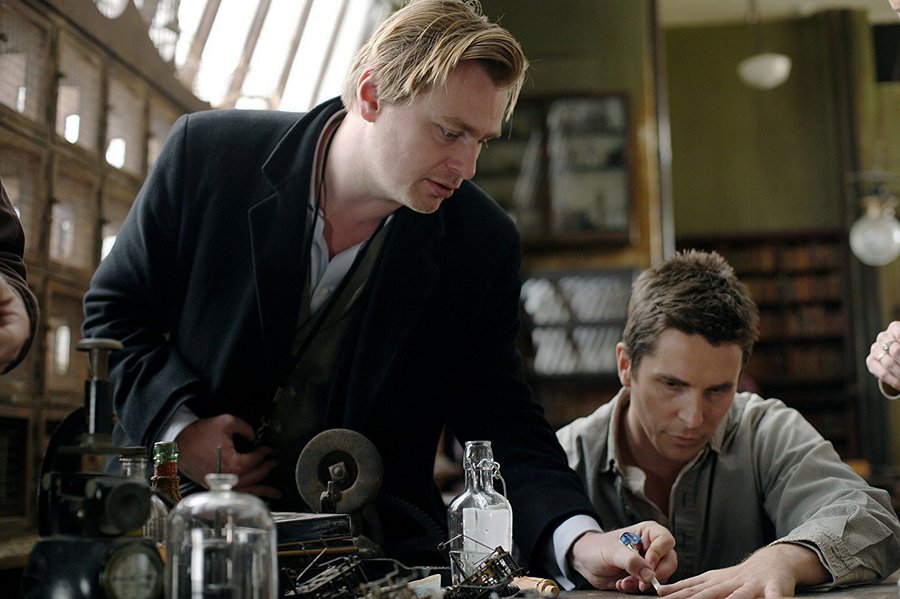
Stills from the film «The Prestige» (2006). Directed by Christopher Nolan.
The principle for material selection is built upon the criterion: «visual device—semantic impact.» The analysis includes episodes where the image inherently carries thematic weight: the prologue featuring cylinders and a caged bird, scenes in Borden’s workshop and under the theater stage, the «Teleported Man» trick, and episodes involving diaries, among others. Special attention is paid to recurring visual motifs.
The structure of the research mirrors the three-part logic of focus introduced at the beginning of the film: The Pledge, The Turn, and The Prestige. The first section («The Setup») analyzes how Nolan creates an illusion of the mundane, compelling the viewer to believe in the characters’ subjective experience. The second section («The Transformation») investigates how the director constructs the rivalry between Borden and Angier through visual means. The third section («The Prestige») examines how the final twist completely alters the perception of scenes previously viewed. The film’s ending shatters the sense of «truth» established earlier, returning the viewer to the position of a deceived observer.
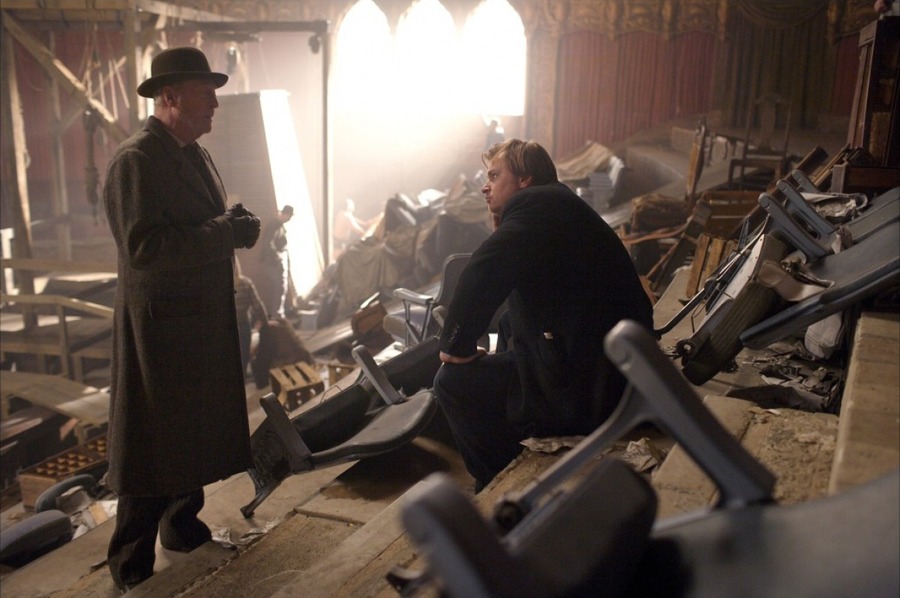
A behind-the-scenes shot from the film «The Prestige» (2006), directed by Christopher Nolan.
The list of sources includes theoretical works on visual narrative and viewer perception, professional materials on filmmaking, as well as critical texts concerning the symbolism and philosophical dimensions of «The Prestige.»
The key research question is: How does the film’s visual language reproduce the mechanics of focus and manage the viewer’s perception?
The research hypothesis is: Christopher Nolan transforms the act of watching a film into an illusionistic experience where the viewer becomes a participant in a meticulously constructed deception. In this context, the film’s visual language becomes not merely a means of storytelling, but a medium for examining the nature of creativity and the price an artist must pay for their own «trick.»
«The Pledge»
In the first act, the illusionist presents an ordinary object and convinces the audience of its authenticity. In the context of cinema, this stage is aimed at immersing the viewer in the film’s world and building trust in the everyday events taking place.
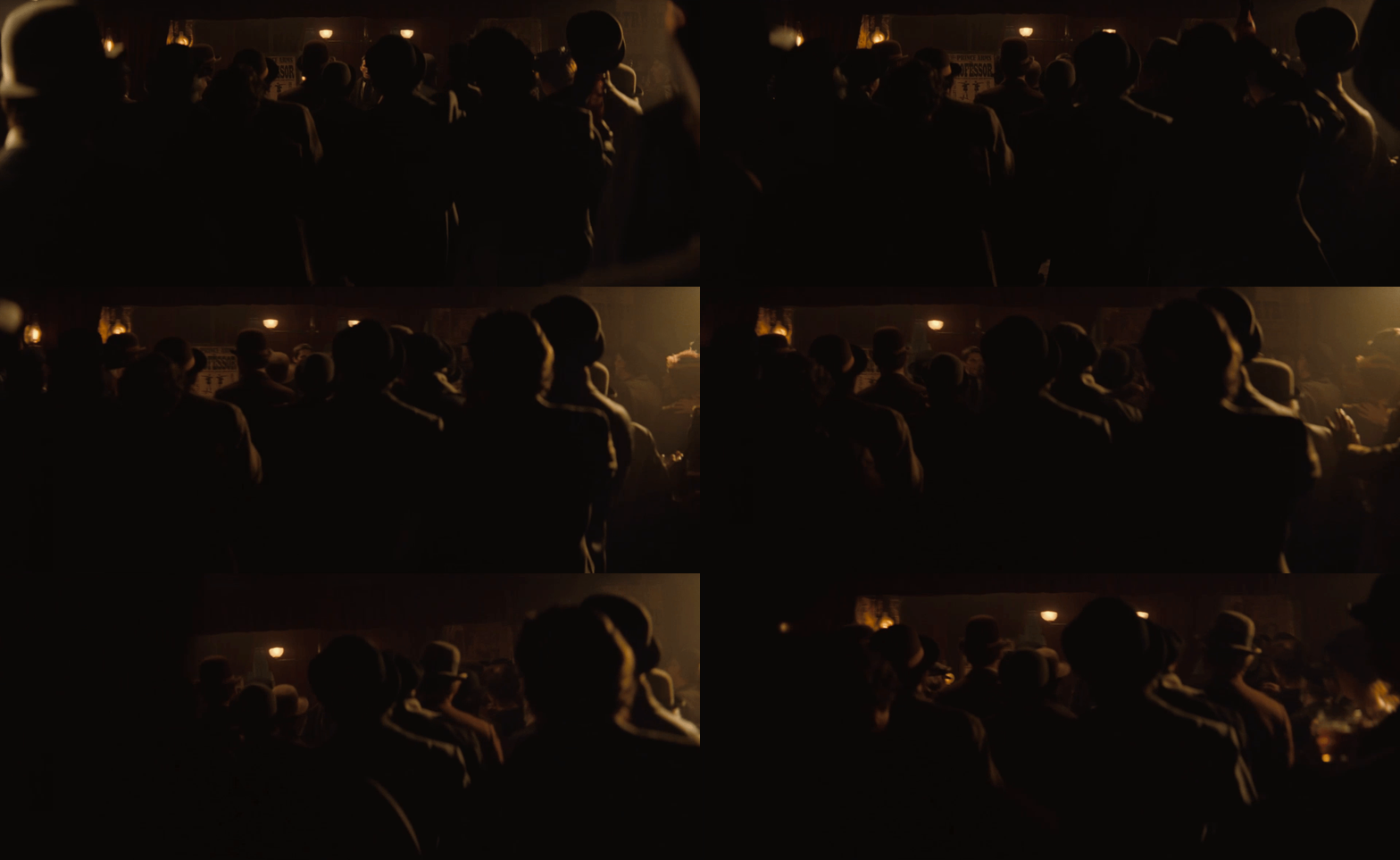
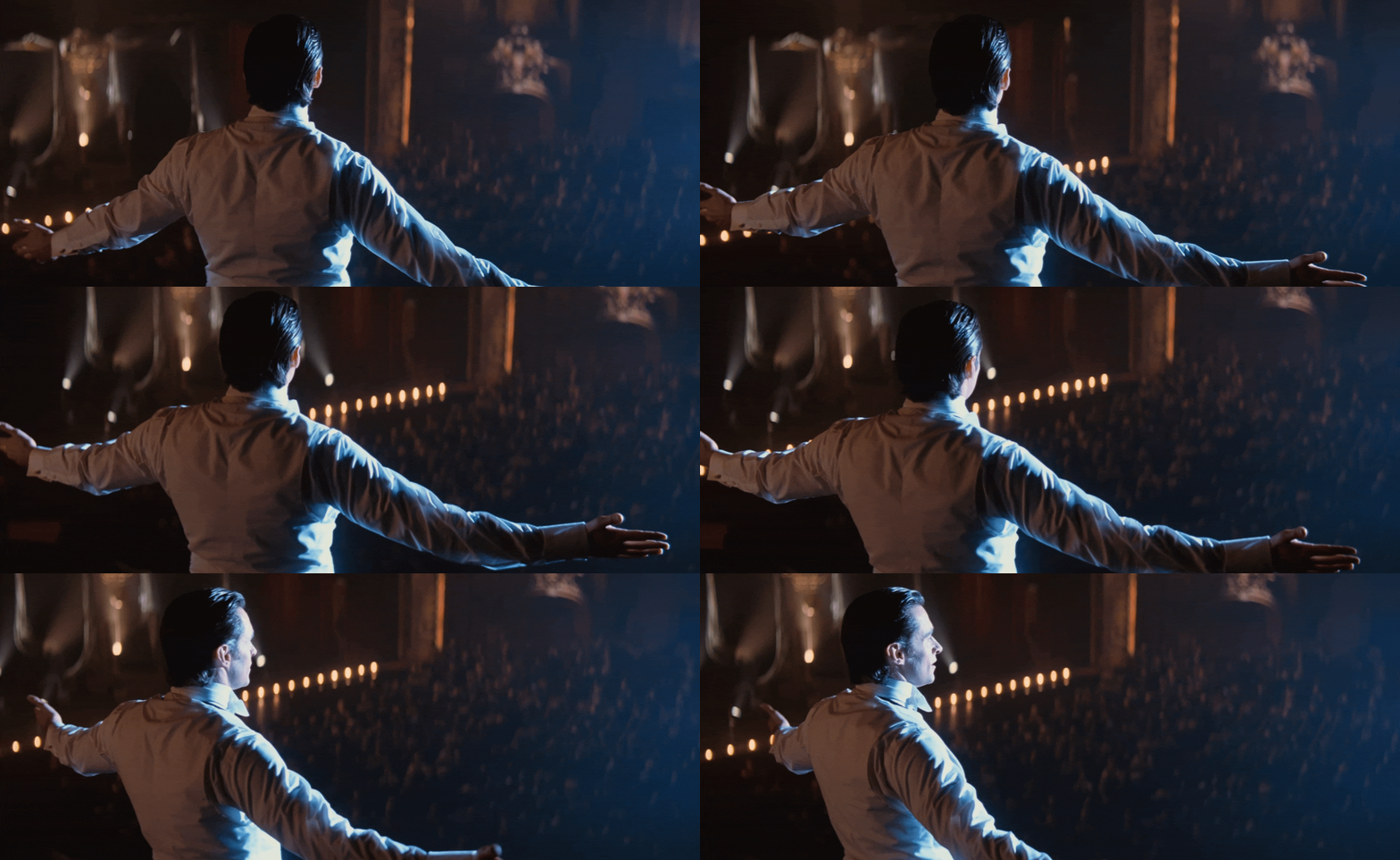
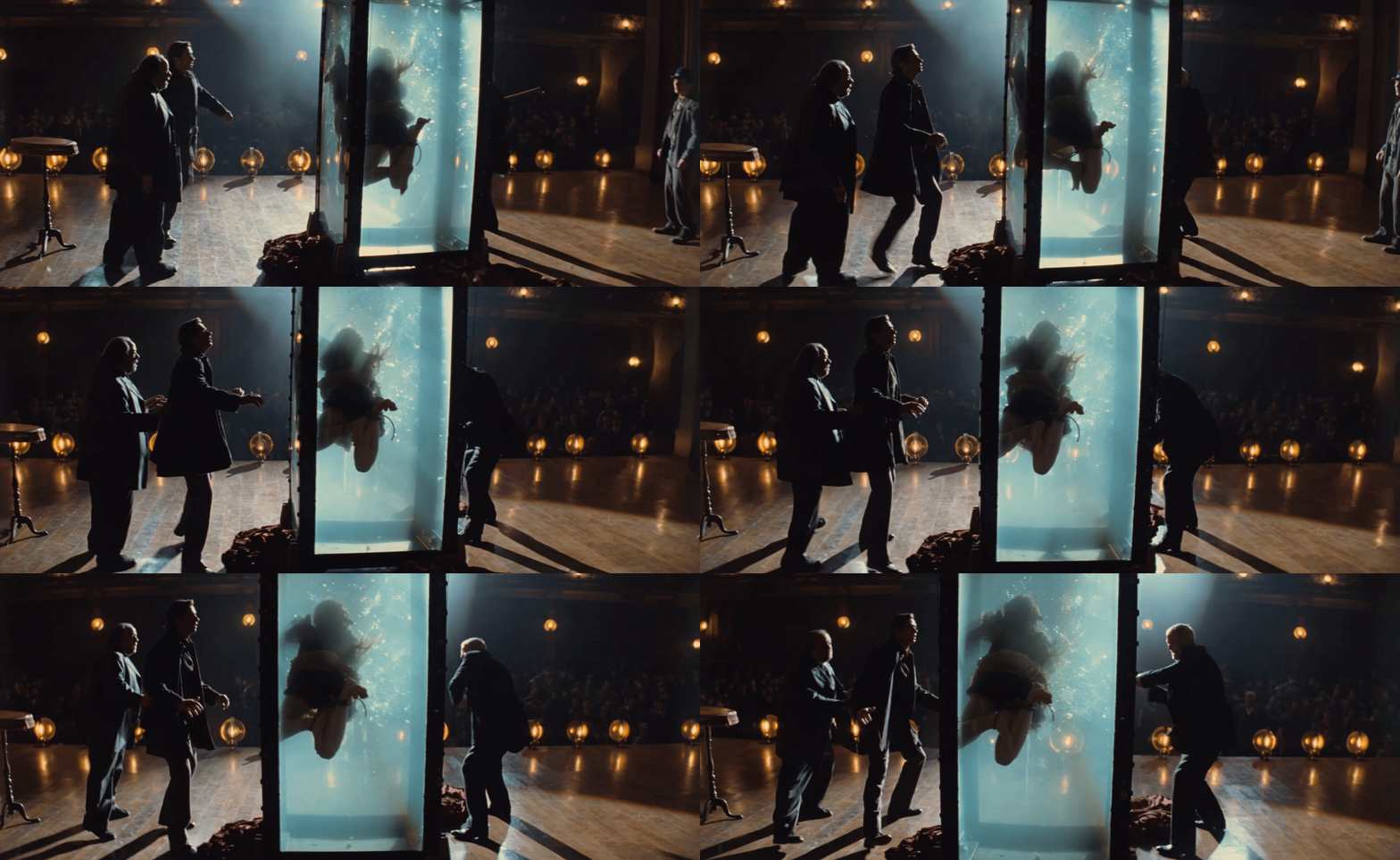
The camera can provide the magician’s point of view / encompass the space from all sides / or be within the crowd of spectators. Fragments from the film «The Prestige,» 2006.
According to the operator, Wally Pfister, in an interview with The Talks, the majority of the film The Prestige—roughly 75%—was shot handheld. He held the camera in his hands even while shooting from the crane. Historically, period pieces are often shot statically so that the audience can become immersed in the world through the set design. But Nolan forces the camera to move alongside the characters, relying on the operator’s intuition.
This creates a feeling of almost documentary footage. The viewer feels as if they have been granted backstage and into the workshops. This pseudo-documentary approach lowers our guard: we assume that a «living» camera is pointing out objects we should be paying attention to.
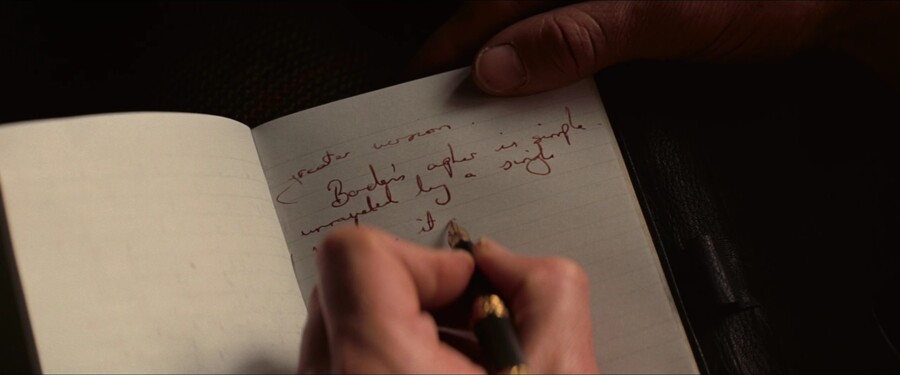
Danton writes his diary / The professor reads it. Stills from the film «The Prestige,» 2006
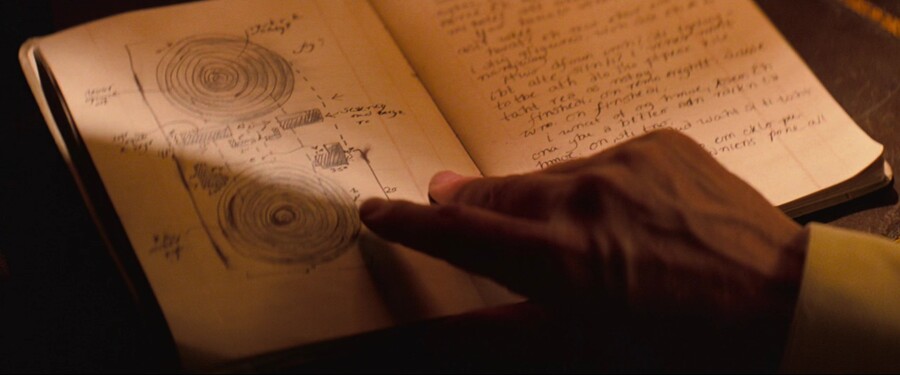
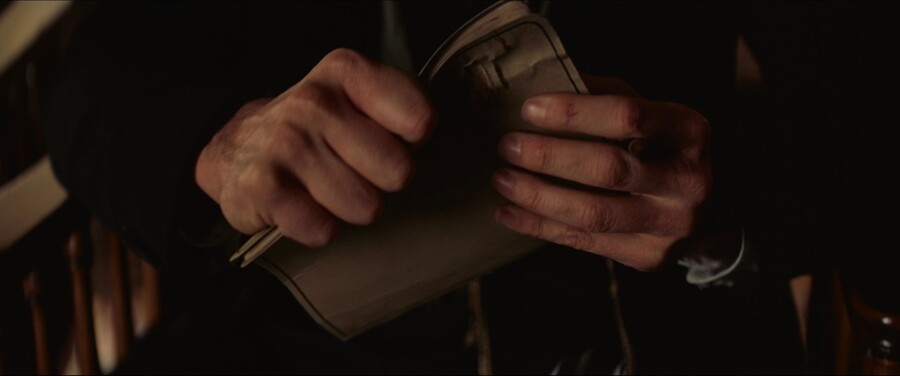
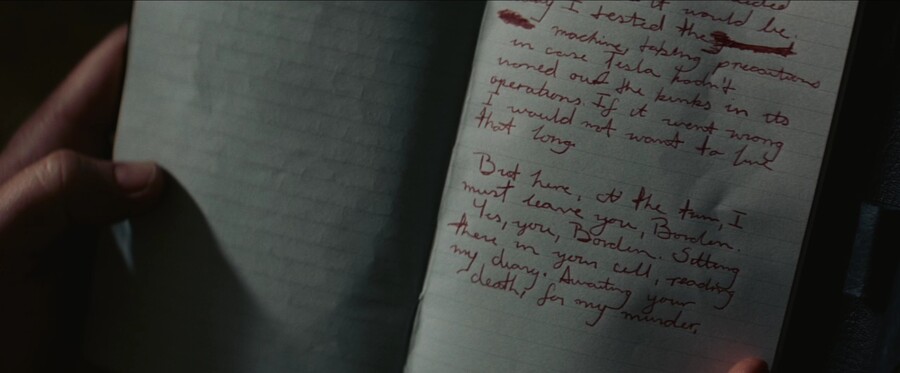
Danton is just beginning to study the Professor’s journal / Finishing the Professor’s journal. Scenes from the film «The Prestige,» 2006
Most of what happens is filtered through the magicians' notebooks. This establishes a complex visual recursion: one character on screen reads another character’s diary, which, in turn, retells the first character’s notes.
The montage of these «stories within stories» is presented in parallel—the framing narrative is interwoven with memories. The viewer has the illusion of absolute access to the characters' thoughts, but these diaries are traps, initially written with the intention that a rival would read them.
Hats and a host of birds in cages: opening scenes from a film. A shot from the film «The Prestige,» 2006
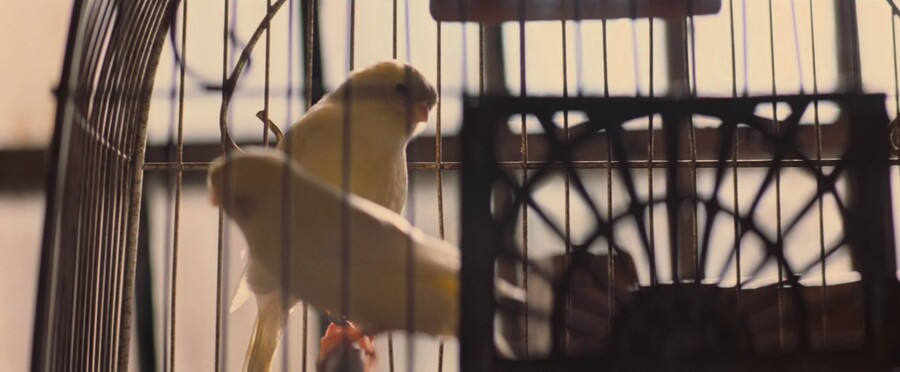
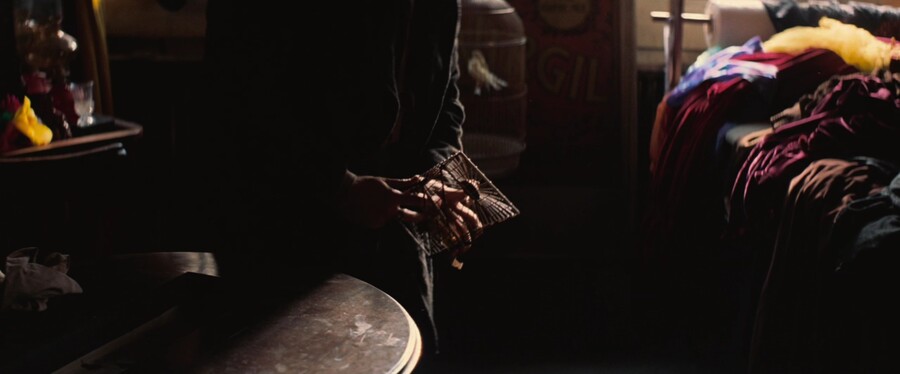
A sacrifice is needed for focus. Stills from the film «The Prestige,» 2006.
The focus on the disappearing bird serves as the main visual key to the entire film. The bird (an association with the artist), crushed by a folding cage, symbolizes the brutal cost of focus. For a «miracle» to happen, one of two living creatures must perish. Sacrifice is required for creativity.
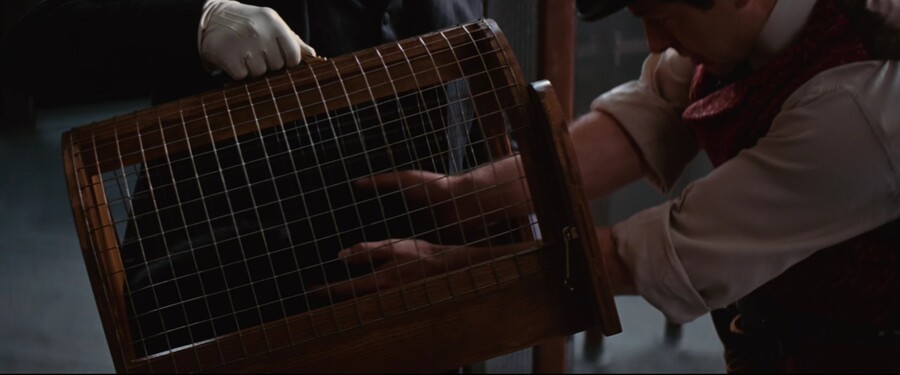
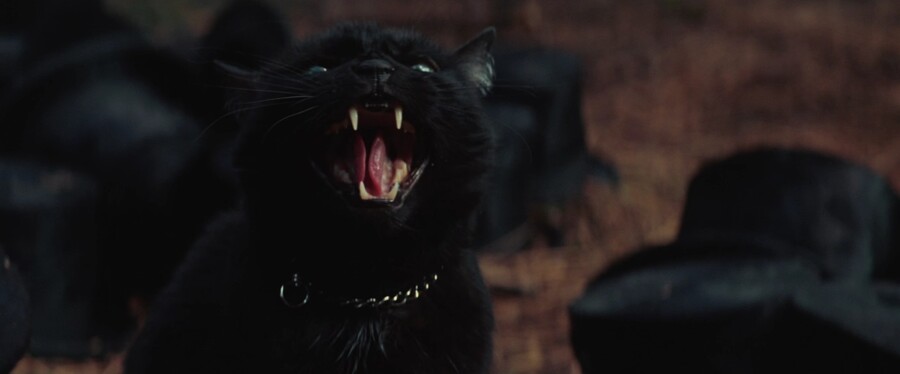
Like a bird or an artist, the cat initially emerges from a cage. A parallel to Danton’s clones from Tesla’s drawer. Scenes from the film The Prestige, 2006.
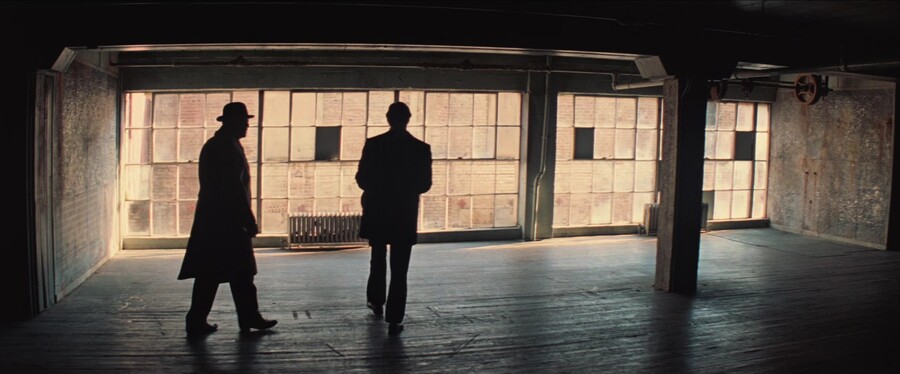
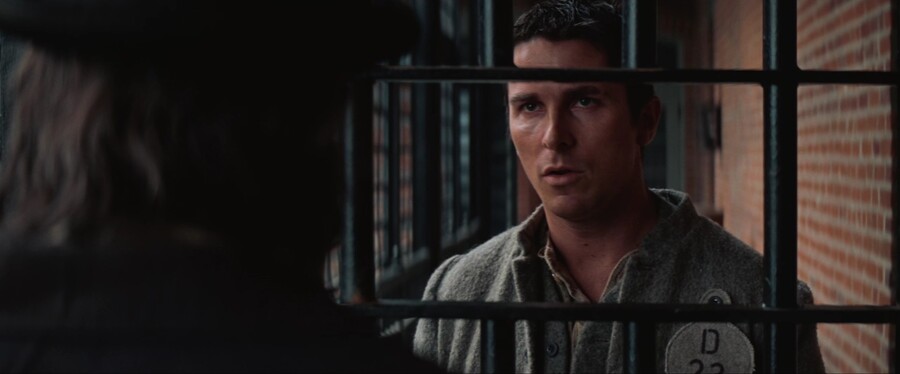
Danton Cell / Professor’s Cell. Stills from the film «The Prestige,» 2006
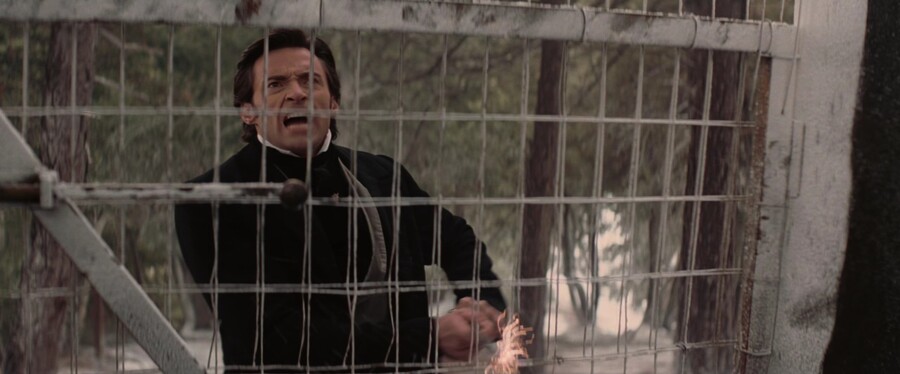
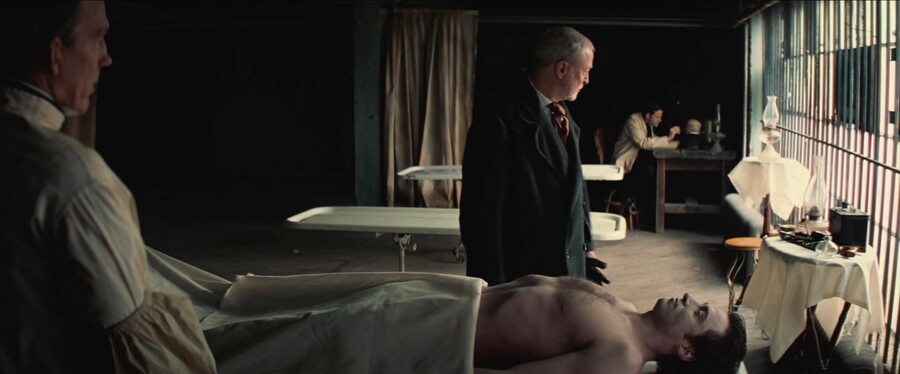
Tesla Coil into which the character falls / Cell containing the dead clone. Stills from the film «The Prestige,» 2006
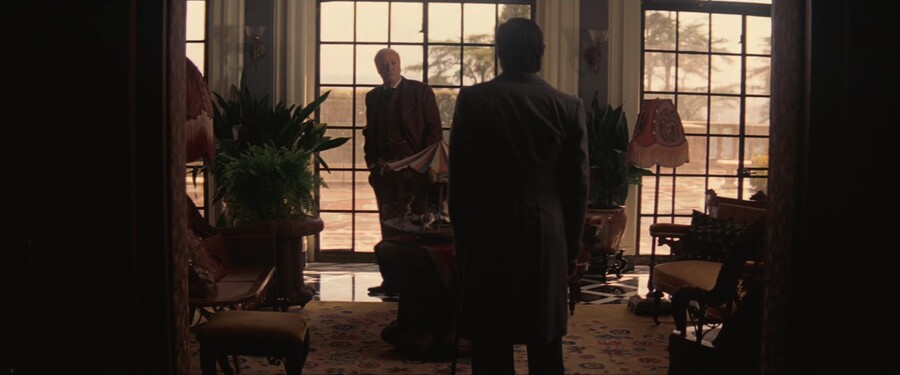
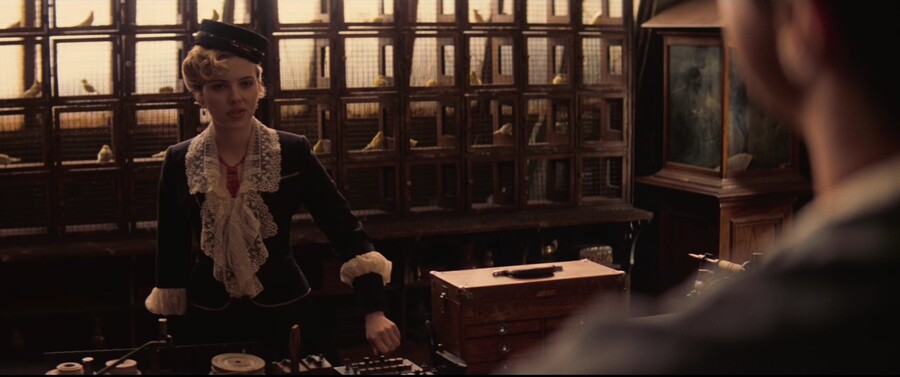
Cells and characters that help focus the scene. In these scenes, they are unhappy (they learn about a betrayal or plan one). Stills from the film «The Prestige,» 2006.
We see the window grates in Anger’s rehearsal room—the bars of a prison cell. These metaphorical cages mark the characters as hostages to their own obsessions.
«The Turn»
In the second part of the focus, the illusionist takes an ordinary object and does something extraordinary with it. In «Prestige,» this phase is dedicated to the escalation of conflict between the characters and the visual embodiment of two polarized approaches to art.
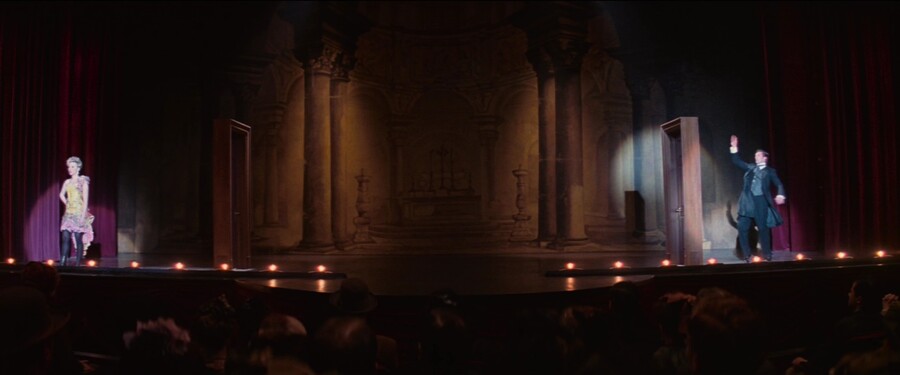
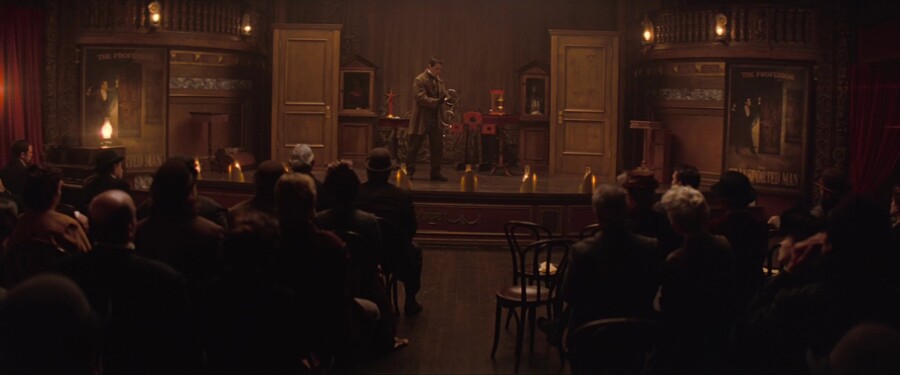
Difference in stage scale for similar numbers. Stills from the film «The Prestige,» 2006
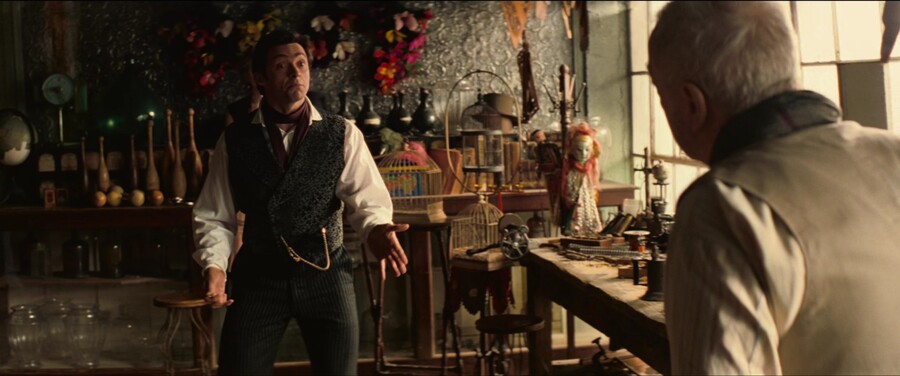
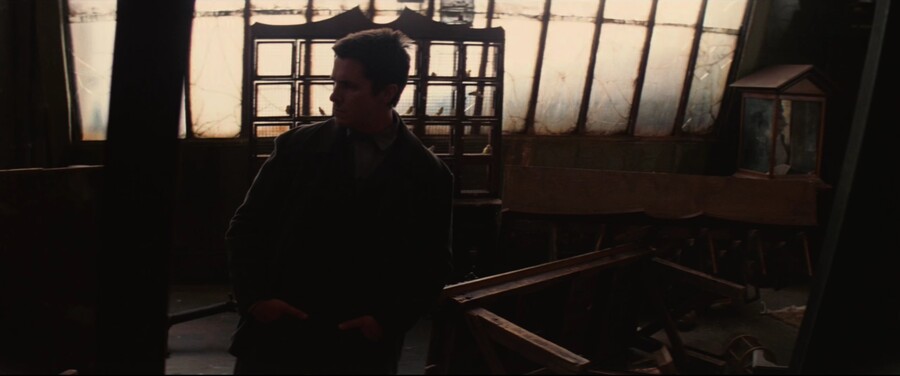
Magicians' Workshops. Stills from the film «The Prestige,» 2006
The conflict between Angers and Borden is expressed through opposing spatial solutions and costumes. Great Danton: expansive stage space, richly decorated locations where the hero arrives, and expensive costumes. He is a showman, a trick performer. In scenes with the «Professor, ” however, there is an association with the craftsman. He is the inventor of the trick.
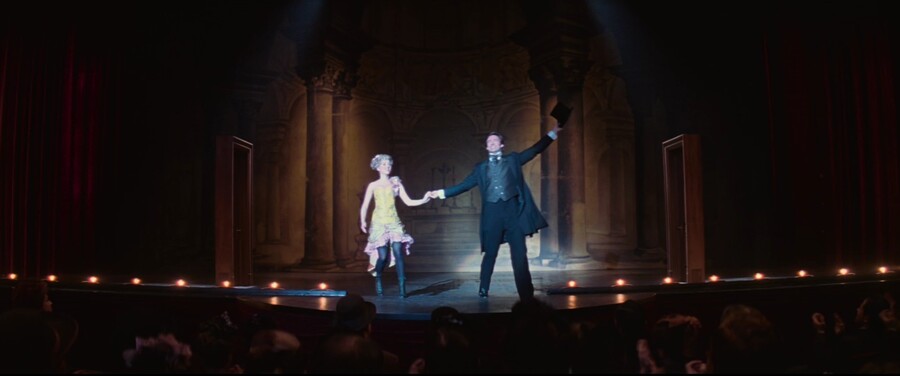
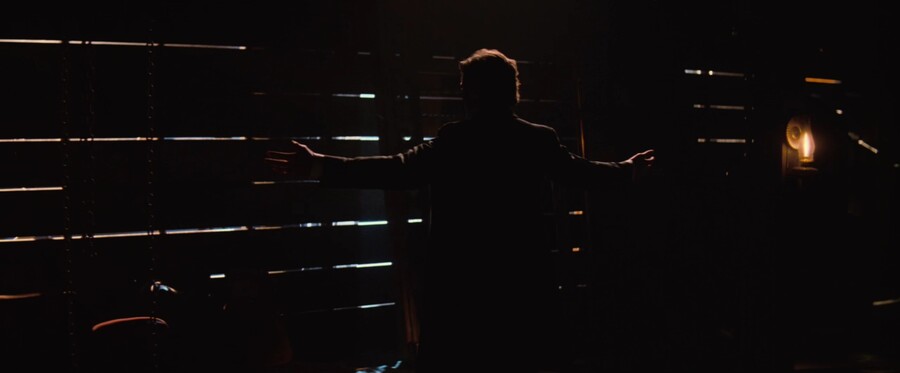
Ruth in the spotlight and Angier backstage. Stills from the film «The Prestige, ” 2006.
For Ender, the mere fact of being the center of attention is important, which prevents him from sharing the triumph with his stand-in. Borden, meanwhile, is visually pushed into the shadows. His costumes are simple, and the spaces where he creates lack showmanship aesthetics. All of this differentiates their financial status.