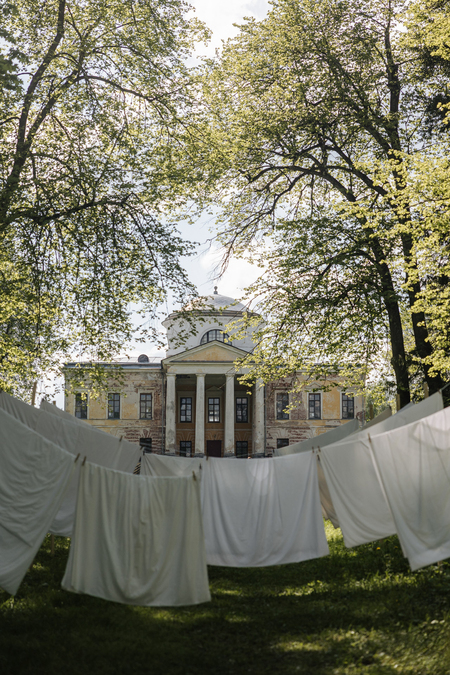
The «State House» project originated from an investigation of the uninviting history page of the Znamenskoe-Rayok estate: in the second half of the 20th century, a children’s colony and special school were located there. Following research and artistic lab work, two exhibitions related to visitor routes opened at two sites in May 2026. In April, a program for children took place in collaboration with students from the Mednovskaya Sanatorium Boarding School (Tver Region).
Project Structure
Participants:1. Exhibition «Believing in the Earth» at the center of contemporary culture «Relsy» in Tver. It addresses the motif of the journey, the present moment and the future, and reflection on the loss and rediscovery of home.2. Exhibition «State House» on the grounds of the Znamenskoye-Rayok estate (near Torzhok). With an emphasis on documentation, the past, and the historical context, it embodies the «memories» of a lyrical protagonist who returns to search for the answer: «why everything is exactly this way, and not otherwise.»3. Children’s Program for Students of a Sanatorium Boarding School in the village of Mednoye (Tver Region). Over the week of April 11–17, 2026, artists conducted sessions and visited the estate. The result was an exhibition of participants' workshop works, along with a printed zine featuring scans of drawings, photographs, and participant texts.
Historical Context
As part of the «Kazyonny Dom» project, a team of artists is exploring the Znamenskoe-Rayok estate, located near Torzhok. Built for the wife and children of General Glebov at the end of the 18th century, the property hosted various state institutions in the 20th century. Among these institutions in Rayok were a children’s colony and a special school, which received boys from across the country from 1958 to 1972.
Today, the estate is in a semi-abandoned state. As of 2025, a restoration process has begun, the result of which will be the opening of the Museum of Russian Palladianism. Apartments from Ray Holding will be located in one of the buildings of the former special school. The history of the Kalininsk Correctional Colony and the special school for «difficult children» will remain only in the documents of local historians and in the memories of witnesses from that time.
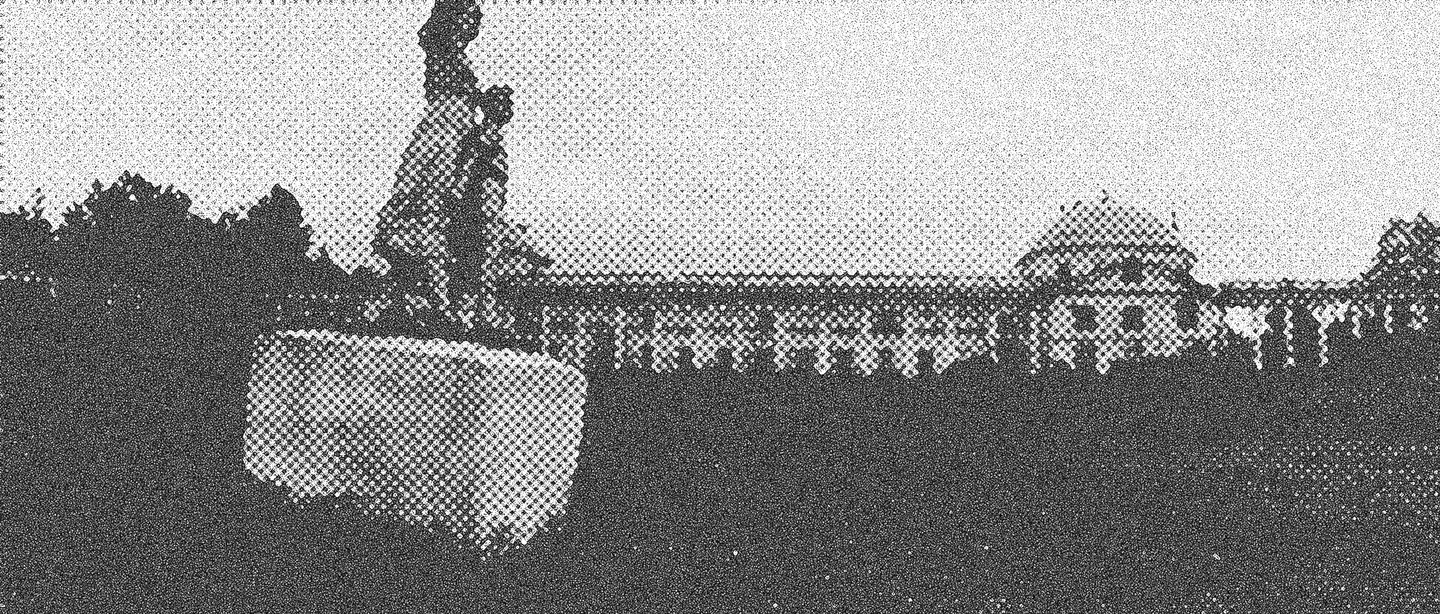
Gates of the Kalininsk Children’s Correctional Colony (1960s)
Exhibition: «The State House»
Exhibition Venue: Znamenskoye-Rayok Estate Park (Tver Region) Exhibition Dates: May 15–24, 2026
Artists: Alexey Geld, MARUSYA, Maria Panina, Evgenia Slastnova, Renata Sharipova, and Ulyana Sorokina
Curatorial Text
Home is a constant—an immutable element that serves as a refuge from the outside world and its dangers. Sometimes a person is forced to leave their dwelling. They seek sanctuary in vastly different spaces, generally referred to as «institutional buildings.» What unites them is that they become a substitute for a «real» home over a long period.
Artists have attempted to delve into Rayk’s history through the lens of such an institution. The estate, which was meant to become a ancestral home, constantly changed its appearance, passing from one set of owners to another, adopting new roles. From 1955 to 1965, the Kalininsk Children’s Correctional Colony was housed at the manor, and from 1965 to 1972, it was succeeded by a special school—as it was then called—for «difficult children.» The children found themselves in a closed system, learning to structure their lives in an isolated environment, navigating the space of a new home they had not chosen. Gradually, memory fades; evidence of the children who lived in Rayok in the last century disappears. A page of history is lost among others, dimming against the backdrop of stately architecture and vanished aristocratic life.
The exhibition unfolds at a moment of massive transformation: the estate is closed for restoration so that after years of oblivion, it can become a museum. In the interval when almost no trace of Rayok’s inhabitants remains, and the future awaits transformation, it is crucial to capture the elusive past within its authentic, semi-ruined décor. It is important to acknowledge the presence of those who long ago left this place—to try and give them a voice, even through artistic interpretation. To let them say, «we were here”—to preserve this vanishing trace that slowly dissolves into the air.
The exhibition is situated on the rear, non-prominent side of the estate, in the alley leading to the river. The site-specific works reference fragments of the historical context and reflect on the daily life of children in a closed environment.
Sleeping Quarters
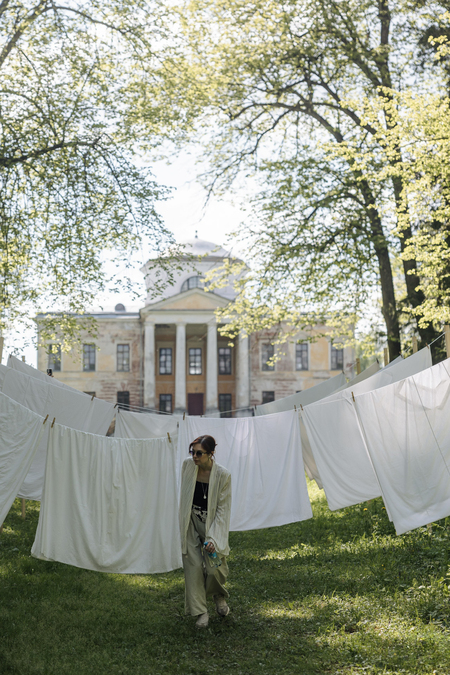
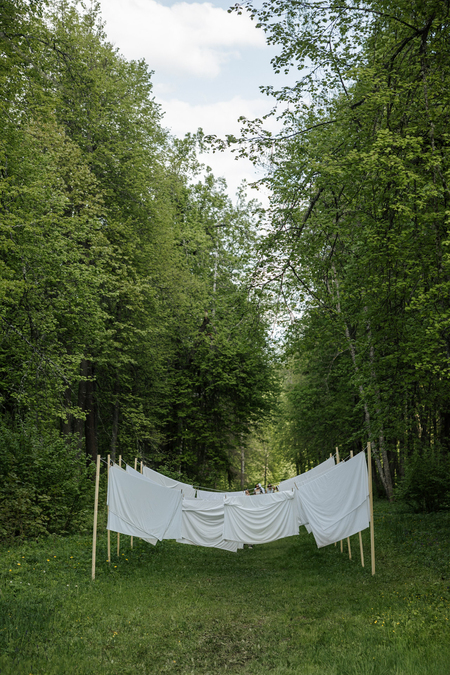
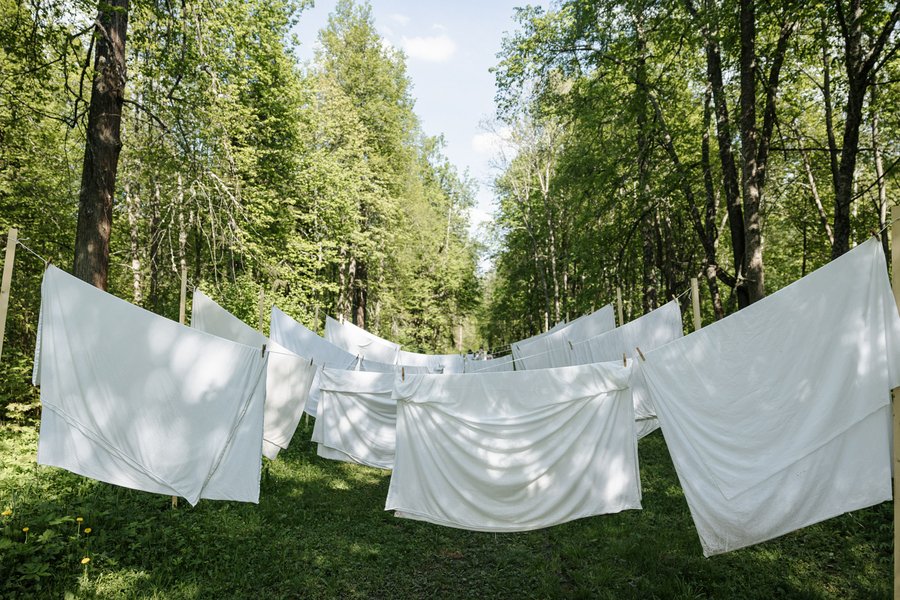
Evgenia Slastnova Duvet covers, wooden battens, laundry line 2026
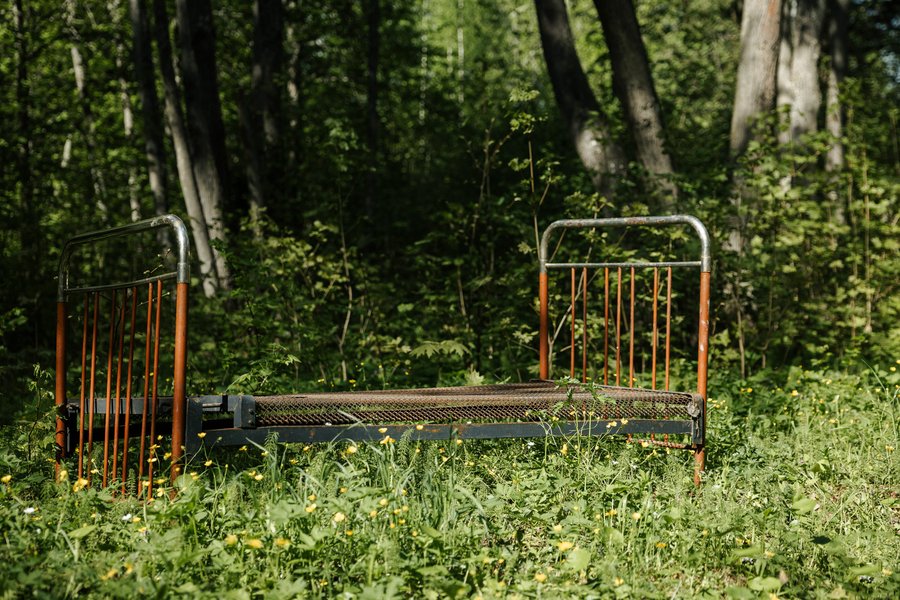
Addressing one of the most striking features of communal housing, the installation forms a structure resembling rows of beds in a shared dorm room. The bedding hung on lines, placed on the rear side of the estate house, signifies the presence of the residents while simultaneously exposing this vulnerable space to public view.
Here begins my
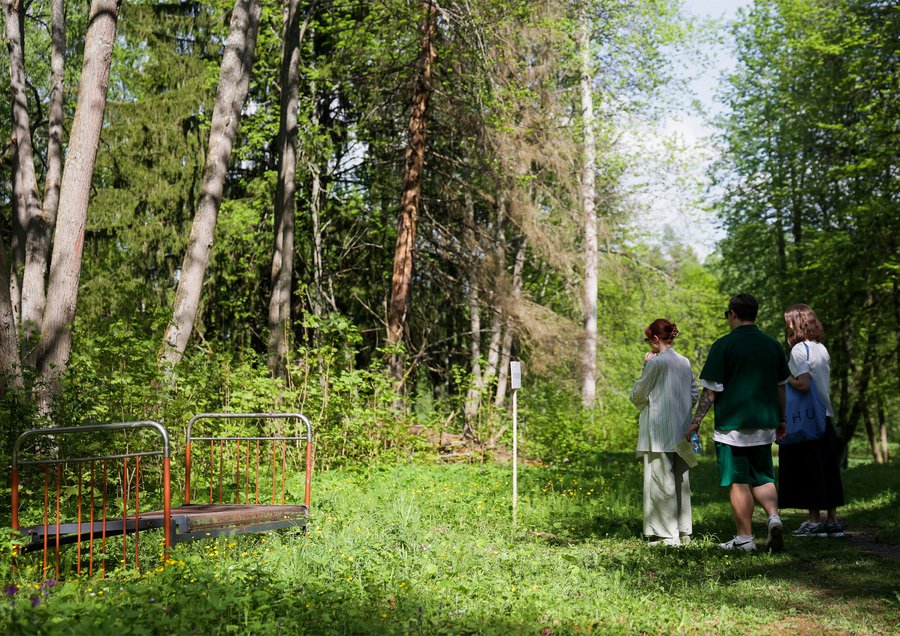
MARUSYA Found Objects 2026
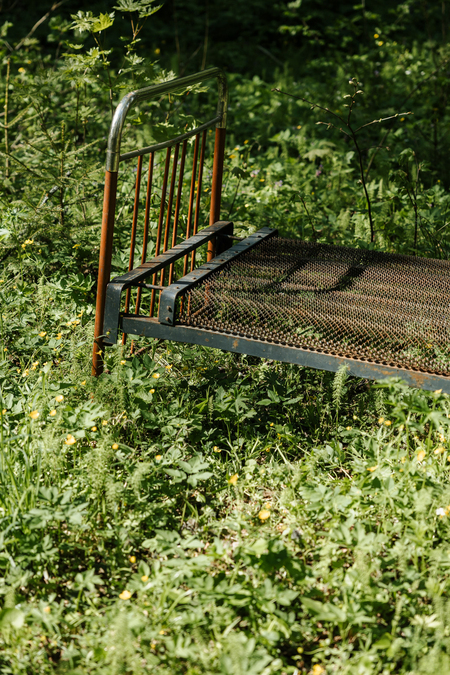
In an institutional environment, the bed becomes the sole space of privacy. It is from the bed that a portion of the freedom one can afford begins—the freedom to imagine, to dream, and to mentally transport oneself to any place one wishes to be. Separated from the floor and walls of a closed home, the bed becomes part of an open landscape.
Shack No. 1
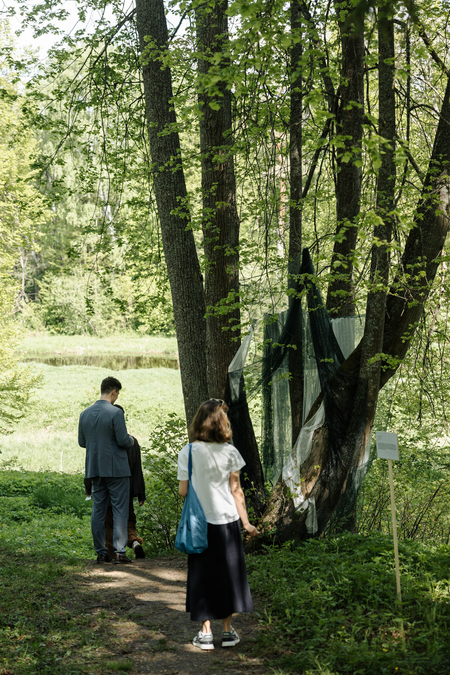
Evgenia Slastnova Structural grid, gauze 2026
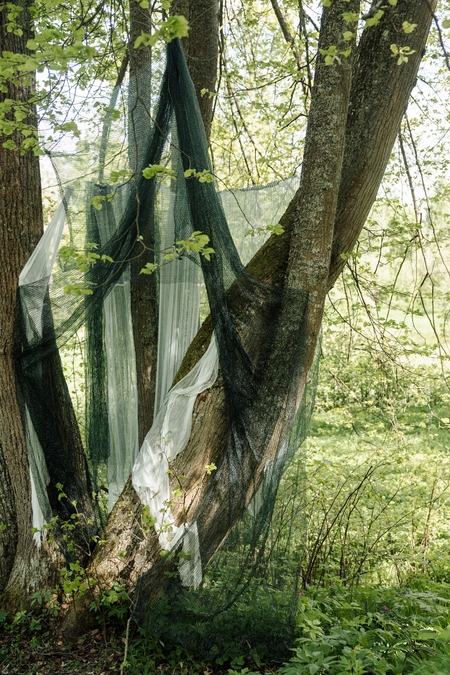
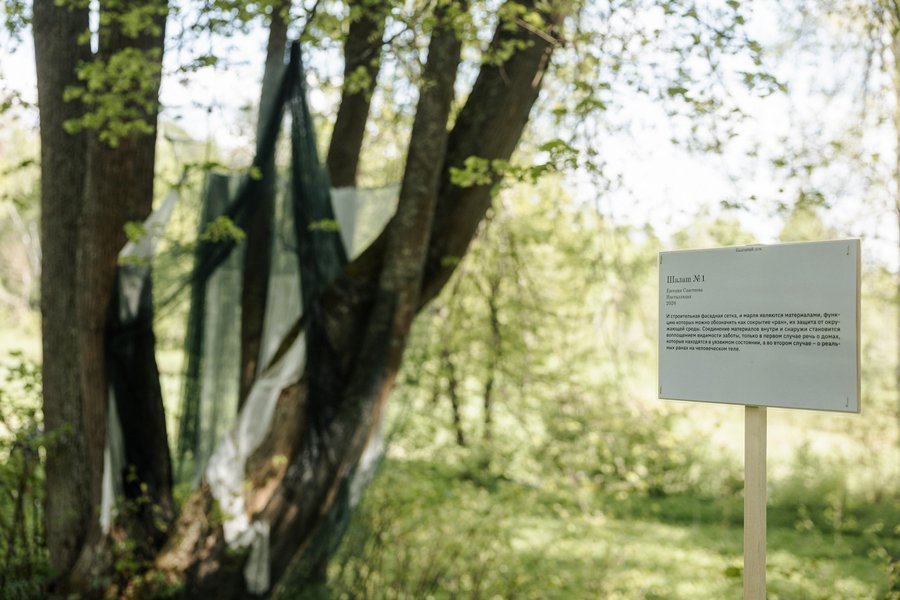
Both the structural facade grid and the gauze are materials whose function can be described as concealing «wounds, ” protecting them from the environment. The joining of materials inside and outside becomes an embodiment of visible care—in the first case, referring to homes in a vulnerable state, and in the second case, referring to real wounds on the human body.
Exit here
Maria Panina Fabric Printing 2026
The work references the legends of Raika, common to any estate: it is said that there are underground passages beneath the manor. The abandoned grotto offers an imagined escape route for the residents of Znamensky, suggesting an exodus beyond the enclosed environment.
«Linguistic Substitution» «Visibility Compensation»
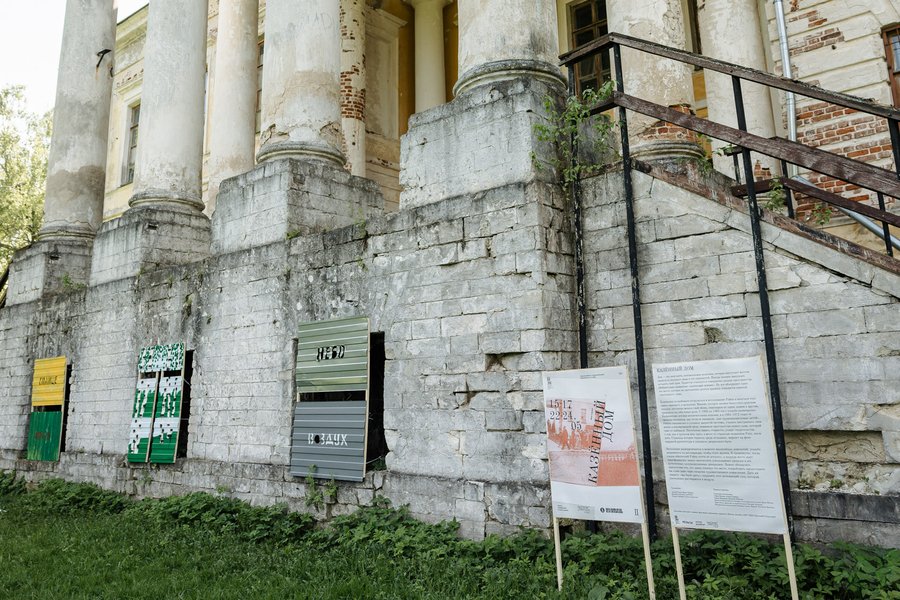
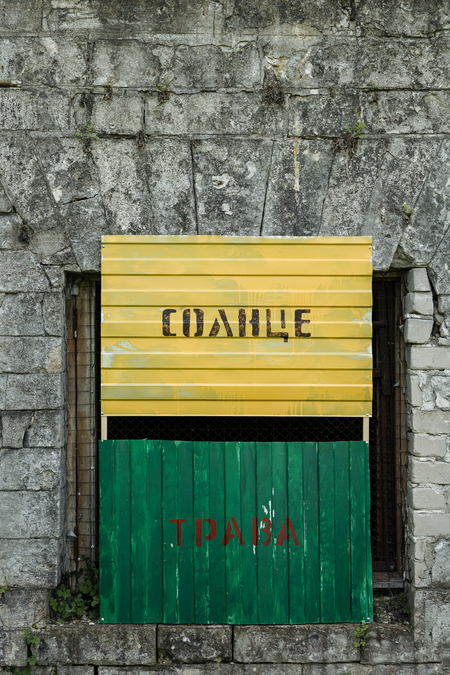
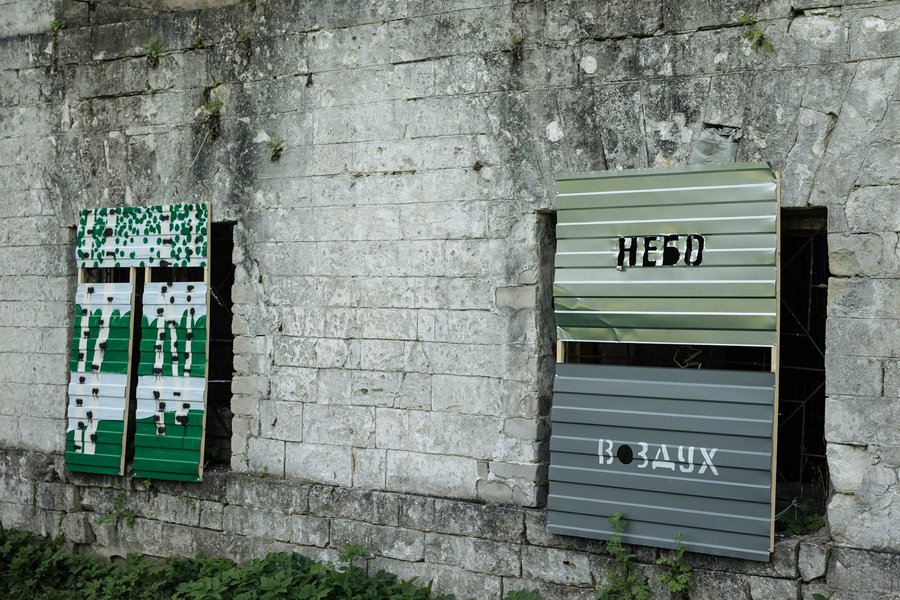
Alexey Geld Sheet metal, paint 2026
The works in the series «Linguistic Substitution» and «Visibility Compensation» explore the phenomena of linguistic and physical constraints. These pieces are placed on the windows of the back staircase of the estate, obstructing the view from the interior.
«Fly with a greeting, return with an answer»
Renata Sharipova and Ulyana Sorokina Audio Tour 2026
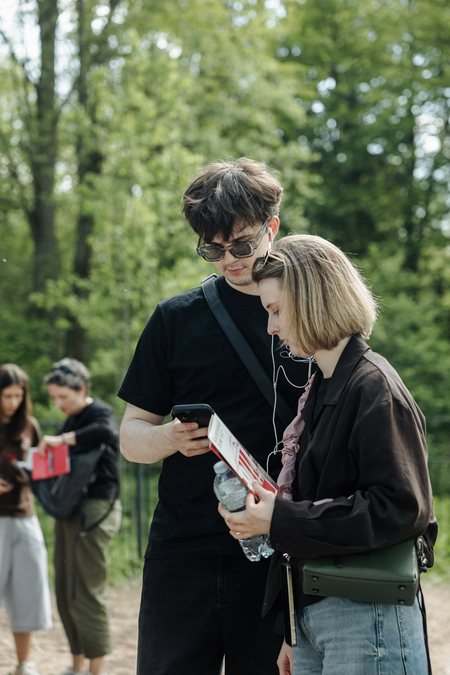
An audio route was prepared for the tour of the manor estate: viewers immersed themselves in the history of the colony and special school that were located in Rayka from 1955 to 1972. The authors utilized direct speech—accounts from local historians, and quotes from letters and documents of that era. The tour guided viewers through the exhibition and was based on the works of artists in the manor park.
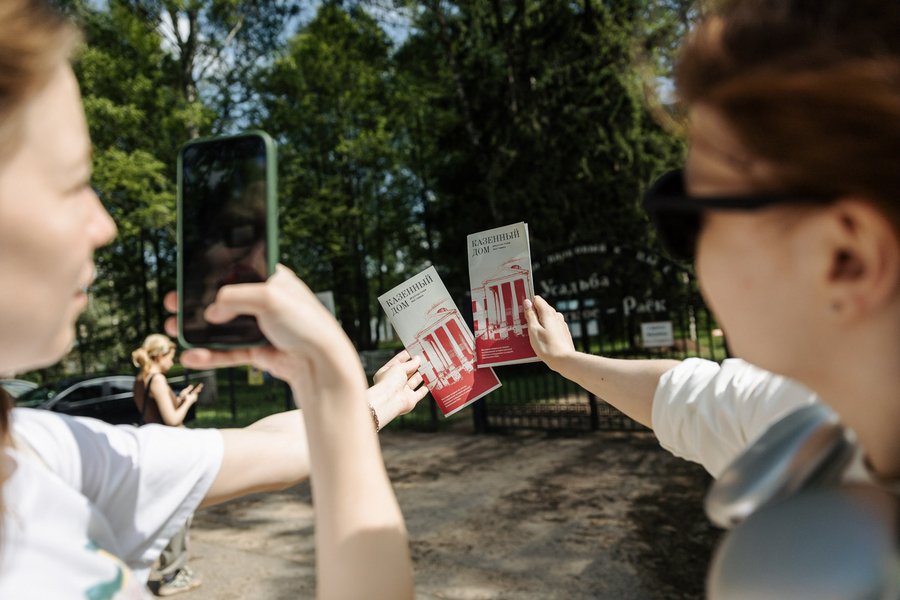
Fold-out spreads for the park guide booklet of the estate