Hi-Hat: A young boy has grown up
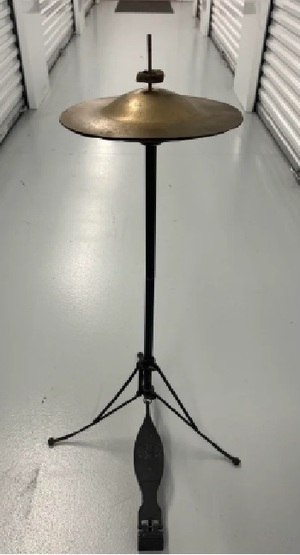
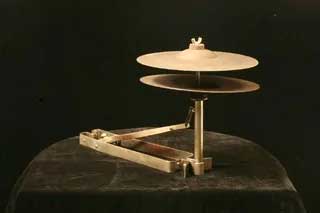
In the previous chapter, we discussed the low-boy—a low-profile kit with two cymbals near the floor. It provided a short foot-operated 'chick' sound but did not allow for full cymbal articulation with the hands. In the 1930s, this idea developed further. The low-boy grew taller. The high-hat appeared, which could now be played with sticks. This fundamentally changed drumming mindset. The high-hat was no longer just a foot-operated 'chick' at the bottom; it became a full voice of the kit. It allowed the player to maintain rhythmic pulse, open and close the cymbals, alter articulation, create motion, play accents, and interact with the snare and bass drum. This is where the kit took another step toward modernity. The drummer gained a higher, pulsating layer that could be controlled by both hand and foot. The foot was no longer merely «closing the hardware»; it participated in the groove. The hands found a new focal point. Music became more fluid. If the bass drum is the ground and the snare is the speech, then the high-hat in the 1930s became the breath of the kit.
The Bass Drum Steps Back from the Parade
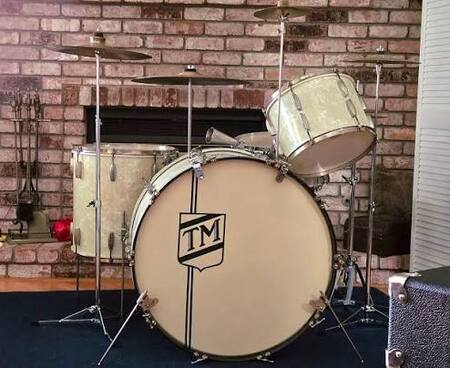
One of the most significant shifts of the 1930s was the changing role of the bass drum. In the early tradition, the bass drum maintained a direct, almost marching foundation—it was the heavy, grounding pulse. But in swing music, the demand is for a lighter, springier movement. If the bass drum hammers every beat too rigidly, the orchestra will march instead of sway.
This is where a new idea emerges: time doesn’t have to be held solely by the bass drum.
Gradually, the function of timekeeping moves upward—to the hi-hat, and then to the ride cymbal. The bass drum doesn’t disappear; it remains vital. But it ceases to be the sole master of the rhythm.
The drummer learns to lighten the low end. The drum kit stops stomping and starts gliding on the balls of the feet. Yes, it sounds strange, but any swing drummer will understand.
Cymbals: From Accent to Accompaniment
In the 1930s, the role of the cymbals began to change. Previously, the cymbal often functioned as a flash—an accent, a punctuation mark at the end of a phrase. But in swing, cymbals started becoming a surface upon which rhythm could be played.
The hi-hat had already become an important, pulsing voice.
Ride cymbals, in their modern sense, had not yet fully claimed their central position—this would particularly develop in the bop era of the 1940s. But the path was already open.
Gradually, the cymbal family within the drum kit became more complex.
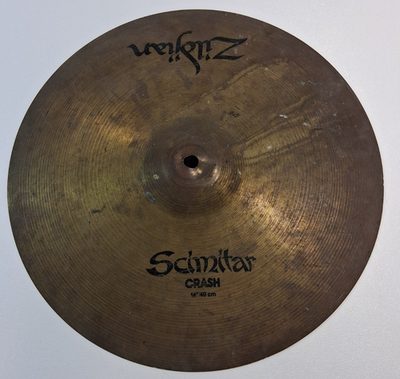
Crash cymbals became a cymbal of bright emphasis. It is an explosion, a flash, a musical exclamation point. It is not needed for constant timekeeping, but for emphasizing form: the start of a section, the end of a phrase, an orchestral accent, the climax of a solo, a sharp emotional surge.
The crash helps the drummer not just play rhythm, but to manage the dramaturgy. If the snare drum can say, «Bang,» the crash says, «Everyone here needs to understand that something has happened.» Sometimes, of course, the drummer says this too often because restraint is difficult for human nature.
China, or china cymbal, brings a different character. Its sound is sharper, dirtier, more exotic, sometimes almost theatrical. It is not the smooth sheen of a standard cymbal, but a rougher, screaming, «broken» texture.
In the early history of the drum set, interest in «Chinese» timbres was an important part of the trap set: Chinese toms, Chinese cymbals, and unusual sound and percussive effects gave the kit not just rhythm, but color.
The china continues this line well. It doesn’t just accent—it colors. It can be used as an effect, as a dramatic impact, as a sharp response to the ensemble.