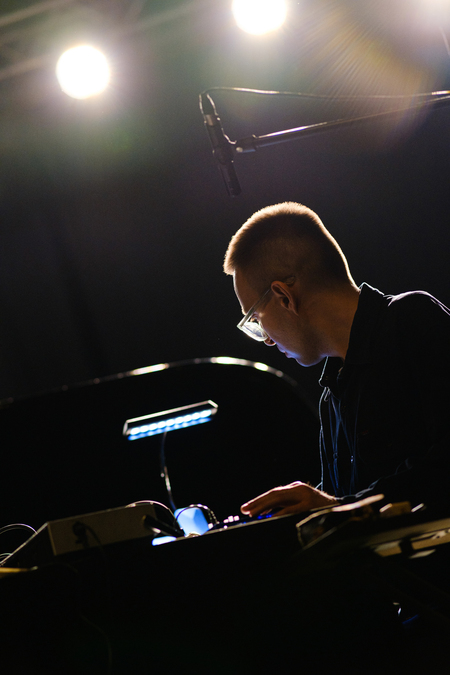
Sergey Zykov, musician and instructor at the HSE Art and Design School, gave an interview for the «Tsekh» project—a media outlet for contemporary adults who are open to new knowledge, interests, and ideas. The conversation covered the current state and future of music and sound design, as well as the role of artificial intelligence in the sound industry.
When people talk about sound, sound design and sound art often get grouped together. But for me, they are still different things. Primarily, I envision the community of sound art, although I more often find myself discussing sound design.
To put it very simply, sound design is an applied field. It always has a specific task, a client, and a context. Sound within it doesn’t exist for its own sake, but as part of something larger.
A good example is audio branding, where a company needs its own signature sound that will work alongside its visual identity. Or consider a car: when you start the engine, turn on the blinker, or open the door—dozens of sound cues accompany you. All of that is sound design. And these sounds seem natural to us precisely because they align with the space we are in.
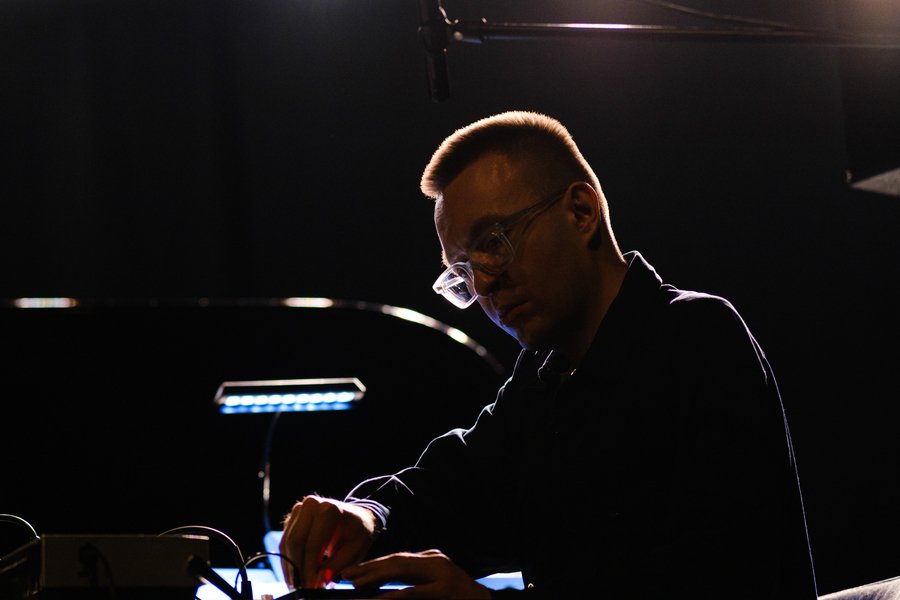
Nowadays, other narratives are becoming more popular. For instance, those involving AI. But for me, its role in music is somewhat exaggerated. I have a Roland JV-1080 synthesizer at home from the mid-1990s. It’s an instrument that functions with pre-set sounds—orchestral, choral, percussion. It has over six hundred presets, and I also purchased additional sound cards with orchestral and techno sounds. Sometimes, you only need to press one key on it, and it begins playing a ready-made Eurodance beat. Other times—a few keys—and instantly, strings, choir, and brass sound. But no one can say that at this moment I have stolen someone else’s music. I bought the instrument, I bought the sound libraries, and I use them the way I deem appropriate. No one bothers to credit Roland as a co-author. It remains an instrument—convenient, complex, but ultimately, just an instrument.
Full interview text on the «Tsekh» media portal website