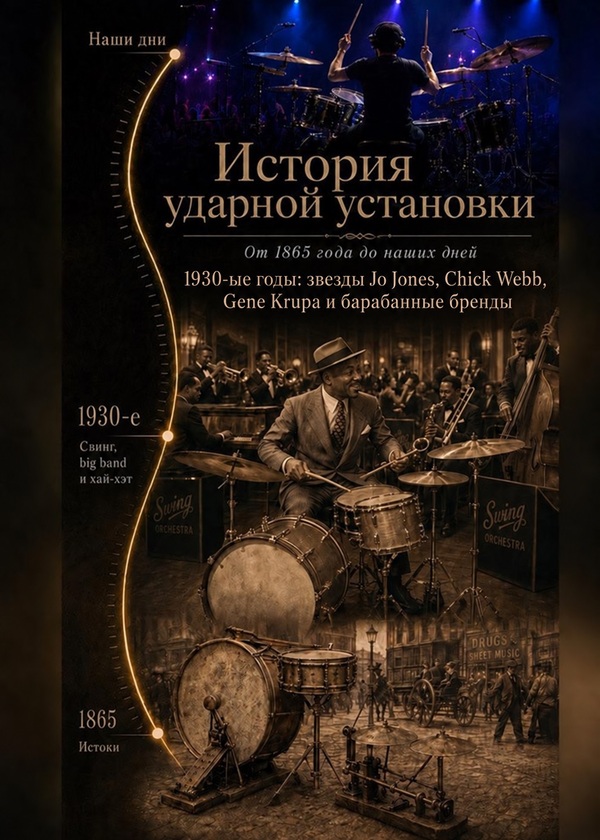
Continued from previous articles.
Drummers of the 30s:
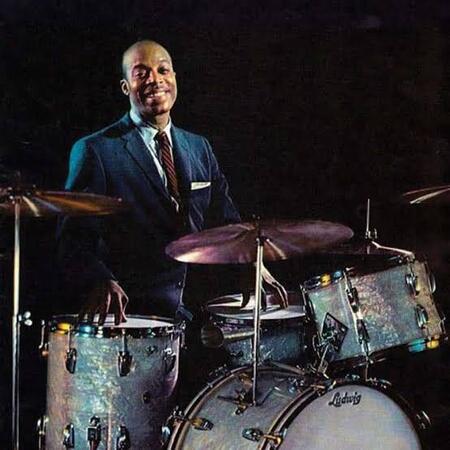
Jo Jones: Lightness as Revolution
Jo Jones, drummer for Count Basie’s orchestra, became one of the key figures in this shift. He is often associated with a lighter, more fluid approach to timekeeping—with the development of the high-hat’s role and the transition from a heavy bass drum pulse to a more airy swing feel. Jo Jones didn’t play as demonstratively as Gene Krupa. His revolution wasn’t about forcing the audience to look at the drummer. His revolution was about making the music fly. This is a fundamentally different kind of greatness. Krupa showed that the drummer could be a star. Jo Jones showed that the drummer could make the entire orchestra lighter, freer, and more elastic. He wasn’t just keeping time. He was creating a sense of time. That, perhaps, is adult drumming magic. It’s not «Look how many notes I can play, ” but „Look how much better everything around you has become.“ A rare quality. People rarely manage to make things better for everyone around them, but drummers sometimes succeed.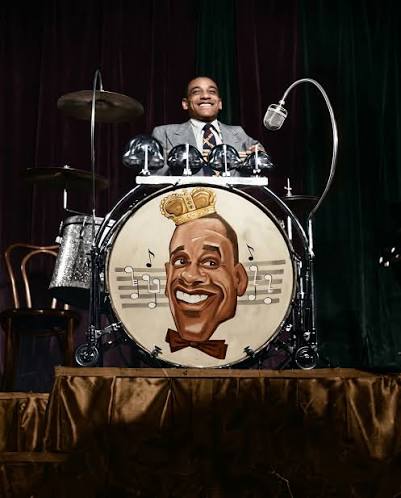
Chick Webb: A Small Man with a Huge Orchestra
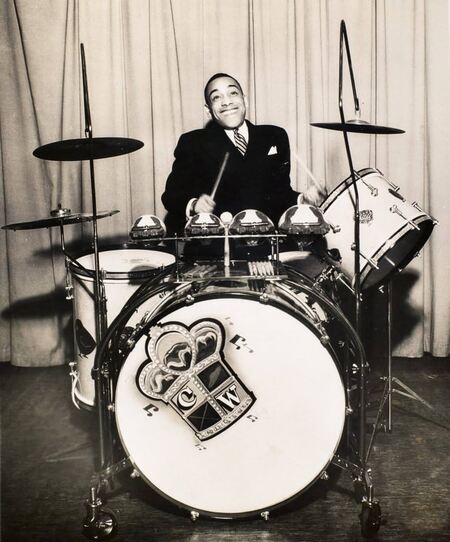
When discussing the 1930s, one cannot pass by Chick Webb. He was not only an outstanding drummer but also a bandleader. His orchestra played at the Savoy Ballroom in Harlem—one of the era’s premier dance venues. Webb became a pivotal figure in the swing drumming language and living proof that a drummer could be not just a member of the rhythm section, but the leader of a major musical apparatus. Webb played with power, energy, and incredible precision. He led the orchestra not just with his sticks, but with his entire presence. His playing was physical, vibrant, and dense. In an era when the dancing audience could literally decide the fate of the orchestra with their feet, the drummer had to be the engine. And Webb was the engine. Today, it is easy to underestimate what a bandleader-drummer meant in the 1930s. Today, a drummer might sit behind a kit with twenty cymbals, lighting, triggers, and pads, and after the concert, still hear, «And you with the group?» In the 1930s, Chick Webb already demonstrated that the drummer could be the focal point of the ensemble and the face of the orchestra.
Gene Krupa: The Drummer Becomes a Star
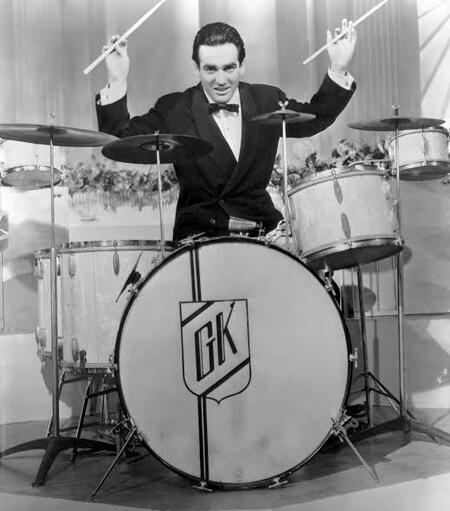
But the most visible icon of the 1930s was Gene Krupa. Krupa didn’t just play well; he changed the social status of the drummer. Before him, the drums were often perceived as an instrument for timing, accentuation, and support. After him, the audience began viewing the drummer as the central figure of the show. This was a massive cultural shift. The drummer emerged from the shadows. He was no longer «the one sitting in the back.» He became an artist, a spectacle, a character. The story involving Benny Goodman and the famous «Sing, Sing, Sing» is particularly significant. Krupa’s extended drum episodes made the drum kit an object of public attention. This was the moment when the average listener suddenly realized that drums could be not just background music, but the main event. Yes, musicians had always known that the drummer was important. But there’s a difference between knowing within the industry and having the audience wait for a drum solo. It is here that the instrument gains not just musical, but media status.
Humanity naturally turned this into a cult of virtuosity, spectacle, and signature gestures. But without this step, the drum kit could have remained in the role of a «support instrument» for much longer.
Drum Brands and Standardization
The 1930s were about more than just musicians—they were about industry.
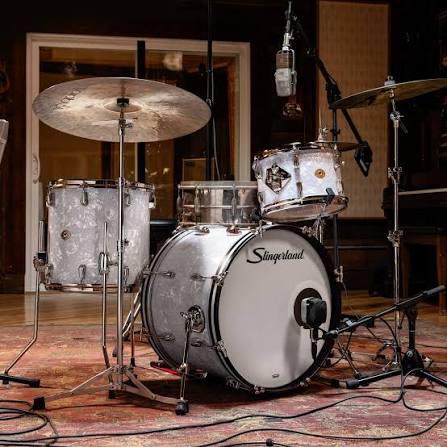
When the drummer became a visible figure, manufacturers began to realize that a drum set wasn’t just a collection of instruments; it was an image. It could be marketed as a complete system, as a professional standard, as the dream of a future musician.
The drum set evolved from merely a practice instrument into a tool for education, commerce, and professional identity.
More recognizable configurations began to emerge. Manufacturers started collaborating with stars. Catalogs and advertisements cemented the image of the «correct» setup. The drummer started choosing not just individual drums, but a complete kit that matched their style, stage presence, sound, and status.
And here began the eternal drummer’s curse: «I need one more tom, one more cymbal, and a new pedal because that will definitely solve my groove problems.» It wouldn’t. But the market was already prepared to sympathetically sell hope.
Radio, Recordings, and the Image of the Drummer
In the 1930s, not only did music change, but so did the ways it was disseminated. Radio, records, film, tours, dance marathons, large venues—all of this formed a new image of the musician.
The drummer no longer existed solely on stage. He was heard on the radio. He was seen in film archives. He was photographed for advertisements. His kits appeared in catalogs. His style began to be copied.
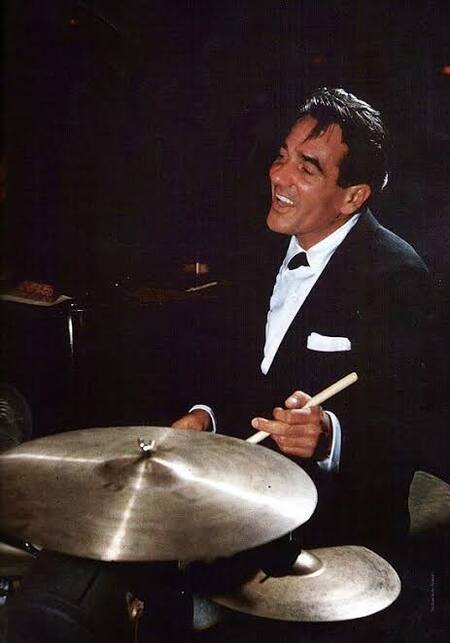
Gene Krupa becomes a key figure again here. He was not merely a musician, but a public archetype of the drummer: energetic, spectacular, recognizable.
This transformed the drummer into a figure of mass culture—not just a professional for other musicians, but a hero for listeners and aspiring players.
Following this, many teens might have wanted to play not the trumpet, the clarinet, or the piano, but specifically the drums. Parents, of course, had no idea what was coming their way. History is silent on how many family dinners were ruined by the first snare drum.
What Changed in the Game
If you synthesize the musical shifts of the 1920s–1930s into one picture, several key transformations emerge. First, the drummer gradually evolved from a noise-maker in a trap set to the rhythmic core of the ensemble. Second, the drum kit transitioned from a «factory of sounds» to a more compact, standardized, and musically focused system. Third, the hi-hat became a full-fledged timekeeping instrument, rather than just a low pedal mechanism. Fourth, the bass drum began to lose its role as the sole timekeeper, becoming a more musical, accentual, and flexible element. Fifth, the crash and china cymbals designated distinct roles for the cymbals—moving beyond simply «hitting metal» to choosing the character, color, and dramatic narrative of the accent. Sixth, cymbals began to evolve from simple crash accents to the role of a continuous rhythmic surface. Seventh, the drummer emerged as a visible figure on stage and in mass culture. And finally, eighth, the drum kit fully entered the industry: production, advertising, teaching, stars, models, catalogs, and schools. Thus, the modern image of the drummer is born—not a person generating noise effects, nor a technician in the background, but a musician who drives the momentum of the ensemble and has the potential to become the face of the entire group.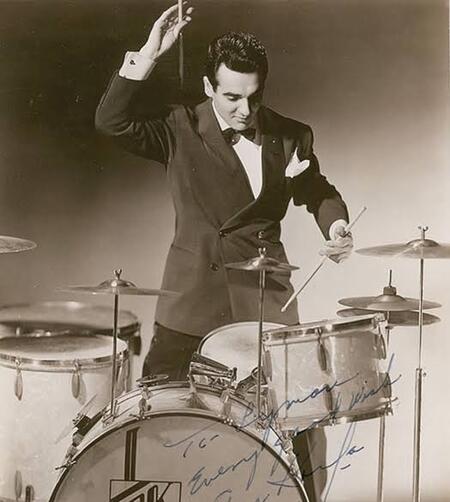
The Major Discovery of the 1930s: The Drummer Becomes Visible
The main takeaway from the 1930s can be summarized like this: the drum kit became a modern stage instrument, and the drummer became a visible figure in music.
Prior to this, the kit was slowly being put together.
Then, it learned to communicate.
In 1927–1930, it still functioned as a factory of sounds, capable of depicting a train, a fall, a gunshot, a comedic pause, and half the world using only skin, wood, and metal.
But in the 1930s, it took to the big stage.
Swing gave it scale. Big band gave it power. The hi-hat gave it a new pulse. The crash and china expanded its metallic vocabulary. Jo Jones gave it lightness. Chick Webb gave it leadership energy. Gene Krupa gave it spectacle and status.
After the 1930s, it is impossible to imagine popular music without the drummer as a central participant in the ensemble. He no longer hides in a corner of the stage. He controls time, form, dynamics, and the audience’s attention.
Yes, bebop is ahead, where the drummer will become freer and more complex. Rhythm and blues is ahead, where the groove will become harder and more visceral. Rock and roll is ahead, where the backbeat will transform into the main nerve of a new youth culture. Studios, microphones, records, television—all of it is ahead, which will make the drums one of the defining sounds of the 20th century.
But without the 1930s, none of this would have happened.
It was in this era that the kit stopped being just a useful construction and became an icon of modern music: the brilliant hi-hat, the powerful snare, the kick drum, the toms, the crash, the china, the ride, the musician seated behind them, and the feeling that everything is about to start moving.
In the 1930s, the drummer finally stepped out of the shadows.
And, as it turned out, while in the shadows, he had been holding the entire orchestra together all along.
To be continued…