
Visual research is not an addendum to your thesis—it is a space for developing your own research perspective, cultivating curiosity, and defining your professional voice.
Visual Research is Closer to Your Profession Now
Starting in 2025, the procedure for Visual Research (VR) in the CGI and Visual Effects program has changed. The CGI Department will now accept and evaluate these projects, rather than the Department of Art History, as was previously the case. This allows the research to become an integrated part of the diploma preparation, instead of being a separate academic assignment. VR can be used as a practical tool for the Final Qualifying Work (FKW): gathering references, mastering a new technology, or practicing a technique that can subsequently be applied to the final project.
Four formats to choose from
Classic Essay/Report — this is academic research in the truest sense: you study a topic, analyze sources, and build a structured argument. This format is ideal if you want to systematically collect and process references for a thesis or analyze a phenomenon that interests you within the CG industry.
Tutorial — this is a practical format where you break down a specific tool or technique and explain it in a way that allows the reader to grasp the subject matter. Here, the depth and clarity of the presentation matter more than the sheer volume of illustrations.
Research & Development (R&D) Study — this is a format characterized by a high degree of uncertainty, allowing you to gain new practical experience. You experiment with something novel—something you haven’t done before—and document the entire discovery process: including findings, mistakes, and conclusions.
Technological Study: Applying AI in Computer Graphics — this is a timely field where you can experiment with new tools for image generation and processing.
What should the thesis topic be?
A strong VIS topic combines several qualities:Utility — the research gives the reader a new perspective on the subject, helps them understand it, or allows them to apply the findings in practice.Novelty — the topic, angle, materials, or research method does not replicate existing work and does not amount to obvious conclusions.Substance — the work contains questions, logic, arguments, and conclusions, not merely a collection of references.Quality and ambition — the topic is interesting and complex enough to yield a convincing, independent, and visually strong study.
Test your topic against these four questions: What exactly do I want to find out? What new insights will this research provide? Who might benefit from its conclusions? And do I genuinely want to talk about this throughout the entire project?
You should not base your work on topics that are too general, superficial, or have been extensively covered. For instance, avoid merely listing archetypes and character types, or offering general reflections on a style, era, or profession without a specific research question. Instead, look for an angle that allows you to say something new and unexpected about the subject.
Before finalizing your topic, review the previous years' portfolios (VI). This will help you understand the required format and standard of work, discover an untapped approach, and avoid repetition. The portfolios written before you can usually be found in presentations from the old Portfolio site for the second module of the 4th Year. If you are struggling to decide, consult the Department; they can offer a list of relevant topics or help you narrow down your initial idea.
What the path to defense looks like
Topic Determination (Early September)
Meetings are held with all advisors for 4th Year CGI students to approve Visual Research topics.Topic Finalization (Early–Mid October)
During the Fall session, the intermediate status of readiness is assessed: the topic, concept, goals, objectives, connection to the Thesis/Capstone Project (if applicable), and structure/outline are defined. The topic is locked, and further changes are no longer possible.Draft Version with Placeholders (November)
The detailed research text is prepared. Missing illustrations and sections are marked with placeholders indicating the intended content. Video materials must be recorded but may not be fully edited or polished (80% readiness). The advisor provides feedback regarding necessary revisions across all aspects of the work.Submission of Text for Review (Early December)
The completed Visual Investigation (VI) text is submitted to the advisor for peer review. Before the exam, the student may continue working on formatting, creating covers, and editing video materials.Review and Grading (Mid December)
Advisors prepare reviews and assign grades; the VI defense takes place during the Winter session.The specific dates for each stage for your cohort will be communicated by the departmental advisor.
Theme Definition → Theme Approval → Preliminary Draft Preparation → Submission for Review → Peer Review and Grading
What exactly should be in the work
Regardless of the type, the Visual Study must be submitted in book format—a multi-part longread on the school’s platform. The study title and the titles of its chapters must not exceed 75 characters. The chapter covers should feel like a unified series, but should not be literal repetitions of each other.Two tags are assigned to the project:
black — «visual study.thesis»,
white — «cgi and visual effects.»
If the tutorial format is selected, the tag «cgi and visual effects textbook» is added additionally.
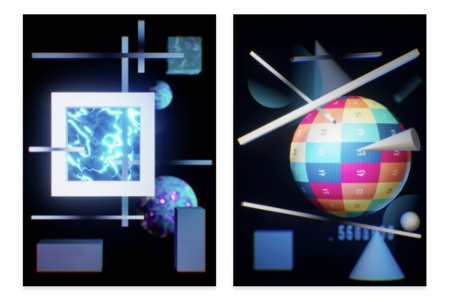
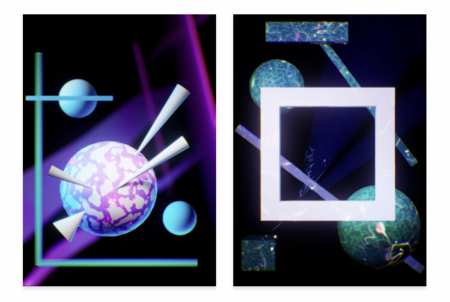
Visual study: «Characteristics of Creating Animated Shaders in UE 5.» Author Ekaterina Lukinykh. Example series of chapter covers.
The general structure of the work is the same for all research types:
Concept — no less than 2,500 characters. The concept explains why this topic was chosen, how the research relates to the Final Project (FP), and how it aids in its execution. It must also detail the methodology selected and the rationale behind it. Furthermore, it should describe the analysis process, the structure of the material, and the logic of its construction, concluding with the main findings of the research.
Research Body/Visual Sequence — no less than 150 screens. If the work includes video lessons, their total runtime must be at least 10 minutes. The illustrations/videos—the visual sequence—must consistently develop and support the research concept. Image captions must include the author, title, and year of creation. A brief comment explaining the image’s role in the research may be added if necessary. The caption length must not exceed 200 characters. Since standard captions cannot be used for videos, the explanatory text must appear on the nearest text screen following the video.
Conclusion — no less than 1,500 characters.
List of Sources — formatted according to the citation rules provided in the methodological guidelines. Sources may include books, periodicals, scholarly and professional publications, as well as reliable internet resources. General search results or links to social networks without citing a specific publication are not considered valid sources.
Any project brief includes:
Concept → Visual Sequence → Conclusion → Sources
Classic VI must be a genuine investigation. The author studies the topic, analyzes sources, and constructs their arguments. In our case, a good topic could be a collection of references for a thesis or any other subject that interests the author.Tutorial teaches something already known. The author takes a tool or technique and demonstrates how to use it. First, the task is described. Then, a brief overview is provided, explaining why this topic is important and presenting good examples. Next, there is a description of the software itself—its tools and buttons. After that, the author devises a task for the experiment, covering the most common use cases for the technique. Finally, the tutorial is executed. Conclusions are written at the end, detailing what worked well and outlining the pros and cons of the method.Research & Development (R&D) Experiment is an opportunity to try something new. The author does not know the result in advance. First, the problem is described. Then, a brief account of how this problem is typically solved in a standard pipeline is given. Next, the author determines where this technique is most often applied and sets up an experiment. The experiment is then conducted, its process is described, and the results are shown. Conclusions are written at the end, stating what succeeded and what did not, along with the advantages and disadvantages of the method.AI Technology Research is structured the same way as an experiment. The author tests a new artificial intelligence-based tool, demonstrates how it functions, and draws conclusions about its usefulness and limitations.
How to Count Screens
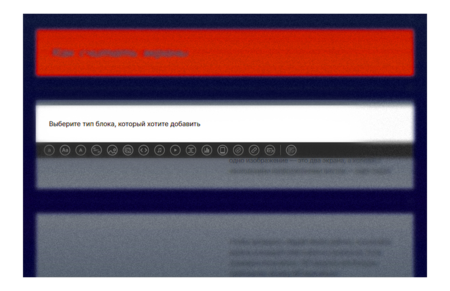
An «screen» is defined as any block created within the longread: text, image, collage, GIF, video, audio, quote, or any other available block type. One block equals one screen. For example, one text block and one image constitute two screens, whereas a collage containing multiple images counts as a single screen.
To verify the total scope of the work, count the screens in each chapter and sum them. If the total equals 150 screens or more, the visual impression (VI) volume requirement is met.
This count includes all components of the research: the introduction, the main body, the conclusion, textual and visual materials, captions, collages, videos, and any other added blocks.
Criteria for Work Evaluation
Checklist:
— The problem, question, hypothesis, or task is clearly stated, and the conclusions address it.
— The topic is explored in depth. The work has logic, structure, and appropriate scope.
— The text is free of errors and written in an informative style.
— Concepts, illustration captions, and author’s commentary are presented in Russian.
— Quotes and borrowings adhere to GOST standards. The work has been checked for plagiarism.
— Others' ideas are not presented as one’s own.
— Meaningless text generated by an AI without substantive refinement is not acceptable for review.
— Images and videos are high quality and effectively illustrate the topic.
— If an experiment is included—its objective is clear, the execution is correct, and the results are reflected in the conclusions.
Useful Resources
Detailed requirements can be found in the following documents:Visual Study — LongreadMethodological Guidelines for Preparation and DefenseGuidelines for Writing a Visual Study for 4th Year StudentsVisual Study Guidelines — IITDInstructions for Uploading a Visual Study for ReviewFormatting Bibliographic References and Footnotes according to GOST
Examples of Successful Work
Classical VFX:
Combining animated characters with live-action footage
The dynamic portrayal of the victim in the context of ritual sacrifice
Reflections of mania: visual metaphors of obsessionTutorials:
Practical comparison of lighting systems in UE5
Scripts in Autodesk Maya: practical application for animators
Recursion in Houdini: creating sprawling structures
Cinematic rendering technologies in Unreal Engine 5R&D:
Methods for creating muscular systems: comparison of approaches and application
Houdini Grooming: simulating hair in an aquatic context
Sound design for animated charactersAI Research:
Applying procedural technologies and AI in environment texture generation
Recreating commercials using generative AI