✴ Concept
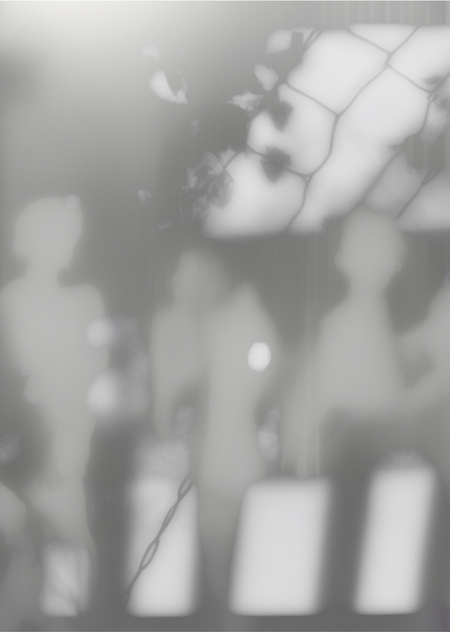
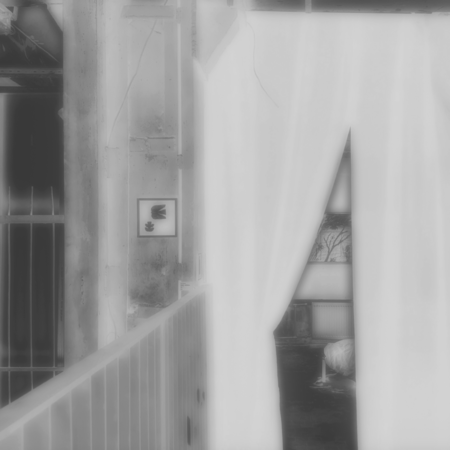
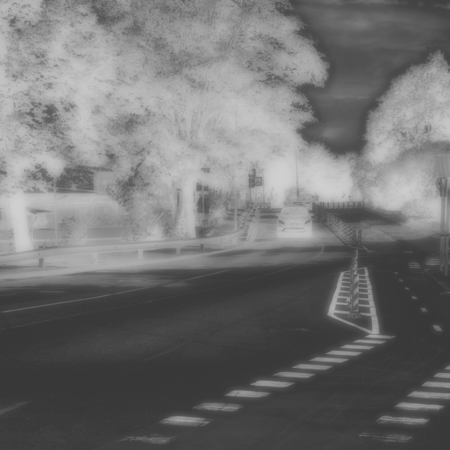
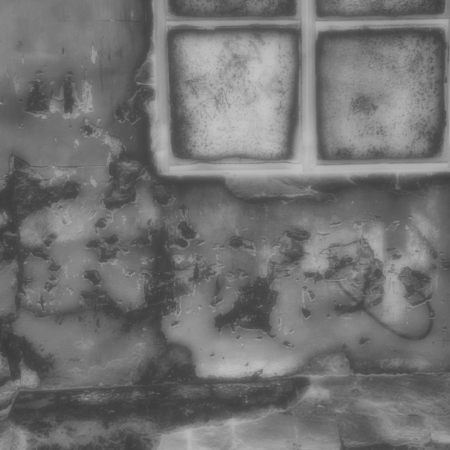
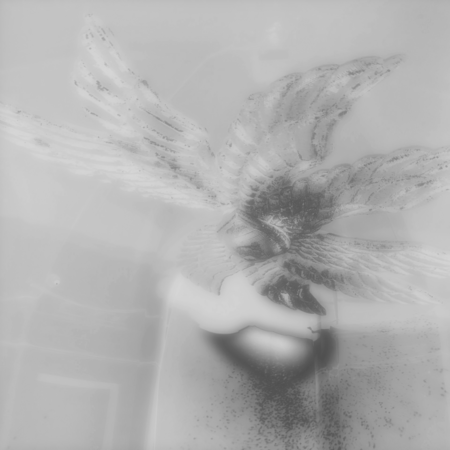
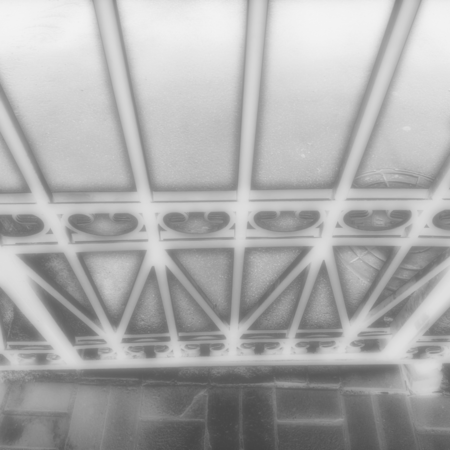
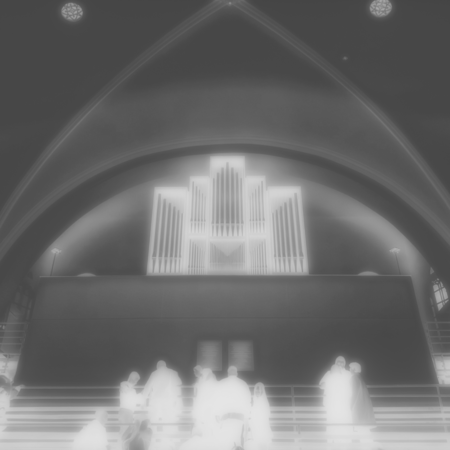
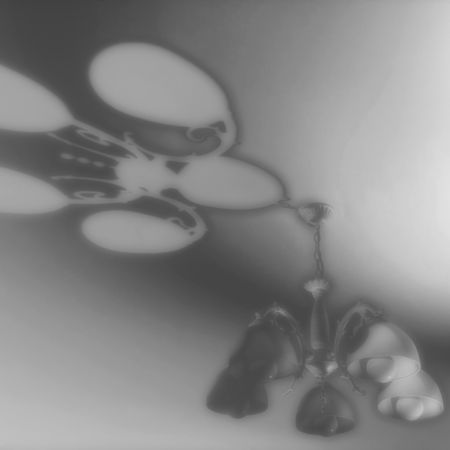
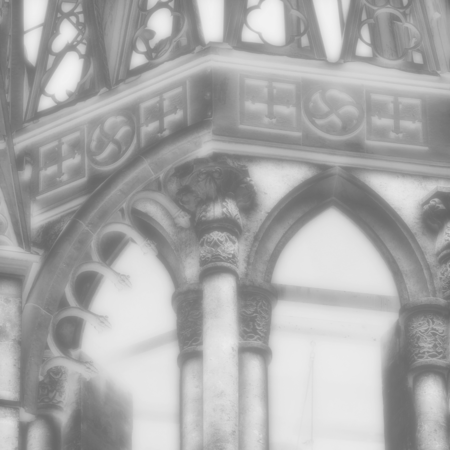
At the core of the project is a series of my photographs converted to negative, processed uniformly: blur, a monochromatic palette, softened edges, and an intense luminescence in the highlights.I was interested in exploring whether the neural network could recognize and reproduce these characteristics as a unified visual language and style.The goal was to train the model on my own photographs and create a new series of images while preserving the recognizable aesthetic of the original material.
✴ Original Images
For the training, a dataset of 50 original photographs was compiled. The selection included architectural fragments, urban spaces, objects, and natural subjects. Some details almost disappear in the bright areas, while others become more noticeable because of dark spots and textures.
✴ Model Training
— The generative model Stable Diffusion XL 1.0 was used for this project. — Model adaptation was performed using DreamBooth LoRA. This method allows for training additional model parameters on a small subset of images without retraining the entire base neural network. — Each photograph was captioned using the BLIP model, after which characteristics of the desired style were added to the descriptions. — The identifier siaxmono was used to denote the aesthetic being trained. It was integrated into the text prompts during both training and subsequent generation.
For the final series, new images were generated via text-to-image prompting.
Base Model: Stable Diffusion XL 1.0
Method: DreamBooth LoRA
Training Dataset: 50 photographs
Resolution: 768 × 768 pixels
Training Configuration: 500 steps
LoRA rank: 16
Learning rate: 0.0001
Environment: Google Colab, NVIDIA T4
✴ Resulting Image Series
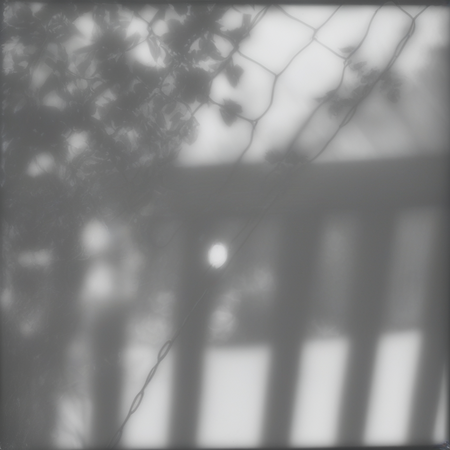
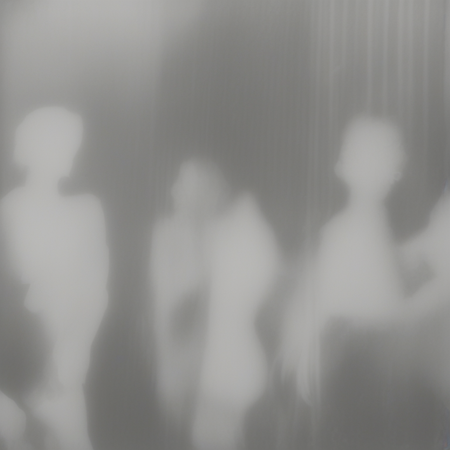
01_fence / 02_afterimages
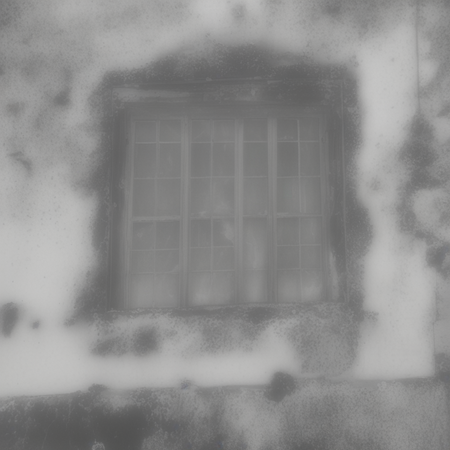
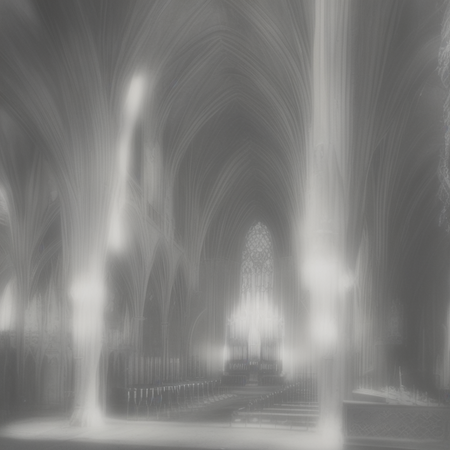
03_window / 04_cathedral
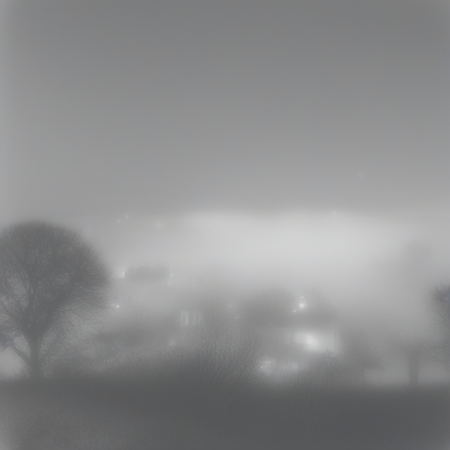
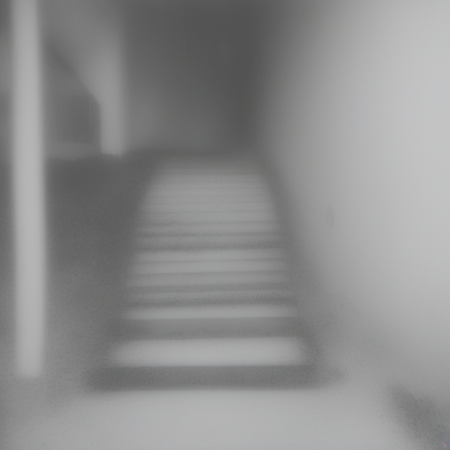
05_landscape / 05_threshold
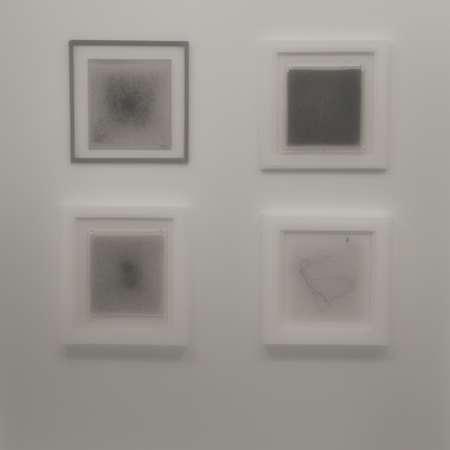
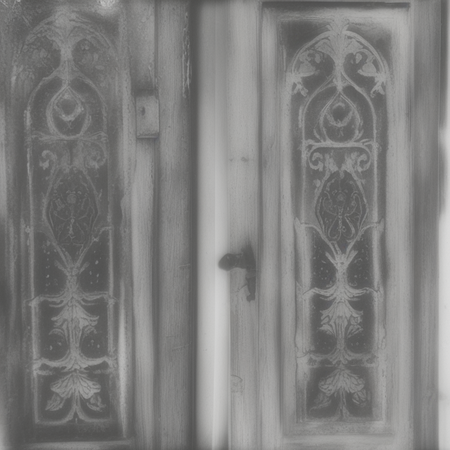
07_artworks / 08_door
✴ Results analysis
The training and generation process resulted in a series with a consistently cohesive visual aesthetic. The monochromaticity and tonality are most noticeable, and the illuminated areas stand out well, particularly in architectural scenes where the glow interacts with the geometry of the space.However, the model interprets different objects unevenly. Images featuring architecture retain more structural detail and line work, whereas human figures become almost abstract light silhouettes. Natural landscapes acquire a softer texture. Compared to the original photographs, the generations appear more smoothed out, and some fine details are reproduced less accurately.During the process, I refined the text prompts, adjusting the intensity of the luminescence, the level of detail, and the composition’s character. For certain images, I had to strengthen the description of light halos to bring the results closer to the original aesthetic.
✴ Conclusion
It was important for me to examine which characteristics of the visual language could be retained when changing the subject matter. The final series demonstrates that the model is capable of unifying different spaces and objects through shared optical and tonal qualities. Beyond this, the generations exhibit their own interpretations of light, texture, and form.
✴ Application of Generative Model
— Stable Diffusion XL 1.0 — a foundational generative model for image creation. The model was adapted to an authorial photographic style using the DreamBooth LoRA method.
Model: https://huggingface.co/stabilityai/stable-diffusion-xl-base-1.0— BLIP Image Captioning — a model for automatically generating text descriptions of source photographs. The resulting captions were used in preparing the training dataset.
Model: https://huggingface.co/Salesforce/blip-image-captioning-base— ChatGPT (OpenAI) — utilized as an auxiliary tool during software code debugging.
Service: https://chatgpt.com/Training and generation were performed in Google Colab. For generating the final series, the trained LoRA, 35 generation steps, a CFG Scale of 5.5, and a LoRA influence coefficient of 0.9 were used.