Introduction
It often feels today that in music, like in other forms of art, everything has already been done. Many people hear this, or perhaps adhere to the position, that culturally, humanity has long since invented everything possible, and everything that appears is merely a reworking of what was created before. The new album reminds one of things from the past; any song can easily be broken down into quotes and references, and nostalgia now often feels like a separate industry. There is certainly some truth to this, but that does not imply that nothing new can happen. I believe that newness is possible in music. It does not arise as a sound without predecessors (such sounds never exist anywhere), but rather as a moment when familiar details coalesce into something that has no name yet, and after that, the music no longer sounds the same.
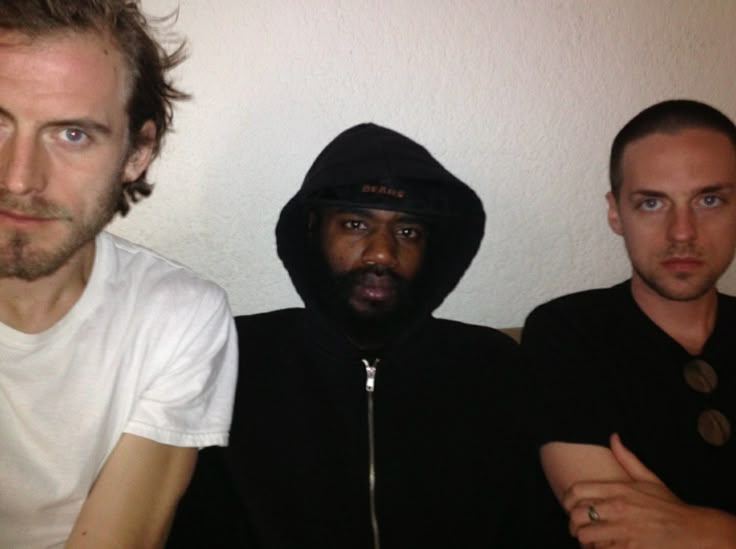
To me, one of the best examples of innovation in music is the American group Death Grips.
What I call new
If we demand a complete lack of precedent from something new, then nothing new exists in music, film, language, or design. This is because all imagery, to some degree, references something familiar and understandable. Therefore, I would like to look at this from a different angle and examine a few indicators:1. Can the result be described using one of the conventional terms (i.e., can a person immediately and clearly articulate the uniqueness of a given project or phenomenon)?
2. Can it change the very concept of how music can sound?
3. Does it change how music lives in the modern world and precisely how it reaches the listener?Using these three criteria, I want to examine the work of Death Grips to prove that creating something new is possible even in the contemporary world, where it sometimes feels like everything that could be said has already been said.
Music without a ready-made label, or on how to define music within the boundaries of a genre
Death Grips appeared in Sacramento in 2010, and looking at the members' backgrounds immediately reveals that they came from three different musical worlds.

Drummer Zach Hill comes from Hella, a duo from the same Sacramento area whose genre is generally categorized as math rock—music featuring atypical and sharp drumming rhythms and dissonant riffs, where the drums function not merely as rhythmic accompaniment but as one of the core instruments for shaping the musical image.
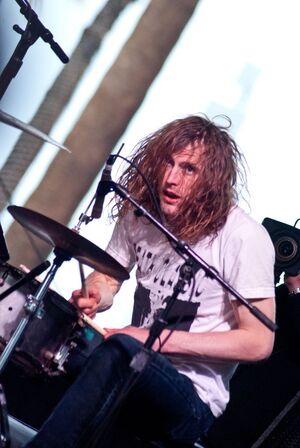
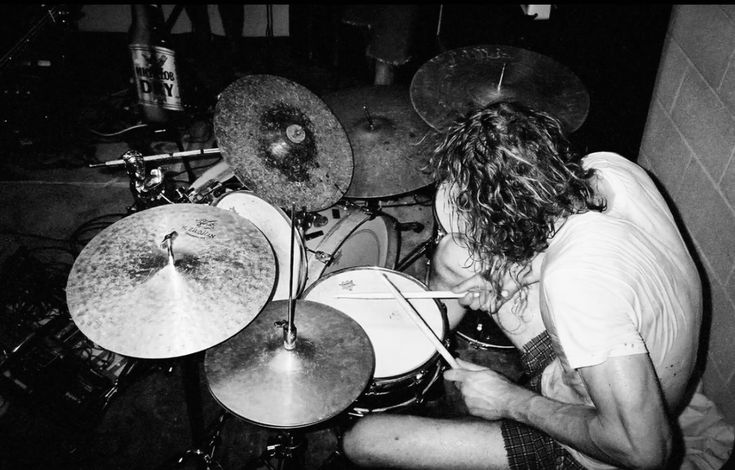
Zaka is often cited as one of the most technically proficient drummers currently working. Much of the recognizable sound and distinct character of Death Grips began to emerge due to his virtuosic drumming.
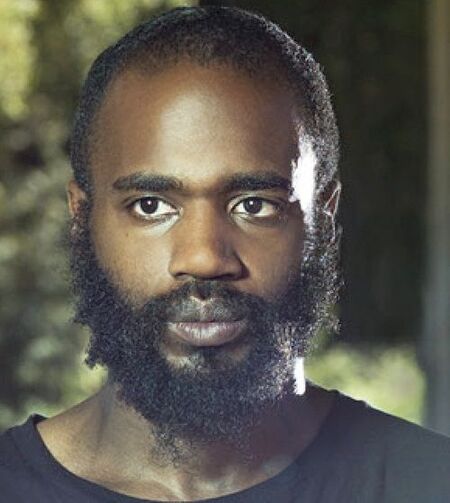
- Stephan Barnett is undoubtedly the most striking member of the group. He adopted the moniker MC Ride in 2010 when he formed a group with his neighbor, drummer Zach Hill. Before joining Death Grips, he made music in the experimental hip-hop genre as part of the trio Fyre. Stephan brought a distinctively aggressive style to the group—a harsh, weighty vocal delivery that immediately sets the tone for all the music.


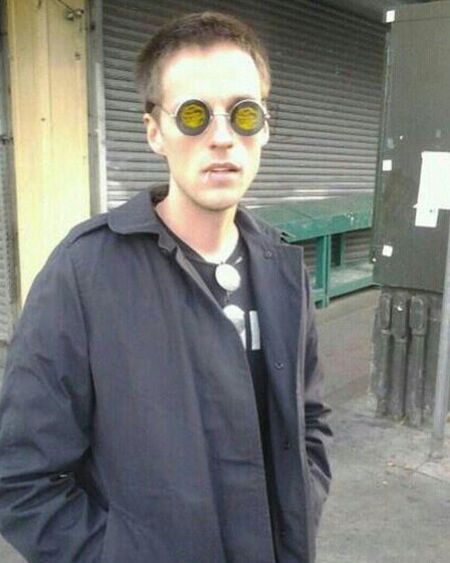
- The third, and perhaps most enigmatic, member of the Andy Morin group is responsible for keys, samples, and sound. Little is known about his background, but he also worked as a producer on a joint project with Zach Hill and naturally became a member of Death Grips.
Ultimately, if Zach Hill is the engine and the voice of the group for the press, and MC Ride is its intimidating face, Andy Morin is the invisible hacker coordinating this chaos from the shadows.
Thus, the group brought together hip-hop and painting, mathematical rock and underground production. Each person approached the music creation process with their own individual habits and style, and no one tried to conform to the others—rather, the group became a harmonious blend of each participant’s personal qualities and abilities.
Based on what I described above, Death Grips' artistry is a peculiar collage of many genres. But when you actually listen, the collage doesn’t cohere. When three such worlds collide, they don’t coalesce into one clear or comprehensible sum. Ride doesn’t rap; he screams, and the scream functions like a percussive instrument. Hill plays live drums as if it were a programmed drum track rather than human performance. The electronics, meanwhile, sound visceral—like a blow. The boundary between human and machine dissolves from both sides: the voice and drums sound mechanical, while the electronics sound like a living body.
Personally, I would also want to compare the group’s aesthetic to the cyberpunk genre in culture—especially the atmosphere and motifs in the game «Cyberpunk 2077”—because the line between the organic and the machine is often so thin in their music that it is almost imperceptible.
It is telling that critics resorted to compound labels—"experimental hip hop,» «industrial hip hop,» «noise rap.» When a phenomenon must be described by several existing labels, and none of them fit completely, it indicates that there is no ready-made category for it.
2. Sound: Acceleration and Decay
The album The Money Store sounds like an overloaded system: digital glitches, syncopated, studio-processed drums, distorted percussion, thick synthesizers, and MC Ride’s voice sounds like a sharp, panicked scream that resembles a plea for help. The sound sources are very unexpected to me: in the track System Blower, as journalist Crack writes, the exhales of Williams sisters tennis players and the noise of the Vancouver SkyTrain subway were used. On The Powers That B, Björk’s vocals are chopped, and the foreign voice here becomes raw material—not just vocals over an instrumental, but literally the sonic foundation. The music doesn’t copy the past; it accelerates and breaks it until it becomes something entirely new. In my opinion, this is no longer just old and familiar sound in a new wrapper, but an entirely new experience born out of the past.
3. Mode of Existence: How Creation Reaches the Audience
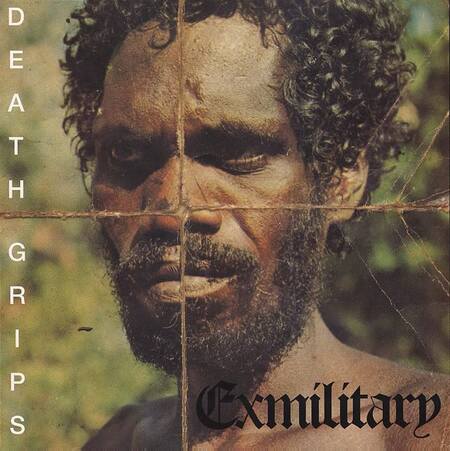
The third characteristic is less about sound and content and more about how the music reaches the listener. Exmilitary was released completely free online and led the band to a contract with Epic Records. In my opinion, this project by the group is one of the most unusual phenomena in the history of Death Grips. The thing is, Exmilitary is considered a full-fledged debut album by many fans—the one from which the group’s recognizable style begins—but in reality, it is just a mixtape containing a huge variety of different samples. The irony lies in the fact that this album/mixtape has still not been uploaded to the group’s official pages on streaming platforms precisely because the samples have not yet been cleared—meaning they do not comply with the regulations for distributing copyrighted material—even though more than 15 years have passed since its release.

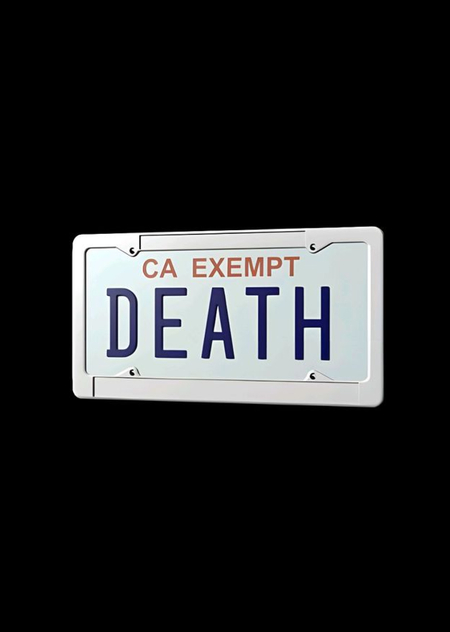
Later, when the label announced the release of the new album No Love Deep Web, the band, viewing this as a gross act of disrespect toward their work, released it themselves to the public without discussing the decision with the label. They also posted on Twitter (now X) stating that the label’s management would hear the album for the first time alongside all the listeners. Epic, of course, would not tolerate such musician behavior and terminated the contract. Government Plates (2013) also followed this tradition and was released entirely for free online.
In July 2014, the group announced its breakup, but they returned in 2015 and released the double album The Powers That B in March.
It is important to note that contract issues, leaks, cancellations, and silence cease to be problems and become integral parts of the project itself. Put simply, everything operates under a new paradigm: labels, the press, and tours are no longer as crucial for distributing material, because the Internet here is not merely a delivery channel—it is the fundamental condition without which such a project would not exist.
Conclusion