
Daily dresser
Концепция разработки медиа
The Daily Dresser (Dd) project focuses on developing the concept of a media stylist capable of curating a look for the user in one minute, taking into account the weather, event, budget, and mood. The project emphasizes competitor analysis, target audience identification, and distribution channels.
CONCEPT
We live in an environment that increasingly decides for us. Marketplaces suggest what to buy; algorithms dictate what to view; social feeds define what is considered beautiful and fashionable. All of this injects stress and tension into daily life. Often, people simply stand in front of a closet, unable to decide what to wear to look trendy while still feeling comfortable.
But what happens when the choice of clothing ceases to be a torment and becomes part of the moment?
Weather, an appointment, mood, budget—none of these are reasons for an hour of scrolling, but rather inputs for a ready-made solution. The look is assembled not from trends, but from context: who you are today, where you are going, what is outside the window.
OBJECTIVE
The primary goal of this project is to relieve the user of the daily stress of «what to wear» and provide a ready-made solution in just one minute—based on weather, event, budget, and mood.Daily Dresser aims to make clothing selection more practical, streamlined, and swift, ensuring people are always dressed appropriately for the weather and aligned with their own sense of elegance.It is important that the everyday act of choosing an outfit transforms from a chore into a swift ritual.
THEME
SEGMENT: Fashion, style, and lifestyle.
NARROW FOCUS: Quickly assembling an outfit for a specific situation—not about «trends» or «shopping, ” but about providing a ready-made solution for „what to wear right now.“
CONTENT FORMAT: Outfit cards, collages, curated selections, and mood quizzes.
Currently, the market is saturated with media about „seasonal trends“ and „shopping guides, ” but there is a scarcity of content that solves a specific problem: „what to wear tomorrow for work when it’s 5 degrees and raining.“ Using artificial intelligence, the user’s choices and preferred looks will be remembered—and these data will be used to generate personalized recommendations in the future.
VISUAL LANGUAGE: Photography, illustration, typography, and other design elements.
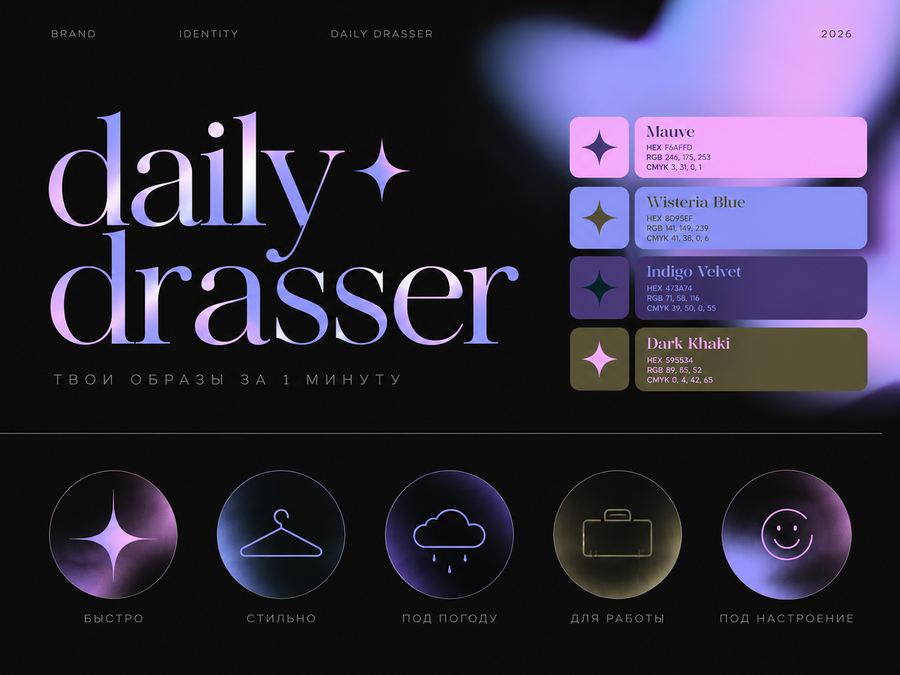
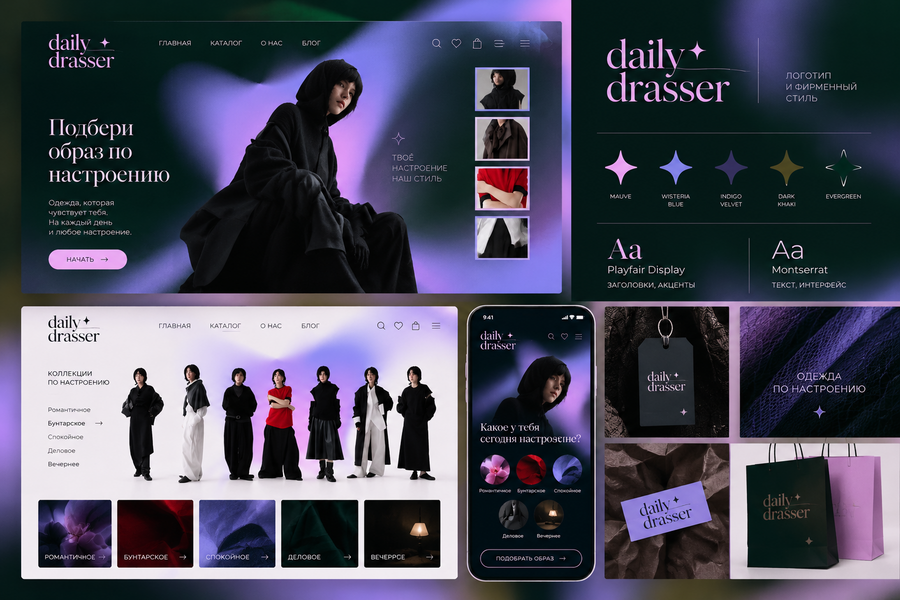
VISUALS: A cohesive identity—outfit cards, color palettes, collages, and minimalistic typography. This isn’t just photos of items on a white background; it’s a recognizable, „editorial“ presentation style.
COMPETITOR ANALYSIS
ANALYSIS CRITERIA
Similar Topics:
What exactly the competitor publishes.Positioning:
How the competitor presents itself and how closely this aligns with our own presentation.Target Audience:
Who the content is aimed at: age, occupation, and level of interest in fashion.Platforms and Channels:
Where the competitor publishes: Telegram, website, application, Pinterest. On which platforms is it stronger—and is there room for Daily dresser there.
Formats and Tools:
What the competitor uses: cards, collections, videos, bots, quizzes, polls. What engagement tools they prefer.Visual Language:
How the content is styled: product photography, collages, illustrations, typography. Does it have a cohesive identity, and how closely does it align with Daily Dresser?Tone of Positioning:
How the competitor speaks to the audience: expert, friendly, dry, ironic, instructive. How close is their tone to the Daily Dresser audience.
DIRECT COMPETITORS
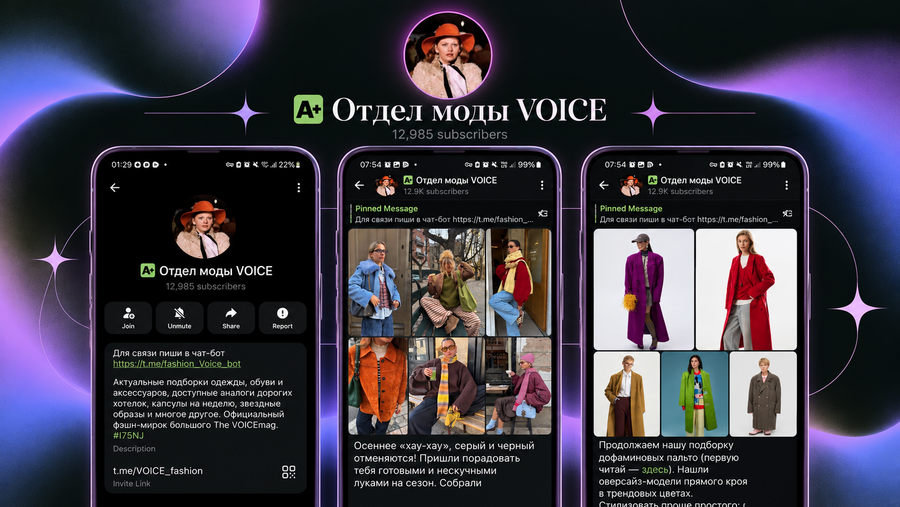
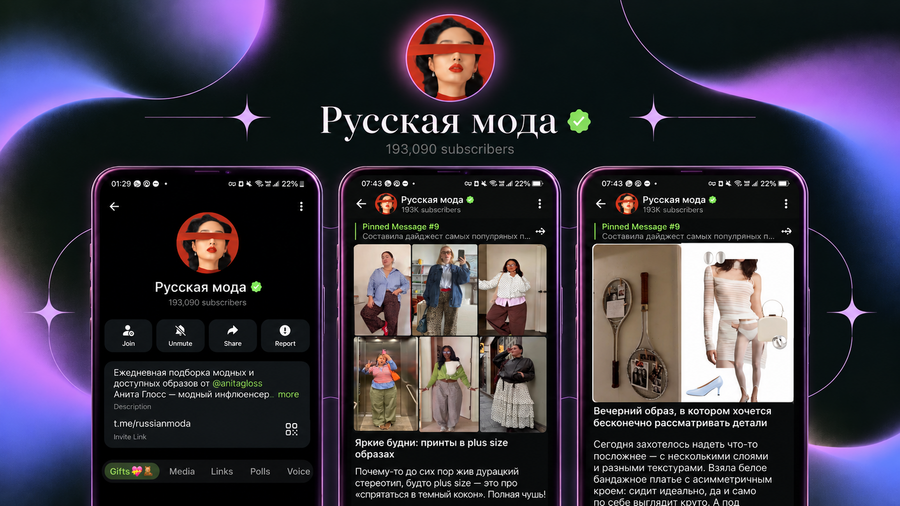
The most direct competitors to Daily.dresser in terms of thematic overlap are primarily Telegram channels focused on fashion. For example, «Russian Fashion» and «Voice Fashion Department.» Both of these channels feature ready-made outfits and clothing selections from Wildberries and other marketplaces. Their audience consists of women who want to look stylish without making large expenditures or engaging in exhausting searches. In addition to outfit cards, the channels publish weekly capsules, selections based on mood and season, and links to specific products. Visually, the channels maintain a simple aesthetic: photographs of items, minimal graphics, with the focus placed on the outfit itself, accompanied by text and links below the posts. The tone of communication is friendly and practical.
Why are these channels direct competitors? Same topic (ready-made outfits), same audience (women who need help deciding «what to wear»), same format (outfit cards).
The difference: «Russian Fashion» and «Voice Fashion Department» provide a selection for the season or week, while Daily dresser offers a ready-made solution tailored to the weather, event, and budget for a specific day.
Another direct competitor is the Telegram channel titled «What to Wear?». This channel maintains a media style and tone that is similar to the previous ones. For similar reasons, it is a direct competitor, but unlike the previous channels, it additionally provides style formulas and cheat sheets on how to make an outfit fashionable.
The next direct competitor is «Viewset.» Its media is presented as a website featuring curated looks, new arrivals, and clothing capsule wardrobes sourced from Wildberries. It functions as a customizable tool for users to create their own outfits.
The site predominantly showcases women’s looks, suggesting a significant female audience. «Viewset» aims to relieve users of the tedious searching through endless marketplace catalogs. The narrative tone is neutral.Why is it a direct competitor?
Similar format (cards featuring finished looks and product SKUs), the same audience, and a comparable platform.Differences: «Viewset» does not factor in weather or events as input data, it uses only one marketplace for clothing selection, and it disregards individual user preferences. In contrast, Daily Dresser incorporates all of the elements listed above.
INDIRECT COMPETITORS
The first example of an indirect competitor is the «Clothing Forecast» Telegram bot. The bot determines the user’s city, displays weather and temperature data for the day, and lists suitable clothing options. Like Daily Dresser, it accomplishes this task in under a minute, but it does so less effectively.Why an indirect competitor?
It addresses a similar need but solves only part of Daily Dresser’s functions and uses a different delivery format: a Telegram bot.Distinction: The bot relies solely on weather data and does not curate clothing on an individual basis, whereas Dd possesses this function and considers not only the weather but also the user’s mood, budget, and preferences.
Another indirect competitor is «Climate-wear"—a website for selecting weather-appropriate clothing. It can assemble an outfit from the user’s existing items. Additionally, there is a bot that sends a weather forecast and a corresponding outfit every morning.Why is it an indirect competitor?
It competes for the same time and attention as the user in the morning, when people are thinking about what to wear. However, it only partially addresses the Daily Dresser challenge. It selects clothing for the user based solely on the weather and practicality, whereas Daily Dresser incorporates the weather and comfort as only a small part of its full scope of capabilities.Distinctions: it lacks style capsule collections, mood tests, budget adjustments, and an AI assistant.
The «Odenu.» website is also an indirect competitor. It helps mothers choose appropriate clothing for their children based on the weather and season. The site also provides guides and ready-made outfit suggestions for children at various outside temperatures.
Why is it an indirect competitor? «Odenu.» solves a similar problem—clothing selection—but for a very limited audience: young mothers whose children are under 14 years old.
Differences: «Odenu.» does not feature visual examples of garments or lookbook cards, whereas Daily Dresser includes all of this.
POTENTIAL COMPETITORS
Lamoda — an example of a potential competitor: a marketplace with 16 million users and a ready-made AI ecosystem («Style Guide») that selects outfits based on occasion and mood.Why a potential competitor?
It could capture the «what to wear tomorrow» niche, but its goal is to sell products, not to solve the problem without a purchase or with minimal expenditure.Differences: Lamoda positions itself as a marketplace where the primary function is placing goods for purchase, whereas Daily Dresser focuses on assisting users rather than selling specific apparel.