Concept
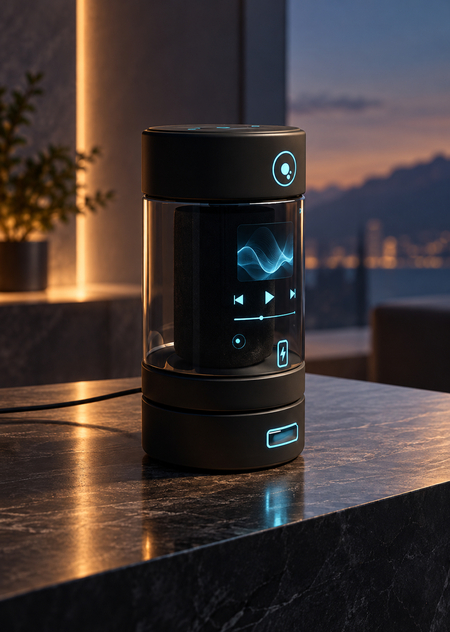
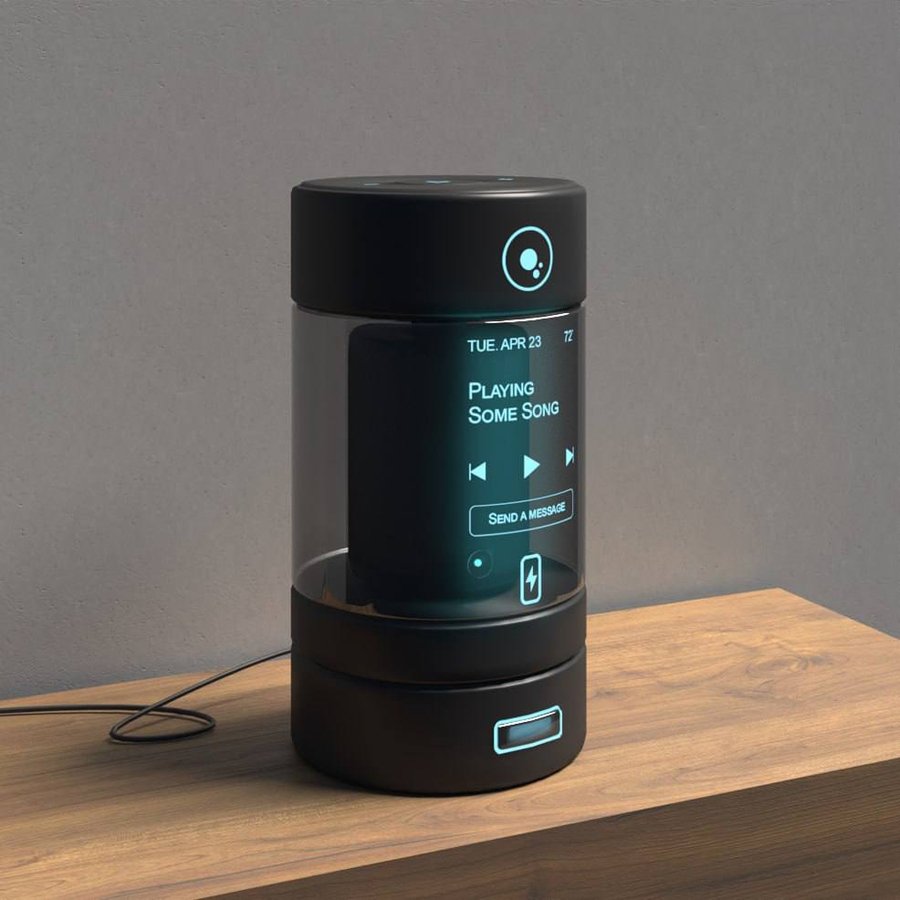
About the Project.CrystalBeat is a concept for a smart acoustic system that integrates modern technology, expressive object design, and interactive features.
The project redefines the conventional home speaker. Instead of merely being a functional device for music playback, CrystalBeat proposes a multifunctional object that becomes an integral part of the interior, interacts with the user, and shapes a unique atmosphere within the space.The core concept is the fusion of sound, light, and digital technology within a single device. The speaker not only reproduces music but also allows users to manage daily tasks, access information, and interact with their environment.
Special attention has been paid to the device’s aesthetic. CrystalBeat is conceived as a standalone piece of design—one that harmoniously complements contemporary interiors while simultaneously serving as a visual focal point.
The core idea behind CrystalBeat is to forge an emotional connection between the person, music, and the surrounding environment. Music has the power to shift mood, influence spatial perception, and accompany a person throughout the day. CrystalBeat develops this concept by transforming the acoustic system into an interactive object that merges sonic and visual experiences.
Most home audio systems prioritize sound reproduction quality and ease of control. In these devices, the visual design often remains secondary, and advanced intelligent functions do not always become part of a cohesive user experience. CrystalBeat proposes an alternative approach: viewing the speaker not merely as technical equipment, but as an element of the designed environment. The project explores how an acoustic device can simultaneously fulfill practical, aesthetic, and emotional functions.
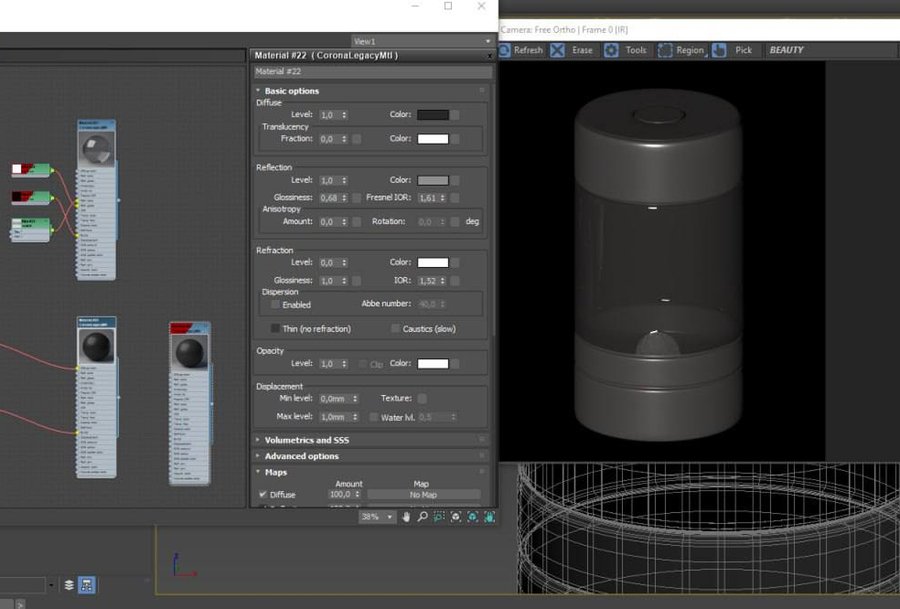
Column Development
Key Features
1. Interactive Display
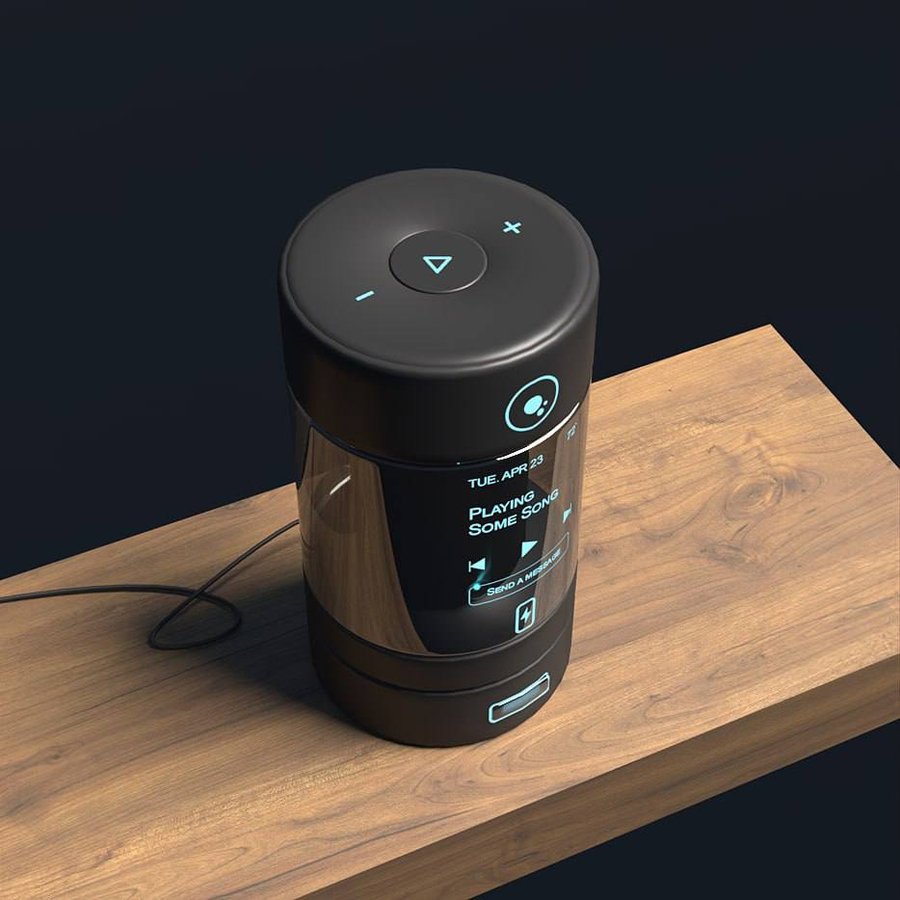
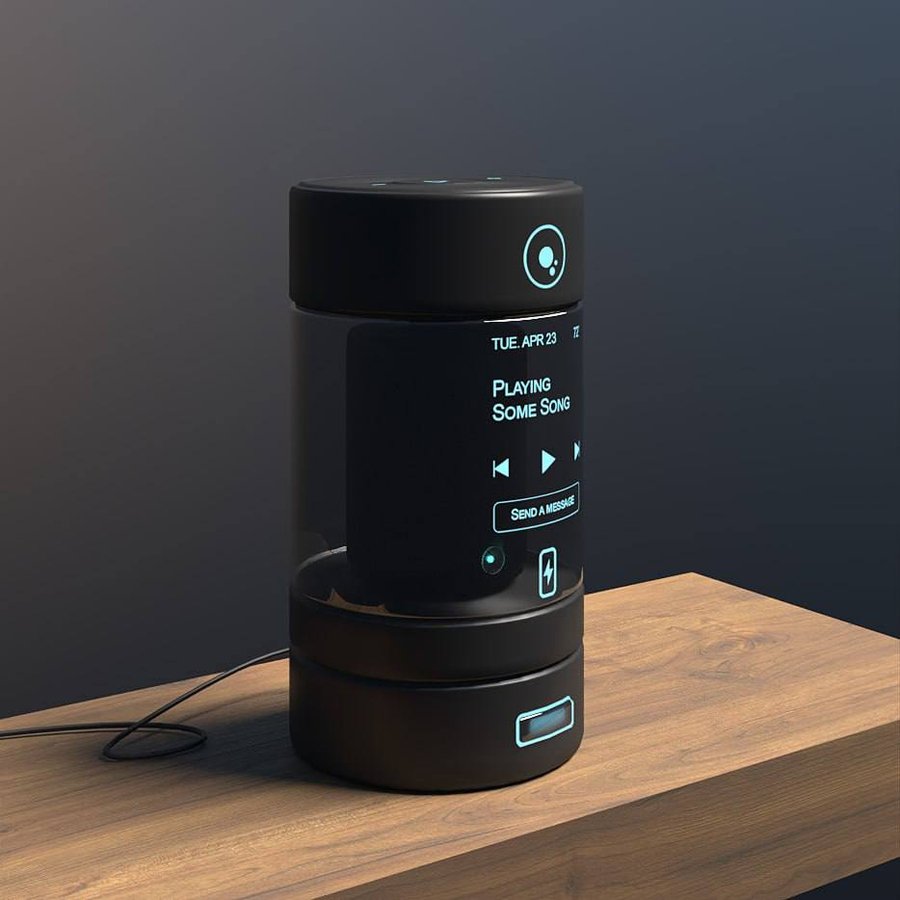
The integrated screen is designed to show time, weather, text notifications, information about the currently playing music, and control elements.
2. Voice Assistant
The device supports voice interaction, including controlling playback, answering queries, and interacting with compatible smart home devices.
3. Touch Control
Touch panels allow users to adjust volume, skip tracks, and activate functions using taps and gestures.
4. Adaptive Sound
The concept involves automatically adjusting sound parameters based on the room’s acoustic properties.
5. Built-in Projector
The projector expands the speaker’s capabilities, allowing users to display music visualizations, images, and video content onto a wall. This feature transforms the device into an atmosphere-creation tool.
6. Smart Alarm Clock
It includes a personalized wake-up feature utilizing musical scenarios. In the expanded concept, integration with compatible devices for sleep analysis is possible.
All features listed are considered design possibilities of the concept and do not imply that the electronics have been fully developed or technically implemented.
Structure
Core Structural Elements
1. External Casing
The casing establishes the recognizable silhouette of CrystalBeat, protects the internal components, and serves as the foundation for mounting functional modules.
The casing is designed to be divided into several structural parts that can be connected using concealed fasteners.
The exterior surfaces must maintain the device’s expressive geometry and allow access to key components when maintenance is required.
2. Internal Support Frame
An internal frame is incorporated within the casing, designed to secure speakers, electronic boards, wiring, and additional modules.
The frame ensures the structural stability of the design and allows components to be mounted independently of the casing’s decorative elements.
3. Acoustic System
The acoustic module is the primary functional component of CrystalBeat.
The design includes the placement of dynamic drivers inside the casing, along with an organization of sound output zones.
To mitigate unwanted vibrations, the use of sealing and damping elements between the speakers and the casing is planned.
The precise number and placement of speakers, as well as the acoustic layout, will be determined in the subsequent design phase.
4. Interactive Display
The screen is integrated into the external surface of the speaker and is intended to display information and interface elements.
The construction must account for the display mounting slot, a protective surface, and the electronic module attachment.
Column Development
- Sensory Elements
The control sensory zones are situated in areas accessible to the user within the housing.
They are designed to regulate volume, switch music tracks, and manage the device’s primary functions.
6. Electronic Module
The housing is designed to accommodate a control board responsible for processing commands and facilitating interaction between functional components.
Additionally, the concept incorporates wireless communication modules, microphones for voice control, and the necessary connection elements.
7. Projection Module
An integrated projector is considered an auxiliary functional unit.
For it, dedicated mounting space, an optical aperture, heat dissipation, and a projection path that is not obstructed by housing elements must be provided.
The feasibility of integrating the projector depends on the available internal space and the specifications of the selected module.
Explosion Diagram
- Power System The design incorporates a power receptacle, cable connections, and electronic protection elements. At the current stage, the primary option under consideration is external adapter power, which allows for omitting a large battery inside the enclosure.
- Base The lower part of the design ensures the speaker’s stability on a horizontal surface. The base is designed to include anti-slip feet, as well as provisions for hidden mounting points to access internal components. Assembly Principle Pre-assembly sequence for CrystalBeat:
- Preparing the main housing parts and the internal frame.
- Installing the acoustic components.
- Securing the control electronics.
- Installing the display and sensor modules.
- Placing the projection module, provided its compatibility with the design is confirmed.
- Connecting the internal wiring.
- Joining the housing sections.
- Installing the base and external decorative elements.
Dimensions
CrystalBeat is a compact, cylindrical smart tabletop speaker. The estimated dimensions were chosen to accommodate the speaker, display, projector, and electronic components. Main Dimensions: Speaker height — 280 mm Body diameter — 140 mm Base diameter — 150 mm Weight — approximately 1.5–2 kg Dimensions of Main Components: Component | Dimensions Upper Lid | Ø 140 × 55 mm Transparent Casing | Ø 140 × 155 mm Lower Base | Ø 150 × 70 mm Interactive Display | 80 × 120 mm Speaker | Ø 75 × 40 mm Projection Module | 65 × 45 × 35 mm Control Board | 80 × 60 × 15 mm Power Supply Unit (Internal Module) | 70 × 45 × 30 mm All dimensions are preliminary and based on the visual proportions of the existing 3D model. They may be adjusted when preparing technical drawings. The selected dimensions allow CrystalBeat to be used on a desk, nightstand, or shelf, maintaining a compact and stable design.
Technical Drawings
Materials
Top cover: ABS plastic, matte black
Transparent body: Polycarbonate (PC), transparent tinted
Bottom base: ABS plastic, matte black
Internal frame: Aluminum
Interactive display: Protective glass and touchscreen panel
Touch buttons: ABS plastic with backlighting
Mounting: Steel screws and plastic fasteners
Anti-slip feet: Silicone
Color scheme: Matte black casing with a transparent center and neon-blue backlighting.
The selected materials ensure structural stability, protection of internal components, and align with the high-tech style of CrystalBeat.
These materials are proposed for the design concept and have not undergone physical testing.
Renders