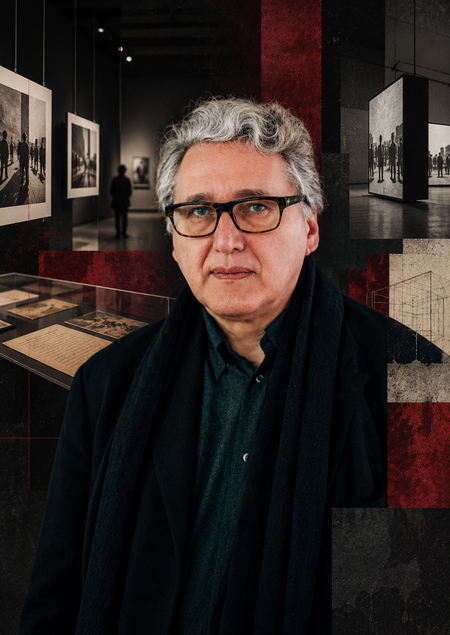
Boris Groys is interesting not merely as a curator who selects artists and hangs artworks, but as a curator-theorist who transforms an exhibition into a philosophical argument.
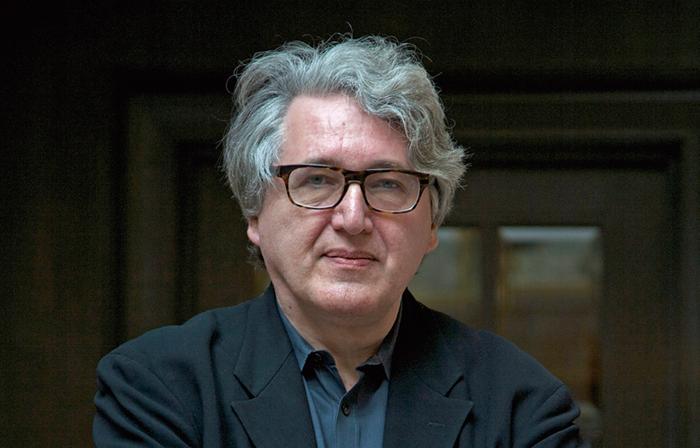
Boris Groys
I chose Boris Groys’s work for analysis because I was fascinated by his position at the intersection of philosophy, art criticism, and curatorial practice. He doesn’t simply organize exhibitions; he contemplates how art becomes art, who determines its value, and what role museums, institutions, and curators themselves play in that process. For him, the presentation of a work is never neutral: the selection, the placement within a specific context, the juxtaposition with other works, the exhibition architecture, and the very status of the museum all alter the meaning of the art.
Boris Groys was born in East Berlin in 1947. From 1965 to 1971, he studied philosophy and mathematics at Leningrad University. After university, he worked as a research fellow at various Leningrad research institutes, and from 1976 to 1981, at the Institute of Structural and Applied Linguistics in Moscow. He emigrated from the USSR to West Germany in 1981. In 1992, he earned a Ph.D. in Philosophy from the University of Münster.
Groys entered the art world not through a classical museum education, but through philosophy, logic, linguistics, and direct engagement with the late Soviet unofficial culture.
After emigrating, Boris Groys gradually integrated into the Western European and American academic systems. In 1988, he was a visiting professor at the University of Pennsylvania; he worked in Münster from 1989 to 1994; and in 1991, he was a visiting professor at the University of Southern California. Since 1994, he has taught art history, philosophy, and media theory at the Karlsruhe University of Arts and Design.
All of his professional experience shapes the duality of his position: Groys is simultaneously a participant in the late Soviet intellectual and artistic environment and a person who later describes it from an institutional position in the West.
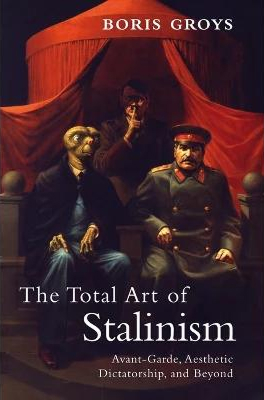
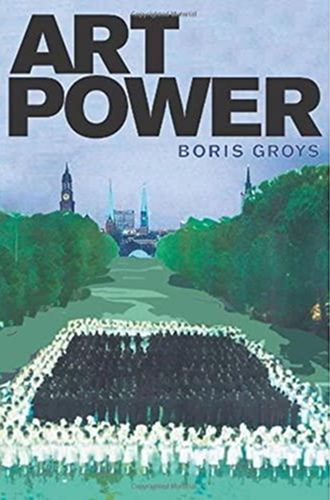
Boris Groys. «Total Art of Stalinism.» Cover of the 2011 English reedition; original book published in 1988 / Boris Groys. «The Power of Art,» 2008.
Boris Groys’s major theoretical works include «Total Art of Stalinism» (1988), «On the New: An Experiment in Cultural Economy» (1992), «The Power of Art» (2008), and «History Becomes Form: Moscow Conceptualism» (2010). His essay «The Curator as Iconoclast, ” which directly addresses the role of the curator, is also particularly noteworthy.All these studies share the central idea that art does not exist outside of its historical and institutional context. The museum, the exhibition, and the curator do not merely present works to the viewer—they actively shape their meaning. This concept is the foundation of Groys’s curatorial approach.For the analysis of Boris Groys’s curatorial practice, I selected three projects: „Dream Factory Communism“ (2003–2004, Schirn Kunsthalle, Frankfurt am Main), „Total Enlightenment. Moscow Conceptual Art 1960–1990“ (2008–2009, Schirn Kunsthalle, Frankfurt am Main, and Fundación Juan March, Madrid), and „Empty Zones. Andrei Monastyrski and Collective Actions“ (2011, Russian Pavilion at the 54th Venice Biennale, Venice).This selection allows for an examination of three facets of his curatorial approach: engaging with Soviet history and ideology, reinterpreting Moscow Conceptualism, and establishing exhibition space as an independent artistic statement.
The Factory of Communist Dreams. The Visual Culture of the Stalinist Era.
Design of the entrance area for the exhibition «Dream Factory Communism»
The exhibition was held at the Schirn Kunsthalle in Frankfurt from September 24, 2003, to January 4, 2004. The curators were Boris Groys and Zelfira Tregulova; the exhibition architecture was created by the Kuehn Malvezzi studio.Groys and Tregulova suggested examining Stalinist visual culture not simply as a collection of pictorial propaganda, nor only through the familiar analogy with Nazi German art, but as a centralized mass culture that manufactured the image of a desired future. In the official Schirn text, Stalinist culture was compared to the advertising mass culture of the United States: in both cases, visual strategies were intended to appeal to a mass audience, but capitalist advertising offered numerous commodities, whereas the Soviet ideological system, according to the curators' metaphor, «sold» one grand product—communism.The phrasing «dream factory» is crucial here: Socialist Realism is interpreted not as a mirror reflecting actual Soviet life, but as a factory producing images of a world that was yet to come. In the official exhibition concept, Soviet culture of the Stalin era is described simultaneously as a façade and a tool of power, and as a visualization of the collective dream of a «new world» and a «new man.»And here lies the direct connection to the essay book «Total Art of Stalinism» (1988): the exhibition develops Groys’s thesis that the Stalinist project, despite the radical shift in artistic language and the political obliteration of avant-garde autonomy, preserves one of the avant-garde’s utopian ambitions—to transform life entirely.
Alexander Gerasimov. «Portrait of I. V. Stalin, ” 1939. Fragment of the painting.
Alexander Deyneka. «Future Pilots, ” 1938
The exhibition featured painting, posters, sculpture, and film. Among the artists represented were Kazimir Malevich, Alexander Deineka, Alexander Gerasimov, Eric Bulatov, Komar and Melamid, and Ilya Kabakov.Groys’s central curatorial approach was to juxtapose official Soviet art with later works that reinterpreted and critiqued it. For example, Alexander Gerasimov’s portrait of Stalin was placed alongside Komar and Melamid’s work, «I Saw Stalin Once When I Was a Child.» This allowed the viewer to see how artists’ attitudes toward Soviet ideology evolved.Groys did not separate official from unofficial art; rather, he presented them as parts of a single history. Moreover, the exhibition was not merely an overview of artworks—it was the curator’s own commentary on Soviet culture.«Dream Factory Communism» is an example of an exhibition where the curator does not just present art but also offers their own interpretation of history.
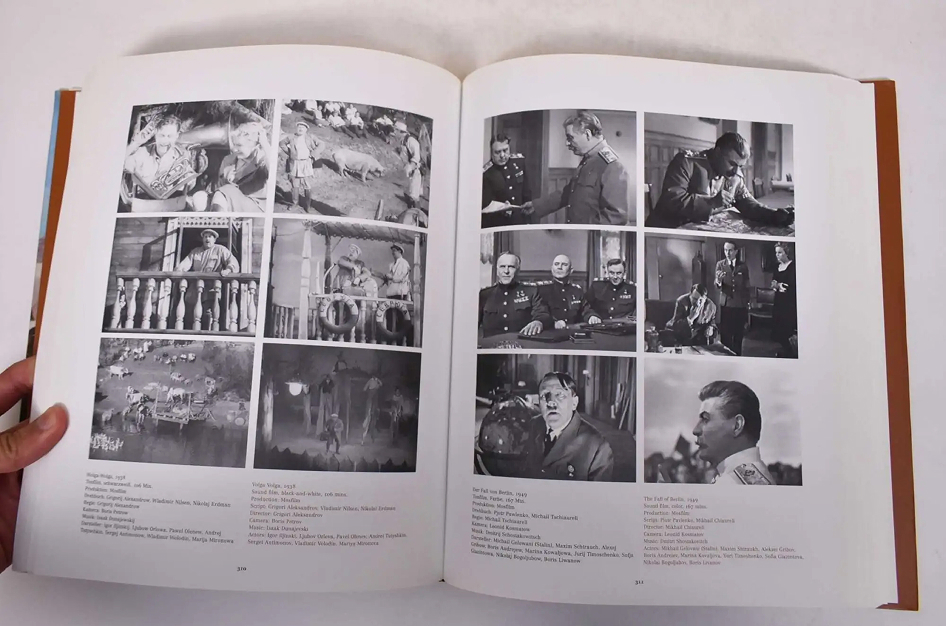
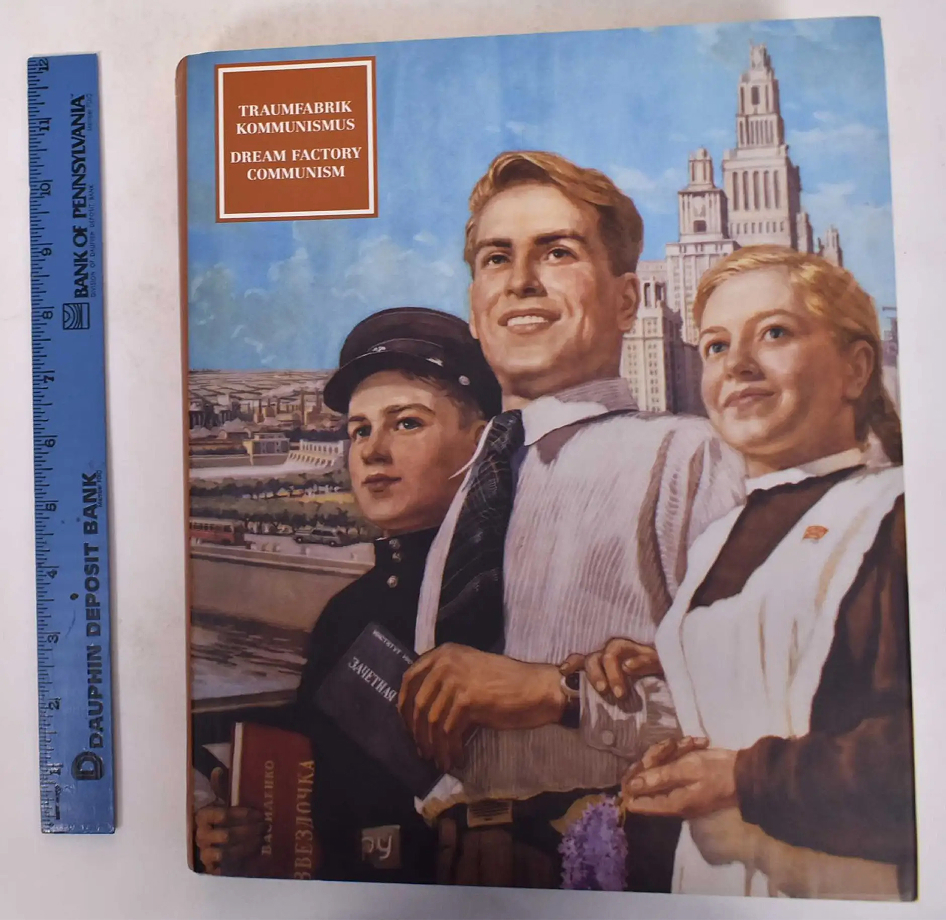
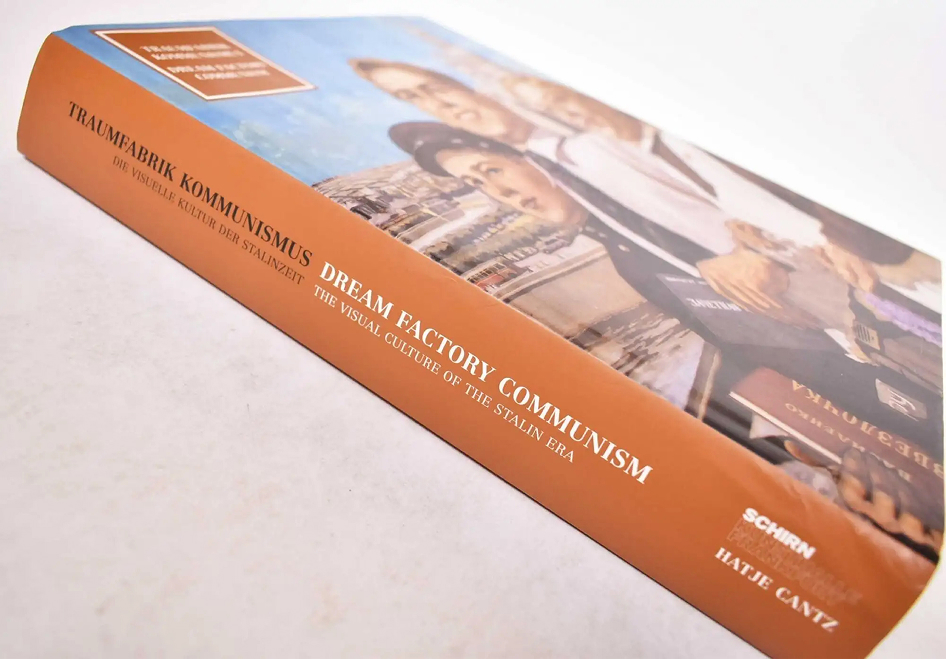
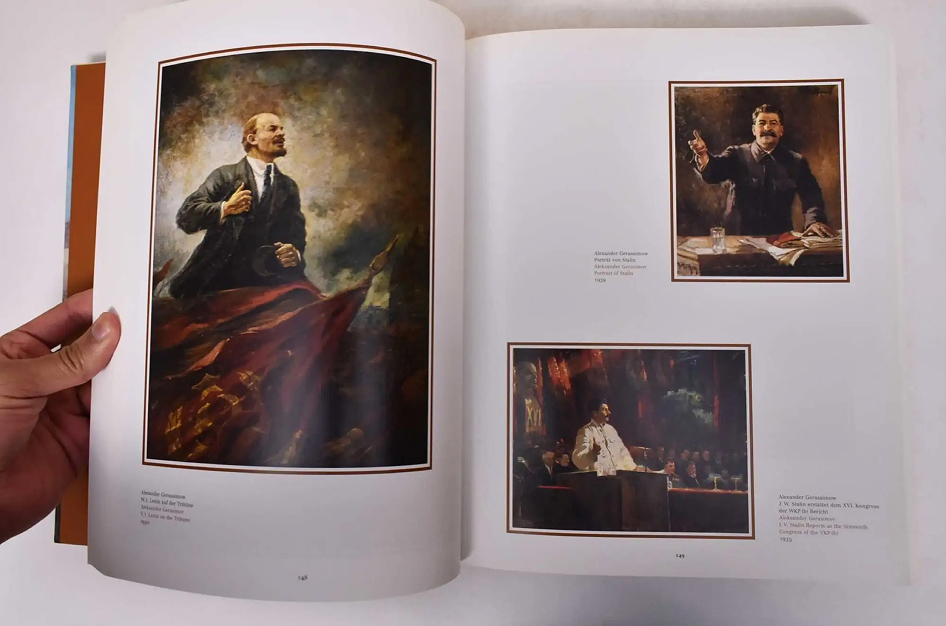
Exhibition catalog: «Dream Factory Communism. The Visual Culture of the Stalin Era,» Schirn Kunsthalle Frankfurt, September 24, 2003–January 4, 2004.
Total Enlightenment. Moscow Conceptual Art 1960–1990
The exhibition was held at Schirn Kunsthalle Frankfurt from June 21 to September 14, 2008, and subsequently at Fundación Juan March in Madrid from October 10, 2008, to January 11, 2009. Boris Groys served as the curator. The architecture was re-created by the Kuehn Malvezzi office. The Frankfurt iteration featured approximately 130 works by about 30 artists. The official Schirn press release emphasized that the goal was to present Moscow Conceptualism to a Western audience not as a collection of established individual names, but as a coherent historical art movement.
The exhibition «Total Enlightenment: Moscow Conceptual Art 1960–1990» focused on Moscow Conceptualism and its relationship with Soviet ideology.
Groys wanted to demonstrate that, unlike their Western counterparts, Soviet artists primarily worked with the language of propaganda, slogans, and official imagery. They incorporated these elements into their work, often with irony, to expose the contradictions of Soviet reality.
Among the participating artists were Eric Bulatov, Ilya Kabakov, Komar and Melamid, Dmitry Prigor, Andrey Monastyrsky, and the group «Collective Actions.»
Groys presented Moscow Conceptualism not merely as a collection of artworks, but as an entire artistic movement that developed outside the official Soviet museums and exhibitions. By introducing this art into a major Western museum, he helped solidify its place in art history. Thus, the curator was not only recounting an existing movement but actively participating in shaping its historical significance.
The strength of the project lies in Groys’s profound knowledge of the artistic milieu—a milieu of which he himself was a part. This allowed him to illuminate the vital connections between the artists and their ideas. However, his perspective cannot be considered entirely neutral: Groys is simultaneously a participant in this history and the person offering the audience its interpretation. Therefore, the exhibition reflects not only the history of Moscow Conceptualism but also the curator’s personal viewpoint on it.
Negative Space. Andrey Monasteryansky and «Collective Actions»
Empty Zones. Andrei Monastyrski and Collective Actions — the project for Russia’s pavilion at the 54th Venice Biennale in 2011. Boris Groys was the curator, and Stella Kesayeva served as commissioner. Andrei Monastyrski and «Collective Actions» were involved in the project; the official list of participants included Andrei Monastyrski, Nikolay Panitkov, Igor Makarevich, Elena Yelagina, Sabina Hansgen, and Sergei Romashko. Kuehn Malvezzi again designed the architecture. The pavilion opened on June 2, 2011.This example is not coincidental following the exhibition «Total Enlightenment: Moscow Conceptual Art 1960–1990.» In 2008, «Collective Actions» was part of a large historical overview of Moscow Conceptualism, and three years later, Groys placed one of the most important practices of that scene at the center of a dedicated national pavilion.
«Collective Actions» is a group founded by Andrei Monastyrski in 1976. Its actions often took place not in art institutions, but in fields, forests, and other spaces outside of Moscow. A significant part of the work was not only the event itself but also the invitation, the viewer’s trip, the anticipation, the description, the interpretation, the photographs, and the subsequent documentation. By the time of the Venice Biennale, the official project text mentioned 125 actions and ten volumes of the «Trips Out of Town» series, with the next volume currently in production.Groys particularly emphasized the change in the viewer’s position: in his interpretation, this was one of the first types of art in the Russian context where the viewer is pulled out of a familiar passive role and becomes a participant in the artistic event.
Graves intended to demonstrate that art could exist not only as paintings or sculptures but also as an event, an action, or the viewer’s personal experience. For the group, crucial elements of art were empty space, anticipation, and even the absence of a visible event.The Russian pavilion featured photographs, videos, texts, and archival materials related to the group’s actions, including the «Trips Out of Town» project.
Graves offered the viewer not a traditional exhibition of works, but a space in which they had to independently search for and understand the meaning of what was happening.It is especially significant that art, which emerged outside official Soviet institutions—based on actions and experiences rather than discrete objects—was presented in the official Russian Pavilion at the Venice Biennale.However, this raises a contradiction: can the living artistic experience be conveyed through photographs, texts, and archives? Furthermore, by presenting unofficial art in a national pavilion, Graves inevitably alters its original meaning.
Characteristics of the Mentoring Method
For Boris Groys, the importance lies not just in the artwork itself, but also in how it arrives at the museum, who decides to display it, and how the viewers perceive it. He believes the value of a piece depends not only on its artistic qualities but also on its context. The same work can be perceived differently depending on where it is presented and what it is shown alongside.
Therefore, in his exhibitions, Groys places great emphasis on history, archives, and the connections between works. He is particularly interested in art that previously existed outside of official museums. He strives to make this art accessible to the general public and illustrate its significance to art history.
Groys’s main strength is his ability to structure an exhibition around an interesting and comprehensible idea. He doesn’t simply gather artworks; he helps the viewer see the relationships between them. However, this also presents a certain shortcoming: sometimes the artists' works become overly subordinated to his own theory. For instance, in «Dream Factory Communism,» the idea he proposed could not equally account for all periods of Soviet art. There is another contradiction. In «Total Enlightenment,» Groys helps Moscow Conceptualism take its place in world art history, yet in doing so, he decides which artists and which ideas to present as most important. And in «Empty Zones,» art that originally existed outside of official exhibitions ends up in the Russian Pavilion at the Venice Biennale. Because of this, it gains recognition, but its original context is simultaneously altered.
Thus, Groys views the exhibition not merely as a display of art, but as a method of storytelling and offering the viewer a new understanding of that narrative. This is clearly evident in the example of the three projects examined. In my opinion, this is precisely the unique quality of Groys as a curator: he compels us to consider not only what we see in the exhibition, but also why art is presented to us in this particular manner.