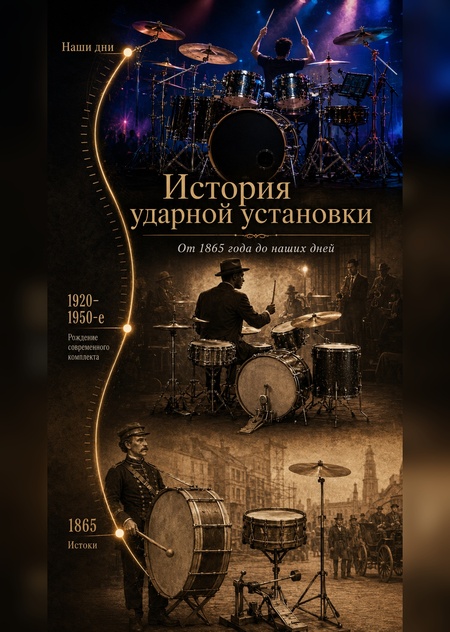
Back Beat: The History of the Drum Kit from 1865 to Today
Friends, I am starting a series of articles on the history of the drum kit—from the first steps to the modern drum set of 1865, and up to today. Why the drum kit? Because it is one of the youngest yet most influential instruments in contemporary music. The violin, piano, and trumpet—all of these existed long before what we today call a drum set. The drum kit, in the form we recognize it today, evolved gradually: from marching drums, theatrical orchestras, jazz, dance music, blues, rock and roll, studio recording, and technical innovations that fundamentally changed the logic of playing.
Initially, they were separate instruments: the bass drum, snare drum, cymbals, toms, and percussion. Then, the idea emerged to bring all these elements around a single musician. It seems like a simple concept. Yet, as is often the case with humanity, it took decades—new stages, new genres, new technologies, and a desire to save space in the orchestra pit—for people to conceive of the obvious. Thus, the modern drummer gradually came into being—a person who plays with their feet one part, their hands another, maintains the structure with their head, listens to everyone with their ears, and tries not to show their face when the guitarist speeds up again.
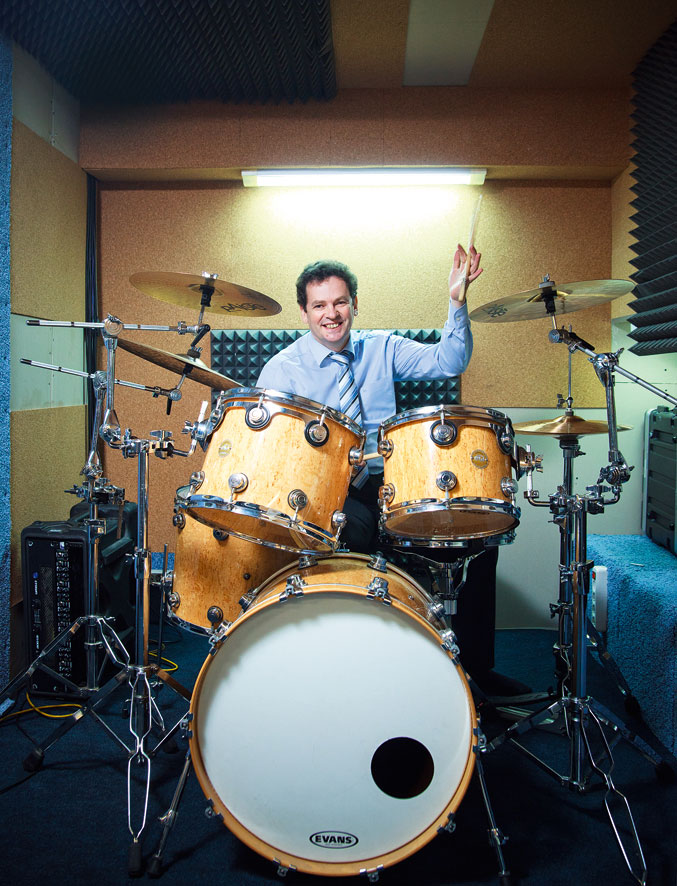
In this series, I want to trace the evolution of the drum kit—from early attempts to combine several percussive instruments to the advent of the bass drum pedal, hi-hat, the standard setup, new playing techniques, studio sound, electronic drums, and hybrid configurations. But this will be more than just a history of an instrument; it will be the history of music through rhythm. Because the drum kit didn’t change in a vacuum. It was shaped by jazz clubs, dance halls, rock and roll, soul, funk, disco, punk, hip-hop, metal, pop culture, and studio technology. Every new genre demanded a different sound, a different groove, a different energy, and a different approach from the drummer. We will specifically discuss the backbeat—the accent on the second and fourth beats—which became one of the fundamental cornerstones of rock and roll, soul, funk, pop music, and all contemporary rhythmic culture. Sometimes a musical revolution doesn’t begin with a manifesto, but with the snare drum delivering a timely «boom.» For me, this topic is personal. I am not just an outside observer of drum history. I am a performing drummer with professional training, and previously, I was the publisher of the Back Beat magazine for drummers and the Russian edition of the American magazine Modern Drummer. Through these projects, I spent many years immersed in the drumming world: among musicians, instructors, instruments, interviews, rehearsals, concerts, and conversations about sound, technique, groove, and the eternal dilemma of choosing between «playing it simpler» and «showing everyone I’ve been practicing.» This series is also connected to my «From Presley to Rap» concept, where I examine the history of popular music through eras, styles, technologies, human behavior, and cultural shifts. I invite you to read these articles as a journey through the history of an instrument that doesn’t just accompany music—it drives it forward. The drum kit is the heartbeat of a band, the engine of the stage, and one of the most precise ways to hear how time has changed. As it was written in great novels of the past: To be continued…