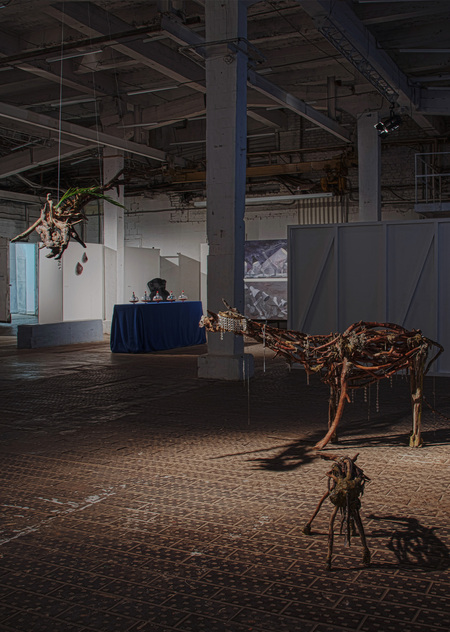
The «Liberacy of An absurdity» exhibition examines contemporary understanding of melancholy and reconciliation with absurdity. The works of artists that have been created over the past three years reflect the uncertainty of the present moment and the search for ways to overcome it. Artists seek freedom by re-establishing their fears, returning to the child’s perception of the world, through philosophical and mythological thinking. Sometimes they find support for others in reconciling themselves with constant instability and the ever — approaching end of the world.
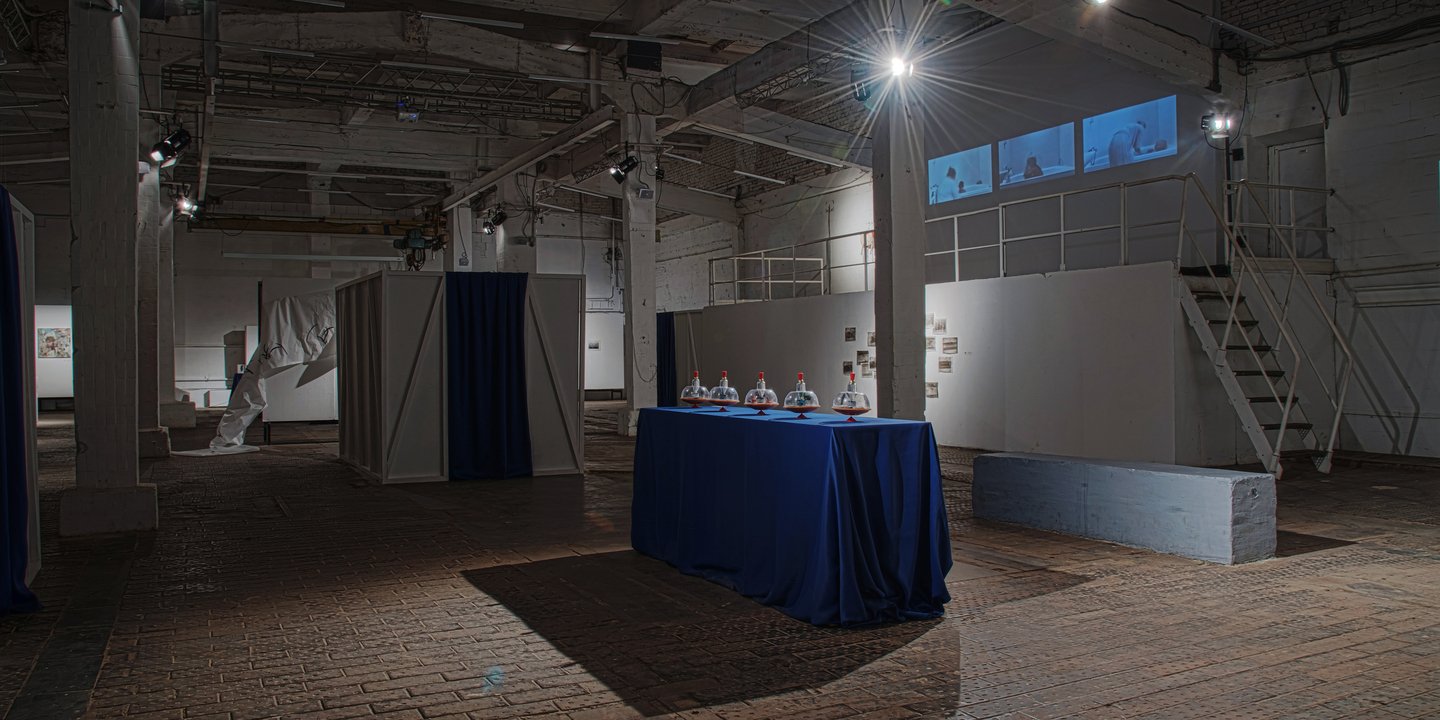
For a long time, melancholy was the condition of creators, geniuses, starving and ascetic. They may have found true freedom from worldly life or simply followed the standards of their time. Melanholia never had clear boundaries, becoming a social construct and reflecting the moods of the era. «Melancholy’s specialty: it finds forms that are time-sustaining and appropriate to it» (C. Johannison, 2011).
It’s easy to get stuck in a timeless melancholy, where there’s room for nothing, despair, fear, and guilt. The encounter with existential traumatic and destructive, and absurd reality cannot be rationally explained. We try to preserve the usual reality, but each new social or personal shock has to be reconciled over and over again. Destroying the usual course of events brings fear, anxiety, melancholy, uncertainty in the face of the present and the future. «We can’t guarantee that we won’t be afraid, we’ll just try to keep our senses» (A. Kamu, 1944). All we have to do is get through the first emotions and move on over the unknown.
The work is conditionally divided into six categories: childhood, story, Philosophy, alert, apocalypse, protection, which are identified by abstract symbols. All the works of the exhibition are divided by them. But it is only a curatorial reading that does not limit the abundance of interpretations of work and the search for reconciliation with absurdity in every work.
One way to overcome the fear of irrational is to return to childhood experience. We accept weird things that aren’t in the world, «But he’s starting to get a little crazy, growing up in endless strange buildings with no support» (Ksenia Efimov Island). A child’s vision facilitates the perception of reality, thereby helping to cope with the horror of reality, or shows the fragility of the world (Erica Savina «Yula»; Pavel Zudanov «Mischka»; Valeria Mitrashkina «As long as the flame burns»). But sometimes fear extends from childhood to childhood, and the trauma does not heal (Veronica Solovyov’s «little death»).
The Efimov Xenia The island (2023) Popptich, painting at the beginning and center of the composition, became a real home on Spartakov Square. He’s part of the everyday world, a piece of every day running around the window of a landscape bus. But then this world starts to go a little crazy, growing up in endless strange buildings without a support. He seems to be recognized by individual elements, but in general he’s not familiar and he’s scary. It produces fish, grows trees, and the world is finally turned into a dream. The picture of a world that is no longer reliable and predictable.
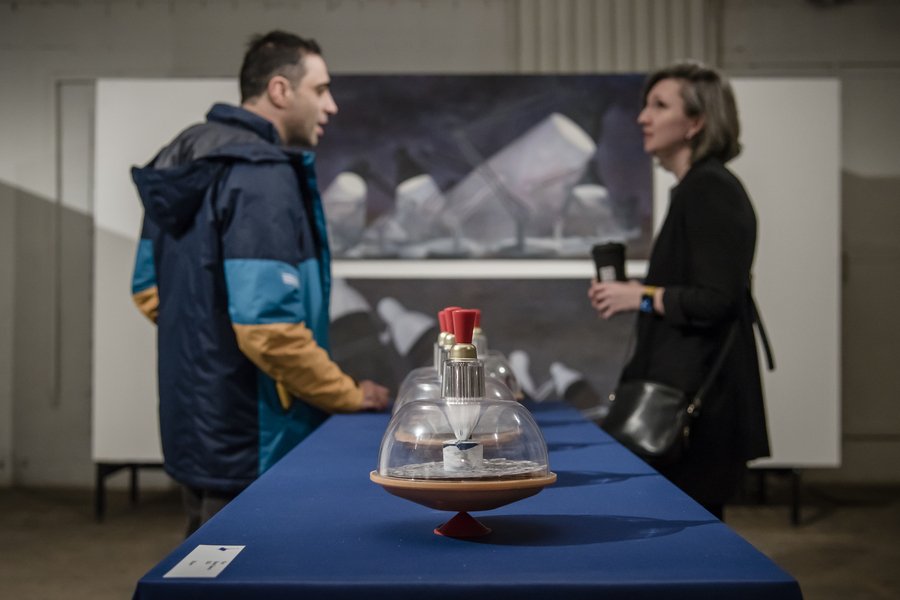
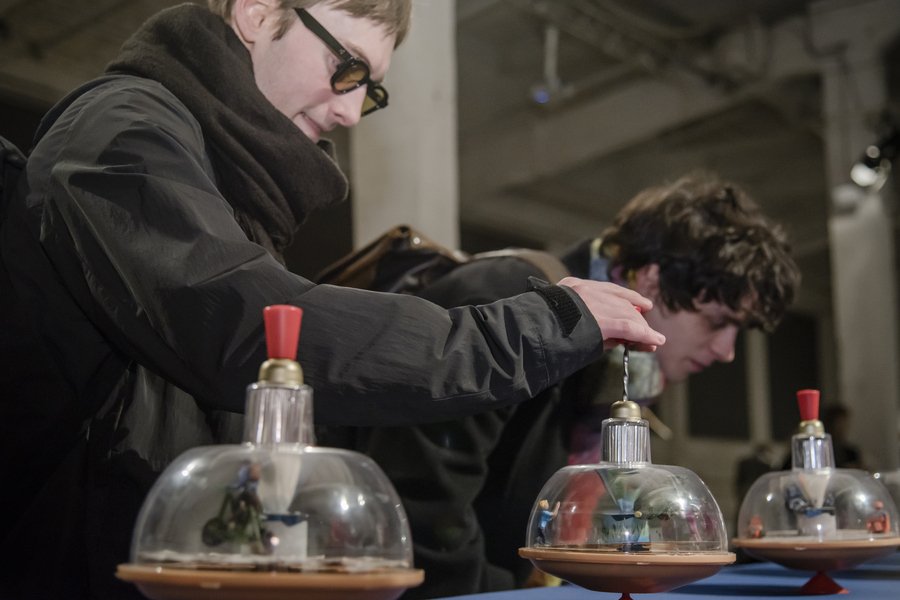
Eric Savina Yula (2024) Subjects are a series of toys with paranoia impregnated with a built-in conscience. Yula is a vicious circle from which it is impossible to break. Trying to cope with impotence by putting it under a plastic dome. The viewer is the God in whose hands to begin, continue, or stop. But do we have the power to give up the game?
The Nightingale Veronica The «little death» cycle of Videoart, 5 unit trauma often results in derealization, which causes reality to cease to work. Many years later, memories of the pain and feelings of insecurity may remain as a child. In this series, I want to talk about the childhood trauma and the sensations that trigger the triggers. Children’s toys destroy themselves for fear, anxiety and panic.
A fairy tale is always a reflection of reality. Fantastic is closely intertwined with rational, creating a metaphor. Trauma and grief (Valeria Mitszyshkina «As the flame burns») are the path to rebirth (Eugenia Boluch «Phoenix»). Overcoming social pressure (Vica Ros and Lime Sparrows «Casket») and the ghosts of today’s world (Sasha Nesturkin» LøApocalypse Des Animaux; Katerina Teplica» Voice of God) are every element of reality, but finds key symbols showing her problems.
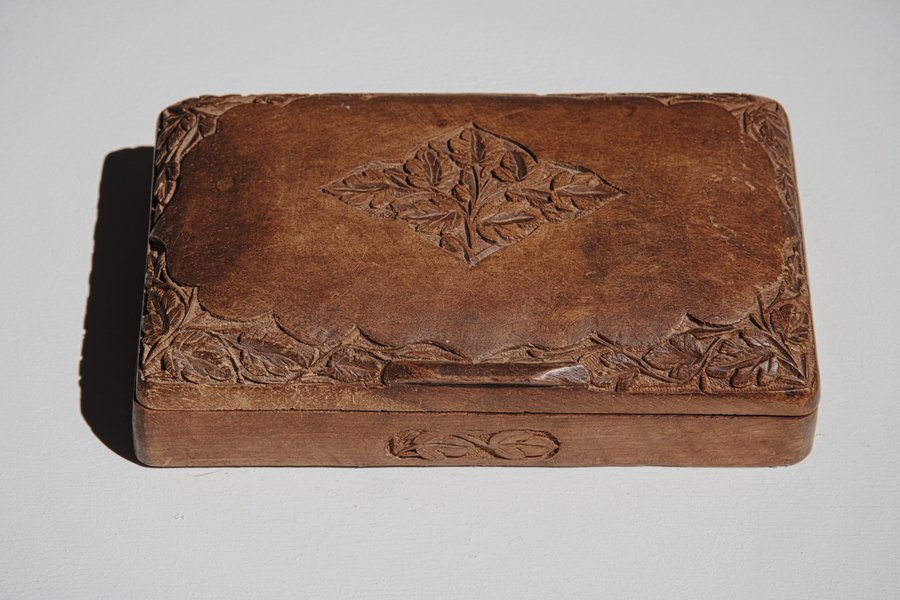
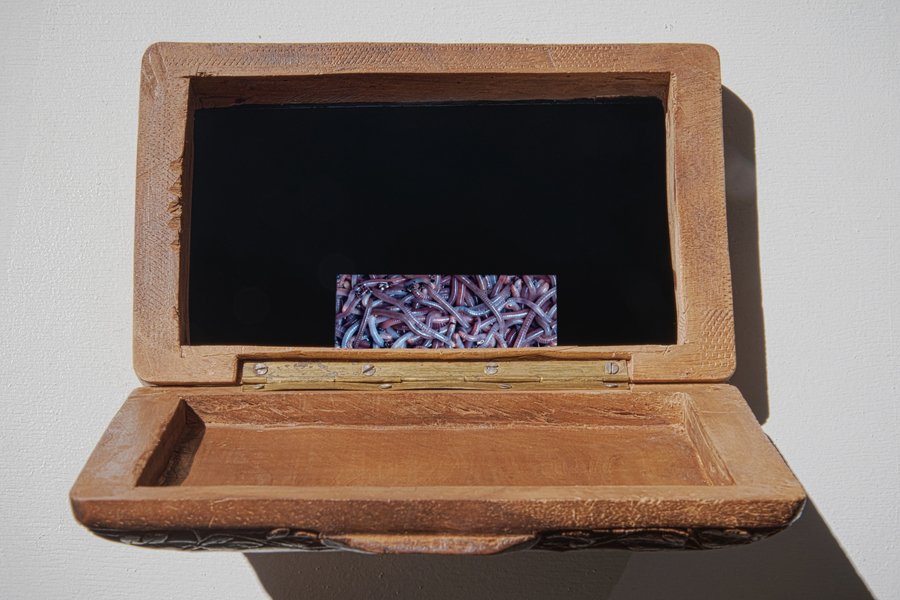
Vica Ros, Lime Sparrow Compositor: Who is folia? Casket (2022) Institute, video, 1 min. 10 sec. Casket in English means both box and coffin. Usually, the contents of the box are a valuable and very personal collection for the owner. At the same time, the idea of interconnectivity is clearly manifested in a double reading of the name. Thus, the box, as a form for video storage, refers to the research collections of the rare room collected as a set of natural or cultural artifacts. The contents of the box highlight the survival of multiples, social pressures and organic evolution.
Eugenia Bolukh Phoenix (2023) Subject «To be born again, you yearn for your death: Chado your father and your successor, your breadwinner and your eternal child. The same is always, but not the same, the same and still different, the good end is yours, in it is your eternal life.» Unknown author, fourth century (Old Rome)
Caterina Teplica Voice of God (2023) One of the hypotheses of consciousness introduces the notion of «bycamial brain». According to this theory, an ancient man could not immediately understand the split of his brain into two parts: «speaker» (smart) and «hearing» (subordinate). Out of nowhere, the voice of reason that dictates thoughts and instructions was received by something clearly external. While outside the body, this voice knew, understood, and anticipated more than the man himself. The voice was in the trees, the wind, the scream of the birds — it belonged to spirits, angels, demons, or gods. And a primal person, faced with a problem, could just ask for advice and do what they say. And in return, hear someone sigh or laugh, cry or whisper.
Valery Mitskina While the flame is on fire (2022), there was a sad story about a girl who had no home, no clothes, but only matches. Every time she lit one of them to warm up, bright visions flashed in front of her eyes. Her life goes on while the flame burns, and then she dies. As we move along the story, we burn matches one after another, history ends when the last match burns: words gradually burn down until they turn into ashes at all.