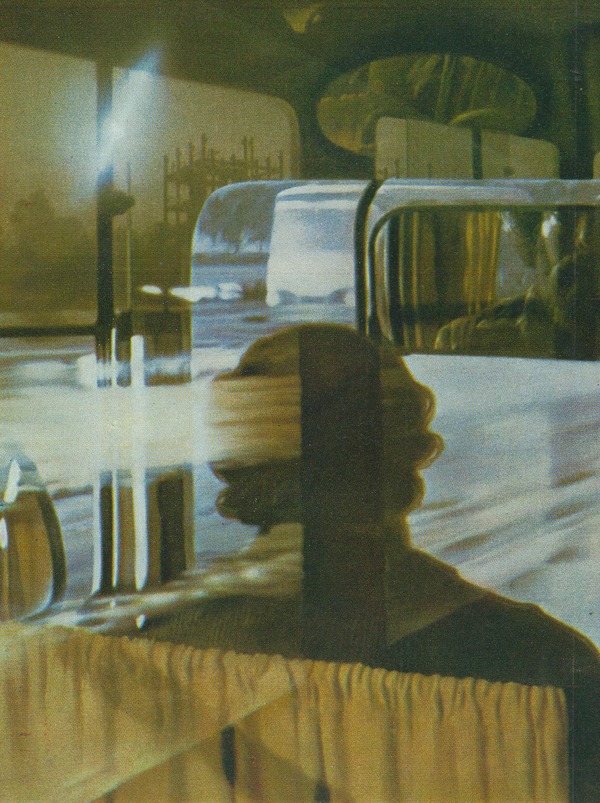

«Malaya Gruzinskaya, 28» is an address on the map of Moscow that, in the second half of the 1970s and 1980s, became synonymous with exhibitions of the painting section of the Moscow United Committee of Trade Unions of Artists and Graphic Artists, or the Moscow Committee of Graphic Artists.
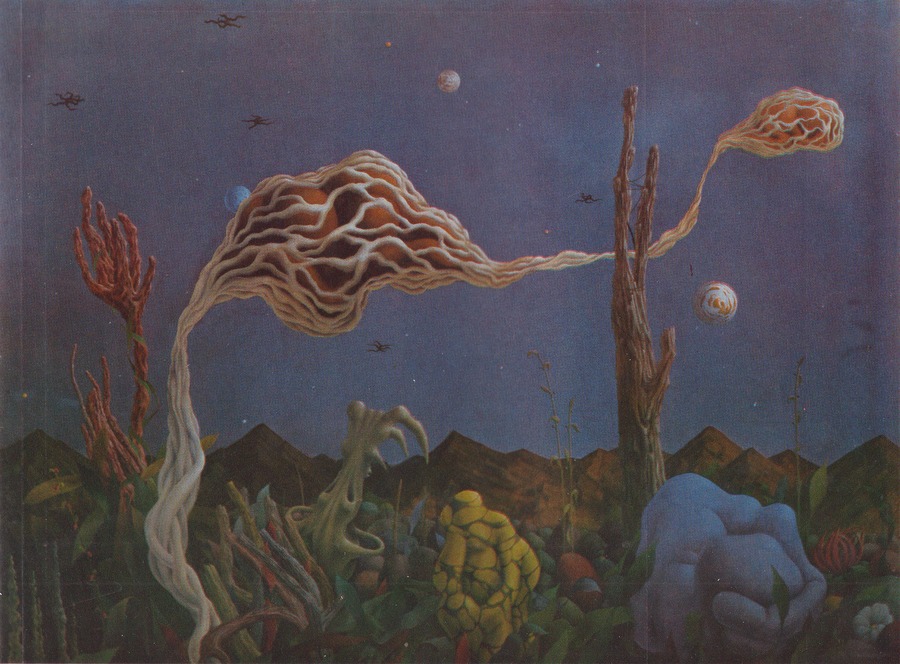
Evgeny Polivanov | «Zapovednik-3» | 1986 [1]
This institution has a long history. The Moscow Union of Graphic Designers originated in 1917, following the February Revolution, riding the wave of a trade union movement that began in pre-Soviet Russia. After surviving the 1932 decree from the USSR government that reorganized artistic and literary organizations—effectively dissolving them—the Moscow City Committee of Graphic Designers quietly persisted «behind the façade» of Socialist Realism, gathering graphic designers and other members of the artistic trades who aimed to draw as little attention as possible from the authorities. As a trade union organization, it maintained its own exhibition hall, which moved to a new location in 1976, establishing itself in the cooperative housing complex of the City Committee on Malaya Gruzinskaya Street in Moscow.
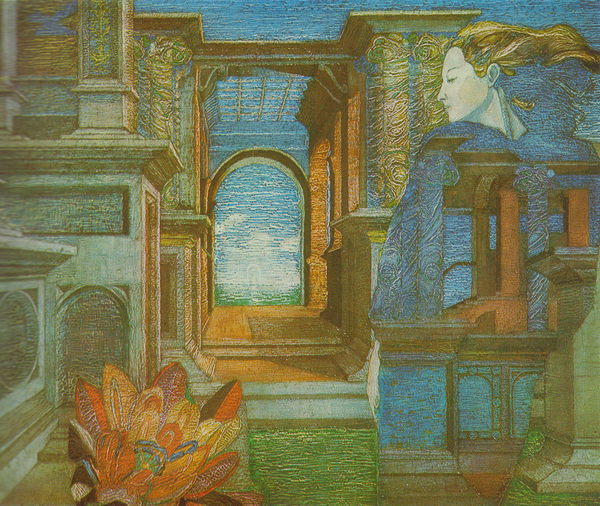
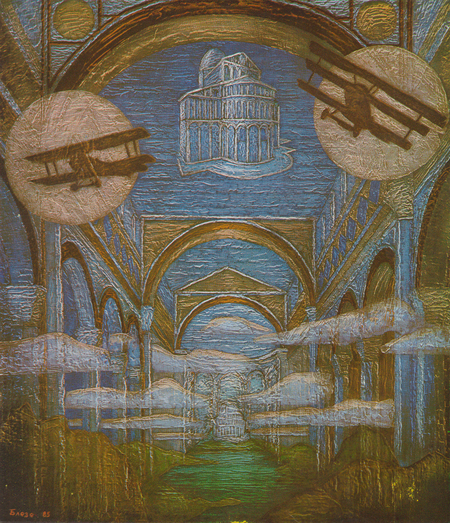
Sergey Bleze | «Fatamorgana» | 1986 [2] | Sergey Bleze | «Utopia» | 1986 [3]
In 1976, following a series of prominent exhibitions of alternative art—such as «Bulldozer» and «Second Autumn Outdoor Painting Viewing» in Izmailovsky Park in 1974, and exhibitions at VDNKh in the «House of Culture» and «Beekeeping» pavilions in 1975, among others—the process of gradually institutionalizing unofficial art began. Consequently, the City Executive Committee’s graphics department accepted many artists connected to unofficial art into its ranks; a painting section was established, followed shortly by a photography section. As an independent creative unit, the photography section emerged in 1975. Among its participants were many who worked in advertising and who aspired to creative independence, including Sergei Borisov, Valentin Serov, Alexander Gradoboyev, Valery Nisanov, and Igor Palmin. Alexander Gerinas headed the section until 1986.

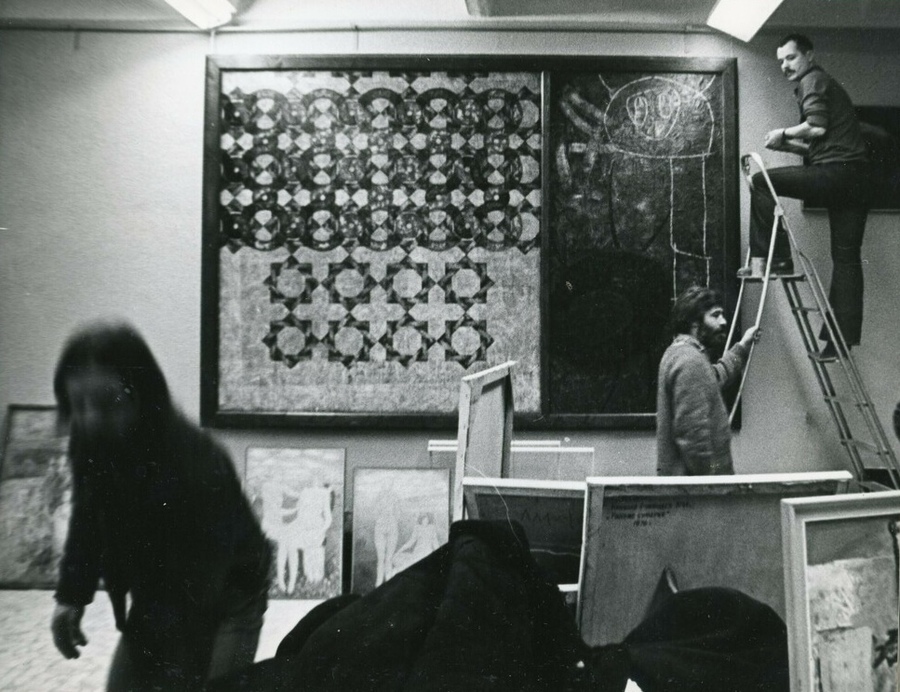
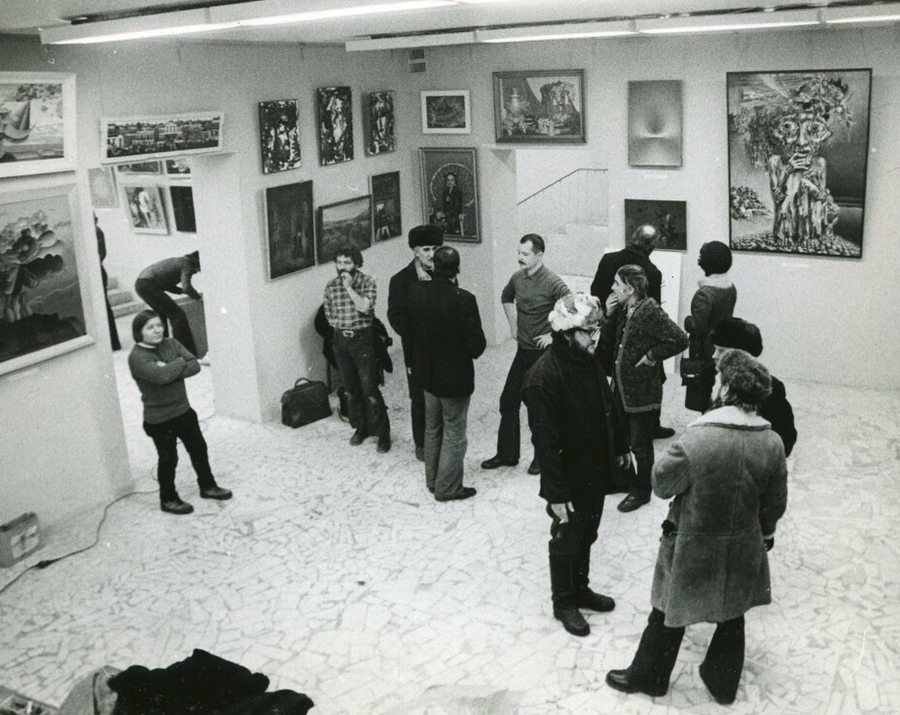
Igor Palmin | Catalog of the 1st Exhibition of the Painting Section of Gorokom Graphics on Malaya Gruzinskaya Street | 1977 [4-6]
In the exhibition hall on Malaya Gruzinskaya Street, shows from the graphic section, photography section, and painting section were taking place. The latter two attracted the most public attention.
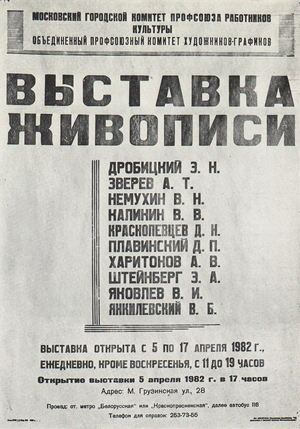
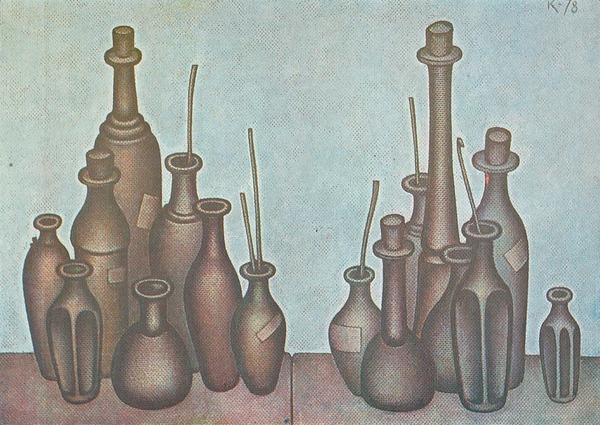
Exhibition Poster | 1985 [7] | Dmitry Krasnopevtsev | «Two Groups of Glass Bubbles» | 1978 [8]
In different years, the painting section included up to 250 members and effectively brought together all alternative artists in Moscow. From its inception, it was overseen by the Culture Department of the CPSU MCG, and operated under the guidance of the Presidium of the Moscow Culture Workers' Trade Union and the Chairman of the Moscow City Trade Union of Culture Workers. The next in the chain of command was the Chairman of the Graphic Arts Committee (this position was held by Vladimir Ashcheulov, and later, from 1979, by Eduard Drobitsky). The first general exhibition of the painting section took place in 1977, and a printed catalog was published that included 175 names.
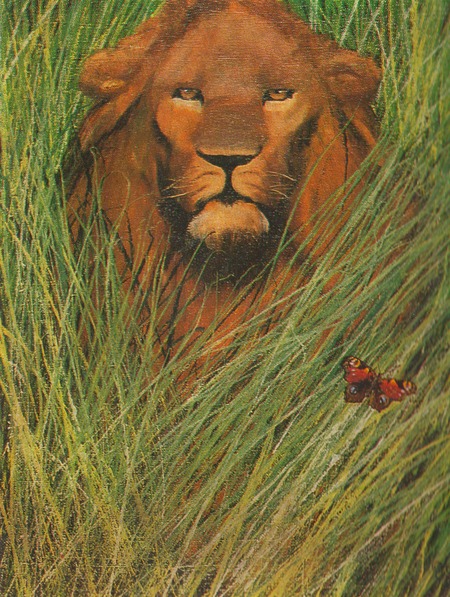
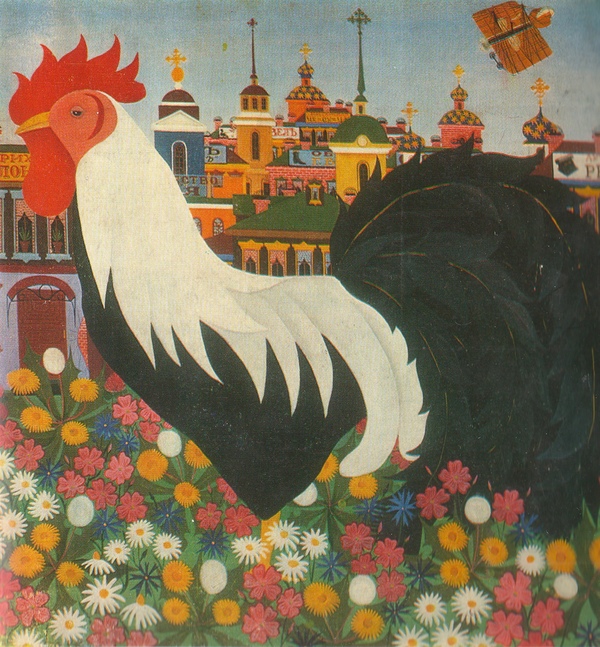
Anatoly Lepin | «Host» | 1977 [9] | Alexander Tumanov | «Rooster» | 1982 [10]
The unofficial art within the walls of the Gorkom was not a homogenous artistic phenomenon. It featured different generations: those shaped by the «Thaw» period and those formed during the «Stagnation» period. The differences stemming from these socio-historical aspects existed alongside various vectors of creative exploration, which can be summarized by: the neo-avant-garde and the «restoration of modernism, ” characteristic of the first generation of unofficial art, giving way to elements of early postmodernism evident in the work of the next generation, which expanded the boundaries of the artistic oikoumene; conceptualism and minimalism, performances, and the advent of video art.
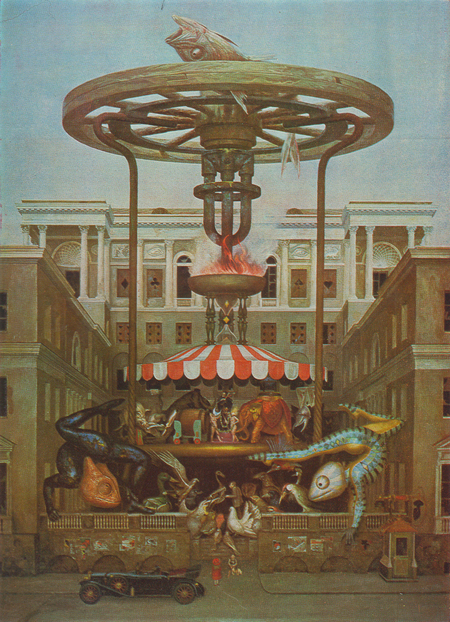
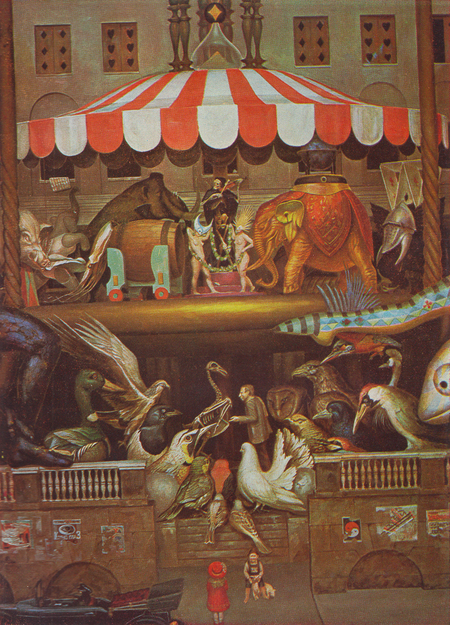
Sergey Sharov | «Mansion» | 1987 [11] | Sergey Sharov | «Mansion» (fragment) | 1987 [12]
The first generation of nonconformists, the «sixties generation» from the Lianozovskaya School—Vladimir Nemukhin, Nikolai Vechtovom, and Lev Kropivnitsky—were representatives of the Neo-Avant-garde. By combining a return to the traditions of abstraction and expressionism with an interest in the entirety of 20th-century European art, they forged a unique path. Another circle of sixtiers—Anatoly Zverev, Dmitry Plavinsky, Vladimir Yakovlev, Boris Sveshnikov, and Alexander Kharitonov—served as continuators of the trajectory set by the Russian Silver Age. For them, in addition to an interest in 20th-century art, the experience of classical European art was equally significant.

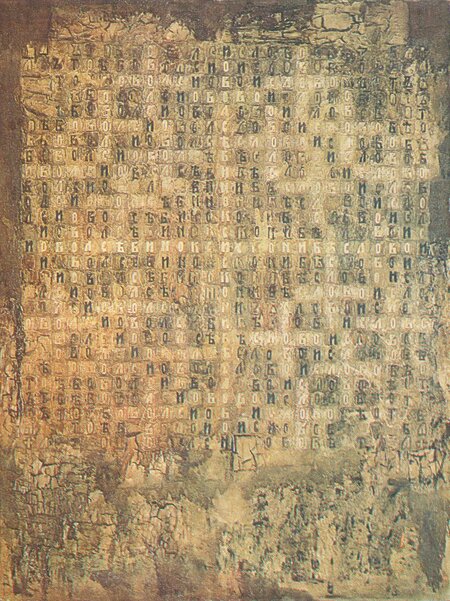
Vladimir Nemukhin | «Composition» | 1978 [13] | Dmitry Plavinsky | «Word» | 1967 [14]
Exhibitors at the Malaya Gruzinskaya gallery included representatives from the Moscow Metaphysical School: Dmitry Krasnopevtsev, Mikhail Shvartman, and Eduard Steinberg. There were also several artists who could be labeled «Young Sixties Generation"—Eduard Drobitsky and Vyacheslav Kalinin. The circle of artists connected to Conceptualism during that period was quite extensive: Ilya Kabakov, Vladimir Yankilevsky, Ivan Chuikov, Erik Bulatov, Sergey Shablavin, and Eduard Gorokhovsky. Quantitatively, the largest group that shaped the identity of Malaya Gruzinskaya in the latter half of the 1980s consisted of the «Seventies Generation» painters: Sergey Simakov, Sergey Sharov, Konstantin Khudyakov, Konstantin Kuznetsov, Vitaliy Skobelev, Igor Snegur, Yuri Mironov, Sergey Potapov, Vladimir Petrov-Gladky, Vladislav Provotorov, Semyon Faibisovich, Igor Kislytsyn, and others.
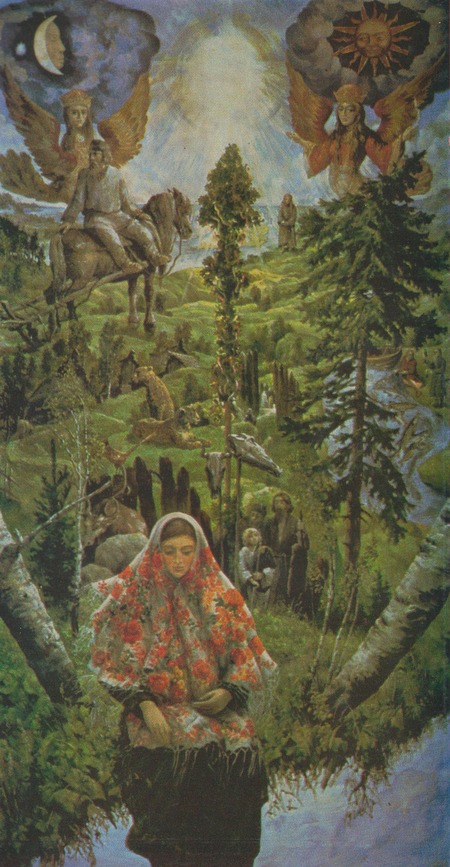
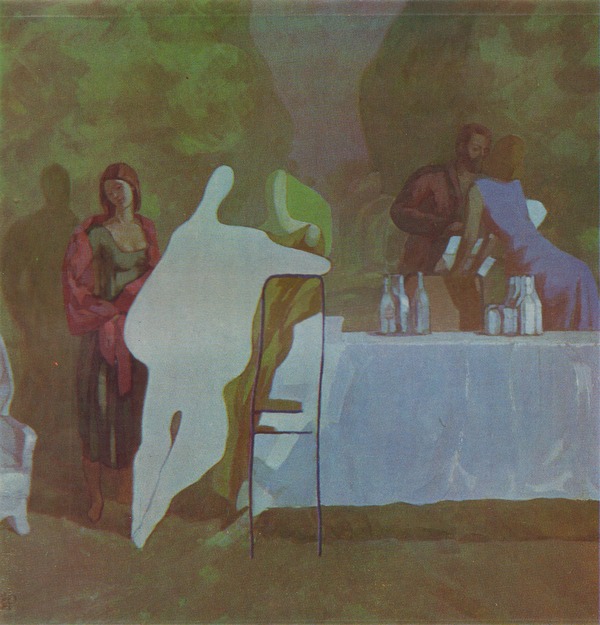
Sergey Simakov | «Tree of Life» | 1985 [15] | Igor Snegur | «Guests Are Arriving» | 1985 [16]
The painting section was a large artistic communal apartment—a modern ark. The unionistic nature of the association allowed for the proximity of different disciplines and provided a certain social and legal status to those not members of the Union of Artists of the USSR. Within this semi-official structure, there was also its own form of censorship: until 1981, exhibiting religious-themed works was forbidden, and later, only politicized anti-Soviet art. To differentiate themselves, or conversely, to unite with like-minded peers in their creative work, communities quickly began to form on the creative platform: first exhibitions, then groups.
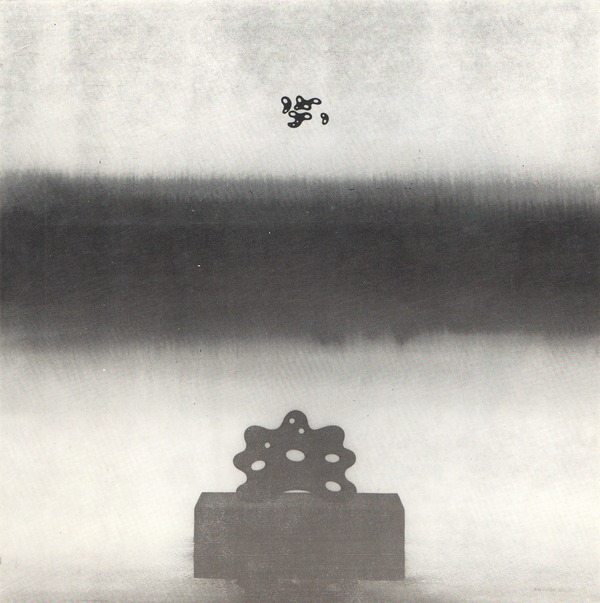
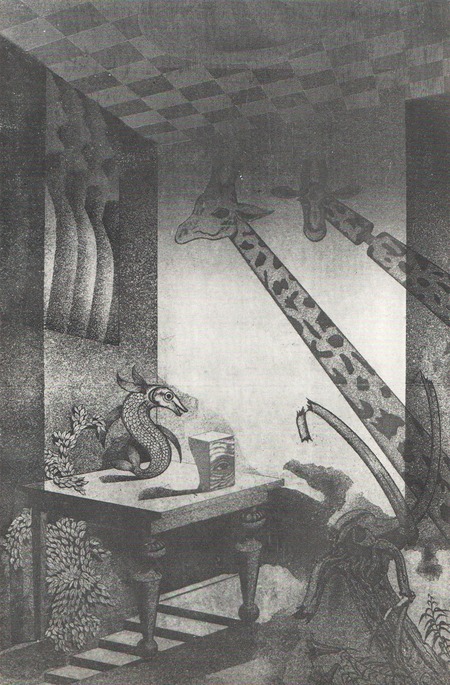
Nikolai Vechtomov | «Early Morning» | 1983 [17] | Lev Kropivnitsky | «One Hundred Years of Solitude» | 1980 [18]
Twice a year—in the spring and autumn—cross-departmental exhibitions were held. In addition to these, there were thematic exhibitions: «Portrait Exhibition» (1977), «Color, Form, Space» (1979), «Watercolor, Drawing, Printmaking» (1984), «Object-1» (1987), among others, as well as solo exhibitions. Almost all of these were accompanied by printed, illustrated catalogs. Creative groups were also formed, such as «Group 7, ” „20 Moscow Artists, ” „21 Moscow Artist, ” „The World of Painting, ” and others.
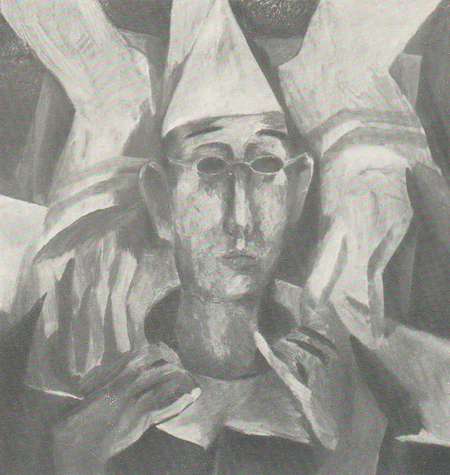
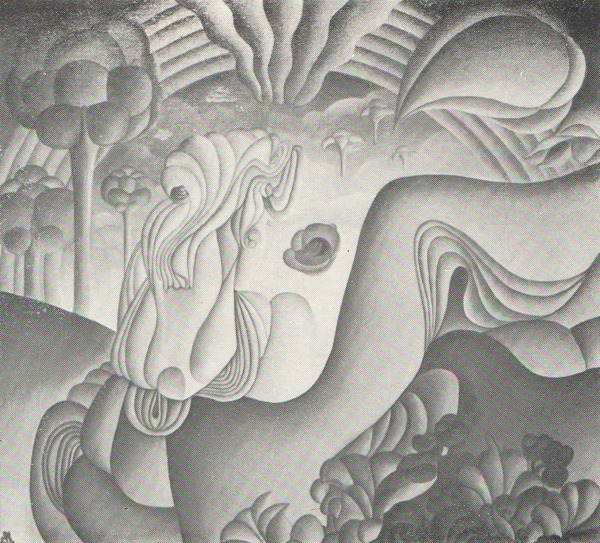
Valery Lokshin | «Man in Glasses» [19] | Viktor Glukhov | «Venus» [20]
The exhibitions of the painting section were held in a small, windowless basement space containing three small halls with very dense hangings. Many members of the public attended these exhibitions (in 1979, a larger and brighter hall on the second floor was made available for the painting section shows). Viewers saw the paintings from very close distances, literally «reading» them, which undoubtedly influenced their perception. During the exhibitions, music specifically composed for the works of these artists—by the electronic musician Mikhail Chekalin—was played in the hall by the «20 Moscow Artists» group.
«20 Moscow Artists» Group | 1986 [21]
Traditionally, during exhibitions, artists would take turns on duty in the halls, actively engaging with the public, answering questions, and participating in discussions. This style of rich exhibition featuring active communication and performative elements was novel at the time and stood in contrast to what was accepted at official Soviet exhibitions. The audience—both local Moscow residents and visitors from other cities—consisted primarily of the urban educated class and students; at times, getting into an exhibition required people to wait in multi-hour lines. In those years, such lines were only seen at the Pushkin Museum for exhibitions featuring masterpieces of world art.
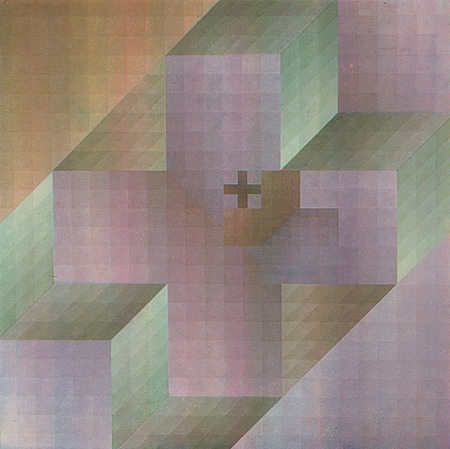
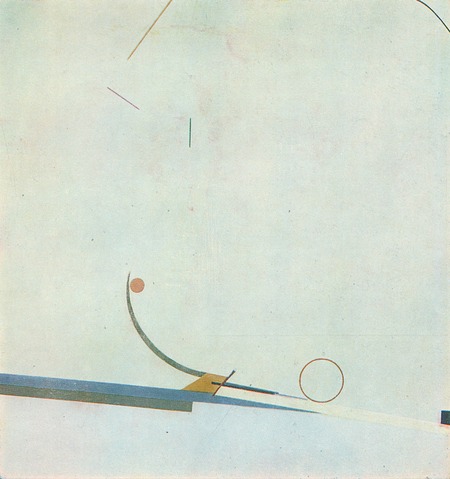
Boris Bich | «Birth» | 1979 [22] | Eduard Steinberg | «Composition No. 2» | 1978 [23]
The phenomenon of the painting section and its exhibitions represents a characteristic feature of the late Soviet period—a period replete with contradictions, multifaceted development, and the growing complexity of artistic life. Creative pluralism increasingly became the norm in art, and the drive toward individuality and the uniqueness of one’s personal artistic world, and its distinction from others, played a crucial role in shaping post-Soviet art in Russia during the 1990s and 2000s.
Vladimir Glukhov | «Mountain Landscape» | 1984 [24]
Image Sources
1. Catalogue: «The Eighth, Ninth, and Tenth Exhibitions of Twenty Moscow Artists. Painting, ” Printing House of the Ministry of Culture of the USSR, Moscow, 1988 2. Catalogue: „The Eighth, Ninth, and Tenth Exhibitions of Twenty Moscow Artists. Painting, ” Printing House of the Ministry of Culture of the USSR, Moscow, 1988 3. Catalogue: „The Eighth, Ninth, and Tenth Exhibitions of Twenty Moscow Artists. Painting, ” Printing House of the Ministry of Culture of the USSR, Moscow, 1988 4. RAAN Website [electronic resource]. Access mode: https://russianartarchive.net/ru/catalogue/document/D17082 (accessed 04/14/2025) 5. RAAN Website [electronic resource]. Access mode: https://russianartarchive.net/ru/catalogue/document/D17082 (accessed 04/14/2025) 6. RAAN Website [electronic resource]. Access mode: https://russianartarchive.net/ru/catalogue/document/D17082 (accessed 04/14/2025) 7. Exhibition Catalogue of the Moscow City Committee of the Trade Union of Culture Workers, United Trade Union Committee of Graphic Artists, TsPUPP MGP VOS, Moscow, 1985 8. Exhibition Catalogue of the Moscow City Committee of the Trade Union of Culture Workers, United Trade Union Committee of Graphic Artists, TsPUPP MGP VOS, Moscow, 1985
9. Catalog of the «Exhibition of Works by Moscow Artists,» Moscow United Committee of the Union of Artists-Graphic Artists, Moscow, 1983 10. Catalog of the «Exhibition of Works by Moscow Artists,» Moscow United Committee of the Union of Artists-Graphic Artists, Moscow, 1983 11. Catalog of the «Eighth, Ninth, and Tenth Exhibitions of Twenty Moscow Artists. Painting,» Typography of the USSR Ministry of Culture, Moscow, 1988 12. Catalog of the «Eighth, Ninth, and Tenth Exhibitions of Twenty Moscow Artists. Painting,» Typography of the USSR Ministry of Culture, Moscow, 1988 13. Catalog of the «Color. Form. Space» Exhibition, Moscow United Committee of the Union of Artists-Graphic Artists, Moscow, 1979 14. Catalog of the «Color. Form. Space» Exhibition, Moscow United Committee of the Union of Artists-Graphic Artists, Moscow, 1979 15. Catalog of the «Eighth, Ninth, and Tenth Exhibitions of Twenty Moscow Artists. Painting,» Typography of the USSR Ministry of Culture, Moscow, 1988 16. Catalog of the «Eighth, Ninth, and Tenth Exhibitions of Twenty Moscow Artists. Painting,» Typography of the USSR Ministry of Culture, Moscow, 1988