When approaching the art of Ancient Rus', the first images that come to mind are icons, frescoes, and mosaics depicting saints. This is tied to the role of Christianity and the nature of the surviving monuments. However, human figures also appeared in princely portraits, book miniatures, and decorative and applied arts. Furthermore, even the religious images themselves are far from uniform.
I’ve been interested in how multifaceted the depiction of women is in the art of the 11th–14th centuries. Can we see in these images not only motherhood and spousal roles, but also spiritual strength, courage, resilience, self-sacrifice, and dignity?
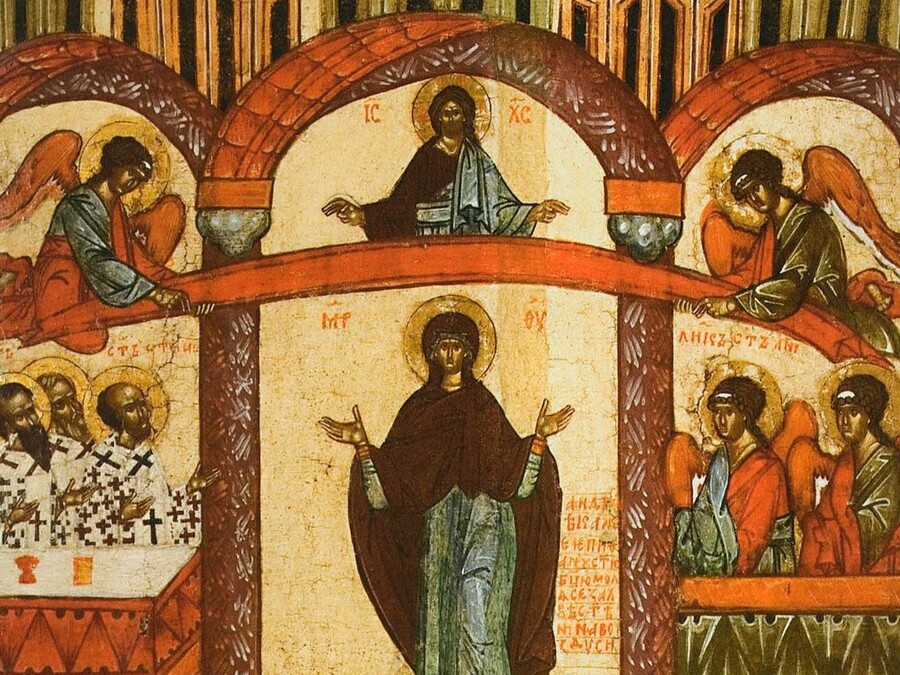
«The Protection of the Mother of God,» unknown artist, early 15th century
For this study, monuments from the 11th to 16th centuries have been selected, focusing on pieces where the female character plays a significant role or presents interest from the perspective of composition, costume, gesture, or subject matter. The works under consideration include ancient Russian icons of the Mother of God, book illustrations of princely families, preserved frescoes, and decorative arts objects.
In the center of the investigation—are artistic representations, not the social position of women. Icons, portraits of princely families, and decorative items were created for various purposes and cannot be considered a direct reflection of everyday life. Therefore, it is important to separate the qualities revealed by the subject matter and artistic language from contemporary notions.
The featured content is built around the qualities of the feminine archetype: motherhood and nurture, spiritual strength and advocacy, resilience and self-sacrifice, dignity, and engagement in social life.
These are not sequential stages of development: various imagery could coexist simultaneously, and a single artwork could express multiple qualities. In sacred imagery, the roles of the Virgin Mary and saints are studied. In princely imagery, attention is directed toward the depiction of a specific historical woman and her position within the familial and dynastic composition. Works of decorative and applied art are examined from the perspective of the female figure in action, her relationship to other characters, and the specific characteristics of the object’s artistic design.
Hypothesis: The female image in Old Russian art was not solely confined to motherhood and marriage. Surviving monuments reveal spiritual strength, courage, resilience, self-sacrifice, dignity, as well as female figures in secular narratives. This diversity is explored through composition, the expressiveness of the figures, and the depicted actions.
The sources include art historical research, scholarly articles, and museum catalogs.
Key question: What qualities of the female image were reflected in the art of Kievan Rus' during the 11th–14th centuries, and how diverse was their artistic embodiment?
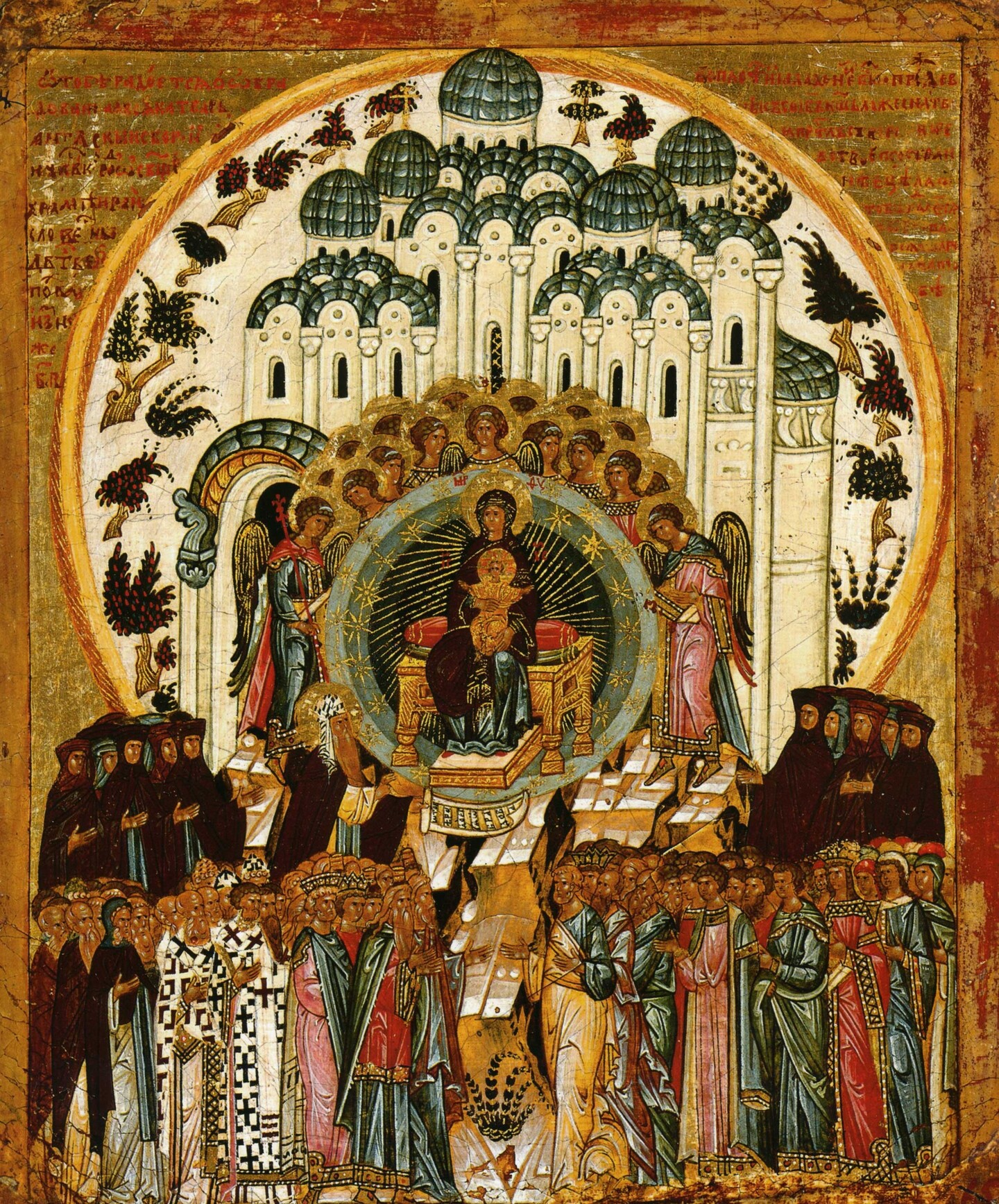
«The Mother of God Sign and Chosen Saints: Venerable Varlam of Hutyn, St. Ioann the Merciful, Martyrs Paraskeva and Anastasia,» unknown author, early 15th century.
Navigator
- Concept
- Dignity and Status
- Spiritual Strength and Resilience
- Energy and Movement
- Conclusion
- Bibliography
Dignity and Position
In the Old Russian art of the 11th century, surviving images of women belonging to princely families begin to appear. Their status is revealed through their attire, the solemnity of the depiction, and their presence alongside the ruler. The woman here is presented not only as a spouse and mother but also as a participant in dynastic representation.
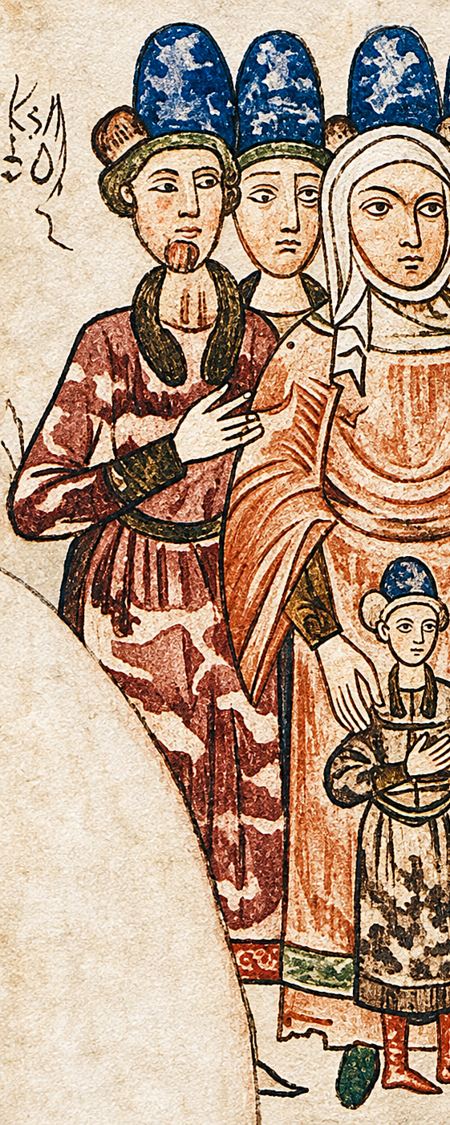
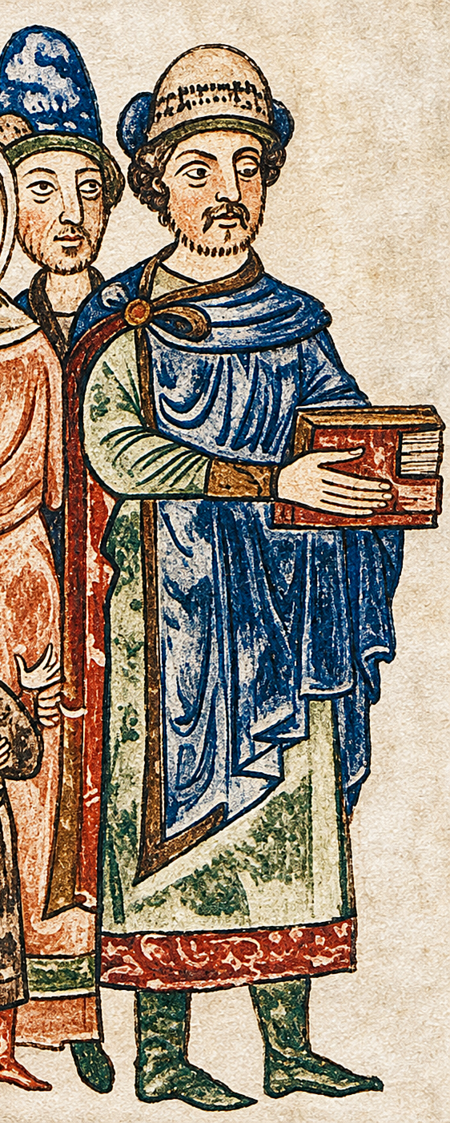
«Prince Sviatoslav and His Family Before Christ, ” Miniature from the Izbornik of Sviatoslav, unknown artist, 1073
In the center of the family group is depicted the wife of Svyatoslav Yaroslavich. The inscription designates her as «knyaginya,» without providing a personal name. In the miniature, the woman is presented primarily through her membership in the ruling dynasty. Her rich clothing and headdress emphasize the knyaginya’s high social standing. Nevertheless, her significance is determined not only by her external appearance; she is placed alongside the ruler and included in the solemn depiction of the entire family before Christ.
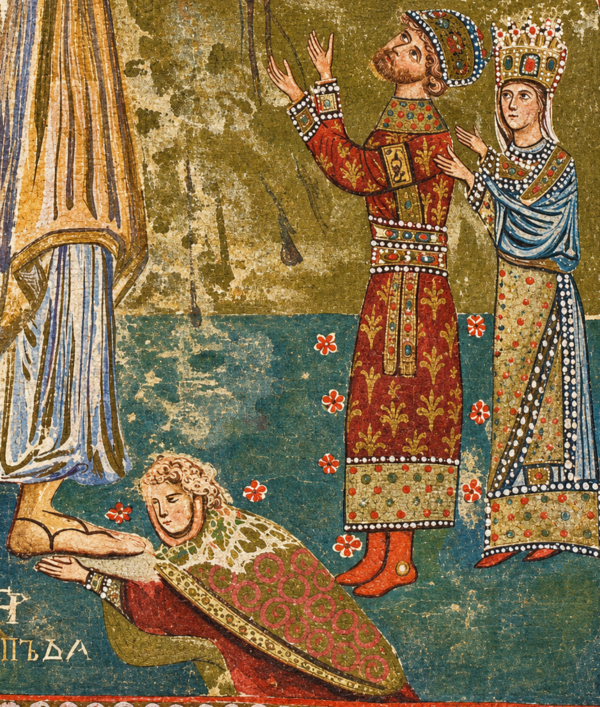
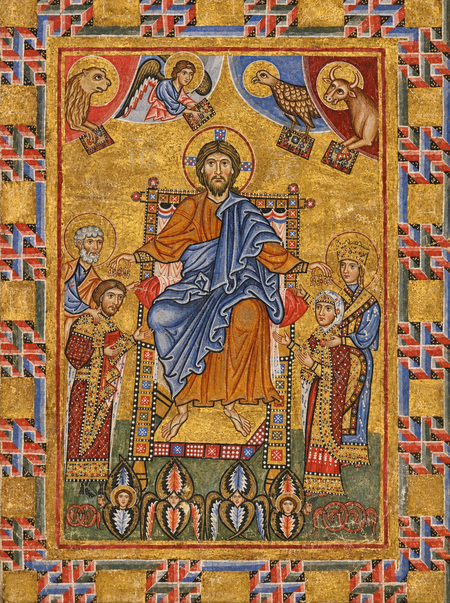
Miniatures from the Gertrude Prayer Book: «Saint Peter with Princess Gertrude, Yaropolk, and Irina, ” „Christ Crowns Yaropolk and Irina, ” unknown author, late 11th century
Gertrude is depicted kneeling at the feet of the Apostle Peter. Her small figure emphasizes her devout humility before the saint, but it does not reflect her position in earthly society—the religious hierarchy of the image coexists with the woman’s high social status.
«Princely Group Portrait, ” fresco in St. Sophia Cathedral in Kyiv, unknown masters, 11th century
Fragments of a solemn princely procession are preserved in the cathedral. Identifying the depicted characters remains a subject of scholarly discussion; the traditional interpretation as a portrait of Yaroslav the Wise’s family is not the only one.
Spiritual Strength and Resilience
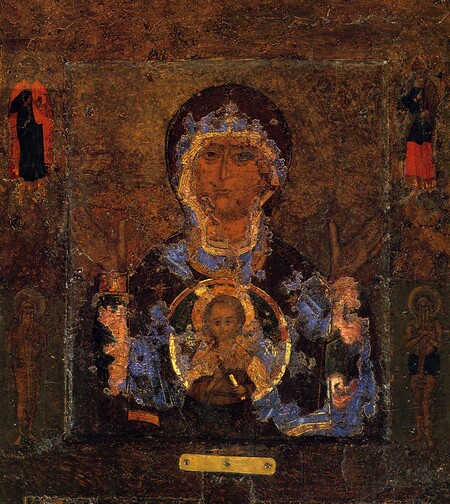
In the art of Old Rus', the female spiritual power was expressed through various themes: motherhood, intercession, sanctity, and fidelity to religious beliefs. It was not always conveyed through external action. A static frontal figure could embody majesty and protection, while a restrained gesture—deep spiritual content.
«The Mother of God Sign, ” Novgorod, Unknown Master, second quarter of the 12th century
The sorrowful countenance of the Mother of God possesses a quality of deep, soulful contemplation.
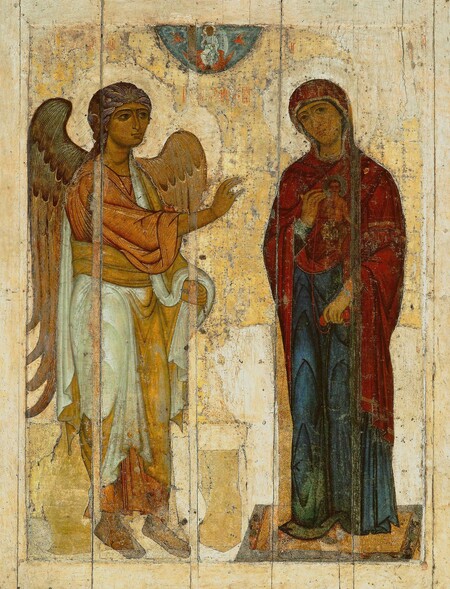
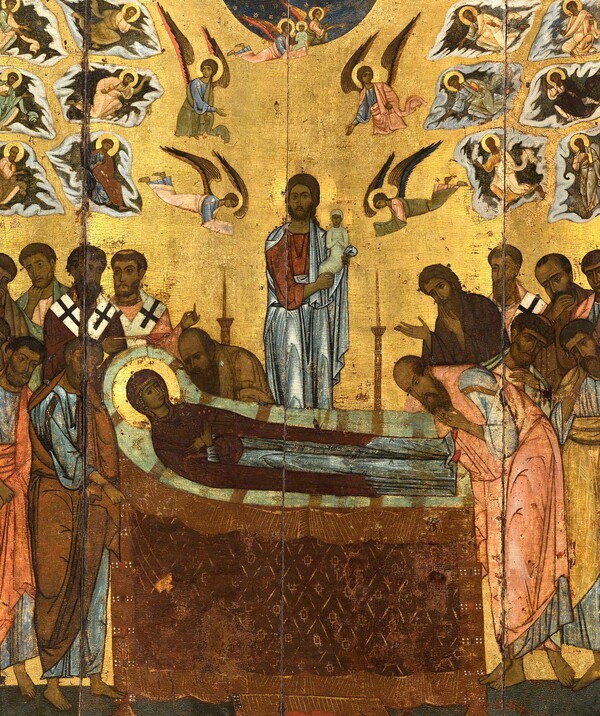
«The Annunciation at Ustyuzh, ” unknown master, first third of the 12th century; „The Dormition of the Theotokos“ from the Desyatinnaya Monastery, unknown master, early 13th century.
In the Icon of the Annunciation, the Theotokos is depicted at the moment she receives the news of Christ’s future birth. In the Icon of the Dormition of the Theotokos, she is shown on her deathbed. Christ stands at the center, accepting her soul in the image of a swaddled infant. In conventional depictions, the mother holds the child; here, Christ receives the soul of His Mother.
Through symbolic comparison, the theme of the completion of the earthly journey and heavenly salvation is revealed.
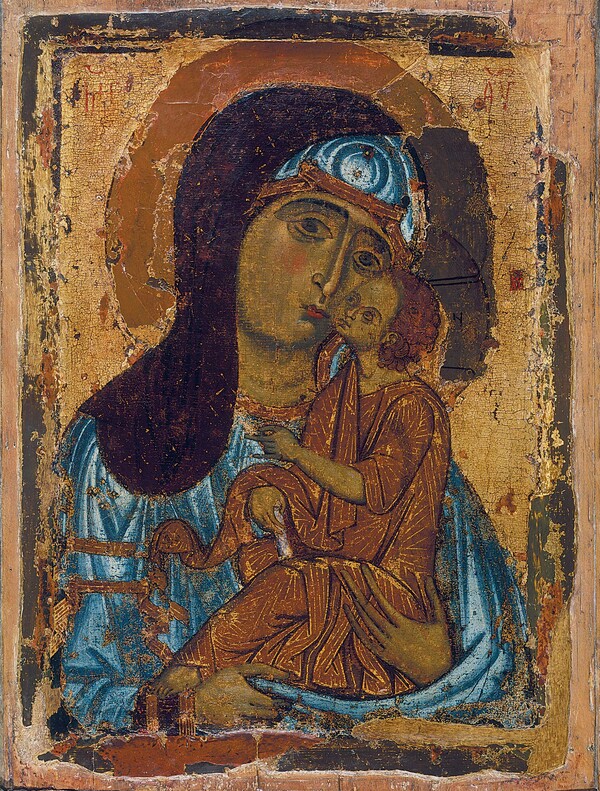
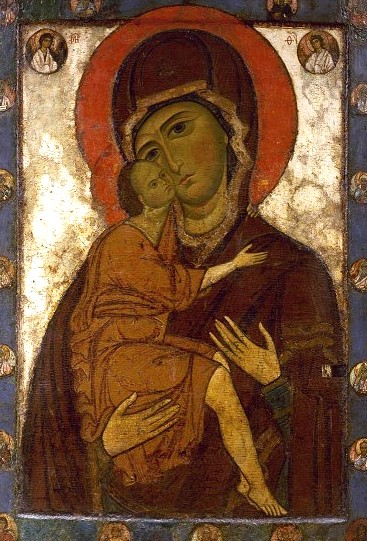
«The Mother of God of the Theotokos of the Dormition» from the Dormition Cathedral of the Moscow Kremlin, unknown master, 12th–13th century; «The Mother of God of the Theotokos (Belozerskaya), ” unknown master, first half of the 13th century.