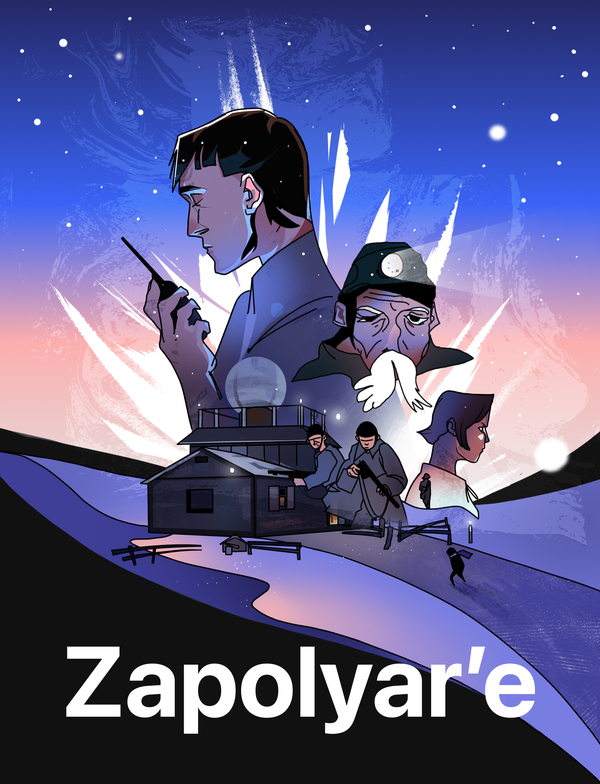
After a nuclear disaster, a young man at an Arctic military research base begins to hear a mysterious whale song. As he tries to uncover its source, he confronts escalating paranoia and the threat of another catastrophe.
Game Concept
Project Title: Zapolyar’e. Genre: Narrative Adventure. Logline: A story-driven 3D adventure with an isometric view, set on an Arctic military base. Due to a progressive ear illness, the protagonist hears a persistent noise that drowns out NPC dialogue and gradually intensifies his paranoia. While exploring the island, the player eliminates sources of interference, gathers clues, and interacts with characters, trying to distinguish real threats from distorted perception. His decisions determine whom he trusts, whom he views as a threat, and whom he decides to kill. Setting: Alternate reality, an Arctic military research base. Engine: Unity 6 Platform: PC Monetization Options: Paid game. Estimated Duration: 2–4 hours.
Core Gameplay
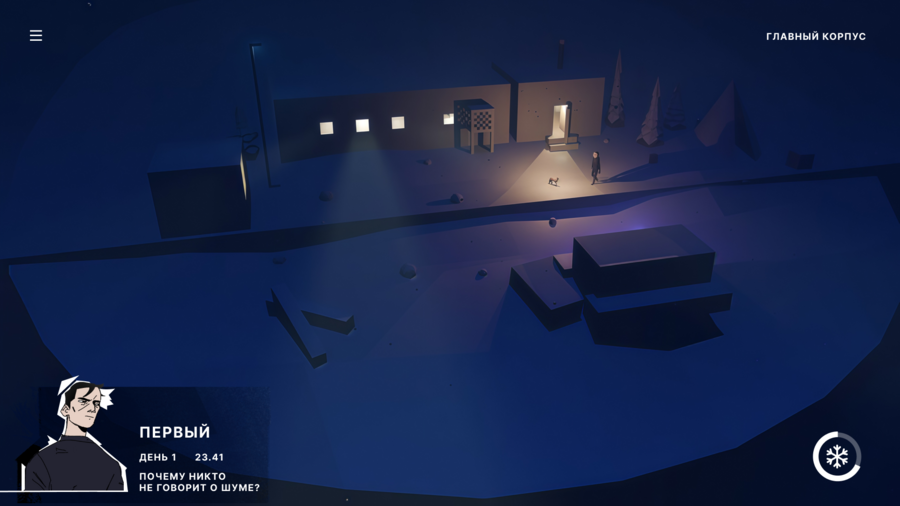
The gameplay loop is built on exploring a location and interacting with the surrounding world: the player discovers a sound, searches for its source, investigates objects, and engages in dialogue with NPCs. Choices made in dialogue and clues found unlock new conversation topics, items, thoughts, and quests, influencing relationships with characters and access to locations. As the story progresses, the sound intensifies, distorts perception, and complicates the interpretation of gathered information. New leads reveal subsequent stages of the investigation, forming a recurring cycle of exploration, decision-making, and mystery unraveling.
USP
The core gameplay mechanic of «Zapolyar’e» is the exploration of the world through sound, which becomes a tool for finding clues and advancing the plot.
As the plot develops, the noise begins to affect the protagonist’s nervous system. The player investigates its sources, gathers and deciphers radio messages, gradually uncovering the truth. The interference also distorts dialogues with NPCs: to make out the lines and continue the conversation, the source of the noise must be eliminated. The protagonist’s condition and reaction to the events are displayed in the character card.
Segmentation System
Level One—noise detection. The player explores a location, searching for objects and interacting with the environment, noticing auditory and visual interference emanating from radios, electrical appliances, ice, or whales.Level Three—perception distortion. The noise begins to cover parts of the game screen and distort character portraits. The player continues exploring and engaging in dialogue but is forced to seek out the sources of interference to distinguish NPC lines and understand what is happening.Level Five—paranoia and loss of control. The noise overtakes dialogue boxes, distorts NPC portraits, and blurs the hero’s own card. It becomes increasingly difficult for the player to interpret information and differentiate real threats from false signals. Incorrect conclusions affect decisions, relationships with characters, and the further development of the story.
Game references: the survival atmosphere and freezing mechanics from The Long Dark; the gameplay, dialogue, and role-playing systems, and the «Thought Cabinet» from Disco Elysium; and the physics of environmental interaction and ice sliding from Snufkin: Melody of Moominvalley.
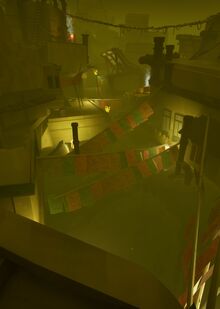
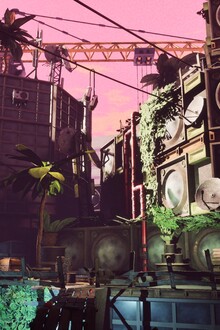
Initially, a 2D prototype of the game was developed to demonstrate the core gameplay mechanics. The following slides present the development process. The full version of the project is planned in 3D, and the intended visual style and gameplay space are shown in conceptual mockups.
Game Trailer Storyboard
Introductory scene
An introductory cutscene was developed for the game where the captain receives an urgent message over the radio. The scene sets the narrative atmosphere and allows the looming threat to be established even before the gameplay begins.
Game characters were drawn in Procreate and animated in Procreate Dreams.
Walking animations for the character were developed in three primary directions. To streamline the animation prototyping process, they were adapted using mirroring.
The player controls Young Man No. 1, codenamed «Cricket, ” exploring a military research base on an island. They uncover the character’s history through dialogues and the environment. Due to a progressive ear condition, he begins to decipher hidden messages within the static of instruments and radio transmissions, attempting to uncover what is happening at the base. The player must distinguish real clues from auditory hallucinations and prevent growing paranoia from leading to tragedy.
Screens