Why do cartoon characters wear white gloves? The origin and dissemination of visual convention in American animation of the 1920s–1930s
Navigation Menu
- Concept
- How did Mickey get white gloves?
- From stage to screen
- Character geometry
- Who else wears white gloves? — Contrast — Anthropomorphism — Gender — Other studios
- Why did the gloves endure?
- Conclusion
Concept
White gloves are one of the most recognizable details of classic cartoon characters. Mickey Mouse, Minnie Mouse, and Goofy wear them regardless of the plot or their other clothing.
This element, so ingrained in the design of classic characters, often goes unnoticed by the viewer; however, if examined without bias, it becomes evident how alien it can appear in many scenes and character portrayals.
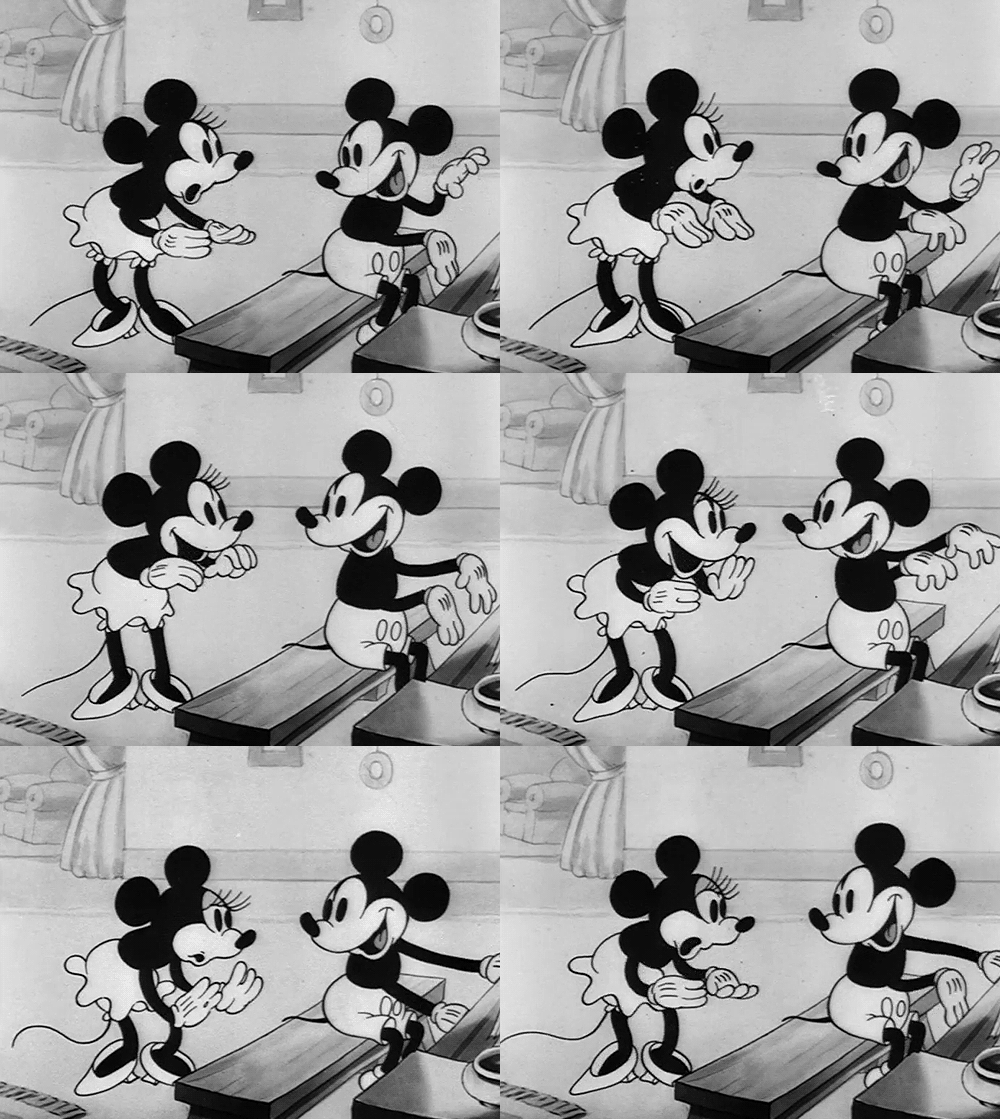
«Puppy Love, ” Walt Disney, 1933
Why for some characters have they become an almost inseparable part of their body, while others never developed them at all? What caused the appearance of these specific gloves, and why has such an unusual detail persisted even after the animation style changed?
The initial point of this investigation will be the early appearance of Mickey Mouse. In 1928 cartoons, his gloves were black, but white gloves appeared in The Opry House (1929), a feature that soon became established in the character’s design. A common explanation relates to contrast: white gloves are more visible against a black body. However, this does not answer the question of why the hands came to resemble stage gloves specifically.Therefore, the study will turn to the cultural context of early American animation. It will examine its interaction with vaudeville and minstrel shows, including the blackface tradition, where white gloves, contrasting makeup, and exaggerated gestures were employed. A key textual source will be Nicolas Sammond’s book, Birth of an Industry (2015).
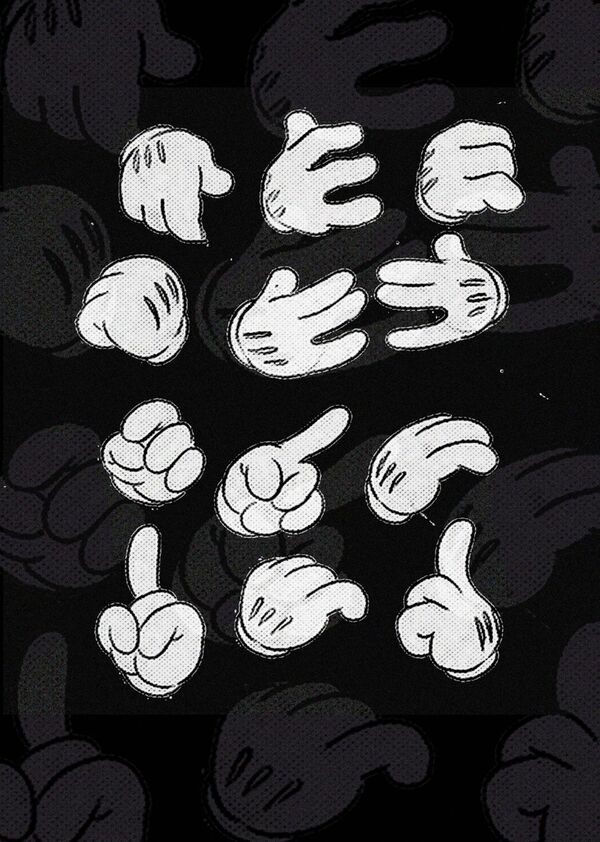
Next, we will focus on the form of the gloves themselves: the rounded palm, the abstract depiction of the fingers, the cuffs, and the lines on the back of the hand. A brief comparison of the characters’ geometric structure and their movements will help us understand how the theatrical detail adapted to drawn animation.
The core of this study will be a comparison of Disney characters and those from other American studios of the 1920s–1930s—both with and without gloves. We will examine possible connections between the choice of gloves, body color, degree of anthropomorphism, the hero’s function, and studio traditions.
The visual foundation will consist of dated footage from cartoons, advertising imagery, model sheets, and historical materials on stage culture. These elements will be organized into five stages: the appearance of Mickey’s gloves; potential theatrical origins; the glove’s structure as a graphic form; a comparison of characters from different studios; and the preservation of detail during the design evolution toward the late 1930s. The finale may feature a brief juxtaposition with modern versions of classic characters. Scientific publications, archival materials, and Disney sources—most notably The Walt Disney Family Museum—will be used for fact-checking.
How Mickey Got White Gloves
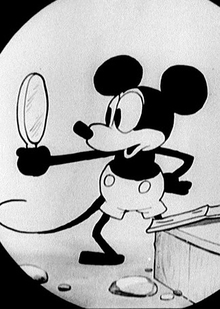
Mickey Mouse debuted in 1928. The first animated short featuring him was Plane Crazy, but the first widely released film was Steamboat Willie, which gained fame for its use of synchronized sound.
In his early designs, Mickey lacked one of his most recognizable features today—white gloves. His hands, like the rest of his body, were entirely black. In some scenes, this caused his hands to blend into the torso against the background, making his movements less distinct.
«Plane Crazy, ” Walt Disney, 1928
«Steamboat Willie, ” Walt Disney, 1928
In the cartoon The Opry House (1929), Mickey plays the role of the host and artist of a small theater. At the beginning of the film, when he sweeps in front of the entrance, his hands are still black. However, during his stage performances, Mickey first appears in the animation wearing white gloves.
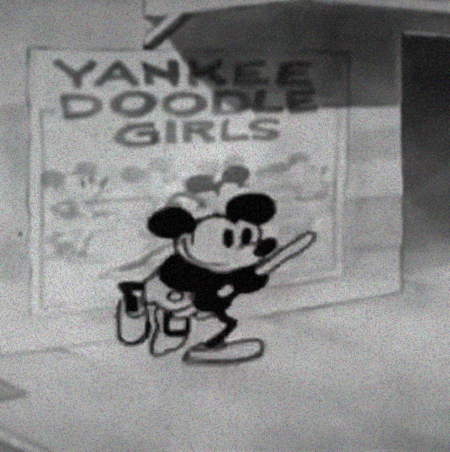
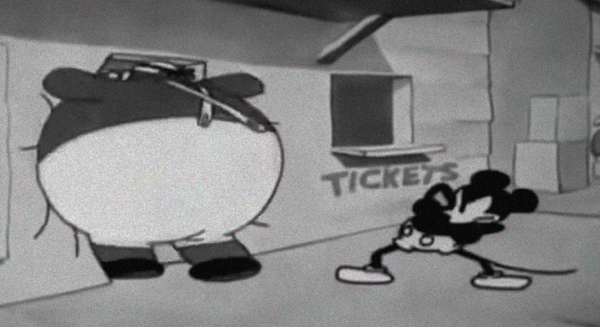
«The Opry House, ” Walt Disney, 1929
It is noteworthy that gloves appear on some other participants in the performance, but they are not a mandatory part of the appearance of all the black-bodied characters. However, it was also observed that there was no single character wearing white gloves who did not have a black body.Thus, even within one cartoon, different ways of depicting hands can be observed.
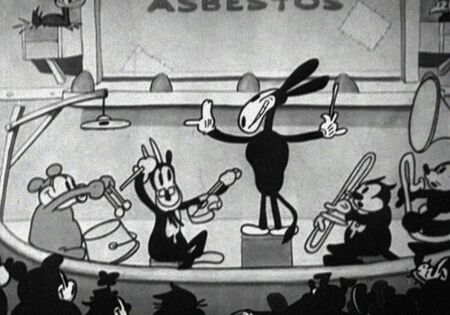
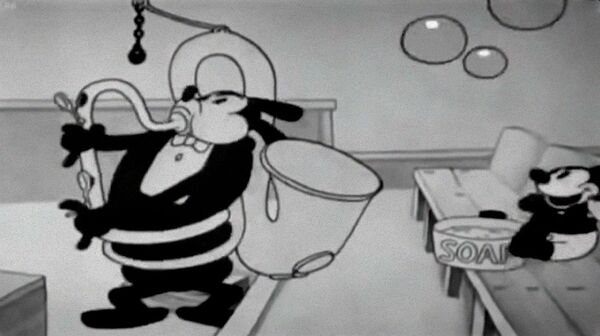
«The Opry House, ” Walt Disney, 1929
In the next cartoon, When the Cat’s Away (1929), Mickey, like some of the supporting characters in the film, continues to wear white gloves even outside of the theatrical performance. A detail from the stage costume transforms into a permanent part of his appearance. Meanwhile, it can be noted that, up to this point, white gloves have not become a permanent feature of Minnie Mouse.
«When the Cat’s Away, ” Walt Disney, 1929
One explanation for the retention of this choice even in scenes that do not feature stage gloves relates to ease of perception: light gloves are easier to distinguish against the black body. However, this is not enough to explain why gloves, rather than just a white fill, were chosen to highlight the hands in such cases. Their appearance in a theatrical context prompts a consideration of the traditions of theater and mass entertainment, which were closely linked to early American animation.
From Stage to Screen
In the 19th century, minstrel shows gained widespread popularity in the United States—entertaining performances that combined music, dance, and comedic sketches. A hallmark of these shows was the tradition of blackface: performers darkened their faces with makeup to depict Black people through exaggerated and often derogatory racial stereotypes.By the turn of the 20th century, this tradition had become integrated into American mass culture, influencing other forms of entertainment, including early animation.
Stage image in the tradition of blackface, Bert Williams, 1921.
Historian Nicholas Sammond, in his book Birth of an Industry: Blackface Minstrelsy and the Rise of American Animation (2015), views early American cartoon characters as descendants of the minstrel tradition. The resemblance is evident not only in the white gloves but also in the exaggerated eyes and mouths, the characteristic facial expressions, the grotesque plasticity, and the comedic demeanor. These features can also be found in the early depiction of Mickey Mouse. Thus, his design was shaped not only by the technical limitations of animation but also within the context of pre-existing stage traditions.
The connection between early animation and minstrel culture allows us to explain why white gloves might have been perceived as a familiar part of the cartoon artist’s persona. However, the stage origins do not negate their graphic function: in black-and-white animation, light gloves are indeed easier to distinguish against a dark body.
Character Geometry
Early Mickey Mouse design relied primarily on simple, rounded forms. The head and ears were formed by circles, the torso and feet by ovals, and the limbs were depicted as smooth lines, almost devoid of defined joints.This construction helped maintain the character’s recognizability across different poses and gave his body a sense of fluidity. The white gloves fit seamlessly into this system—their rounded shape continued the character’s overall geometry.
«Mickey Mouse Animator’s Practice Model Sheet Original Art,» Walt Disney, 1930
Mickey gloves retain the recognizable features of a real piece of apparel: cuffs, a rounded palm, and distinctive lines on the back of the hand that resemble seams or darts. However, their form is noticeably simplified: the fingers are short and thickened, and the palm easily changes its outline during movement. Furthermore, the seams help make it easier to tell which way the palm is facing, even if its position is quite ambiguous.