Concept
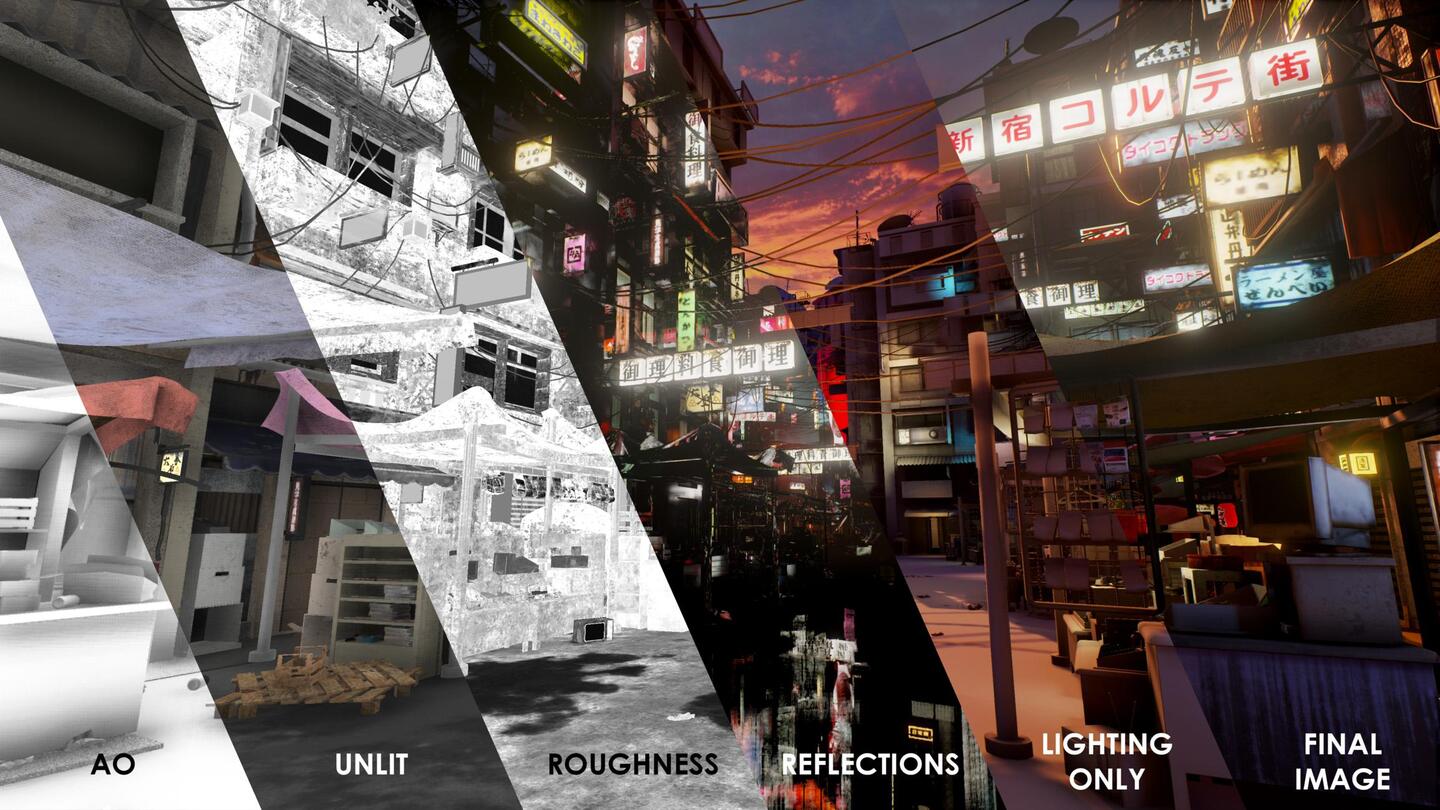
«Behind the Render» — an educational media resource on the internal workings of CGI graphics.The project explores how images are created across film, video games, advertising, animation, and independent 3D projects.Each episode centers on a specific CGI frame, which is broken down into its constituent elements: modeling, geometry, materials, textures, lighting, composition, camera work, simulations, and compositing.

Data Sources for Media
To create a high-quality analysis, it is not enough to simply find a beautiful render. It is necessary to gather information about its origin, author, production process, and specific technical solutions. Sources are divided into four main groups:
Primary Sources (Production Materials)
Official breakdown videos from studios and artists.Making-of and production diaries.Project files, scenes, models, and textures.Author commentary and technical presentations.These are the most valuable resources because they allow students to study real production decisions.Example: Blender Studio The official archive of open animation projects by Blender. Production files, assets, and additional materials are available on the Open Movies page.
Professional and Academic Resources
SIGGRAPH and ACM Digital Library publications.
Computer graphics technology documentation.
Technical articles on rendering, lighting, and simulations.
Research in computer vision and visualization.
These are used to verify technical explanations and confirm CGI operating principles.
Portfolio and Creator Platforms
ArtStation.Sketchfab.Official websites of 3D artists and studios.YouTube channels of creators and production teams.These are needed to find visual case studies, determine authorship, and locate supplementary materials about the work.
Official Program and Technology Documentation
Blender Manual.Unreal Engine Documentation.Adobe Substance 3D Documentation.Foundry Nuke User Guide.These are used as reference materials to verify technical terminology, tool operation principles, and production stages.
Data schema divided into human and machine processing
The «Behind the Render» workflow is structured around dividing tasks between automated services and the editorial team. Machine processing handles the search and collection of materials, metadata extraction, transcription, sorting, preliminary classification, and draft preparation. Human processing is responsible for verifying accuracy, interpreting visual concepts, theme selection, editing, authorial conclusions, and publication. The core principle is that automation accelerates material preparation but does not replace expert CGI analysis.
Overall Data Flow Diagram
DATA SOURCES: Blender Studio · SIGGRAPH · GDC Vault · ArtStation · Sketchfab · YouTube · technical documentation — DATA COLLECTION — MACHINE RSS · YouTube Data API · manual links · automated import— PRIMARY PROCESSING — MACHINE Extraction of titles, authors, dates, and links · transcription · preliminary classification— EDITORIAL CURATION — HUMAN Verification of the original source, authorship, technical accuracy, and usage rights for materials— ANALYSIS AND PREPARATION — HUMAN + AI AI assists in structuring information and drafting content. The editor analyzes the footage and formulates the explanation.— CONTENT PRODUCTION — HUMAN + AUTOMATION Scripting, voiceover, editing, subtitles, graphical diagrams, and text publication— PUBLICATION AND ARCHIVING TikTok, YouTube Shorts, VK Clips, Telegram, case study archive
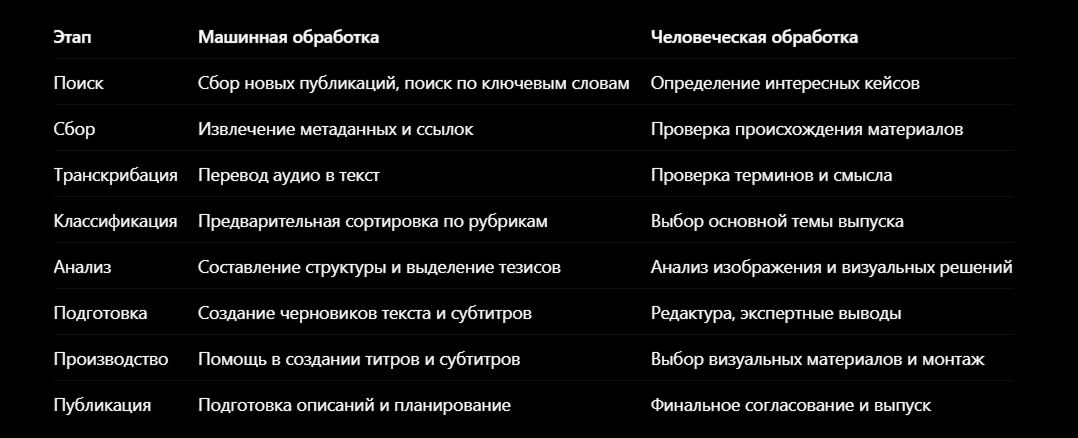

Table illustrating the division of stages between human and machine data processing
What cannot be fully automated:
Determining whether a specific visual technique truly functions as intended.
Verifying which tools a particular creator employed.
Assessing artistic expressiveness and composition.
Checking context and copyright compliance.
Formulating original editorial insight
Guidelines for Automated Services in the Scheme
General Automation Guidelines
Automated services must function as editorial assistants, not as independent authors of publications. To achieve this, the following rules are established:Do not invent unverified facts. The AI must not autonomously fabricate the author, program, studio, or production stages.Cite the original source. Every entry must contain a link to the original publication.Separate facts from speculation. If information is not confirmed, it must be marked as a hypothesis.Do not alter original author materials. Automated processing must not remove watermarks, signatures, or authorship information.Do not publish without an editor. All material undergoes human review.Maintain a processing history. It must be clear where the information originated and what modifications have been made to it.Do not use closed or inaccessible data. Collection must be done through official APIs, RSS feeds, open materials, and permitted integrations.
Make Guideline — Automated Collection
Task: Automate the submission of new materials into the editorial database.
Tool: Make
Guidelines Schema
Setup Guidelines:Connect only verified RSS feeds and authorized sources.Check whether a card already exists with this link.Do not create duplicates.Retain the original title, publication date, author, and link.Assign a unique ID to each entry.Send a notification to the editor in case of an import error.Do not initiate automatic publication of the found material.
Recommended Structure for Submission Entry: { «source»: «Blender Studio», «title»: «Publication Title», «url»: «Original Link», «published_at»: «Publication Date», «author»: «Author or Organization», «category»: «Production Breakdown», «status»: «Needs Review» }
AI Guidelines — Text Analysis and Preparation
AI is used to preprocess information and prepare editorial materials.