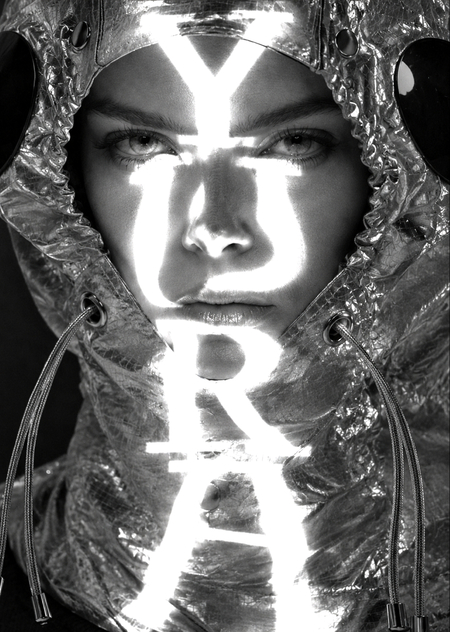
Conception: shelter — an independent Russian fashion brand that merges function and aesthetics in its designs. Through technological materials, construction, and visual identity, the brand reinterprets the concept of pioneering.
Shelter aims to restore humanity’s sense of primal freedom, to reestablish its inseparable connection with nature, and to evoke the feeling of being a pioneer. Through its forms and materials, Shelter rethinks the human relationship with the environment. The brand’s fashion pieces interact with space, allowing the individual not to resist the world, but to merge with it. Shelter invites us to step beyond, to abandon passive existence, and to reclaim the capacity to explore and to feel.
LINE 01 | NO SIGNAL
NO SIGNAL — shelter’s debut collection dedicated to the human experience at the threshold of venturing beyond familiar boundaries. The title signifies a state where conventional modes of connection lose their significance. Attention turns back to the body and the surrounding environment.
The visual and semantic language of the collection is rooted in space-age aesthetics, Siberian austerity, technical outerwear, reflective surfaces, facial-covering elements, and the sensation of existing outside of one’s usual environment.
YURA — the first piece in the NO SIGNAL line. The name is dedicated to the idea of a first step. This is not a literal reconstruction of a space helmet nor an attempt to create a historical costume. It is a contemporary interpretation of the pioneer spirit: the readiness to push beyond the familiar, to trust one’s own choice, and to venture into the unknown.
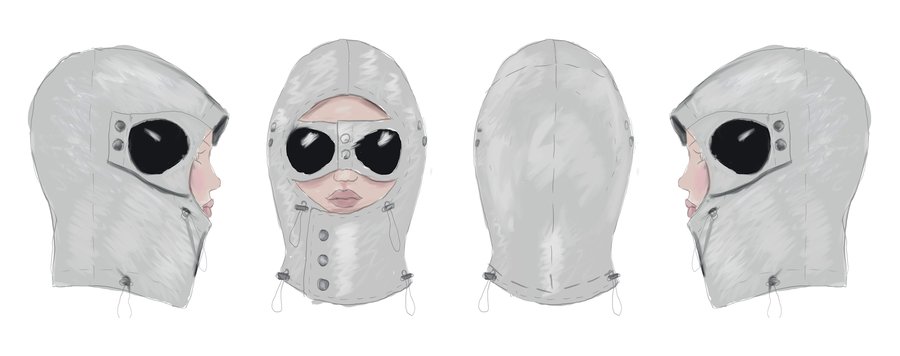
YURA Sketches
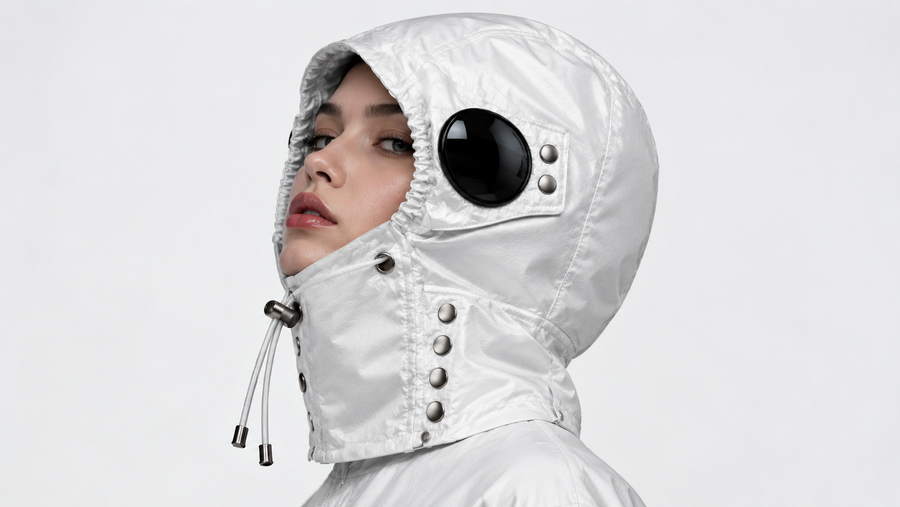
AI Generation Based on Sketches and Patterns
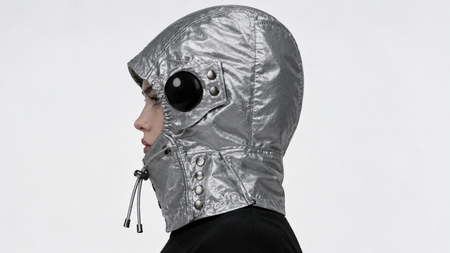
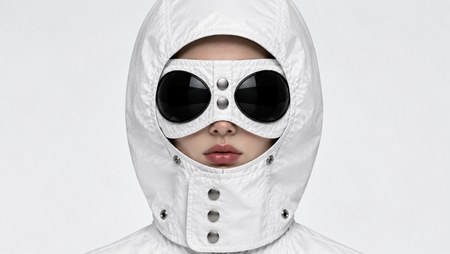
AI Generation from Sketches and Templates
YURA Structure
Prototype in mock-up fabric
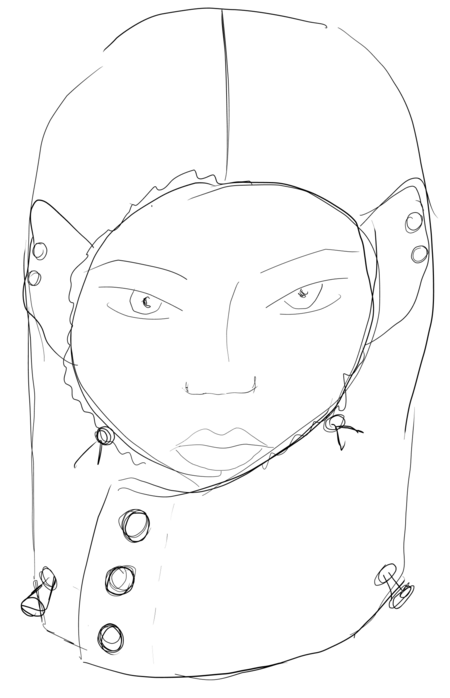
YURA is crafted from coat fabric with a silver metallic coating and features a voluminous, rounded silhouette. The front opening is framed with a finished contour, flanked by two flaps with large black lenses. The flaps attach to the main shell via metal snaps, allowing their position to be adjusted and the garment’s appearance to be transformed. The lower front portion of the hood is designed as a high protective collar, covering the chin and neck. A drawstring system, passing through metal eyelets and fitted with toggles and metal tips, is provided for fit adjustment. The interior of the hood is lined, which conceals internal seams and ensures comfort while wearing.
Technical Implementation
Materials and Hardware
Shell Material Durable jacket fabric based on polyester or polyamide with a silvery metallic coating.
Lining Smooth lining fabric that ensures comfort against the head and face, reduces friction, and allows for neat finishing of the internal seams. 100% polyester, lining taffeta in neutral gray or silver.
Lenses and Vents Two black lenses of an organic oval-teardrop shape are set into separate vents made from the main fabric. The vents are located on the sides of the face opening and are secured to the hood with metal snaps, allowing the face to be opened or the eyes to be covered.
Hardware and Adjustments Metal snaps, eyelets, and drawstring clasps.
AI Generation Based on Sketches and Patterns
Cost for one experimental prototype — ₽7,500 Cost to produce YURA at a run of 10 units — ₽58,000 Estimated retail price per YURA — ₽16,900.
Potential Production Partners