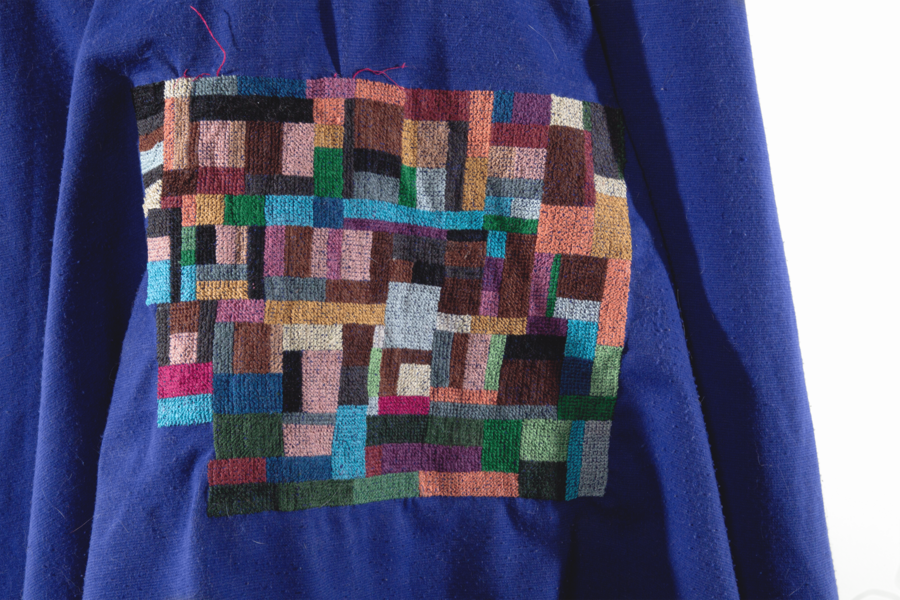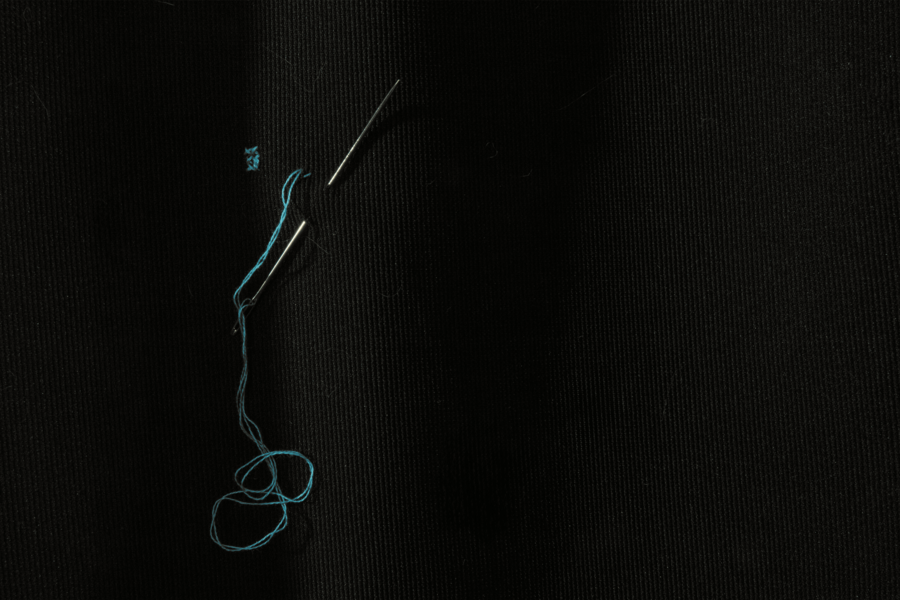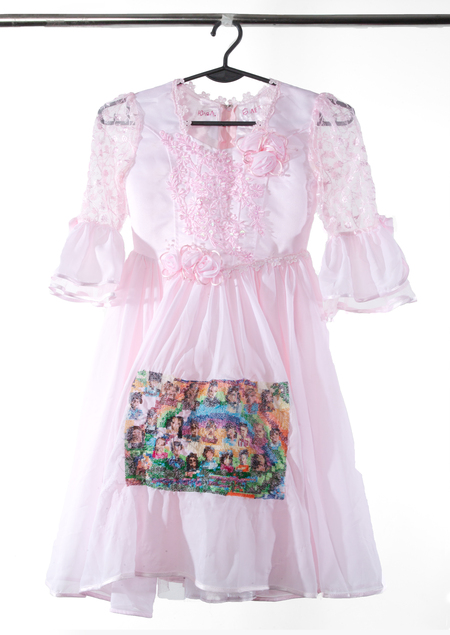
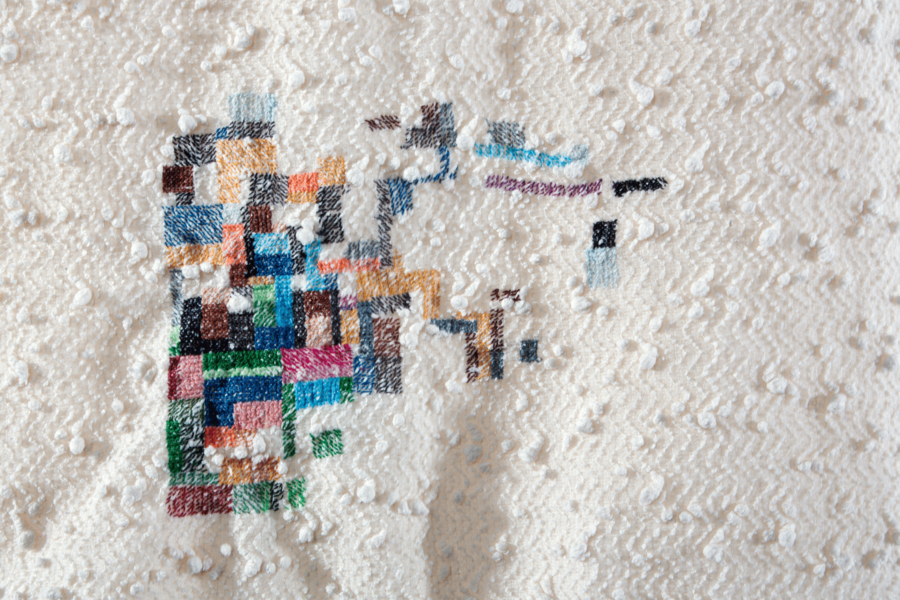
The foundation of this work is a technique I developed in a previous project using embroidery, titled «I Don’t Remember.» The core of this technique is that the embroidered image loses its detail from one piece to the next, creating a metaphor for fleeting memories. In this new project, I am developing that method: I am adding new details, complicating the inherent metaphor, and making it more layered.
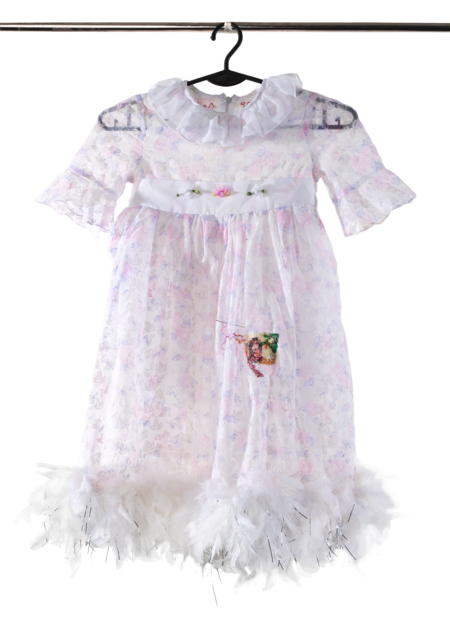
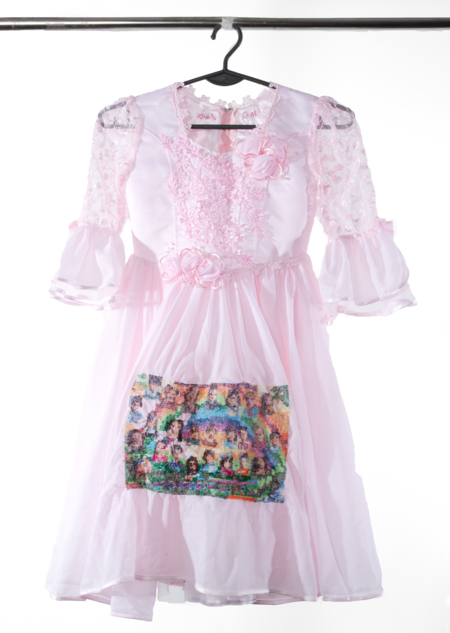
«Yulia L., 4 years old» and «Yulia L., 6 years old»
The source image, which forms the embroidery pattern, is a photograph of my kindergarten class from the year I graduated. I am approaching my kindergarten memories as a starting point. This is a significant stage in any child’s life—one of the first vivid impressions, a period when memory is just beginning to form. However, these early memories prove extremely fragile. I can already barely recall the names of my friends from games or what we played, even though this very experience laid the foundation for my personality. Reconsidering my method, I am adding a new element that speaks to the nonlinearity of memory. The process of forgetting is inconsistent and much more complex, as numerous external factors influence it. To convey this idea, I manipulate the degree of image loss differently: part of the pattern disappears, some embroideries are almost entirely «finished, ” while in others the original drawing is barely discernible. The loss of detail transforms the embroideries into abstract canvases that hardly reveal the original image. This creates a distinct barrier between the viewer and my personal memories. Thus, I emphasize the private nature of memory, the individuality of lived experience, and the impossibility of fully knowing what another person’s memory holds.
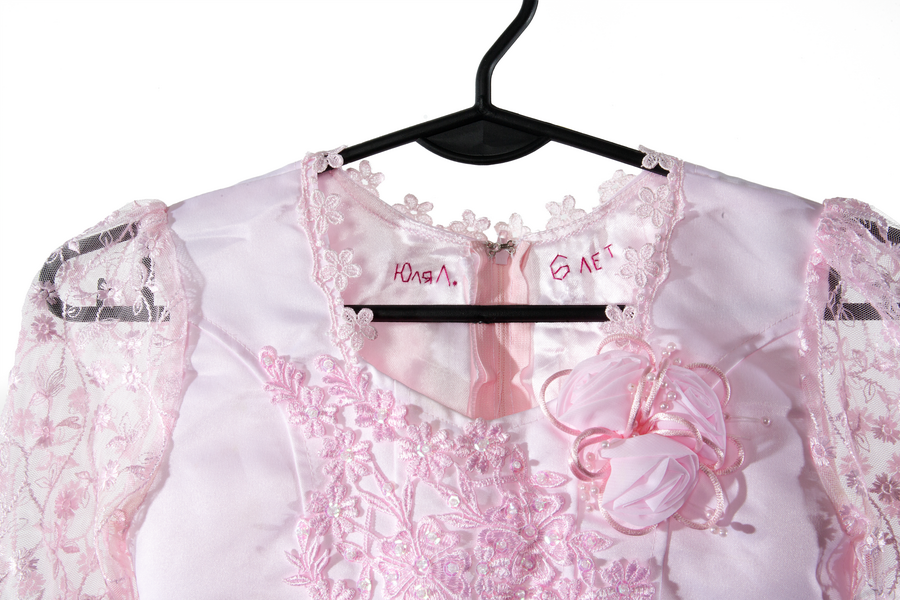
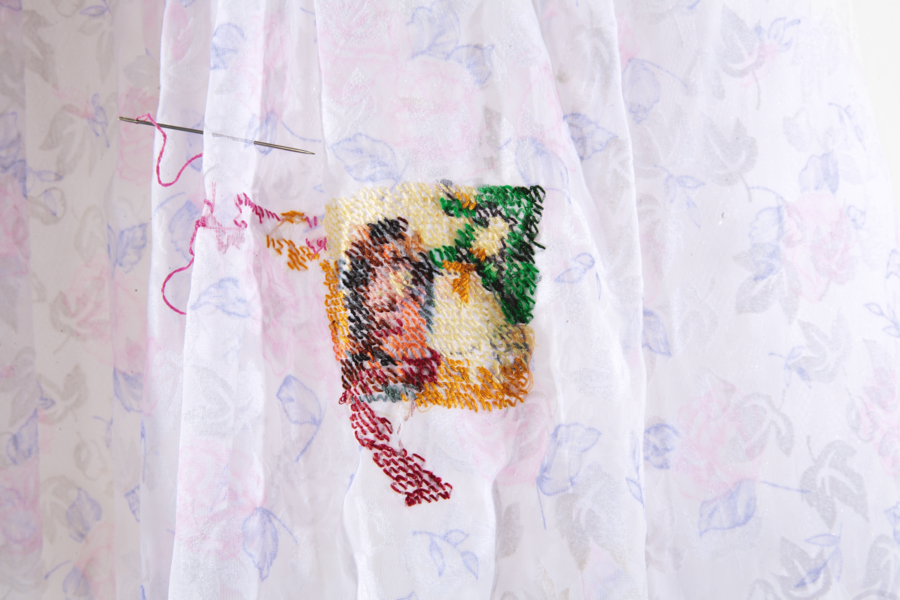
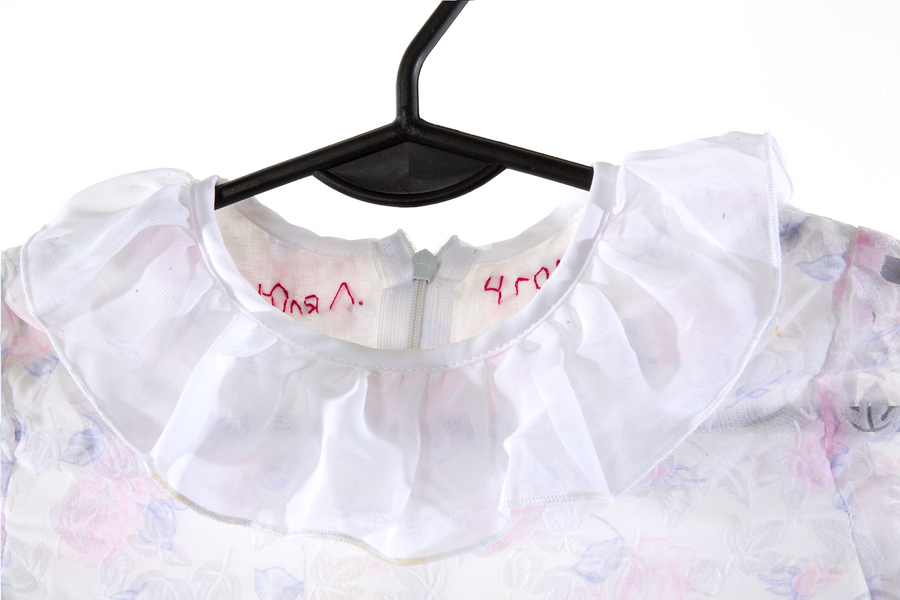
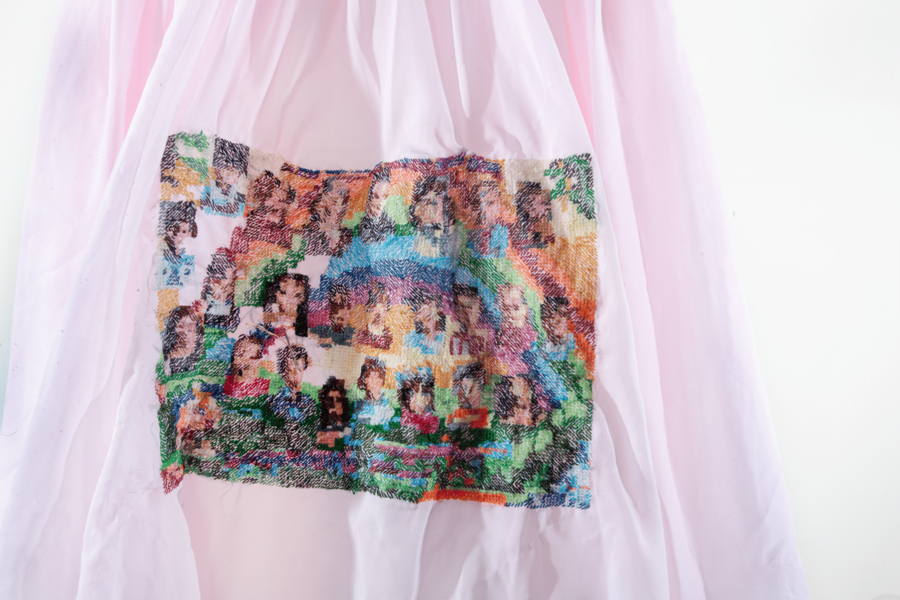
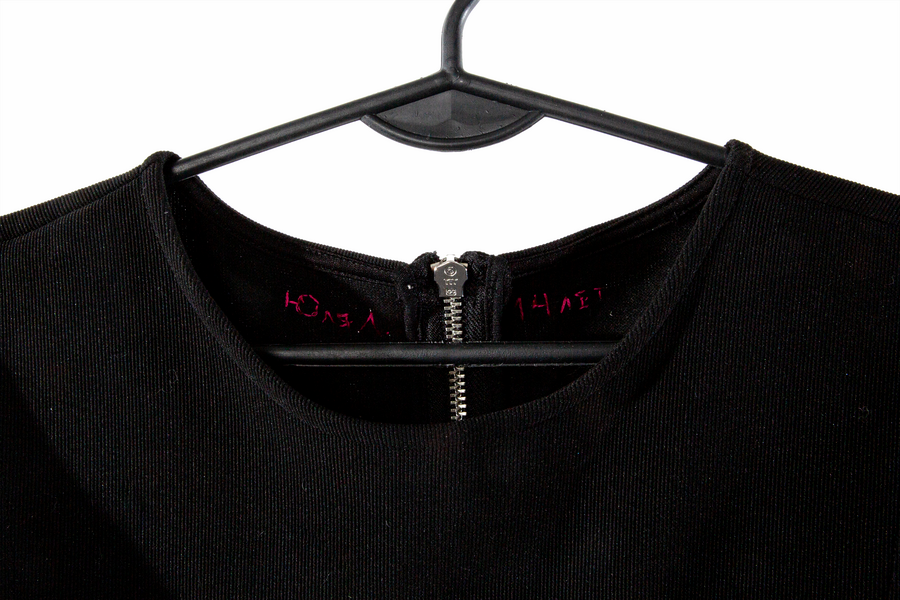
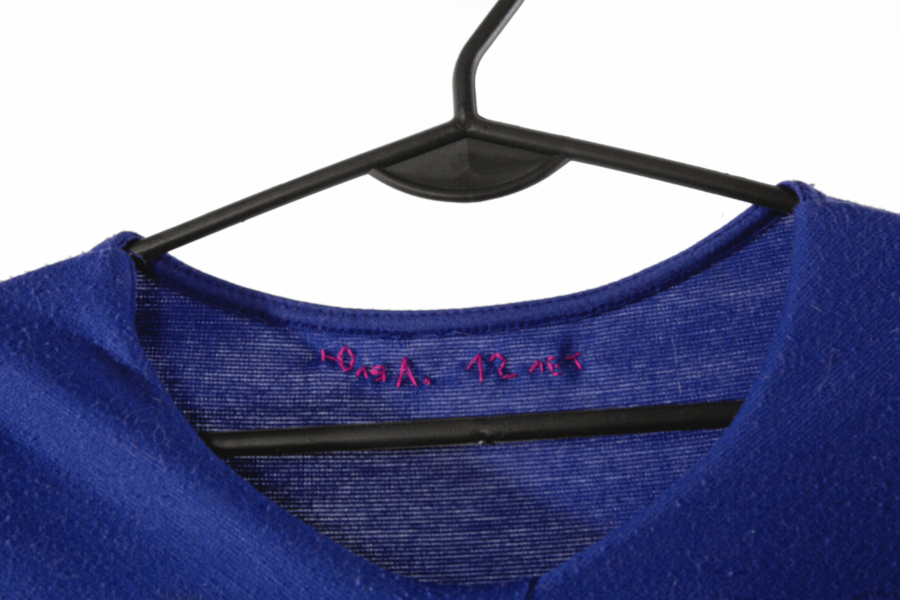
Another anchor to the theme of the personal becomes the foundation onto which the embroideries are applied: my childhood dresses from the family archive. They are ranked by age—from the dress I wore at four years old to the dress I wore at fourteen. By introducing these material testimonies of time, I turn memory from a mere metaphor into something that directly reflects itself in cherished and memorable objects. Each dress is labeled: «Yulya L.» and the age I wore it. This navigation recalls how my grandmother would label my belongings in childhood. This gesture unites all the pieces, becoming a «beacon of memory» that does not fade with time, and demonstrates another, alternative mode of memory at work—a persistent one, in contrast to fleeting visual images.
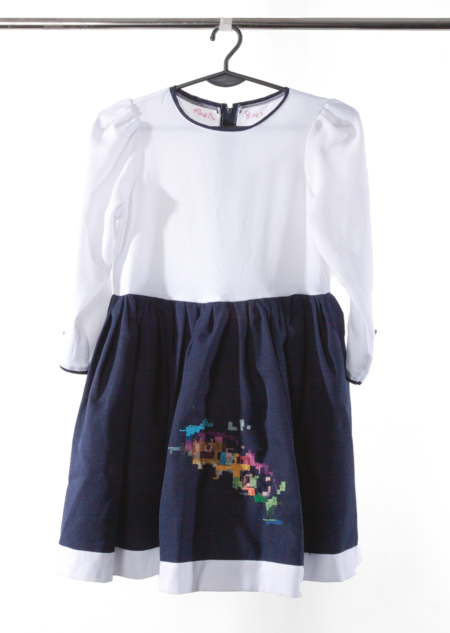
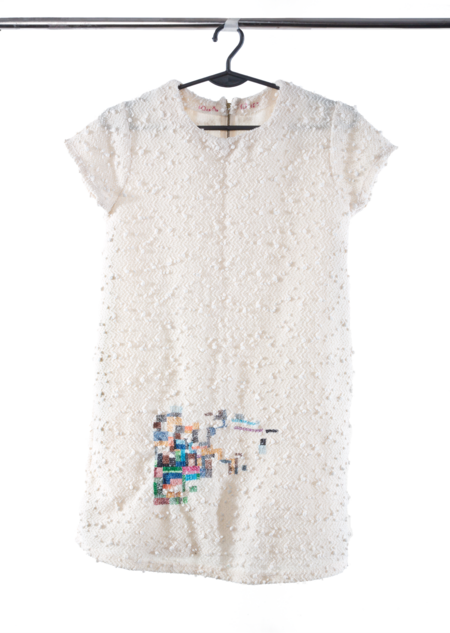
«Yulia L. Age 8» and «Yulia L. Age 10»
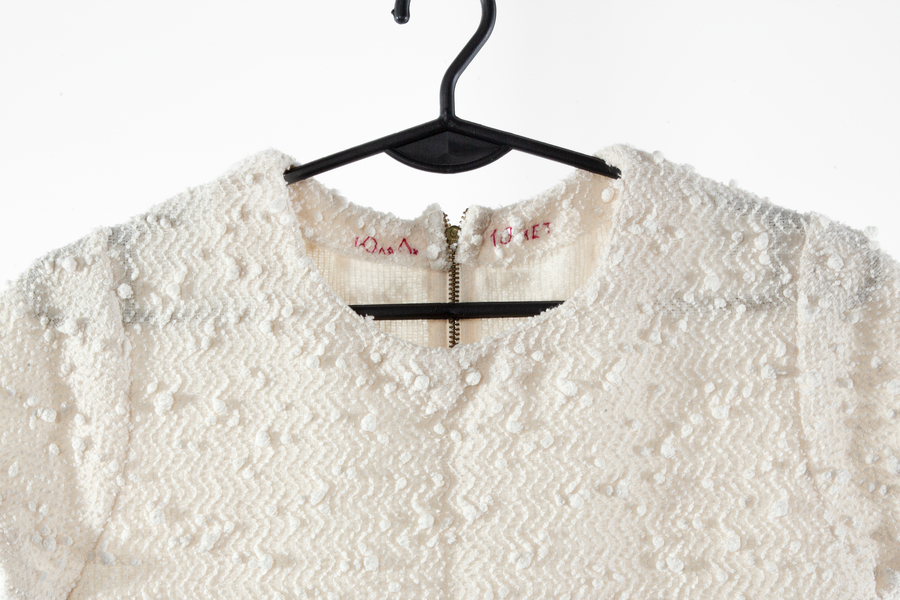
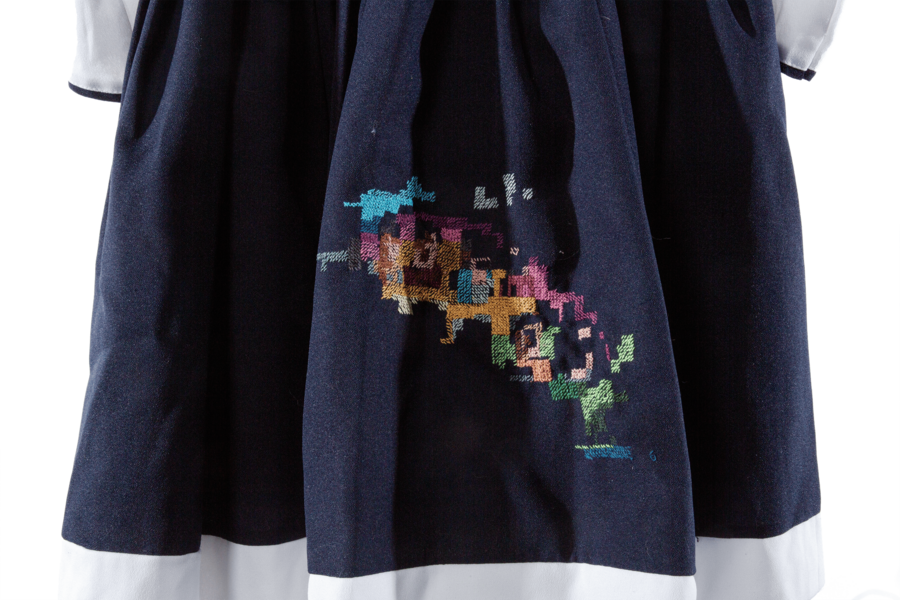
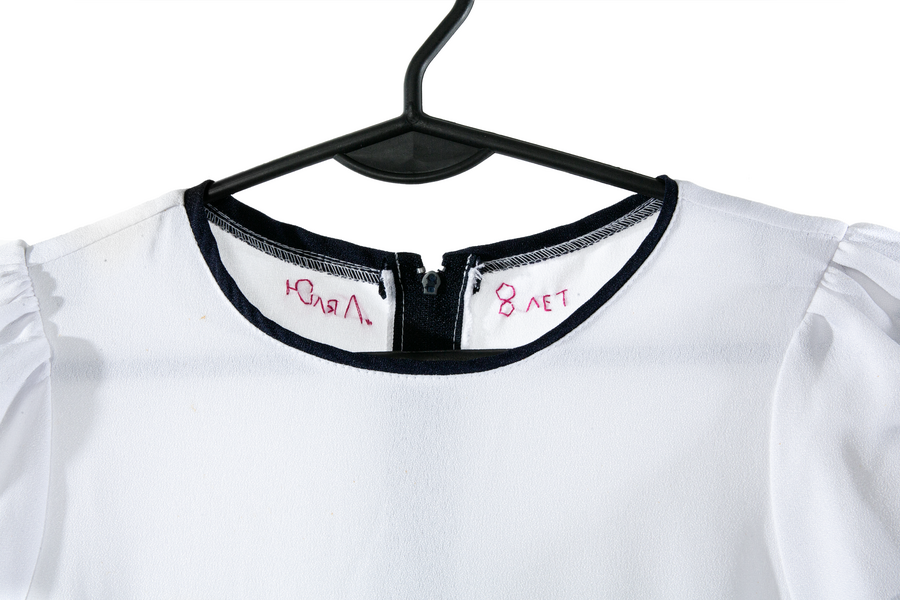
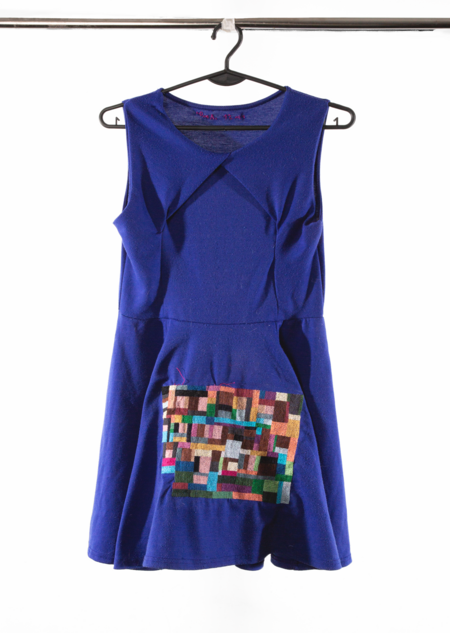
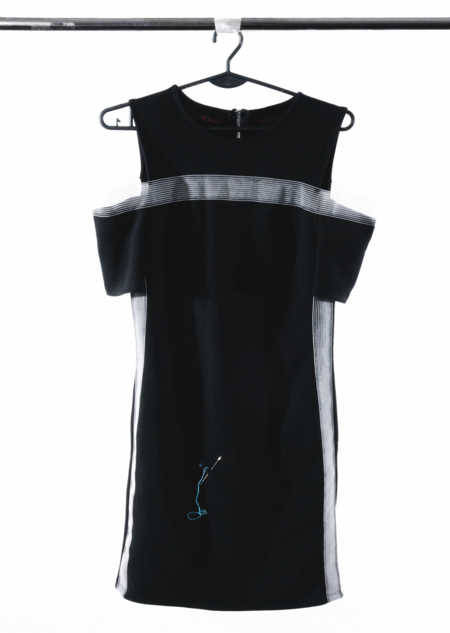
«Yulia L., 12 years old» and «Yulia L., 14 years old»