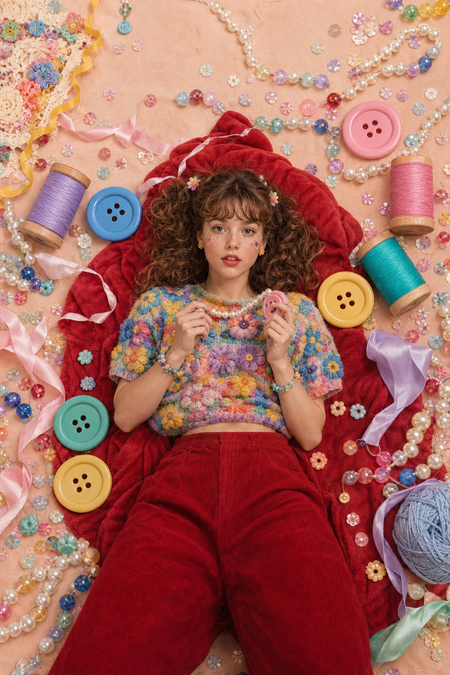
Y-hobby is derived from the well-known DIY—"Do It Yourself"—term, using the letter Y specifically as a media representation for «for yourself.»
Media Objectives
Helping everyone interested in crafting to choose and master accessible DIY hobbies that can be practiced at home without a workshop, a large budget, or specialized education.The media solves a specific problem: «I want to find a hobby for fun and relaxation, but I don’t know where to start, what materials to buy, how much it will cost, or how to avoid ruining my project / hurting myself.»This is not just an inspiring feed of «beautiful crafts»; it is a regular media stream featuring breakdowns, checklists, budget guides, common mistakes, and safe scenarios for your first project.
Media Themes
Segment:
People of various ages looking for an offline hobby for recreation, self-expression, gifts, or supplemental income. They often live in the city, lack a dedicated workshop, and are constrained by time and budget.Niche Topic:
«Accessible DIY Hobbies at Home: Thermomosaic, Rhinestone/Diamond Painting, Epoxy Resin, Polymer Clay, and other techniques—from first project to confident skill.»Why This Topic Sustains a Course:
★ New techniques, materials, tools, and trends emerge constantly;
★ There are perpetual resources: YouTube, Pinterest, Telegram, VK, artisan blogs, material reviews, manufacturer instructions;
★ Content can be released regularly: breakdowns, checklists, comparisons, common errors, curated collections, interviews, and quizzes.
Competitors and Their Analysis
Comparison Criteria:
★ Topics and Techniques: what DIY hobbies are covered.
★ Target Audience: beginners, experienced individuals, parents, vendors.
★ Platforms and Content Adaptation.
★ Formats and Tools: articles, cards, videos, podcasts, stories, polls, saves.
★ Tone of Voice: expert, friendly, inspirational, sales-oriented.
★ Visual Style and Engagement: photos, videos, before-and-after, UGC.
Direct Competitors
These are media and communities focused on DIY hobbies for the same audience.Indirect Competitors
1. Pinterest
Themes and Techniques: All visual DIY techniques, independent of a specific school.
Target Audience: Broad—from beginners to experienced creators, predominantly visual learners.
Platforms and Content Adaptation: Pinterest exclusively; content is adapted for the vertical pin format.
Formats and Tools: Images, ideas, boards, saves; video pins are less common.
Tone of Voice: Inspiring, neutral.
Visual Style and Engagement: Aesthetic, visual; engagement is driven by saves rather than discussion.2. YouTube / TikTok / Reels
Themes and Techniques: Any DIY techniques, often trending and visually spectacular.
Target Audience: Mass market, primarily beginners and «viewers, ” not practitioners.
Platforms and Content Adaptation: Video platforms; content is rarely adapted, often simply re-uploaded.
Formats and Tools: Short and long videos, shorts, comments, saves.
Tone of Voice: Entertaining, engaging.
Visual Style and Engagement: Dynamic; UGC comes through challenges and duets, but without editorial depth.3. Marketplaces Ozon, Wildberries
Themes and Techniques: Items available in the catalog—kits for thermo-mosaics, rhinestones, resins, clay.
Target Audience: Kit purchasers—beginners, parents, gift-givers.
Platforms and Content Adaptation: Website and app; content is tied to the product listing, not the technique.
Formats and Tools: Product pages, reviews, collections; videos and stories are within the product listing.
Tone of Voice: Sales-oriented.
Visual Style and Engagement: Product-focused
Potential Competitors
1. Hobby recommendation services and apps These could add content and become media outlets.
2. Lifestyle bloggers They could expand into DIY hobbies and capture audience attention.
3. Neural networks and idea generators They could offer schemes, selections, and instructions, competing for user time.
Conclusions and Insights
★ Most competitors are either shops, inspirational feeds, or individual artists. ★ Few systematically cover a beginner’s first project—budget, safety, consumables, errors, and home space. ★ Areas to adopt: product cards, before-and-after shots, process videos, curated collections, polls, UGC, and saves. ★ Ways to differentiate: «first project in the evening, ” „safe at home, ” „honest material reviews, ” and „budget and consumables.“ ★ It is important to verify sources and warn about toxicity, ventilation, tabletop protection, etc.Distribution Channel
Main Channel: Telegram.
Why:
★ The 20–40 age demographic actively uses Telegram;
★ It is convenient for publishing cards, checklists, collections, and polls;
★ It supports saving, forwarding, and searching;
★ It allows for easy A/B testing of formats and content adaptation;
★ It is suitable for a regular media stream.Additional Channels:
★ TikTok — for visual processes and short tutorials;
★ Pinterest — for inspiration and traffic generation;Adaptation:
One analysis can be adapted into a 5–7 slide card, a post-checklist, a 45-second short video, a materials collection, and a poll.
Target Audience Description
Segment 1. «Novice Explorer»
Context: Wants to find a hobby but fears complexity and cost.JTBD: «When I’m looking for a relaxing hobby, I want to understand what suits me and how much it costs so I don’t quit after a week.»
Problem: Too many techniques; it’s unclear where to begin.
Media Value: technique comparisons, a first project, budget, material list.
Segment 2. «Practitioner»
Context: Is already trying thermo-mosaic, rhinestones, and resin.JTBD: «When I’ve grasped the basics, I want to improve quality and find new ideas so I don’t get stuck at one level.»
Problem: Not enough error analysis or advanced techniques.
Media Value: breakdowns, life hacks, material reviews, interviews with masters.
Segment 3. «Gifter / Seller»
Context: Makes gifts or sells on marketplaces.JTBD: «When I make something for a gift or to sell, I want it to look beautiful, be packaged well, and be photographed so it’s appreciated.»
Problem: Lacks packaging, professional photos, pricing, or positioning.
Media Value: case studies, checklists, photography guidance, packaging tips, pricing strategies.
Segment 4. «Parent / Teacher»
Context: Works with children.JTBD: «When I’m working with a child, I want a safe and simple project that is engaging and doesn’t use toxic materials.»
Problem: Safety, age appropriateness, mess.
Media Value: safe techniques, age restrictions, simple projects.
Unique Selling Proposition
Based on an analysis of direct competitors.
USP 1
First evening project without a studio.We show you how to master a DIY hobby at home: with a minimal set of materials, budget constraints, and a step-by-step plan.
USP 2
Material safety and honest reviews.We warn about toxicity, ventilation, and protection for surfaces and skin. We compare materials and tools without marketing hype.
USP 3
From idea to finished product: templates, consumables, and common mistakes.We provide not only inspiration but also specific schematics, checklists, time estimations, and an analysis of typical beginner errors.