Research Concept
Chapter 1. Primitive Art
Chapter 2. Art of the Ancient World: Egypt
Chapter 3. Art of the Ancient World: Greece
Chapter 4. Art of the Ancient World: Rome
Conclusion
Sources
Concept
Animals occupy a special place in ancient art. I chose this topic because I was intrigued by the contradictions inherent in their coexistence. Humans cared for animals essential to their livelihood while hunting those whose strength and agility inspired admiration. An animal could be a source of danger, a helper in daily life, or a creature from which humans sought protection. I am interested in how this manifests in the artwork through posture, movement, or the distance between figures—especially when one gesture allows for multiple interpretations. For instance, a hand resting on an animal’s body could be supporting it or restraining it. Which details determine how the viewer interprets this gesture? The main research question is: what artistic means were used in ancient art to convey the relationship between humans and animals? My hypothesis is that the meaning of the interaction depends both on the arrangement of the figures and the intended purpose of the artwork. Externally similar poses can express care, submission, or patronage. To test this assumption, I will rely on primary historical motifs and examine what specific details provide grounds for each interpretation.
When selecting material, it is important to me to be able to connect observation with specific characteristics of the image. In scenes of shared action, I will focus on the ratio of human to animal size, the direction of their movements, the placement of their hands, the tilt of their heads, and the points of physical contact. The study will also include images where the animal is depicted separately. In these cases, the basis for selection will be the ability to understand the connection between the image and human life through the object’s function, its placement, or its address to the viewer. It is important to consider who might have seen the image and under what circumstances. Separately, I will examine the specific features the artist emphasizes in the animal’s appearance—its characteristic pose, behavior, or movement. The accuracy of an observation can be described solely by the image itself, whereas concluding what emotion a person felt toward the animal will require additional evidence. The material will be organized into four historical-cultural sections: the first dedicated to primitive art, the second to Ancient Egypt, the third to Ancient Greek art, and the fourth to Ancient Rome. Within each section, I will compare images based on the nature of the relationship between humans and animals. This organization will allow me first to examine each image within its cultural context and then to trace which motifs recur across different eras and how their meaning shifts under varying conditions. The question of similarities and differences will remain open until the analysis is complete; I will address this in the conclusion. For working with textual sources, I will select museum catalogs, archaeological publications, research papers, and art history articles. When choosing a source, it is crucial to examine the foundation of the author’s interpretation. Museum descriptions will help clarify the dating, material, and origin of the object, while archaeological publications will provide information on the discovery circumstances and potential function. Initially, I will describe what can be observed independently, and subsequently, I will correlate my observations with the provided explanations.
Chapter 1: Primitive Art
Wild bulls on the wall of the Altamira cave in Cantabria. Around 16,000 years BCE.
The massive bison bodies, reddish-brown coloring, and dark outlines create a sense of weight and volume. The various postures of the heads and legs convey the diversity of the animals' states. The human figure here interacts with the surface and is present as an observer. This suggests the significance of the animals to the painters, but it does not definitively prove either worship of the bison or the performance of a hunting ritual.
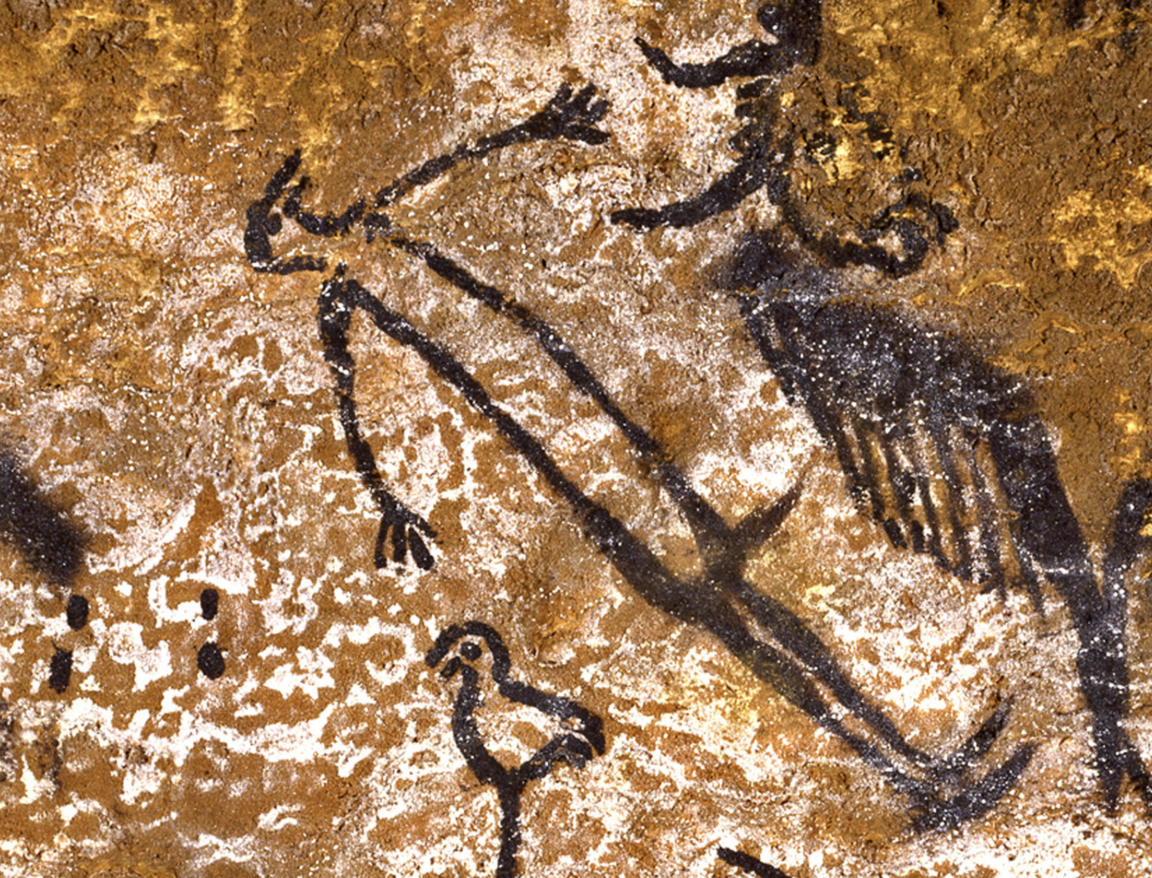
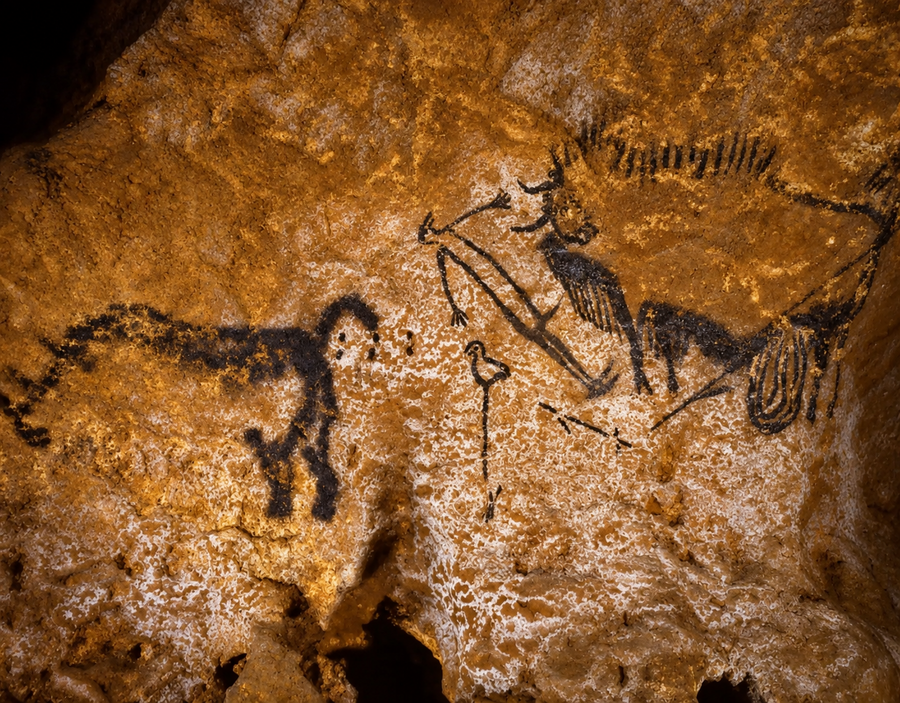
In the scene from the Lasco cave, a human figure with a bird-like head stands next to a large bison. The human body is depicted with several lines, while the animal retains recognizable contours and an expressive turn of the head. The precarious posture of the human and the signs of injury on the animal create tension. The scene is often associated with a perilous encounter between humans and beasts, illustrating the possibility of showing a person vulnerable before an animal.