PROBLEM
Conceptualizing the idea, sourcing references, and developing visual metaphors is an inherently labor-intensive process. This effort is further complicated by platforms that primarily aim to retain user attention, leading to aimless, endless scrolling. Designers spend significant time and energy on this task, often forgetting which images they have already saved or the rationale behind their selections. The intended association gets lost in the stream of similar references, leaving no opportunity to structure or analyze them for the next stage of concept development.
HYPOTHESIS
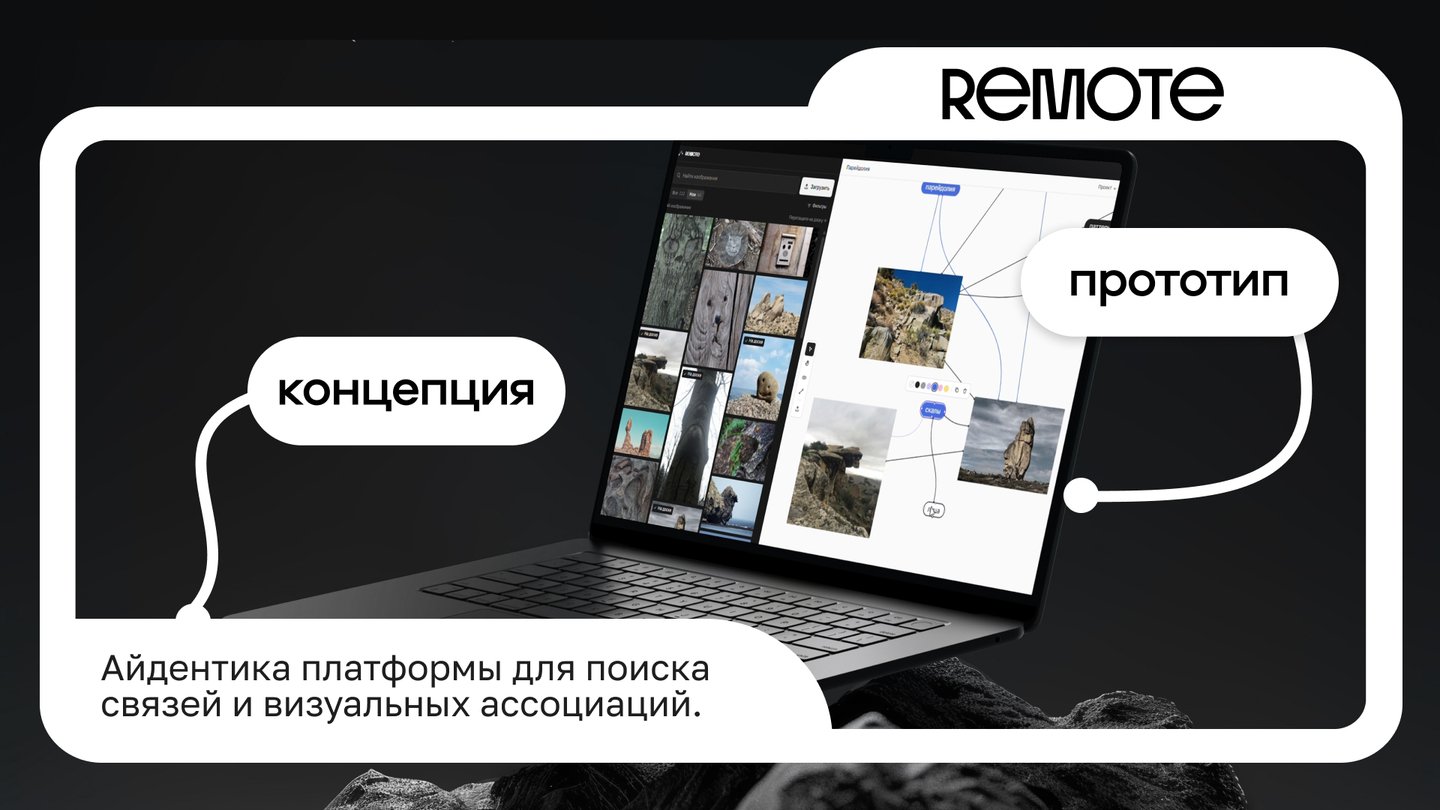
The Remote platform offers several potential solutions to this problem. One of the core ideas is to integrate image search and association mapping into a single space, allowing users to move more seamlessly from viewing references to developing an idea and exploring associations.
METHODOLOGY
detection → filtering → interpretation → analysis
→ consolidation









Step 3. Resolution
Представьте подход, метод или продукт
Articulate your solution simply and concretely: what exactly are you proposing, and what problem does it solve?
Begin with the overarching idea, and only then detail the mechanics and operational logic if necessary.
Maintain focus on the core concept—details can be relegated to supplementary slides.








Step 4. Defense
Подтвердите состоятельность решения
Support key claims with facts, examples, and measurable results.
Use case studies, data, demonstrations, and practical breakdowns—they reduce skepticism and make the solution verifiable.
If the audience might have questions—it’s best to answer them proactively here.









Step 5. Action
Переведите понимание в решение
Formulate a clear next step for the audience: what exactly is proposed after the presentation.
Indicate any format, stages, or conditions that might influence the decision.
A strong call-to-action slide removes ambiguity and converts interest into commitment.









Step 6. Final
Зафиксируйте главный смысл и оставить сильное послевкусие
Articulate the central thesis of the entire presentation in a concise and memorable way.
You can return to the original problem and showcase the new state after implementing the solution.
The final screen must retain the core meaning and direction—even if the viewer remembers nothing else.