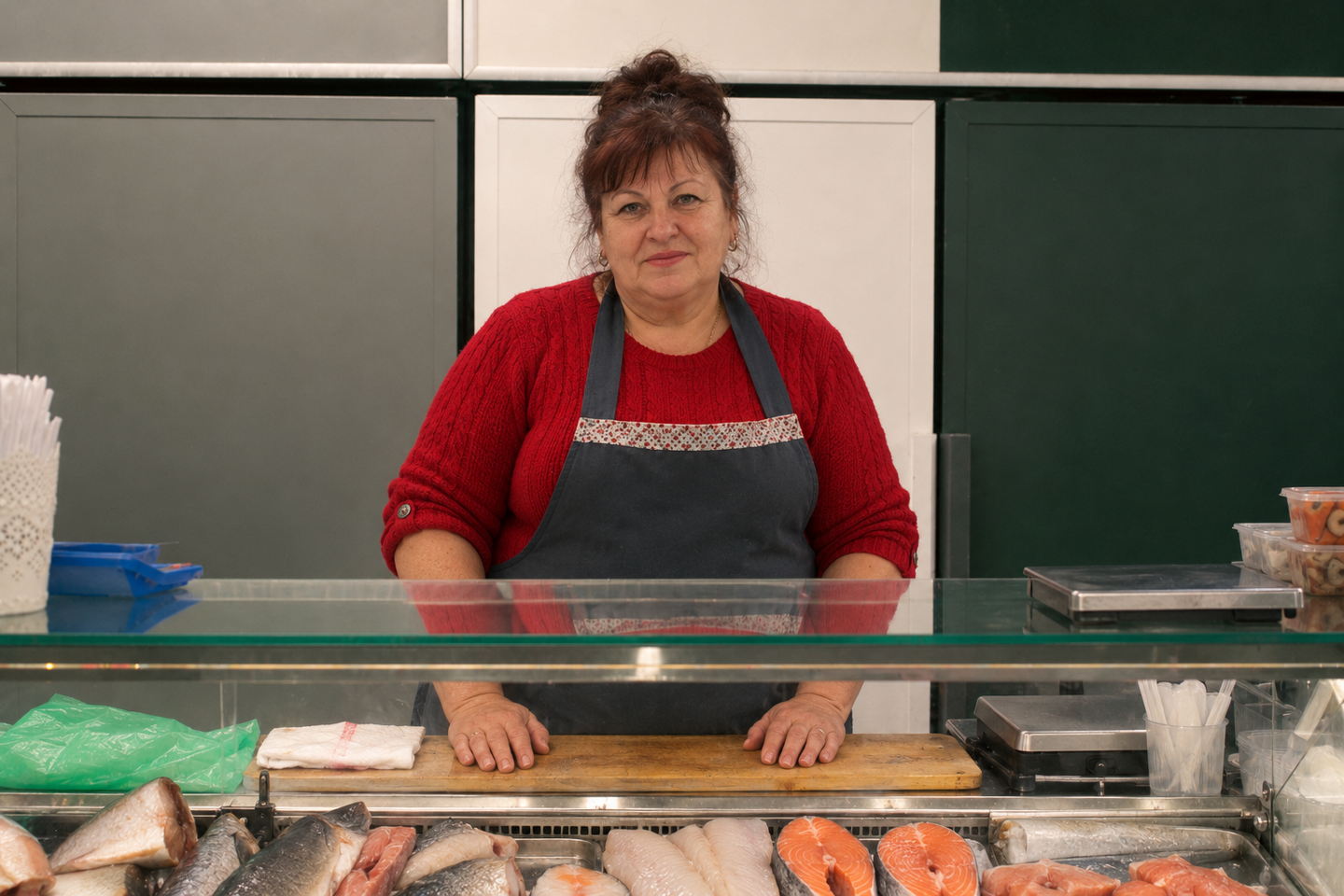
The guard at the entrance, the vendor behind the counter, the courier at the door—we meet them, exchange a few words, and move on. Our acquaintance is limited to the professional role, behind which a whole life resides: hobbies, relationships, memories, and plans.
Who are these people beyond the role we are accustomed to?
«Secondary» is a city media platform that introduces people through photographs and personal stories. A person who appears only for a moment in someone else’s day becomes the main character, telling their own story about what matters to them.
Goal
The goal of the media project «Secondary People» is to make visible the people we encounter daily but rarely notice outside of their professional roles: salespeople, security guards, cleaners, and other participants in urban life. Through photography and personal stories, the project shifts the focus from their job function to their character, experiences, and individuality. The title challenges the conventional division between protagonists and secondary characters: the person who remains in the background of our lives is the leading figure of their own story.
Topics
Segment: Urban media focusing on people and daily life.
Narrow theme: The personal stories of employees in the urban service sector—salespeople, security guards, couriers, cleaners, and doormen—whom we regularly encounter but know only through their work.
The media reveals the heroes' lives beyond their professional roles: their hobbies, relationships, memories, values, and aspirations. Each feature is an introduction to one person through their narrative, portrait, and the meaningful details of their everyday life.
Competitors
Selection and Comparison Criteria
For this analysis, we selected projects that reveal personal human experience, address urban daily life, or possess the potential to expand their thematic scope in this direction. The research was conducted through search engine results, official websites, interview sections, and public Telegram feeds.
Direct Competitors
Direct competitors include projects where understanding a person through photography and personal narrative forms the basis of the format. Foreign examples are most similar in their editorial approach; their overlap with the Russian-speaking audience is limited by language and geography.
1. Humans of New York
Brandon Stanton’s project features the stories of strangers through photographs and interviews. The latest posts are shared on Instagram and Facebook; the official website introduces the project and its creator.The visual language is built around photographic portraits and the subject’s environment. The core tools are imagery and narration of personal experience. The tone can be characterized as intimate—the focus is on the person’s experiences and their own words. The degree of duplication of posts across social media was not established in this study.The similarity to «The Secondaries» lies in transforming an unknown person into the central figure of the material. Our project’s difference is the consistent selection of service industry workers. A principle that can be borrowed from the competitor is linking the portrait to a specific episode of personal history.2. Humans of AmsterdamDebra Barro’s photographic project reveals the stories of Amsterdam’s residents and visitors. The website features individual stories and thematic series; the project is also developed through social media, a book, and collaborations with other organizations.The primary visual tool is the photographic portrait accompanied by a personal story. In specific special projects, video and supplementary images are used. The presentation focuses on individual experience and dialogue. The website organizes materials into series, but the systematic adaptation of the same publications across platforms has not been verified.The project is similar to «The Secondaries» in its attention to the individual within the urban environment. Our distinction is a narrower pool of subjects. A useful technique to adopt is the use of thematic series, which allows for the comparison of different stories around a common theme.
- «Moskovich Mag»: The «This Is My City» FeatureThis feature introduces Moscow residents through their biographies, careers, habits, favorite spots, and plans. Among the featured individuals are service industry employees, such as Anastasia Morozova, a «VkusVill» sales associate. The publication utilizes its website and Telegram channel.The interview analyzed combines photography with a first-person narrative, segmented into recurring thematic blocks. The tone is conversational, preserving the protagonist’s personal insights. The primary tool employed was a structured interview. The migration of this specific material to Telegram has not been confirmed.The similarity to our project lies in exploring the everyday life of an individual. The difference is in the core lens: the feature examines the subject through their relationship with Moscow, whereas «Secondary» focuses on their personal life outside of a professional role. We could borrow the recurring question structure while maintaining the individuality of the responses.
Indirect Competitors
1. «Such Matters»The media covers social issues, ways to solve them, and the lives of people in Russia. It utilizes a website, Telegram, and a newsletter. The main formats include reports, interviews, monologues, photo essays, videos, and polls.Documentary photography showcases an individual and the circumstances of their life. The tone can be described as empathetic and explanatory. The Telegram feed utilizes excerpts from stories with links to the full materials; the content is adapted for initial exposure within the channel.The overlap with «Secondary» occurs through an interest in the personal experience and voice of the subject. Our primary motivation for publishing is the protagonist’s daily life, hobbies, and choices. The publication offers a model for paying attention to context and combining short posts with in-depth narratives.2. T—ZhT—Zh examines everyday life through personal experience and practical concerns. Reader stories, diaries, and materials about interests intersect with the project through an interest in people’s biographies and habits.Platforms include a website, Telegram, YouTube, and newsletters. Formats used are articles, user-generated content, podcasts, videos, and vertical clips. This structure demonstrates the evolution of various formats, although the adaptation of a specific story across them has not been tested. The presentation is predominantly explanatory; content is organized into thematic sections.The main difference is the practical orientation: the individual’s experience helps readers understand a life situation. «Secondary» will focus on getting to know the personality of the subject. For the project, reader participation in creating materials and consistent columns would be beneficial.
3. «Daily Poster»This publication intersects with «Secondary» themes through urban narratives and interviews. For example, a piece on Delivery Club couriers reveals their working conditions through direct quotes.Confirmed platforms include the website and Telegram. The open feed utilizes short messages, photographs, video snippets, links, and forwards. Full features can be presented via an announcement adapted to the channel’s format. The tone shifts depending on the genre—news reporting sits alongside a more conversational style.The individual here often becomes a participant in an event or a public issue. In our project, their personal life will serve as an independent basis for publication. We can borrow a concise entry into the story and a compelling segment from an interview.
Potential Competitors
1. The VillageThe «People in the City» section compiles materials about residents, their experiences, and lifestyles. The site utilizes interviews, stories, and video content. The presentation blends urban issues with the personal perspectives of the participants.This cross-section would be stronger if service industry employees became the focus of a recurring series about life outside of work. What differentiates «Secondary» is that this theme defines the entire project. We can draw inspiration from The Village’s connection between personal narrative and a specific urban environment. Cross-platform adaptation within the scope of this study has not been established.2. MoslentaThe publication defines its theme through the life of Moscow—its events, the daily routines of its citizens, and urban changes. This focus creates potential for a series of portraits featuring employees of city infrastructure.The website was confirmed within the research framework. A possible competitive scenario involves transitioning from isolated urban stories to regular narratives about the people who sustain the city’s daily function. «Secondary» is distinguished by its consistent attention to their personal lives. A useful benchmark is anchoring the material to familiar places and situations; the use of stories, short clips, and cross-platform adaptation has not been confirmed.3. «SHI» — VkusVill magazineThe magazine publishes content about food, production, daily habits, and the people connected to this environment. The reported piece on the Rostov market uses photographs, observations, and conversations with vendors.The journalistic format merges an environmental depiction with specific details and participant dialogue; the tone can be described as accessible and conversational.Potential competition arises if a recurring series on the private lives of vendors and other workers develops. Our project covers various professions and organizations. We can borrow attention to objects, workspace, and conversational nuances. The adaptation of materials for social media has not been tested.
Insights and Takeaways
The difference lies in the sequential selection of subjects. Competitors are already publishing stories of ordinary people, including service industry employees. «Secondary» could stand out through consistent focus on this group and by revealing their personal experiences.
The photograph and the individual’s own voice form the basis of the format. With direct competitors, the image introduces the subject, and the narrative expands the understanding of them. For this project, we propose a combination of natural portraiture, monologue, and significant elements of daily life.
A regular structure helps unify diverse stories. Thematic series and recurring questions can be used to form content segments. The overall structure must support brand recognition while leaving room for the subject’s individuality.
The materials should be adapted to the depth of the reading experience. For Telegram, a self-contained, concise story is proposed; for the website, a full interview and an extended photo series. The announcement should provide a substantive introduction to the person and motivate the reader to continue.
The audience can participate in identifying subjects. The practice of reader publications and feedback can be developed through suggestions for new participants, questions directed to them, and discussions about the stories.
The response must be assessed alongside the content of the reaction. The sheer number of reactions indicates engagement but does not explain its cause. To develop the project, it is important to correlate publication metrics with comments and to distinguish the audience’s attitude toward the subject, the theme, and the presentation style.
Distribution Channels
The «Secondary» media distribution model involves using two interconnected platforms: a Telegram channel and its own website. Their functions are divided between regular audience engagement and the publication of in-depth materials.
TelegramTelegram is considered the primary distribution channel. The content will consist of photographic portraits, brief character monologues, photo series, and audio interview excerpts. This combination of formats will allow us to unfold personal stories through text, image, and voice.Each post will have its own complete narrative arc. Thematic sections and material navigation will ensure the coherence of the editorial program. Comments and polls are planned for feedback, discussing the stories, and soliciting suggestions for new subjects.
Official WebsiteThe site is designed to host full interviews, extended photo essays, and thematic collections. Its function is to create an accessible archive where individual publications are woven together into a cohesive overview of the project.By systematically organizing materials by profession and theme, users can compare the experiences of different individuals and trace common motifs in their stories. The website will also serve as a space for publications that require a more in-depth exploration of a person’s biography and life circumstances.
Target Audience