Concept
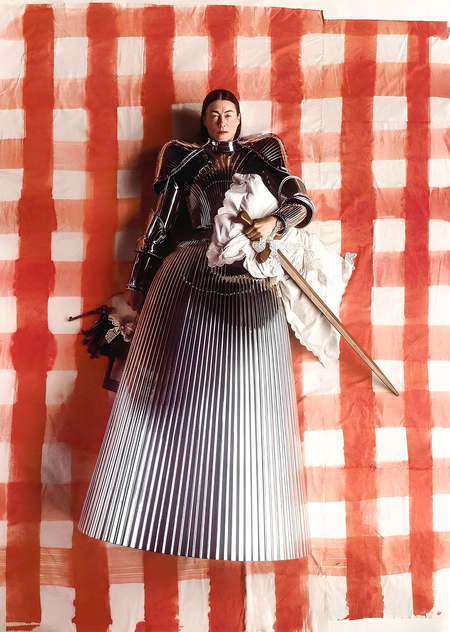
The theme, «The Influence of Knightly Attire on Modern Fashion, ” intrigued me because it investigates the intersection of history, culture, and current trends in the fashion industry. The knight’s „garb”—with its intricate forms, symbolism, and masterful craftsmanship across centuries—has left an indelible mark on fashion. By studying this influence, one can gain insight into the evolution of fashion and its relationship to broader social and cultural dynamics.
The materials selected for this visual study will encompass a wide range of sources, including historical imagery, paintings, sculptures, fashion photography, runway shows, and designer sketches. By drawing upon both historical and contemporary sources, it will be possible to explore the continuity and transformation of knightly motifs and elements in fashion throughout time.
The study will be structured around key themes and periods, tracing the evolution of knightly dress and its impact on modern fashion. Themes will include armor—its forms and construction—heraldry, chainmail, weaponry, and medieval textiles. Each theme will be examined through historical analysis, visual comparisons, and scholarly articles.
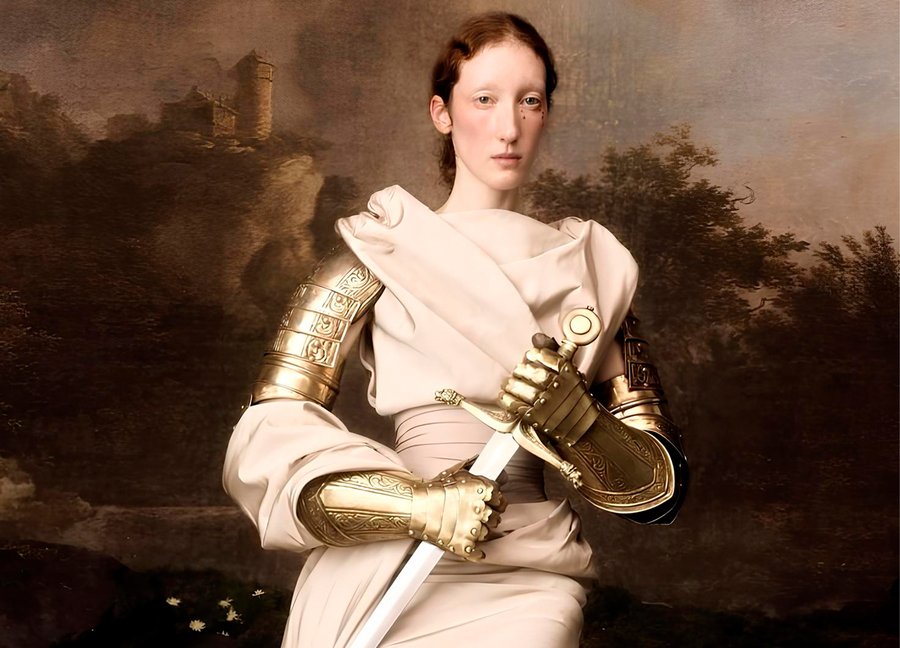
The research will be organized chronologically, spanning from the early Middle Ages to the present day, highlighting significant events and shifts in fashion trends. Textual sources will include academic articles, books, fashion criticism, and interviews with experts in medieval history and fashion studies. These sources will provide contextual information, theoretical foundations, and a critical analysis of the influence of knightly attire on contemporary fashion. The textual analysis will focus on identifying recurring motifs, techniques, and reinterpretations of knightly elements in modern fashion design. Historical images and artifacts will be juxtaposed with contemporary fashion photography and runway shots to illustrate the connections between past and present. This structured comparison of medieval motifs and modern designers' clothing will visually demonstrate which elements served as primary historical references for current designers. Through the combination of historical data, visual analysis, and critical interpretation—
The research seeks to illuminate how fashion continues to draw inspiration from the past while simultaneously reflecting the values and aspirations of the present.
Exploring the influence of medieval attire on contemporary fashion, this visual study will reveal the enduring appeal and significance of medieval aesthetics in modern clothing.
The History of Knight Armor Evolution
The Age of Chainmail
Medieval chainmail was a form of armor resembling a tunic with medium or long sleeves. It was constructed by linking small metal rings. Several types of chainmail existed—half-hauberk, which covered only the knight’s torso and shoulders, and the haubergeon, which protected the entire body.
Miniatures from the manuscript «Mendel’s Household Book I» / 1425, Germany.
The technique for making chainmail was extremely simple, allowing it to become established for centuries. Artisans would spend days in the workshop connecting one ring to another—a rather monotonous task due to its repetitive actions. Much more complex and vital was the production of the wire needed for the chainmail. Therefore, at that time, its production was industrialized. It was manufactured by drawing red-hot metal through a small conical hole, then winding the resulting «thread» onto a spool. With each iteration, the diameter of the hole was reduced, making the thread progressively thinner.
1. Psalter of Saint Louis. France / c. 1260–1270. 2. Winchester Bible. England / c. 1170.
The chainmail coif, widely known as a coif, played a crucial role in protecting the knight’s head and neck during battle. Crafted from interwoven metal rings, the coif was designed to be worn beneath the helmet, playing a vital role in defending against various threats on the battlefield. The coif typically covered the entire head down to the neck, and sometimes even extended to the shoulders, providing additional protection for the nape of the neck. Some coifs were integrated with the rest of the mail armor. One of the primary purposes of the chainmail hood was to protect the wearer from overhead attacks, such as blows from swords or blunt weapons. The tightly woven metal rings effectively dispersed the impact force, reducing the risk of head and neck injuries.



Fragments of a tapestry from Bayeux / 1066–1082
Around the mid-12th century, woven garments were worn over chainmail. Their general term is «surtcoat, ” but it is more accurate to refer to it as a „battle jacket.“ No one has definitively determined the true purpose of this item. Some believe the surtcoat served as protection from dirt and rain, while others lean toward the idea that it was the most convenient way to display a specific knight’s heraldry.
1. Goliath, miniature from the «Macievsky Bible» / 1240–1250. 2. «Ass’s Jaw» miniature / 1300. Zurich, Switzerland.
1. Goliath / 1185, France. 2. «Praying Crusader”—miniature from the Winchester Psalter / second quarter of the 13th century.
1. Mail armor with helmet and bailiff (aventail) / 13th–14th centuries. 2. Western European mail armor (hauberk) / 1400–1460.
Plate Armor
The next stage in the evolution of knightly protective attire involved plates connected by chainmail rings. This combination allowed the armor to merge the high durability of solid metal plates with the flexibility provided by movable rings. This type of armor became much harder to penetrate, offering the warrior protection against arrows and sabers. Often, it was supplemented with a mail aventail and gauntlets. Historians call these «transitional armor» because they represented a phase in the experimentation period between the dominance of chainmail and the dominance of plate armor.
Manuscript by Tristan de Leonoua / 1380–1385
Plate Armor
Medieval plate armor stands as one of the most significant and recognizable symbols of medieval military culture. Its evolution, manufacturing techniques, and constituent parts present a fascinating subject for this study.
History and Emergence Plate armor began to develop in Europe in the 14th century, reaching its zenith in the 15th–16th centuries. Its appearance was a response to the advancement of weaponry—particularly firearms and cold steel—which began to penetrate earlier forms of defense, such as chainmail and simple metal plates. Initially, plate elements were combined with mail armor, but over time, plate armor became dominant.
1. Barbute later / 1438–1440 2. Knight’s armor with brigandine over mail and bascinet helmet / c. 1400–1450 3. Landsknecht / c. 1485–1505
1. Gothic armor of Emperor Maximilian I. / 15th century 2. Segmented armor / c. 1450–1460 3. Lorenz Helmshmid (German), gothic armor / c. 1485 and later
1. Left gauntlet / c. 1495 2. Left gauntlet of Emperor Maximilian I / c. 1495
1. Harnisch / 1495 2. Full Armor of Elector Frederick I / circa 1450
1. Armor of Sir George Clifford (1558–1605), 3rd Earl of Cumberland. 2. Cuisant with gold inlay / 1582. 3. Armor of Sir James Scadamor (1558–1619).
The process of creating plate armor was complex and required highly skilled blacksmiths and armorers. High-quality steel was used and tempered to increase its strength. The metal was heated and forged with hammers, shaping it into the necessary plates. The plates were heated to a high temperature and then rapidly cooled in water or oil to increase hardness. Afterward, tempering was performed to reduce brittleness. Individual plates were joined together using leather straps, rivets, and other fasteners, creating a structure that was both flexible and strong. The finished armor was often polished and decorated with engraving or gold inlays.
1. Miniatures from the manuscript «Mendel’s Household Book I» / 1425 Germany.
The «tomet» cuirass is a specific element of protective armor that was popular in Europe during the late Middle Ages and the Renaissance, particularly in the 16th century. Tometes symbolize a transitional period in the development of armor, where functionality began to merge with aesthetics. They reflect a high level of craftsmanship from armorers and a tendency toward personalizing protective gear, emphasizing the owner’s status and individuality.
1. Kampfkurz from the Eagle collection / 1547 2. Kampfkurz of Emperor Maximilian II / 1550 3. Infantry battle armor / battle cuirass from the so-called Rosenblatt set / 1571
Brass knight helmets were an essential part of medieval armor, providing head and facial protection in combat. Their construction and design evolved over time, reflecting changes in military tactics and available technology.