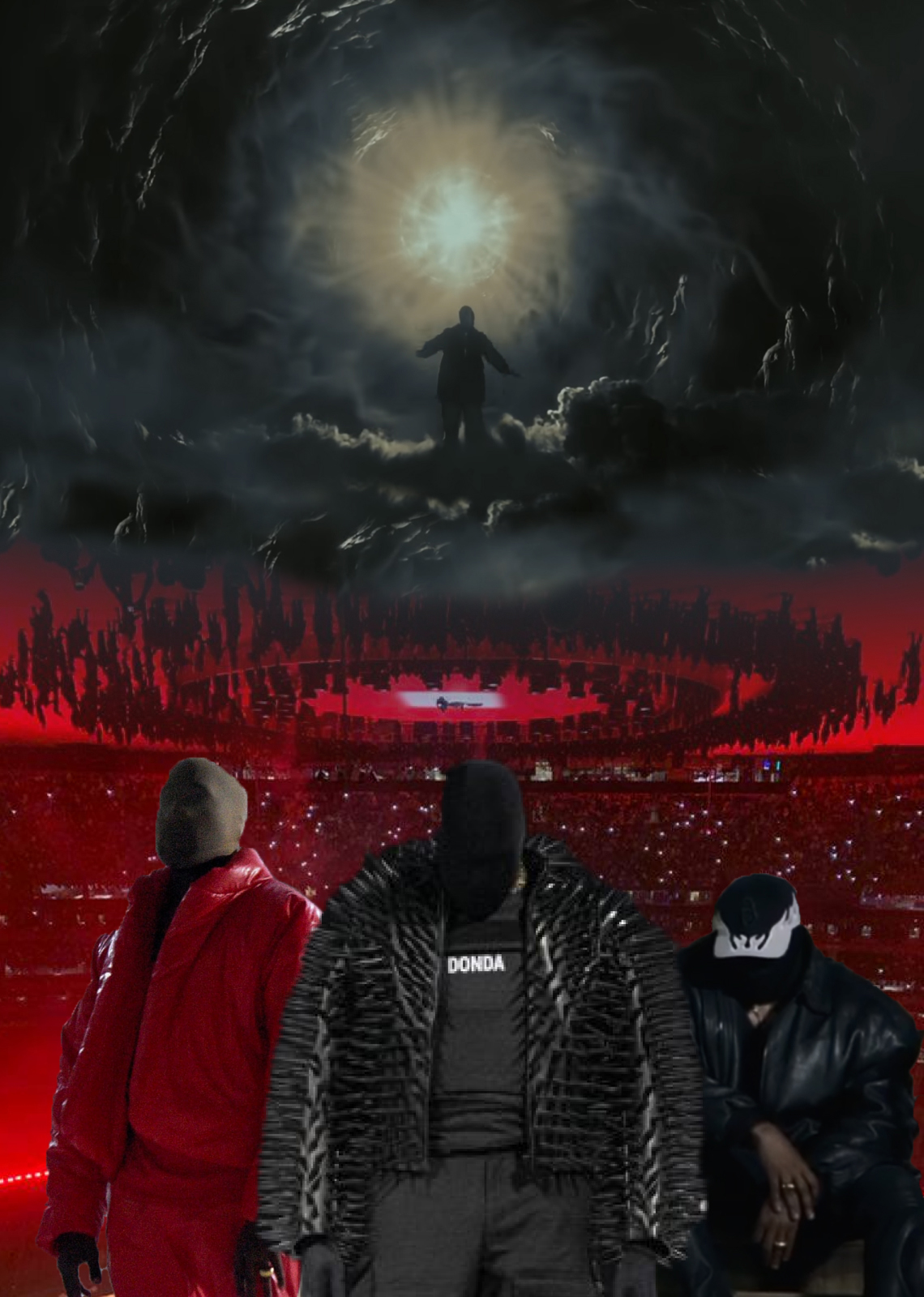
«Donda» is Kanye West’s tenth studio album. Unlike his previous works, it didn’t introduce a new sound to the hip-hop industry, but it manages to shift perceptions of the contemporary music industry by shaking up the world through its delivery, narrative, thematic shifts, imagery, and spectacle. This album successfully brought together people, sounds, and opinions.
Kanye West exists on the edge—between genius and madness, between the sacred and the profane, between sincerity and provocation.
The album was long-awaited. The release and the atmosphere surrounding «Donda» kept the entire fashion, music, television, and news industries in suspense.
«Donda» is like glass that has cracked precisely in half. On one side, there is a young man who lost his mother, seeking acceptance and pride in himself. On the other, there is a superstar building a temple of hip-hop, becoming its patriarch.
It was on this 2021 album that listeners witnessed and were given the opportunity to participate in the inception of this music.
Kanye West decided, at the very least, to present the world with a perfect gospel album, and perhaps, to become the thought leader of our time.
But how did Kanye manage to gather so much «buzz» around himself again, effectively canceling any notion of his own «cancellation» and provoking not just listening, but belief?
Research Hypothesis
Kanye has always been capable of astonishing with his musical talent (Kanye West’s album The College Dropout won three Grammy Awards in 2004). Through dedicated hard work in music, keen listening, and keen observation, he managed to anticipate the times in his releases and set trends. Each of his releases was not merely a new sound, but a reflection of his internal evolution—a quality that earned him belief and allowed others to see themselves in his work. This, in turn, helped foster the rise of new musicians.
This pattern was evident with Graduation, 808s & Heartbreak, and Yeezus. Kanye continued to pioneer new sounds in 2019 with the album JESUS IS KING, striving to create the definitive gospel album. However, despite the choir, the Sunday service feel, and the unconventional presentation, the album did not receive the attention it deserved.
Yet, it was Donda that managed to shift the paradigm. It united feuding artists and disparate public opinions—but why?
Donda emerged at the intersection of both societal and personal upheaval. There was the coronavirus pandemic, social injustice in the United States, while Kanye was navigating the unsuccessful 2020 election and his divorce from Kim Kardashian.
Furthermore, the music industry was undergoing significant changes. TikTok was becoming the most downloaded application, setting trends for «fast food» music—music created for viral trends rather than reflecting artistic ideas.
Kanye made the right decision: to tell a story about people, life, and God, thereby building a new «Babylon.»
This succeeded because of three pillars that underpinned the concept: personal tragedy, inspiration, and successful marketing and visual communication.
Context Definition
The first signs of Kanye’s desire to become a public opinion leader surfaced long before the events in question. The initial instance was his televised conflict with Bush in 2005.
However, let’s return to more recent events, specifically the 2020 single, «Wash Us in the Blood.» Here, Kanye’s desire to speak out about current affairs is already visible. This is evident in the music video’s visuals, the beat, and the lyrics, yet the chosen language doesn’t fully satisfy his needs. Therefore, the rapper abandons the album concept for «God’s Country» and passes it on to Travis Scott.
Instead, Kanye decides to focus on God and a personal story—the loss of his mother, Donda West—which occurred 14 years ago and which he felt he couldn’t adequately address.
For Ye, the loss of his mother was a devastating event—a shadow cast over a future he had spent years preparing for and expecting to be happy. His first three albums brought Kanye success, fame, money, and Grammy Awards. None of that would have been possible without his mother, Donda West. However, just one month after the release of one of those defining albums, «Graduation, ” on November 10, 2007, Donda passed away.
Kanye distanced himself from his past circle, struggled with depression, broke up with his girlfriend, and created 808s & Heartbreak—a mournful, compassionate album unlike anything he had written before. The album proved to be intensely raw, and its true resonance only emerged with time.
Kanye did not return to the theme of losing his mother in his music afterward, but it was clear that this subject would continue to haunt him for a long time. Kanye seemed like James Cameron with Avatar—waiting for new technology, the right people, or the perfect moment to articulate his most painful, defining theme: the loss of his mother.
And so, Donda came into being in mourning, only to emerge as a triumph.
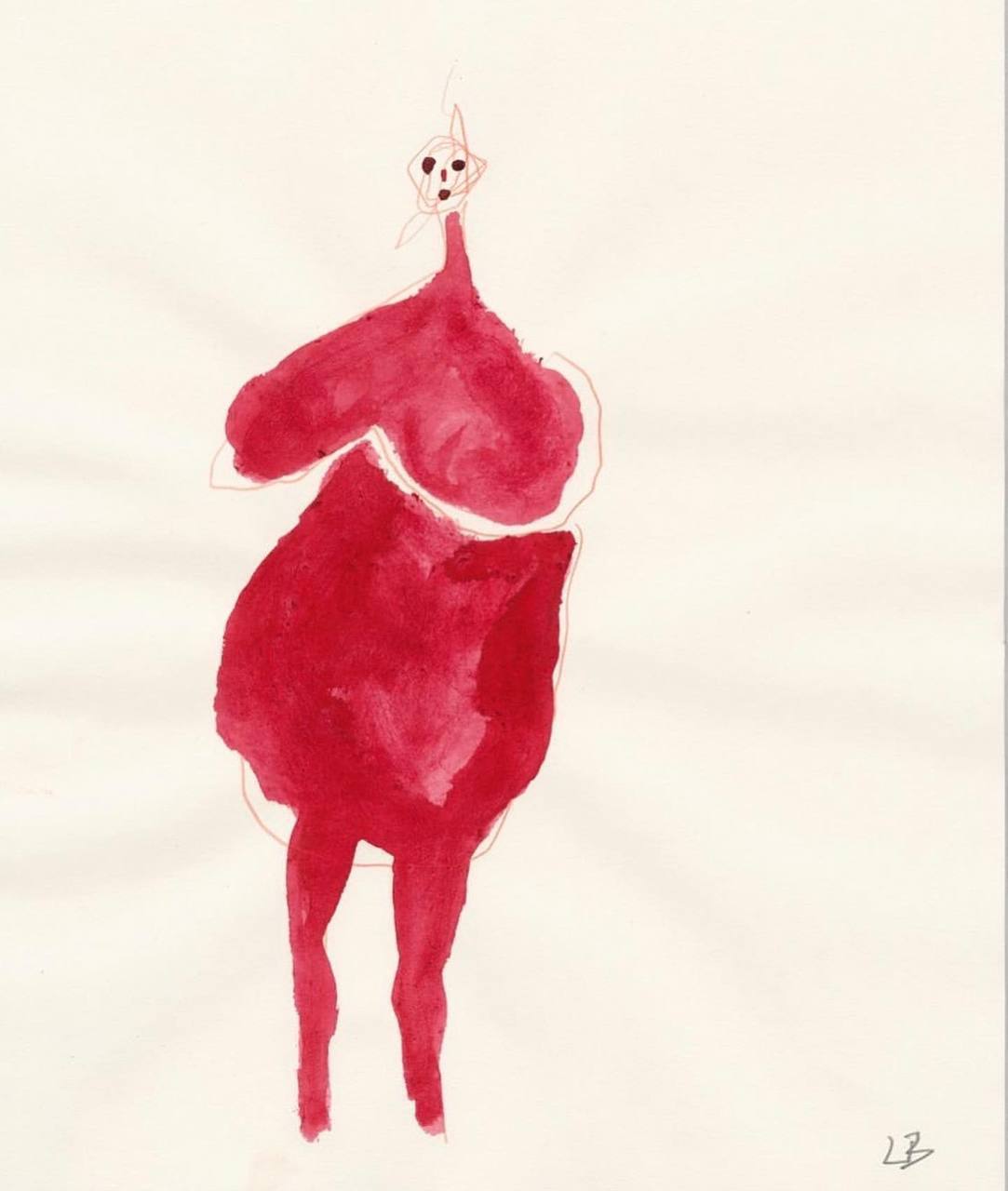
Paintings by French artist Louise Bourgeois
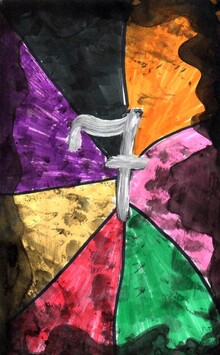
The album’s first cover reflects the loss of his mother.
Kanye West initially chose the drawing of artist Bourgeois for the first concept—drawings she created after the death of her own mother.
However, at the last minute, he moved away from this idea, transforming the concept from personal suffering into something more accessible to a broad audience and representative of the spirit of the times (the black square).
Kanye pays tribute to his mother during the scribing of the album’s debut. Kneeling down, he repeated the gesture he usually made while performing the song «Hey Mama, ” giving thanks to his mother.
Kanye West performs the track «Lose My Family» on the first listen of the album Donda.
The album’s scenography is also rich with references to Kanye’s childhood. The house where he grew up becomes the central element—a kind of tribute to nostalgia and memory.
This image was specifically designed for the album’s third presentation. At the climax of the show, Kanye burns down the house, symbolically leaving the past behind.
However, the building was later recreated in a modified form—now shaped like a mausoleum—for the presentation of Donda 2.
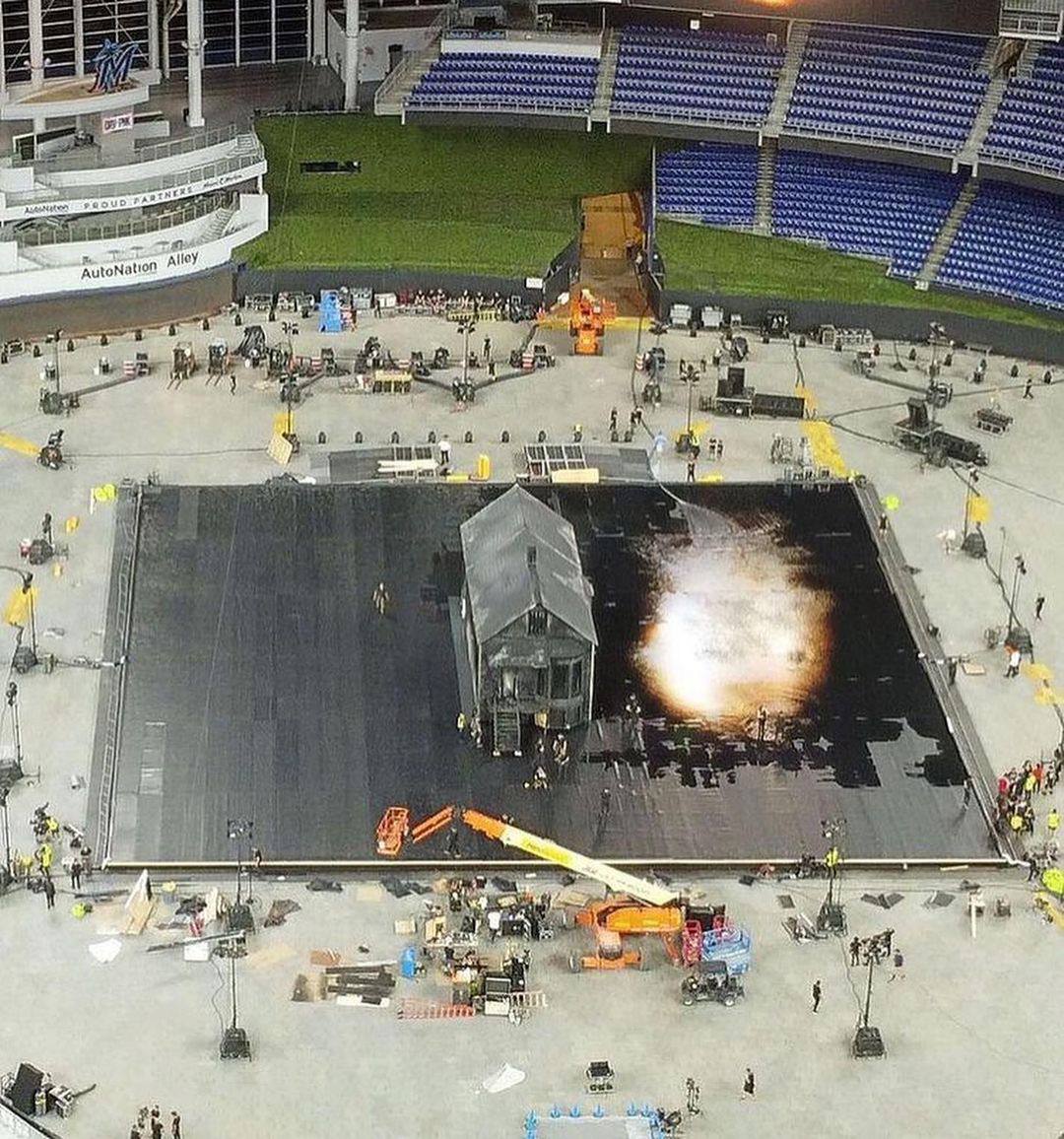
Kanye West’s Childhood Home, built for the third album release
Kanye also echoes the image of the protagonist from his favorite anime, which influenced his visual perception.
Album completion
A distinguishing feature of the album is its creation process. The album was literally built before the audience’s eyes. To avoid losing time or concentration, Kanye rents a stadium after the first listening session to finish the album and prepare for the second.
Demetri Ghosali, Rick Rubin, Mike Dean, and Seitov Aysultan also joined him.

Backstage from the album presentation
The Hero’s Journey 1. Solitude and Imperfection
The first presentation was a shock. It had a raw sound and an unclear scenography. It was as if Kanye intentionally wanted to appear like a novice, a child, an outsider. A significant point was that the presentation took place in Kanye’s home country.
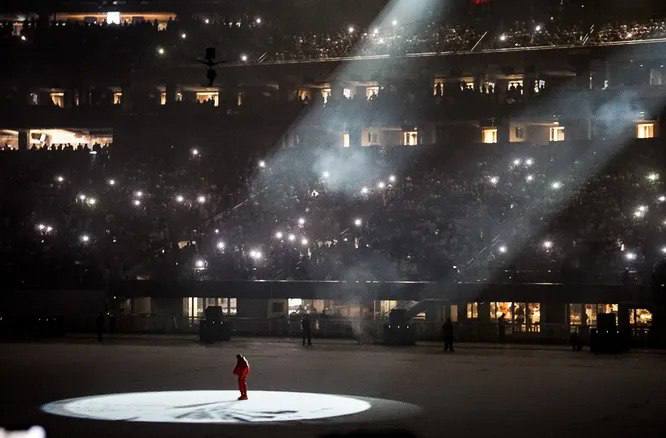
First listening of the album «Donda»
The Hero’s Journey 1. Solitude and Imperfection 2. Preparation and Ascension to the «Heavens»
The second presentation came as a surprise to everyone, even though it’s hard to believe that such a large number of celebrities could be gathered in such a short time to prepare the album.
The outstanding communication was the live stream of Kanye’s life while he was preparing for the presentation—he was practicing, fitting his wardrobe, writing music, and sleeping.
Preparing for battle, putting himself out there.
At the end of the presentation, he «flies» out of his home in Chicago, symbolizing his ascension to paradise.
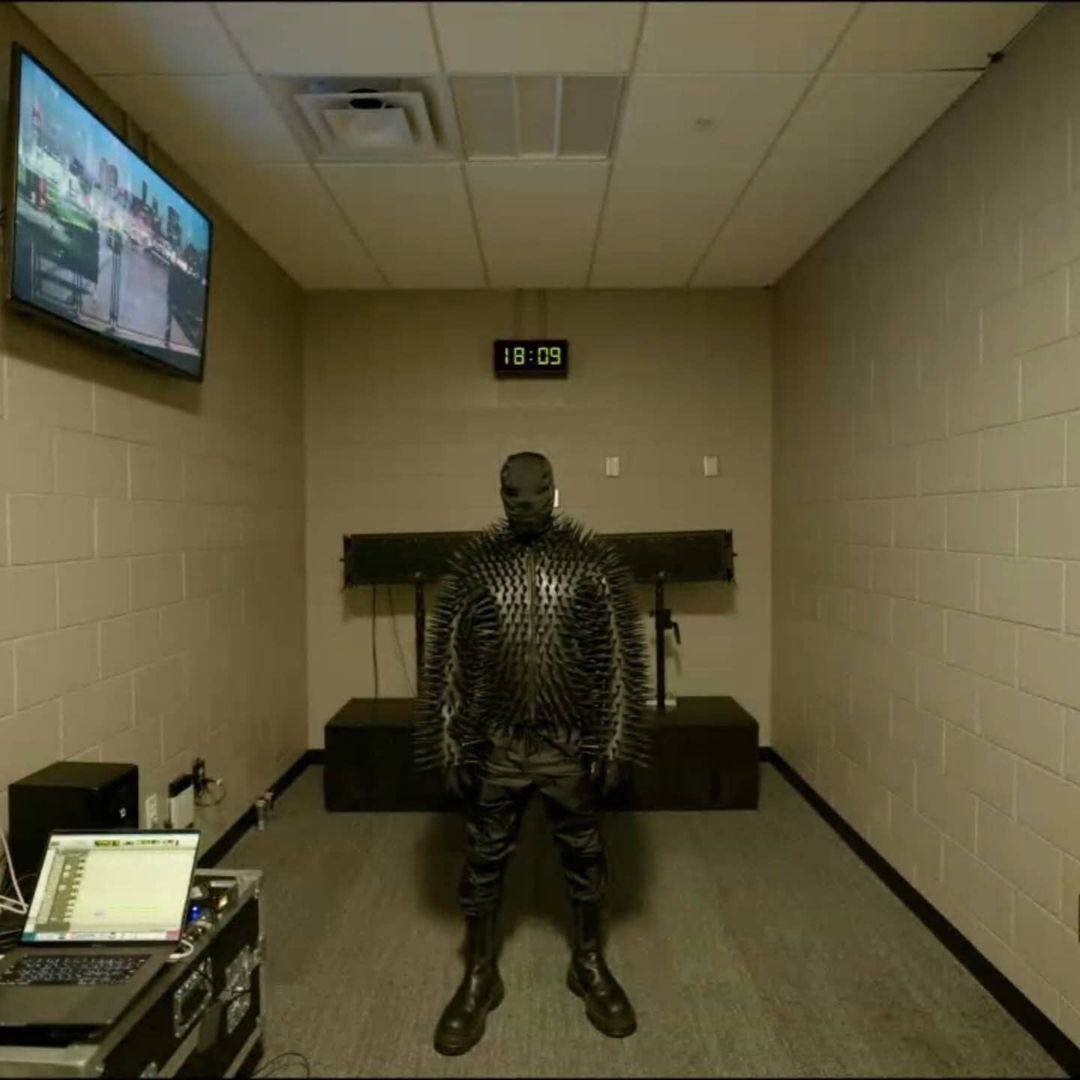
Live Stream: Kanye’s Preparation for the Second Audition

Second listening session of the album «Donda»
The Hero’s Journey 1. Solitude and Imperfection 2. Preparation and Ascent to the «Heavens» 3. Forgiveness of Sins, Finding Inner Peace
In the third presentation, Kanye demonstrated a benchmark presentation. Kanye returns to his childhood home, which he burns down toward the end, and meets Kim, his «fiancée, ” gaining freedom and a chance at a new life. Merlin Manson and DaBaby also appeared, representing that Kanye had received God’s forgiveness, showing that God can forgive everyone. The main thing is to have faith. The set design was superb: a crowd of people, cars in a circle symbolizing cyclicity, the circles of hell, the rat race; celebrities, archetypes, and the burning of the house.