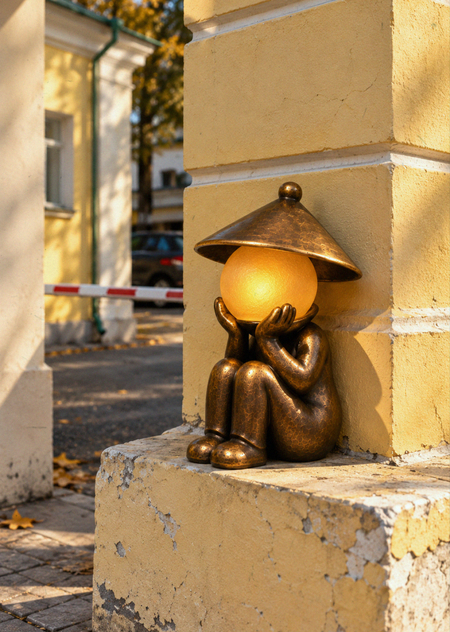
The «In Search of the Blue Bird» competition invites participants to transpose the world of Maurice Maeterlinck’s play into the urban landscape of Moscow. Through small bronze figurines of the characters and the stories associated with them, familiar locations are transformed into an adventure route—a journey that allows viewers to see the history of the Theatre of Arts in a new light and sense the magic within everyday details.
Concept
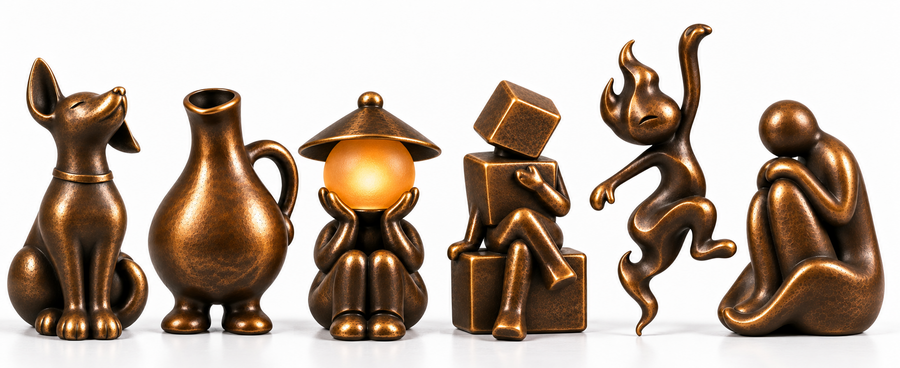
6 characters for the route
The participant transforms into Tilti and Mitili, and familiar objects—Light, Fire, Milk, Sugar, Water, and a faithful Dog—come to life as small bronze figures. Each of them appears in the space of Moscow’s theaters and tells its own story connected to the location, architecture, and the memory of the Theater. The route turns a walk into an exploration. Here, one must not only follow the map but also notice details, read the city, and discover familiar streets anew. The six characters become six keys to the theater’s history. In the finale, the participant discovers that the Blue Bird is not just a search objective. It is the ability to see the extraordinary in the ordinary and to feel that happiness is often very close by.
Route
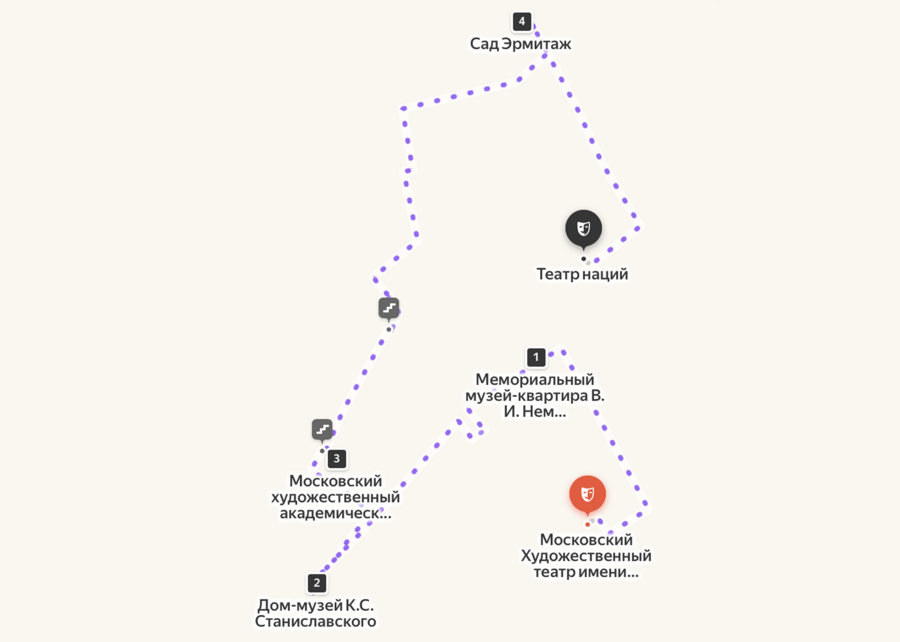
Walking route length: 45 minutes
Six physical figures are placed on six points. The seventh (The National Theatre) becomes a digital stop—a scenic transition.
Hero Legends
Pes — A. P. Chekhov Moscow Art Theatre
A dog cannot speak of loyalty; it simply stays near. Against the walls of the Theater of Arts, it reminds us of the people who built a shared endeavor, trusted one another, and returned to the same stage year after year. Its figure seems to guard the invisible bond between the theater and its history. Finding the Dog is remembering that great art begins with fidelity.
Moloko — the home of MXAT artists, the Nemirovich-Danchenko apartment
Milk is the quietest hero of the journey—it lacks glamour and grand pronouncements, offering only the warmth of everyday life. In the home where Vladimir Ivanovich Nemirovich-Danchenko lived, it serves as a reminder of the person outside of their public role—of habits, memories, and domestic space. Here, the history of theater becomes closer and more human. Sometimes, to find something essential, one must notice the most ordinary things.
Stanislavsky House-Museum
Light does not reveal the finished answer; it helps discern what previously remained in shadow. In the home of Stanislavsky, it becomes a metaphor for the creative quest and the pursuit of inner truth—forces that transformed theatrical art. His small figure reminds us that behind a convincing stage persona lie observation, doubt, and self-work. Light appears where a person begins to see more deeply.
Sugar — M. Gorky Theatre
Sugar craves attention and knows how to make a moment unforgettable. Next to the theater, it embodies the sweetness of applause, the anticipation of a premiere, and that special feeling that draws an audience back to the hall. But its appeal is deceptive. Behind the shine of success always lies unseen labor. Sugar prompts us to contemplate what remains after the audience has quieted.
Fire — The Hermitage Garden
Fire cannot stay still. It flares, changes shape, and transforms darkness into the anticipation of a miracle. In the «Hermitage» garden, which is connected to the early history of the Theater of Arts, it is a reminder of the spark from which a performance is born. Its figure seems frozen in motion just before taking the stage. Finding Fire means sensing how ordinary space becomes a place of magic.
Voda — K.S. Stanislavsky and V.I. Nemirovich-Danchenko Musical Theater
Water never repeats itself exactly. It flows, changes direction, and responds to every movement. In musical theater, it becomes a metaphor for voice, rhythm, and physicality, which combine into continuous stage action. Its nature reminds us that art exists only in the moment of encounter between the performer and the audience. Water teaches us not to hold onto an impression, but to allow it to continue within ourselves.
Route History
A. P. Chekhov Memorial Hall
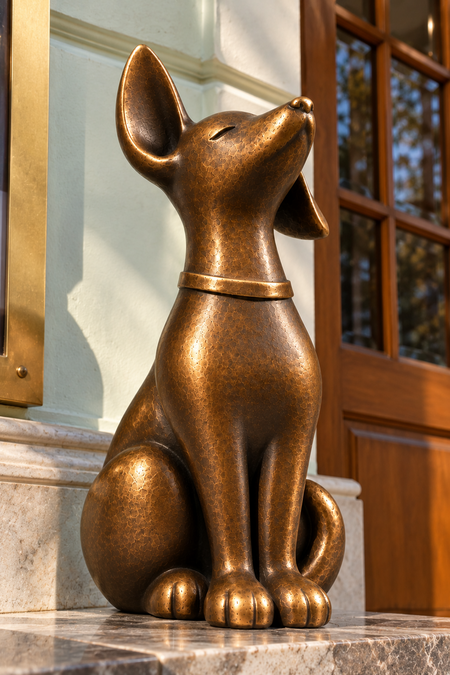
Act I. Fidelity — Moscow Art Theatre
A dog meets the participant outside the theater where the story begins. He asks the quest’s central question: what keeps art alive—the building, the name, or the people who continue the shared mission?
MKhAT Artists' House, Nemirovich-Danchenko Apartment
K.S. Stanislavsky Museum
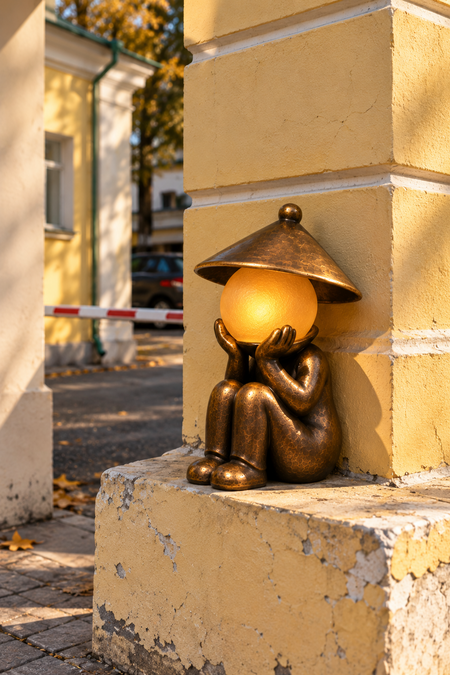
Act II. Home and Memory — Two Memorial Addresses
Milk and Light shift the focus from the theater to the individual: to daily life, habits, and internal processes. The participant searches for heroes not on grand facades, but within the details of the urban environment.
M. Gorky Moscow Art Theatre
Act III. Recognition — Moscow Art Theatre (MHC) named after Gorky
Sugar reminds us that theater exists not only through the labor of its artists but also through the emotions of the audience. Here, the story becomes a dialogue about success, expectations, and the cost of applause.
Hermitage Garden
Act IV. Transformation — The «Hermitage» Garden
Fire symbolizes the moment when an idea becomes a performance. This is the thematic climax of the journey: the participant finds themselves in a space directly connected to the early history of the Theater of Arts.