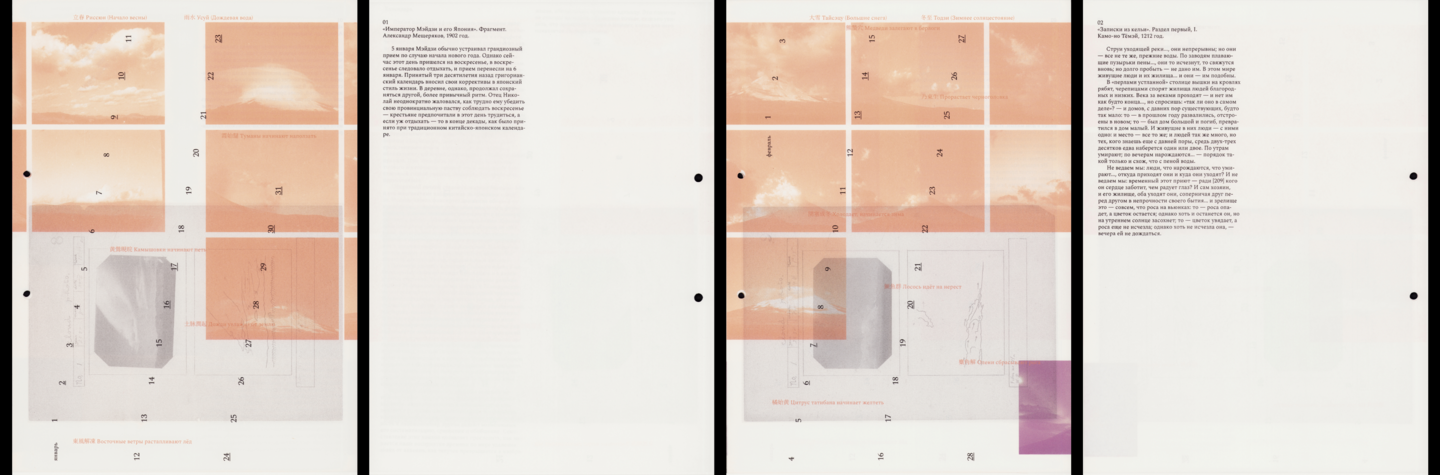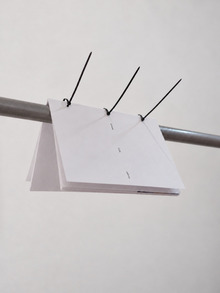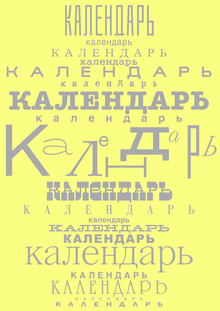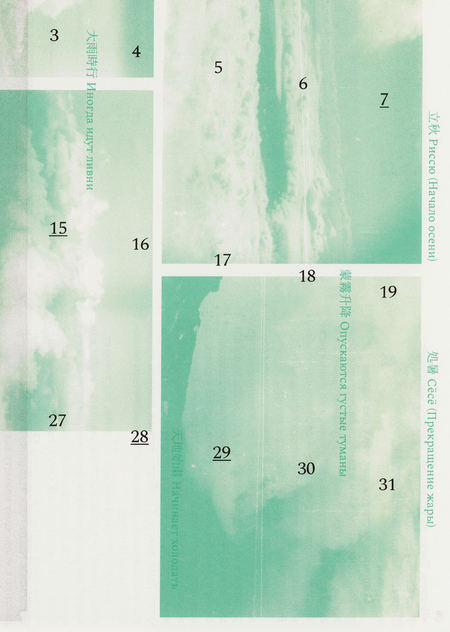
«Notations”—a 2027 calendar that explores various methods of describing and fixing transient phenomena. Time, cloud movement, and seasonal shifts exist as continuous processes, yet to observe and systematize them, we translate what is happening into a system of signs. Some of these languages remain closer to direct observation, while others are based on abstraction and strive for universality. The project begins with the archive of the Japanese meteorologist Masanao Abe, who spent many years studying cloud movement near Mount Fuji. He documented atmospheric changes on film and in photographs, and cataloged individual observations within an archival system complete with dates, numbers, and descriptions. In this calendar, these materials are examined alongside two methods of organizing time: the Gregorian calendar and the traditional Japanese system of 24 seasons and 72 microseasons.
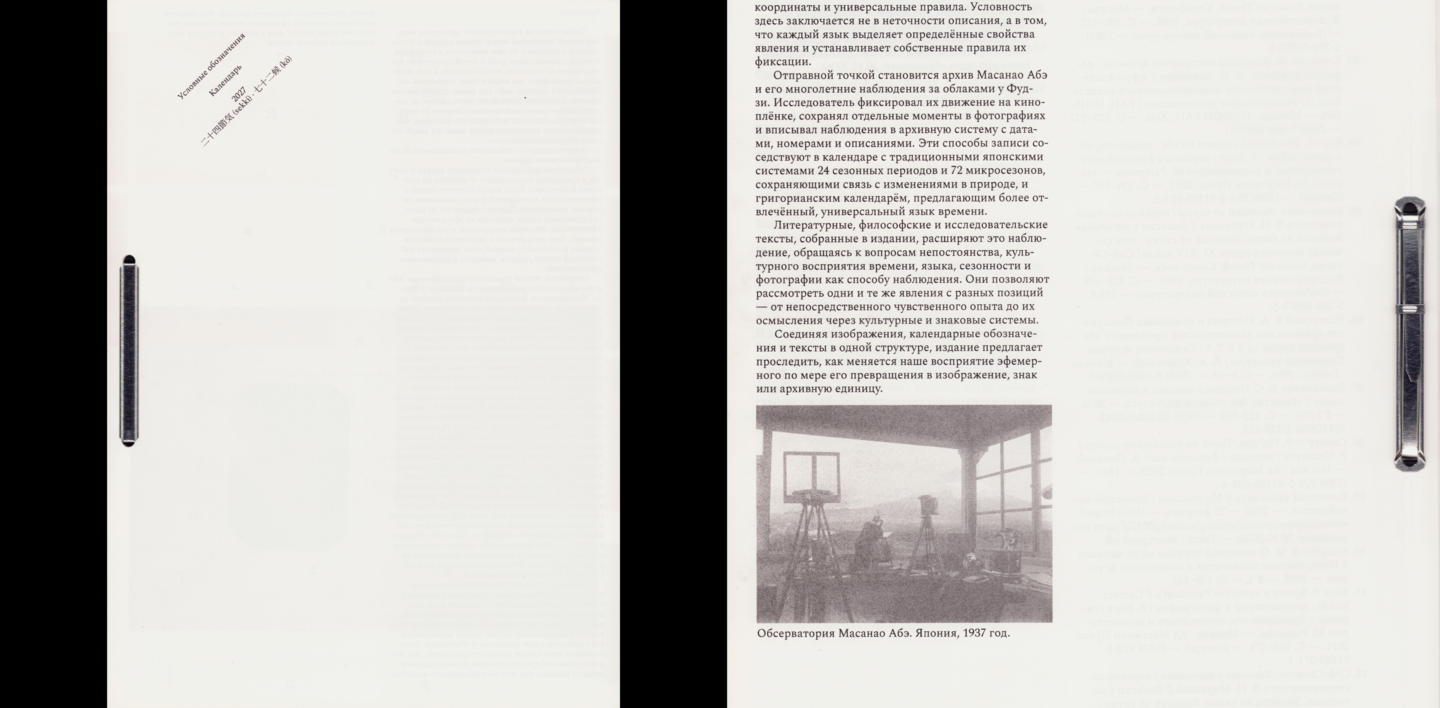
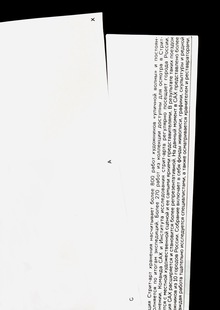
The calendar’s structure illustrates the differences between these languages. The horizontal orientation of the pages adheres to the Gregorian calendar grid of 12 months and the Abe archival classification. The vertical orientation corresponds to seasonal changes and the sequence of frames from its video recordings as they transition from one page to the next. The color layer, linked to direct observation, is printed over the black-and-white layer, which presents a more universal language of description.The publication is supplemented by a collection of literary, philosophical, and research texts from various eras dedicated to time, impermanence, seasonality, language, and photography. These offer additional perspectives on the phenomena being studied, forming an independent textual layer for the calendar.