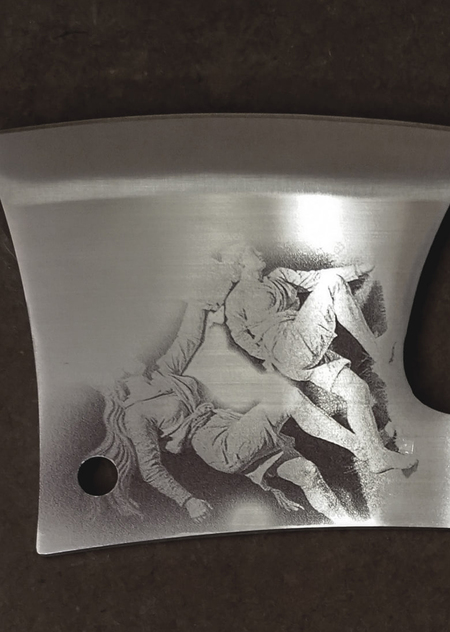
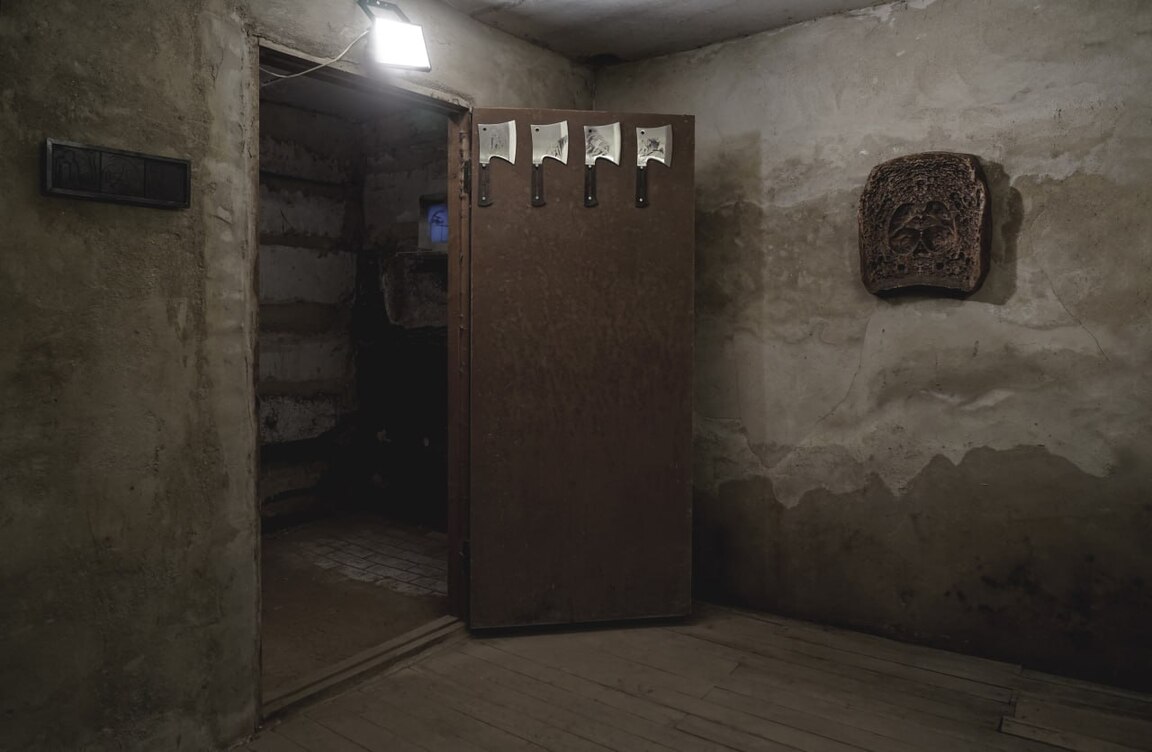
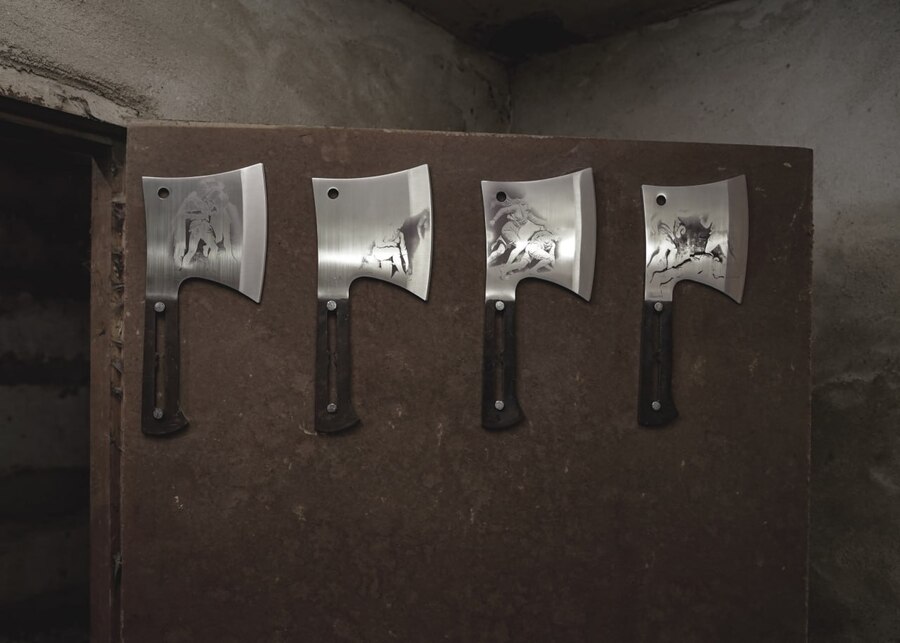
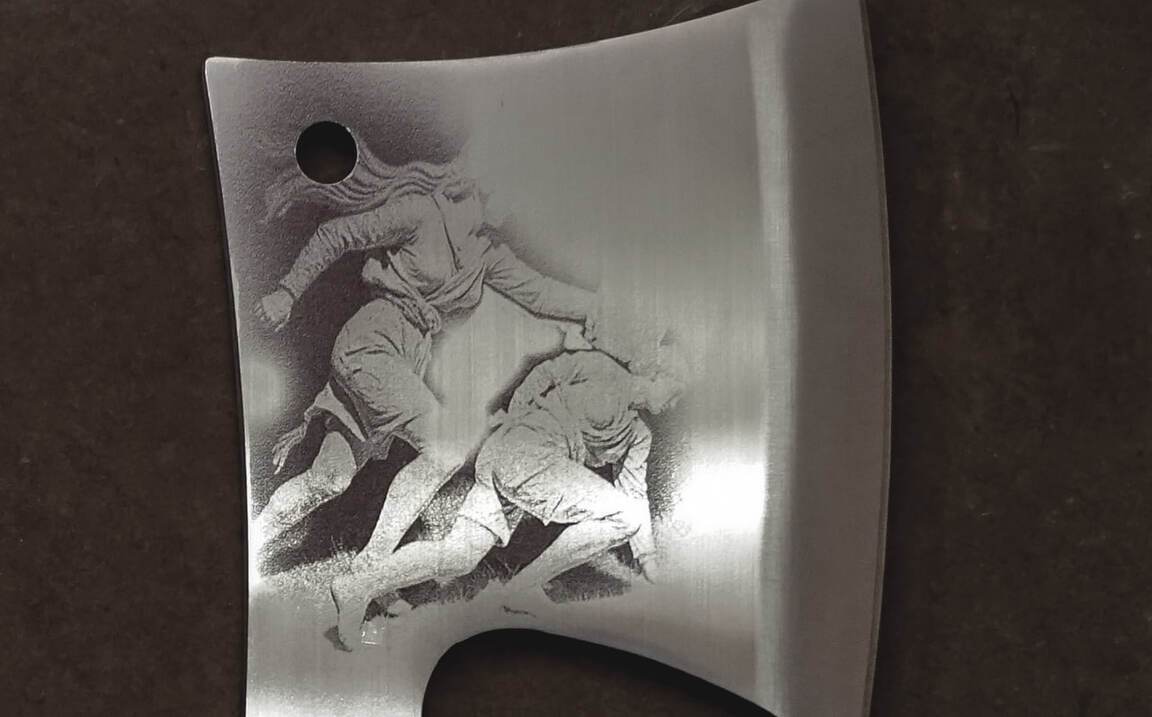
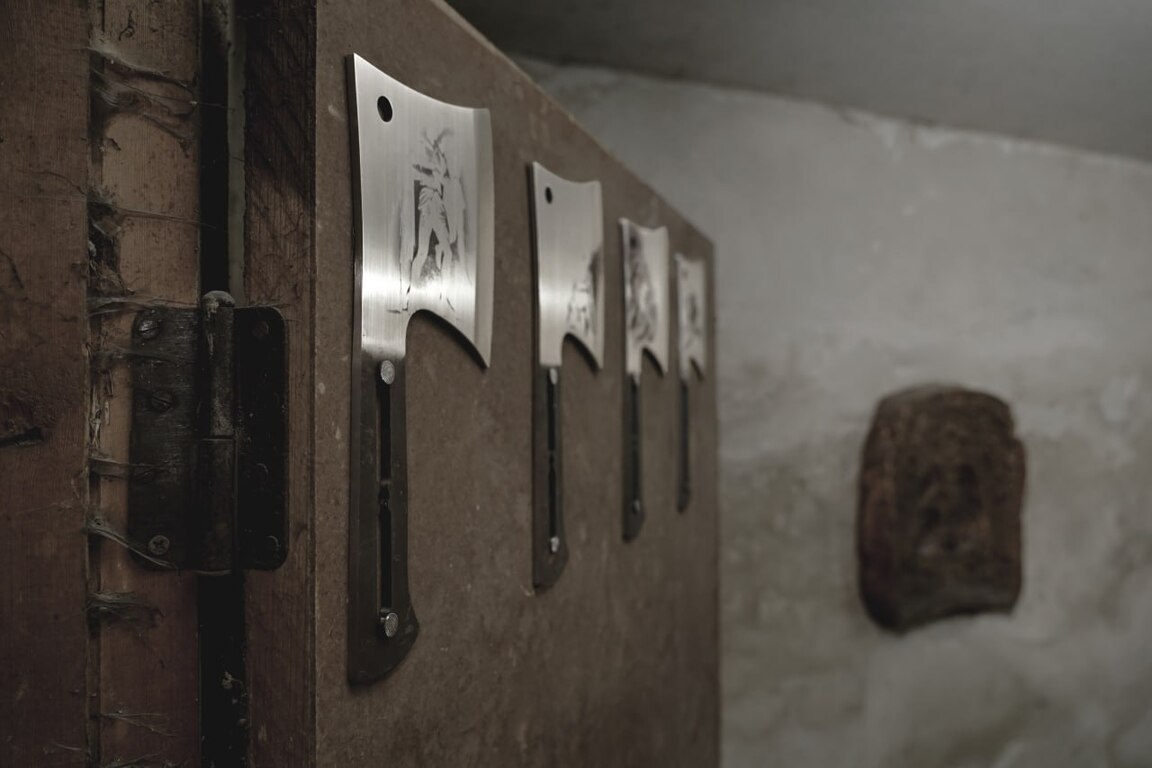
The axe belongs to the domain of labor and the domain of death. Its form solidifies the memory of violence prior to any image—the image arises on the tool as a late inscription upon an already existing fact. Graphics on it are perceived as the site where the blow was fixed. Humanity carries violence as one of its primary capacities. Ritual introduces violence into a controlled form.
Culture preserves the memory of this process. The aesthetic form solidifies this experience as an acceptable action.
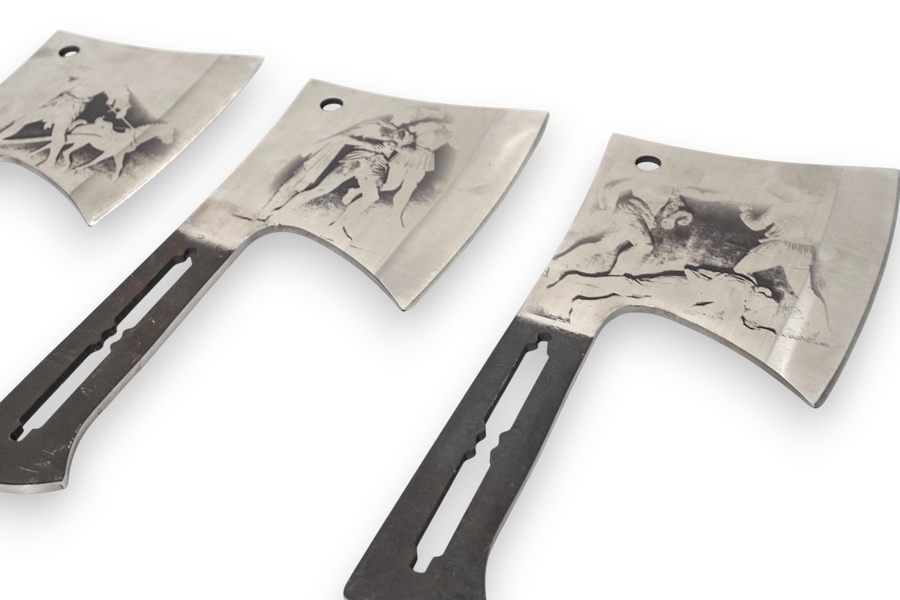
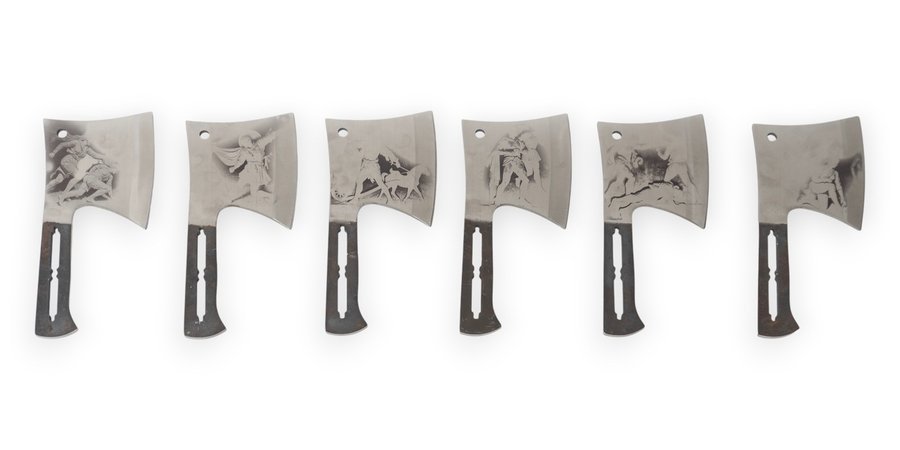
The series is built upon scenes of conflict. The ancient scene is presented as a form of aestheticizing this manifestation, rooted in culture: figures strive for mutual annihilation, yet the composition holds them in a harmonious balance. Society achieves unity through directed violence: the victim accepts the destructive impulse of the group and stabilizes the order. Culture grew out of the procedures for controlling the «inhuman» within humans. Law and religion continue this sacrificial mechanism in a rationalized form.
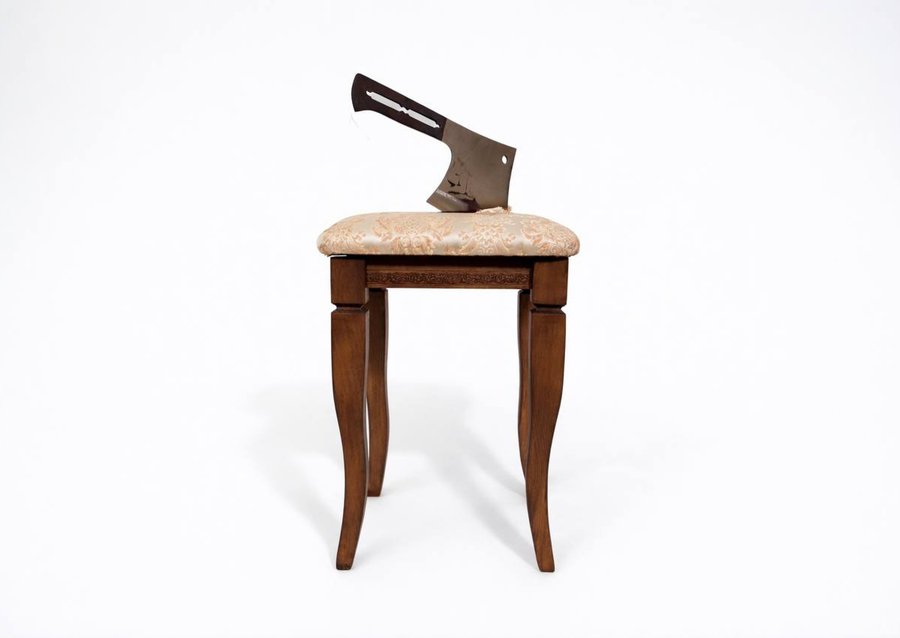

For the interpretation, the subject of the struggle between Greek heroes and Amazon warriors was chosen. The battle is not depicted directly but is broken down into fragments, traces, and the states of the bodies. The figures' turn toward one side and the sense of flight shift the emphasis from confrontation to movement—perhaps to an escape or evasion from it.