Recommended by the Academic Council of BSGU University as a teaching and methodological guide for students in higher education programs 54.03.01 «Design» and 29.03.03 «Technology of Printing and Packaging Production.»
This teaching and methodological guide covers topics related to creating a moodboard. The guide contains theoretical material and methodological recommendations for conducting practical sessions in the disciplines of the cycle «Design Projecting,» «Graphic Design Projecting,» «Interface Design,» «Mobile Application Design,» and other creative disciplines.
Reviewers: T.S. Beketova, Candidate of Technical Sciences, Associate Professor, BSGU University M.A. Sazonova, Director of the Interior Design School, Chairwoman of the Regional Branch of the Union of Designers of Russia in Buryatia Republic
INTRODUCTION This guide examines a visualization technique known as a mood board. Despite its popularity in design, it is often not given due attention in academic literature.
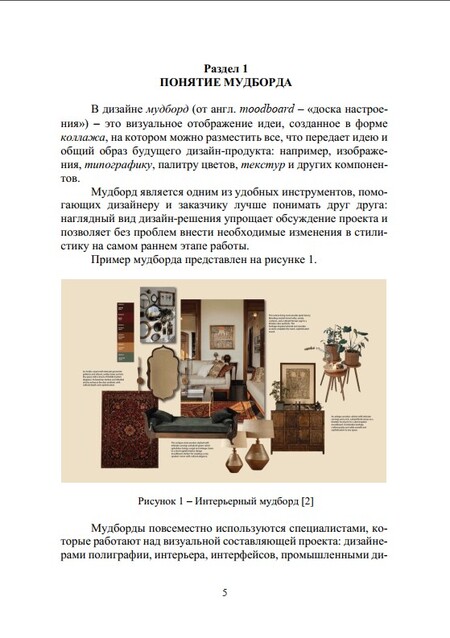
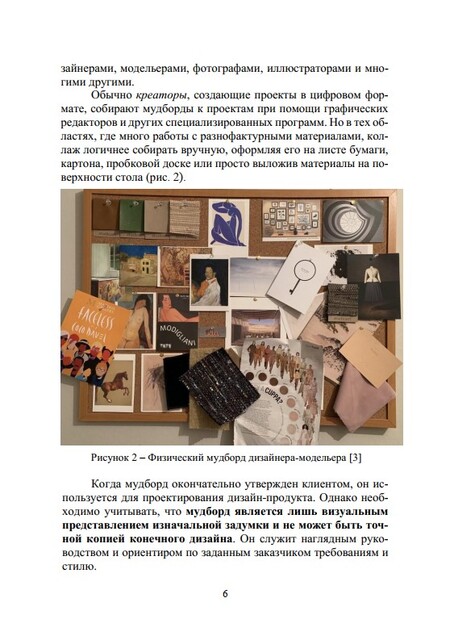
A mood board is a specific type of collage (from the French collage—to paste, to adhere) used to convey ideas, mood, and concept in fields such as graphic design, interior design, fashion, web design, marketing, and others. Mood board collages are also actively used by individuals for personal purposes: planning shopping, events, travel, as well as visualizing future dreams and plans.
The guide consists of three sections: the first section introduces the concept of a mood board, its application, and its significance in the creative industry; the second section is entirely dedicated to the practical process of creating a mood board from idea to realization; the third section contains exercises for independent completion.
For inspiration and to hone visual acuity, readers can use the supplementary material in the form of an illustrated appendix with examples of mood boards. At the end of the book, a brief glossary of terms appearing in the text has been compiled. At the end of each section, the author provides questions to reinforce the material, along with short motivating case studies featuring novice designers. Their aim is to discuss the role of the mood board in design practice in an informal tone.
This guide is intended for self-study by students in creative disciplines across all forms of education, as well as for anyone interested in creative development and visual design.
The author expresses sincere gratitude to the reviewers: T.S. Beketova, candidate of technical sciences and associate professor at the Department of «Construction, Design, and Technology» at VSGUUTU, and M.A. Sazonova, director of the Interior Design School and chairperson of the regional branch of the Union of Designers of Russia in the Republic of Buryatia, for their valuable recommendations provided during the preparation of this guide; and A.Kh. Tsybikova, associate professor at the Department of «Construction, Design, and Technology, ” for her input.
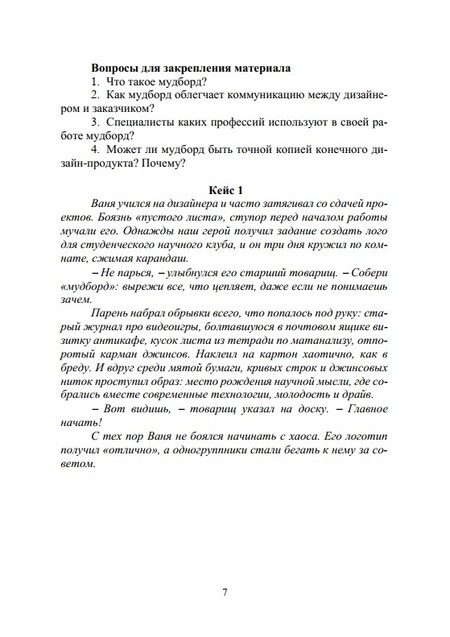
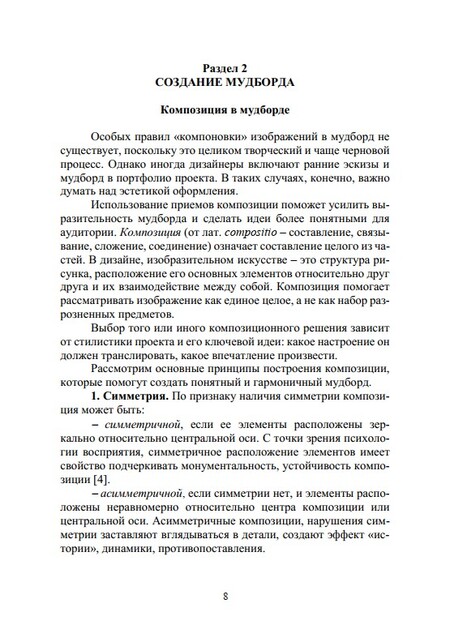
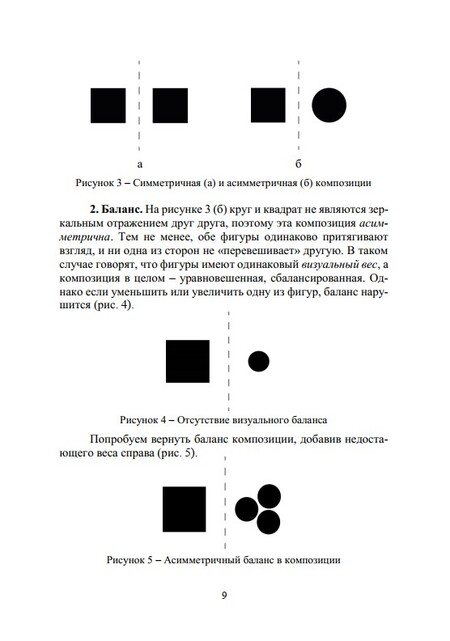
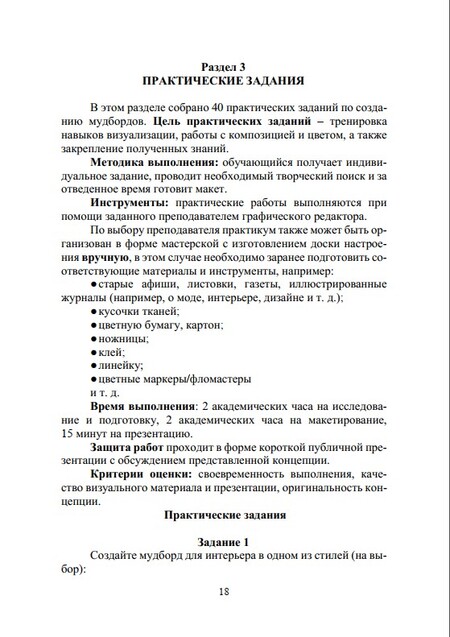
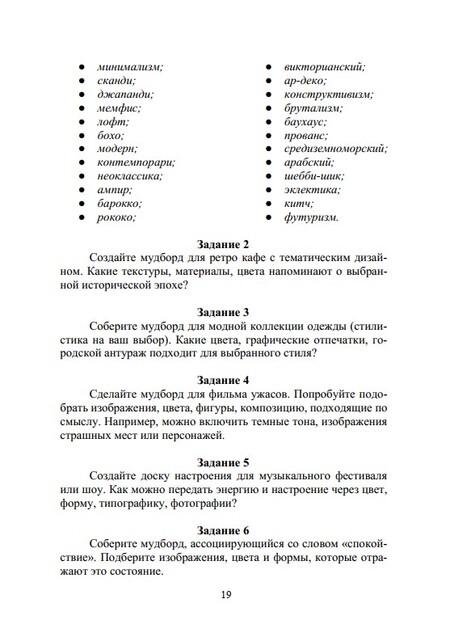
Section 2 offers a concise yet comprehensive overview of graphic design fundamentals. Omitting some of the academic material, we will move to the next section, which compiles practical assignments. These assignments can be completed using graphic software or manually (using pre-prepared corresponding materials and tools, such as cardboard, glue, scissors, old posters, leaflets, newspapers, magazines, pieces of fabric, colored paper, etc.).
Throughout the handbook, short, instructional «case studies» are included—fictional stories from the lives of beginning designers. For example:
«Anna once received a commission to create a coffee shop’s brand identity. However, the client vaguely explained what he wanted the brand identity to reflect: coziness, modernity, and a connection to nature. Anna felt she didn’t fully grasp his vision, so she decided to create a mood board.
She assembled a collage featuring warm wood textures, photos with soft lighting, green plants, minimalist furniture, and accents made of natural materials. Then, she added fonts that evoked coziness, along with a color palette of 'natural' tones—the result was both comfortable and modern.
During the meeting with the client, Anna presented her mood board. He immediately brightened up, saying, „YES, EXACTLY LIKE THIS!“
Shortly after, they discussed the details of the next steps, talked about trends, and signed the contract. The mood board helped visualize the client’s indistinct desires at the right moment and quickly helped her find common ground with him. The project was completed on time, and the coffee shop became a popular spot in the town.»
CONCLUSION In this guide, we discussed the mood board. The key objective was not merely to compile a collection of exercises, but to create a resource that would allow a future designer to comprehensively engage with the topic: to learn what a mood board is and why this format is popular in design and other creative fields; to gain an understanding of the principles of structuring a mood board composition; and to solidify acquired knowledge, develop professional skills, and enhance the quality of design solutions through practical exercises.
The mood board—though often a preliminary stage of work—is extremely important: it is a powerful tool for forming and conveying the core idea of a project and for communication within a creative team. The crucial element in this process is the deliberate selection of thematic focal points and dominant concepts around which the entire concept is built. We firmly believe that the skill of quickly systematizing one’s ideas and arranging those meanings within a mood board is a vital professional skill for any creative professional.
At the end of the guide, you will find Appendices—an illustrated section featuring colorful mood board examples and a comprehensive glossary of design, art history, and cultural theory terms used throughout the text.
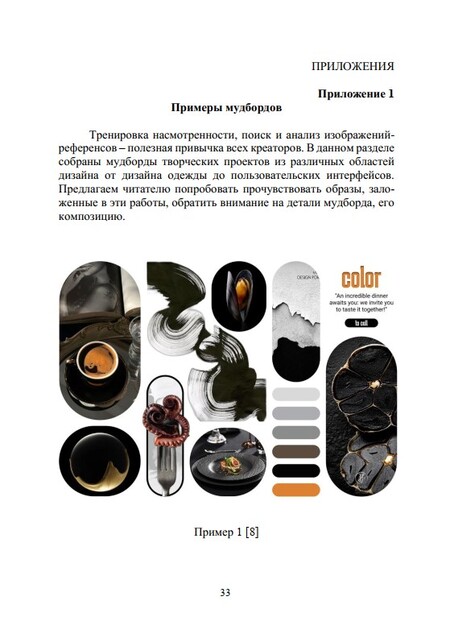
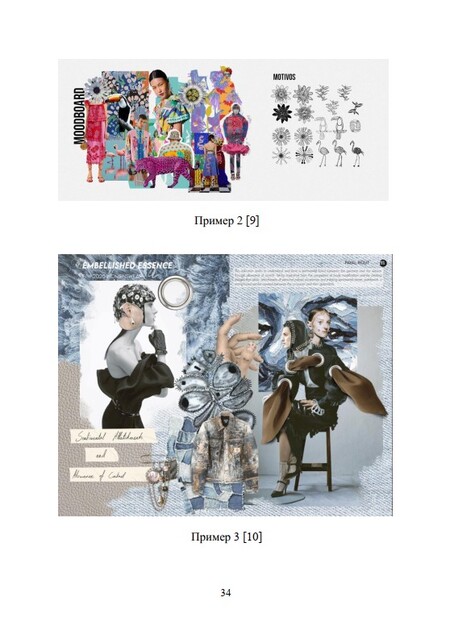
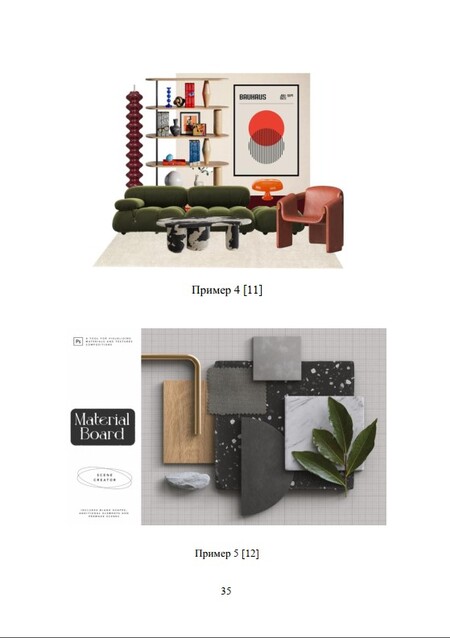
Sharpening visual literacy and sourcing/analyzing reference imagery is a valuable habit for all creators. The «Resources» section features mood boards from creative projects across various design disciplines, ranging from fashion design to user interfaces. Readers are invited to immerse themselves in the concepts embedded in these works, paying close attention to the mood board’s details and composition.
Below is a list of sources.
Cover photo: Paulina Milde-Jachowska [1]
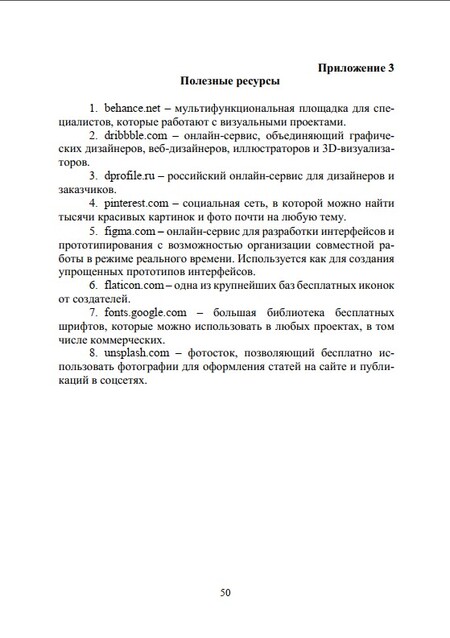
At the end of the guide, there is a list of helpful services for your work.