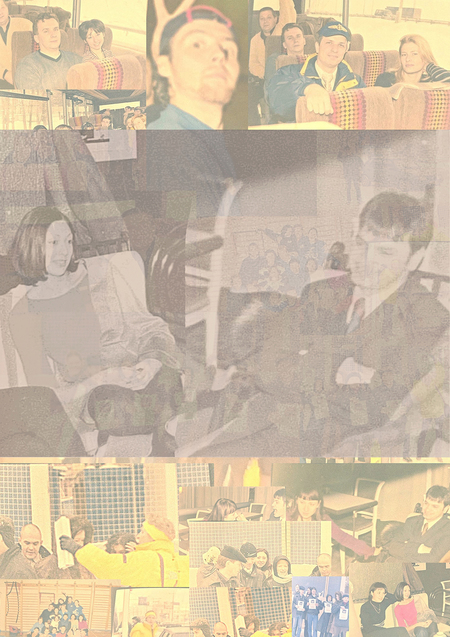
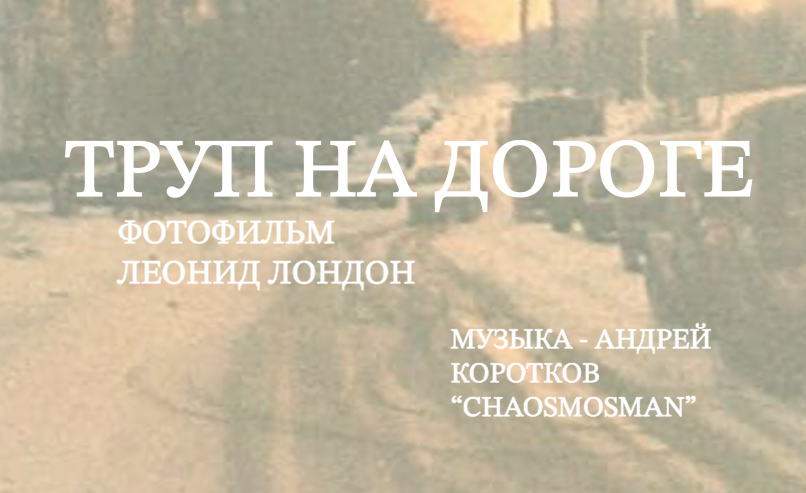
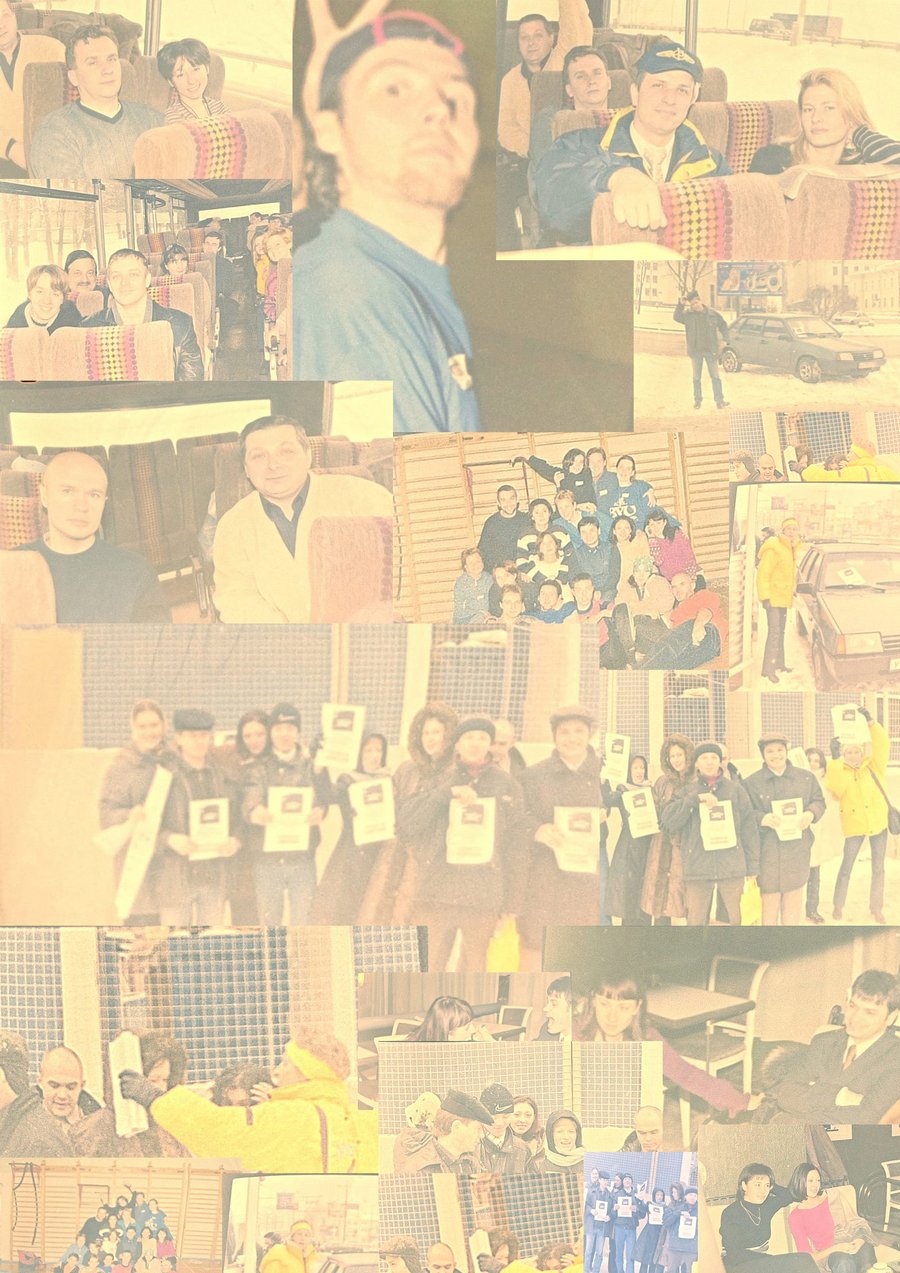
The photo film «Corpse on the Road» attempts to explore the theme of parental divorce and their abandoned children through personal experience and an archive collection of photographs from a pedestrian rights rally where my parents first met.
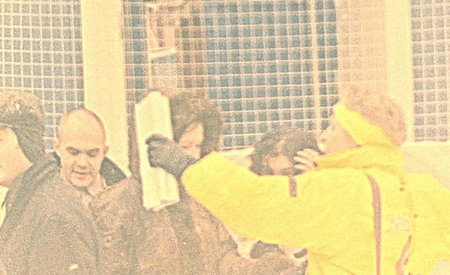
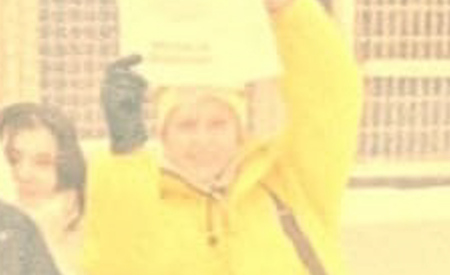
The photomontage is set during the «Let the Pedestrian Pass» protest. The image of the pedestrian and the struck boy conveys the figure of a child experiencing parental divorce.
The work structure is complex:
The story of the struck boy from the newspapers
The story of the group and the rally itself
The story of Mom and Dad
My own story
This narrative arc, unfolding through a four-part story, imbues the film with a wealth of meaning that reflects its core concept and ideas, while also presenting numerous parallels—such as the child run over and split in two on the road, and the self navigating divorce.


The assembly of the work is simple and concise—approaching and receding the group members in the photograph. This allows for a sincere narrative told from the child’s perspective and better conveys the mechanisms of how a child experiencing divorce views photographs.
The central theme of the work is the child’s reflection on their parents' relationship—whether it was possible to understand the outcome by observing the early days of their acquaintance.
The narrative unfolds through a stream of consciousness and the mother’s anecdotes about the event participants. This stream of consciousness is perfectly suited to conveying the emotions of a child who is encountering the story of their parents' meeting for the first time and witnessing it visually.
The manner of storytelling is also crucial—a narrative, «Proustian» approach that permeates the entire piece, following the flow of thought. This is because these thoughts arrive subjectively in the mind of a child viewing the photographs. This is precisely why the work maintains a non-linear and subjective progression.
The corpse on the road answers the film’s question on its own, quoting Prigov’s poetry, «Am I?», without uttering a single word. The story begins with him and ends with him.