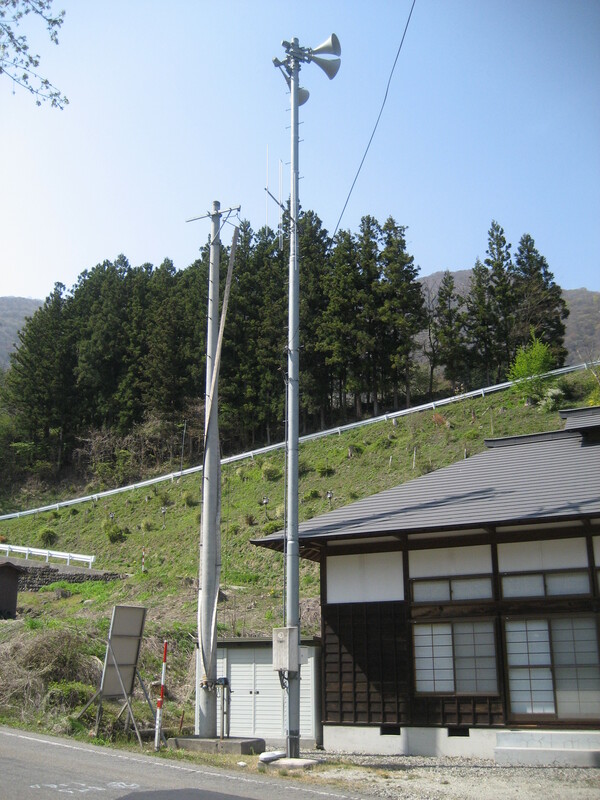
Table of Contents1. Concept.2. The sound that became alarming.3. The sound that was made alarming.4. When the alarming sound stops working.5. Conclusion.
Concept
Sound cannot be turned off. It operates constantly, even during sleep, which is why we often first detect danger through sound: footsteps behind us, the screech of brakes, or a siren outside the window. In sound studies, listening directed toward threat detection is termed anxious listening [1]. This work focuses on the sounds that prompt such vigilance—how they are structured and why they evoke alarm.
Many city sounds are intentionally designed to be alarming. R. M. Schafer referred to foreground sounds as those that are listened to consciously, primarily including warning devices: bells, whistles, horns, and sirens [3]. Now, car alarms, beeping medical monitors, and phone notifications have been added to this list. All of them are intended to interrupt what a person is doing. Yet, the more such signals there are, the less attention they receive. In New York in the early 2000s, car alarms were one of the main reasons for noise complaints, but according to a survey by an insurance company, less than one percent of people would call the police upon hearing an alarm [9]. In hospitals, staff eventually stop reacting to constant instrument signals. This is known as «alarm fatigue» [5].
B. Trusc notes that the same sound can be a signal for one person and background noise for another. His example is the ambulance siren near a large hospital: a visitor notices it, but for a local resident, it has become just ambient sound. Trusc distinguishes between active listening, prepared listening, and background listening [2]. The work traces how an alarming sound transitions from a signal to background noise and how those who design signals attempt to prevent this shift.
The example involving an ambulance siren demonstrates that anxiety cannot be explained by volume alone. One listener notices it immediately; another has long become accustomed to similar sounds. This leads to the research question: what makes a sound anxious—its acoustic properties or the circumstances in which it sounds? And why does a signal specifically created to warn sometimes cease to capture attention?
Hypothesis: Sound anxiety depends simultaneously on its structure and the listener’s experience. Sudden changes in pitch, timbre, or rhythm can draw attention, while ordinary sounds are capable of causing anxiety in specific situations. Frequent repetition also alters perception: in some cases, a person habituates to the signal, while in others, the sound begins to evoke a past danger.
For the study, recordings from everyday sound environments were selected: a night street, voices from behind a wall, sirens, hospital machinery, and the city’s alert system. Each example can be listened to. The photographs help contextualize the sound source or the location where it is heard. The analysis is grounded in the work of Scheffer and Truax, research on specific soundscapes, materials on designing warning signals, and artistic projects dedicated to listening.
For a warning sound, being loud and noticeable is not enough. A car alarm can wail in the middle of a street, but passersby do not rush to investigate what happened. In a hospital, the constant beeping of equipment makes it difficult to discern truly critical alerts. Therefore, when we talk about signal ineffectiveness, we don’t mean a technical malfunction. The sound continues to emit, but it no longer elicits the reaction for which it was designed.
The sound that became unsettling
First, let’s talk about sounds that nobody would initially consider unsettling: footsteps, voices, impacts. They become anxiety-inducing when it’s unclear where they originate. At that point, the listener focuses intently, trying to decipher what is happening through the sound. Trucks terms this act of close listening as «listening in search of sound» [2].
Night Street
Since 2016, artist Mallika Tanedge has been organizing «Women Walk at Midnight» in Delhi—walks where women move through the nocturnal city without accompaniment. She describes the night street as «an inaccessible space, a taboo, a state of nervousness, an impossibility» [7].
S. Mishra. Participants of the Women Walk at Midnight, Delhi, 2021.
The recording of the walk features footsteps, conversations, and cars—the soundscape of a typical night city. There is nothing threatening in these sounds. However, the walk itself is challenging for the participants: Tanedja describes the night street as a «nervous state» [7]. The anxiety stems from the fact that the city is not designed for a woman walking alone at night. According to S. Arora, the shared walk is built on «listening and care» [8] and offers a chance to hear the night city in a different way.
Behind the Wall
237 Steiner Street, San Francisco. Late 1980s.
Eddie Lee Sausage and Mitchell Dupray moved into this house in 1987. Through the thin walls, they could hear their neighbors, Peter Haschett and Raymond Hoffman, yelling and threatening each other every night. «Out of fear and irritation, ” writes H. Spolding, they secretly began recording these quarrels [6].
The wall attenuates high frequencies more strongly than low frequencies, so the words are almost indecipherable, but impacts and shouts are audible. The listener receives sound devoid of meaning or imagery, and they imagine the rest themselves. The tape recorder helped neighbors somehow gain control over these sounds. According to Spolding, he «asserts territorial rights over sounds intruding into the home» [6].
In both cases, the sounds themselves are ordinary: footsteps, voices, impacts. What makes them unsettling is that the source is hidden—behind you or behind a wall. But there are also sounds into which anxiety is deliberately built in beforehand. The next section addresses those.
The Sound That Became Alarming
Nobody intentionally designed the footsteps or the voices beyond the wall. The alarm signals, conversely, are engineered to be audible over any background noise. Schäfer refers to these as foreground sounds—sounds that are consciously listened to [3]. We then examine two such sounds and how the alarm is structured within them.
Siren

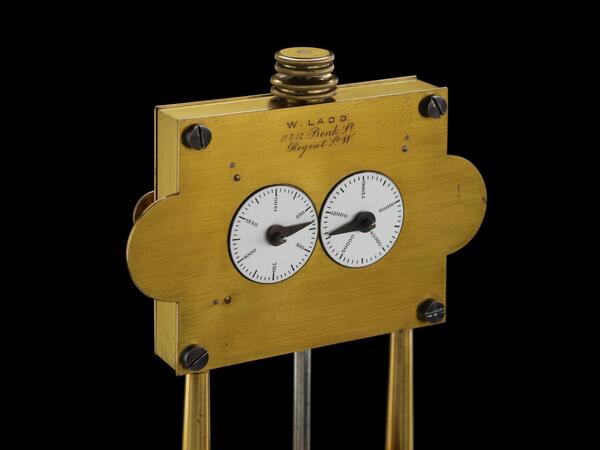
1870 Sirena, U. Ladd St.
In 1819, the French engineer Charles Canvier de La Tour designed an instrument to measure the frequency of vibrations. Compressed air passes through a rotating disk with holes, and the faster it spins, the higher the pitch. This was the first artificial sound source whose pitch could change smoothly. Since the device could produce sound underwater, it was named after the sirens from Greek mythology. The sound of a siren is sharp because it contains many overtones [10; 16].
Over a century and a half, the source of the siren has completely changed: instead of a rotating disk, there is now electronics and a speaker on the car’s roof. However, the sound itself remained the same. The electronic siren rises and falls in pitch as smoothly as the mechanical one. This means that the level of alarm is sustained by the sound itself—by its constantly changing pitch and the large number of overtones that ordinary city sounds lack. Different countries have chosen different siren variants, and each one has become a local alarm signal.