Navigation
- Concept
- Violation of Action Logic
- Figure Isolation and Deconstruction
- Stoppage of Time and Event Ambiguity
- Visual Artifice and Theatricality
- Conclusion
Concept
Michael Borremans is a contemporary Belgian artist whose visual language is rooted in extreme academic rigor and realism. His painting cannot be classified as impressionistic or expressionistic, nor does it fit within hyperrealism. Instead, his style is based on Baroque and Renaissance techniques, drawing inspiration from 18th and 19th-century masters such as Francisco Goya, Diego Velázquez, and Gustave Courbet. Nevertheless, his works cannot be termed classical because they systematically violate the familiar principles of visual logic; a constant sense of displacement, falsehood, and illusion pervades the imagery. In the classical tradition of figural painting, an image typically implies either recognizable narrative or subservience to aesthetic contemplation. In Borremans’s case, these mechanisms are disrupted: the scene retains an external plausibility but loses its internal functional coherence. Consequently, the viewer is placed in a state of perpetual interpretive instability—the image demands to be read yet simultaneously resists it, offering neither a stable narrative nor a symbolic key.
The goal of this study is to interpret the painting of Michael Borremans through an analysis of the visual and compositional devices that generate a sense of anxiety and uncertainty within the image. The work examines how the organization of composition, spatial relationships, lighting solutions, bodily gestures, the portrayal of the figures, and the interaction between figures create a feeling of alienation, artificiality, and instability in the depicted scene.
The hypothesis is that the anxiety in Michael Borremans’s painting arises from a systemic disconnect between the external realism of the image and the internal impossibility of interpreting it: the depicted scene maintains the appearance of everyday life but lacks causal, spatial, and social coherence.
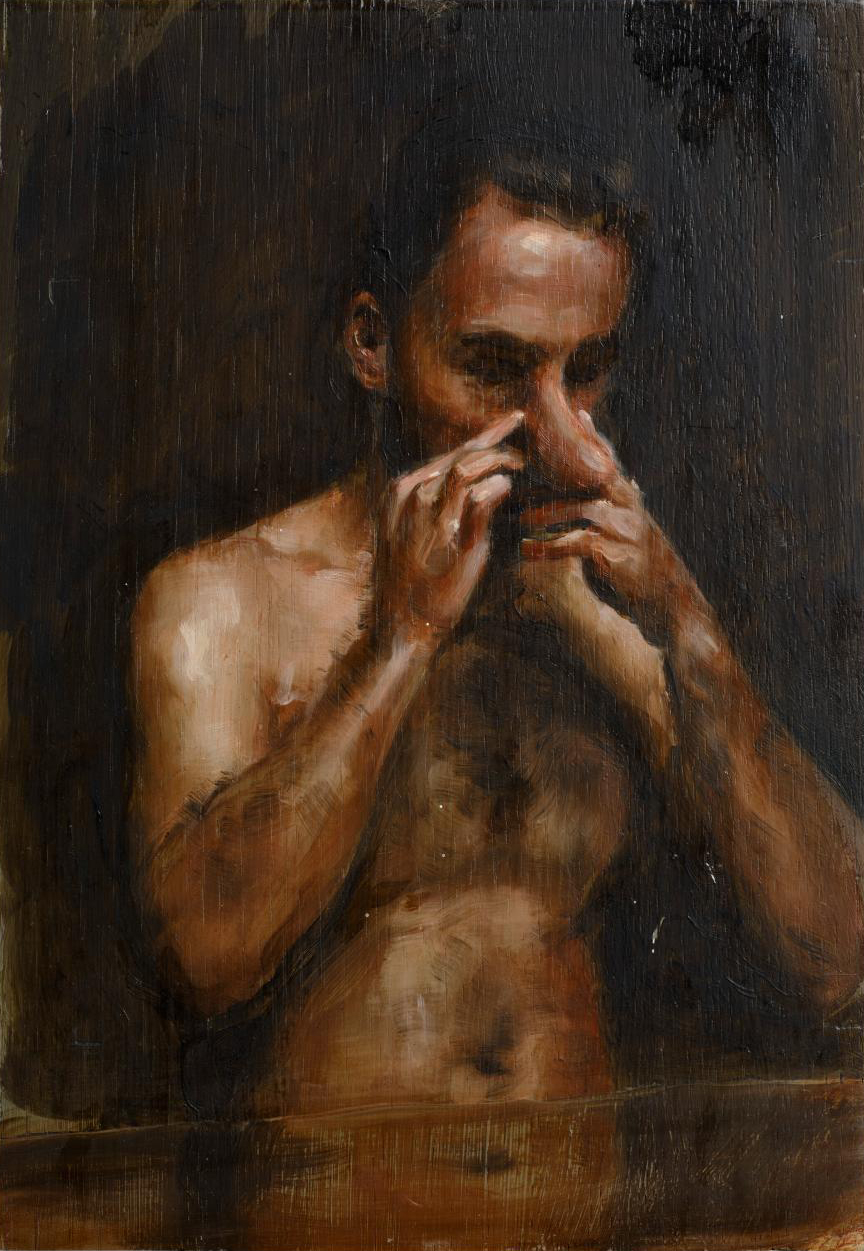
Michaël Borremans, «The Second Dimension,» 2007
The selection of this theme stems from an interest in the methods of generating emotional effect in contemporary figurative painting. The works of Michael Borremans are particularly compelling because, despite their outwardly academic style, they evoke a persistent sense of anxiety. Furthermore, even when rendered with extreme realism and precision, they convey something illusory. This quality makes his painting a productive subject for analyzing the mechanisms through which emotional states are constructed in an image without resorting to direct narrative or expressive means.
The research is divided into four thematic sections that investigate the structure of the image and the components of the anxious effect. A critical analysis based on visual mechanisms will allow for a holistic examination of the image system and expand the possibilities for interpreting Michael Borremans’s painting.
Textual sources for this study include interviews with the artist himself, as well as critical articles from art and contemporary painting researchers. Analyzing these sources reveals the underlying concepts the artist integrated into his works, allowing for a more precise definition of the narrative depicted. For visual material, paintings by the artist from various periods were selected—pieces that correspond to the categories of anxiety, horror, and fear.
Action logic violation
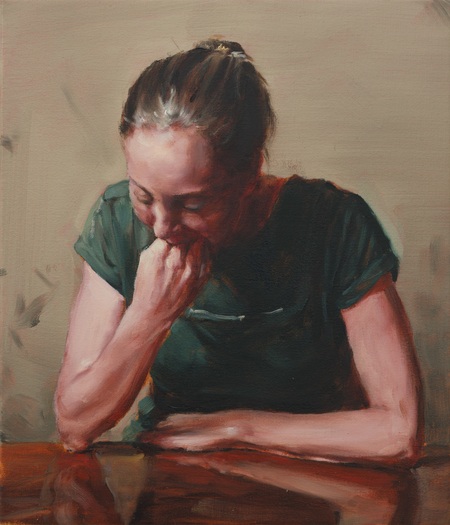
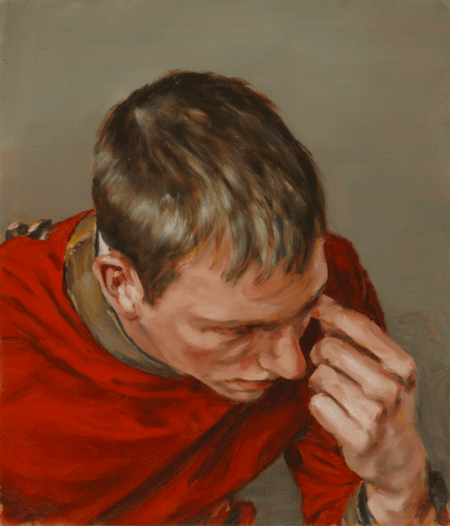
Michael Borreman: «Girl Eating, ” 2013; „Valet, ” 2010.
The violation of logical action in the paintings of Mikael Borreman can manifest in various ways. In several works, the artist depicts scenes that directly contradict logic and natural human behavior—for example, characters place body parts in their mouths or engage in strange manipulations of their faces and eyes. The artist deliberately maintains the external neutrality and restraint of the scene: the characters show no emotional response, the composition remains static, and the painting technique is academically precise. This combination of visual fidelity and internal absurdity creates a sense of unease. The viewer is confronted with a situation where familiar mechanisms of interpretation cease to function: the image appears realistic, but the logic of what is happening is violated.
Michaël Borreman, «Sunfire (Five Figures, Three Limbs),» 2017
Mikael Borremans, «Sun Fire (Four Figures),» 2017
In his other works, Michiel Borremans engages with overtly horrifying, anxious, and brutal themes. For example, in his series «Fire from the Sun,» children dyed red—a hue that alludes to blood—play and interact with one another and with obscure substances that resemble body parts. Childhood, typically associated with innocence and purity—evoking cherubs and angels—is fused with cruelty, thereby disrupting conventional perception. These narratives suggest the inherent human frailties and the vice within human nature. Borremans employs childlike imagery to shift violence from the category of exception, demonstrating that it is a deeply rooted component of modern society and the human condition from birth.
Michael Borremans, «Duck, ” 2010
Michaël Borremans, «Sweet to the Extreme,» 2005
The interaction with objects in Borreman’s paintings violates classical rules of pictorial composition. When the characters in Michael’s paintings hold, interact with, or assume specific poses and gestures, all their actions lack functional completeness and causal clarity. The figures appear to be engaged in an unknown ritual, mechanical action, or unfinished procedure—a meaning that remains inaccessible to the viewer.
Michael Borreman, «Appearance,» 2005
Michaël Borremans, «Cheese Sandwich, ” 2019.
The character of the figures' movement also plays a vital role in creating the sense of alienation underlying the artist’s visual language. Borreman’s characters rarely exist in a state of natural dynamism, even when performing everyday actions: their movements appear slowed, frozen, or artificially interrupted. The artist captures not the climax or the completion of an action, but an intermediate state where the gesture loses its temporal direction. Because of this, the scene begins to be perceived as a moment that exists outside the usual logic and development of an event.
Michael Borremans, «Interface,» 2008.
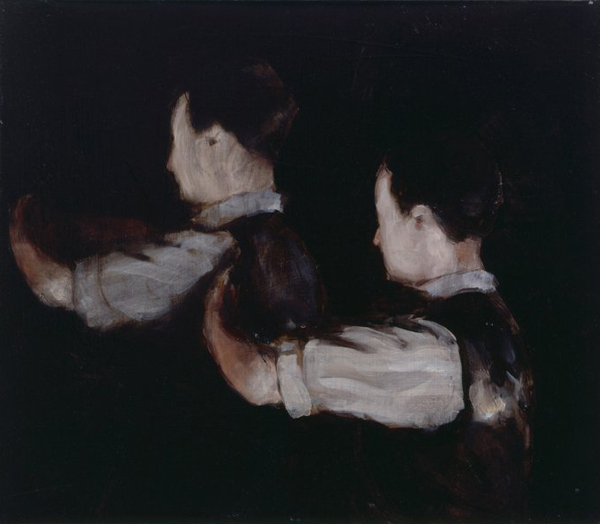
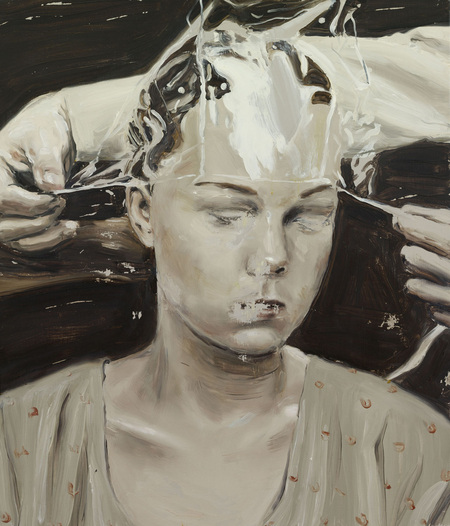
Mikhail Borremans: «Shift,» 2004; «Preservation,» 2001.
Such a violation of functionality and contextual action—where the viewer does not understand why the characters are performing a particular action—creates a sense of anxiety and disorientation. Humans instinctively strive to recognize the structure of events, determine cause-and-effect relationships, and reconstruct the narrative; however, Borremans’s painting systematically resists this interpretation. Anxiety arises precisely at the point of rupture between the image’s recognizability and the impossibility of its final reading.
Figure Isolation and Its Deconstruction
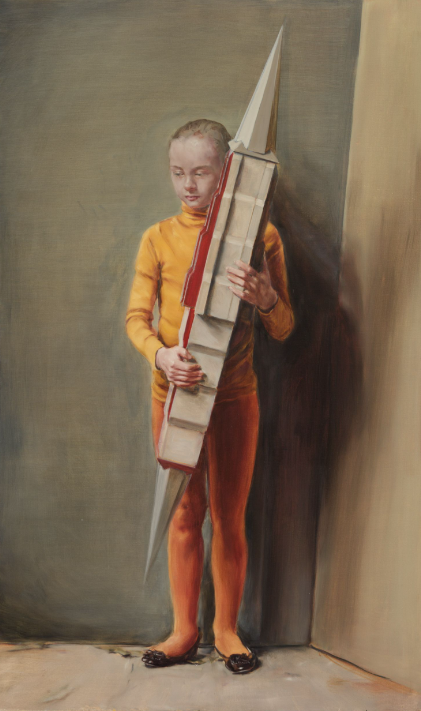
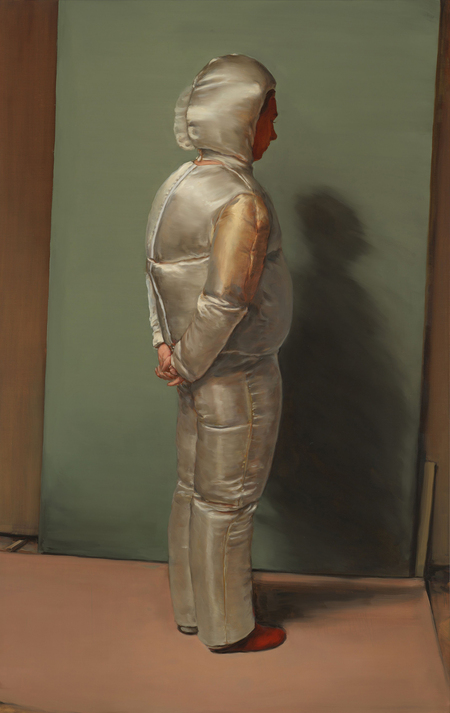
Michael Borreman: «Rocket,» 2013; «Bob,» 2025.
One of the most crucial elements of the anxious atmosphere in Borremans’ paintings is his particular way of depicting the human figure. The person is isolated as a distinct figure within the composition, and this isolation is amplified by the compositional structure. Figures are often placed in the center of an empty or sparsely detailed space, which serves less to create an environment and more to emphasize their separation and stillness. The absence of a domestic context, the minimal inclusion of objects, and the neutral backgrounds deprive the characters of social and spatial grounding. As a result, the figure comes to be perceived not as a participant in an event, but as an object of scientific observation or study.
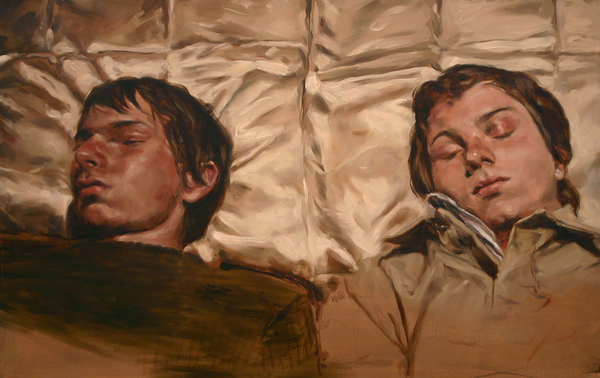
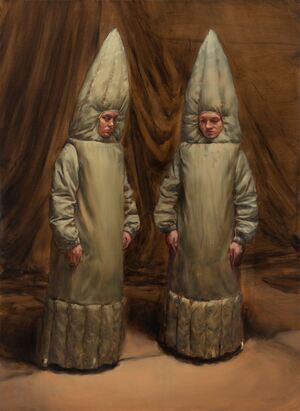
Michaël Borremans: «Bodies III,» 2005, «What Else Could They Have Done? ,» 2019
Even in scenes featuring multiple figures, there is a lack of sense of interaction, communication, or psychological connection between them. Borremans’s characters rarely look at each other or engage in obvious contact; most often, they exist as autonomous objects within a closed and artificial space.
Michael Borreman, Pony (II), 2009
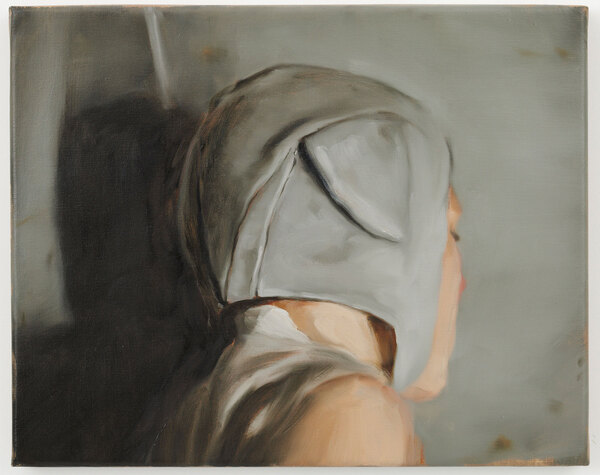
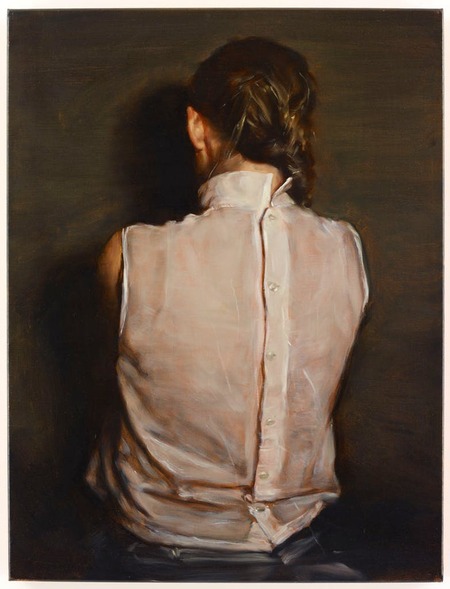
Michael Borremans: «Load,» 2008; «Ear (II),» 2011
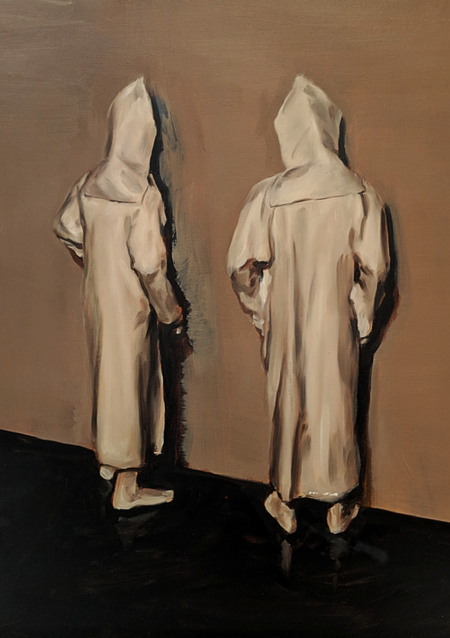
The method of depicting characters’ faces plays a crucial role in creating a sense of alienation. The artist often positions the figures with their backs to the viewer or turns their faces away. As a result, the viewer is deprived of the opportunity to establish an emotional connection with the depicted person. In classical figurative painting, the face is one of the primary conduits of psychological information: through gaze, expression, and the direction of the head, the viewer accesses the character’s internal state. Borremans systematically blocks this mechanism. The absence of a direct gaze and the concealment of the face prevent the figure from being «read» in the conventional way, causing the character to be perceived as a closed-off and inaccessible object.
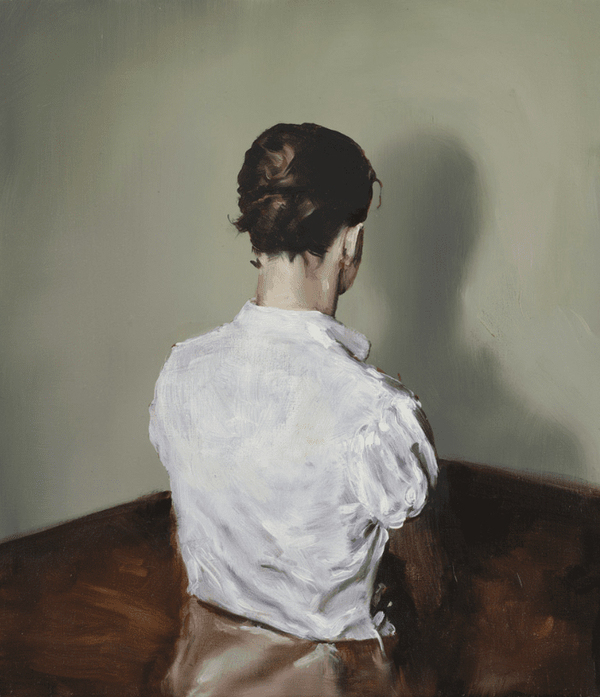
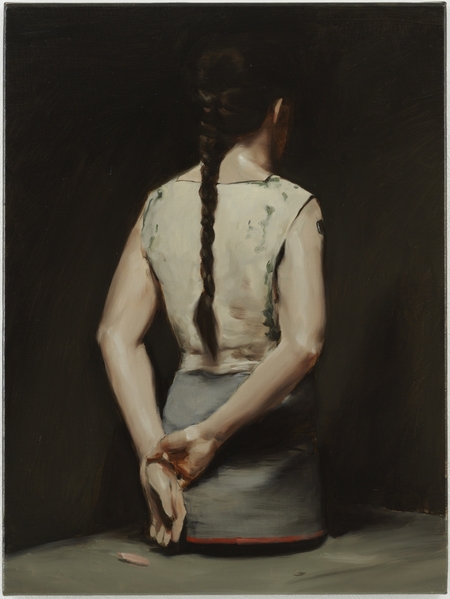
Michael Borreman: «A2», 2004, «Automatic (1)», 2008