Navigation
— Concept — 1940s — The Golden Age of Warner Bros. and Metro-Goldwyn-Mayer — 1950s — A Transitional Period — 1960s–1970s — The Rise of Television — 1980s — The Renaissance of Interest in Classic Animation — Conclusion
Concept
Humor in animation is one of the key drivers of audience interest and cartoon success. Visual gags are the primary tool for achieving a comedic effect. A gag is a brief comedic episode that elicits laughter through surprise, exaggeration, or absurdity. According to the 2024 Animation Industry Report, cartoons featuring well-developed gags increase audience engagement by 35% and box office revenue by 40%.
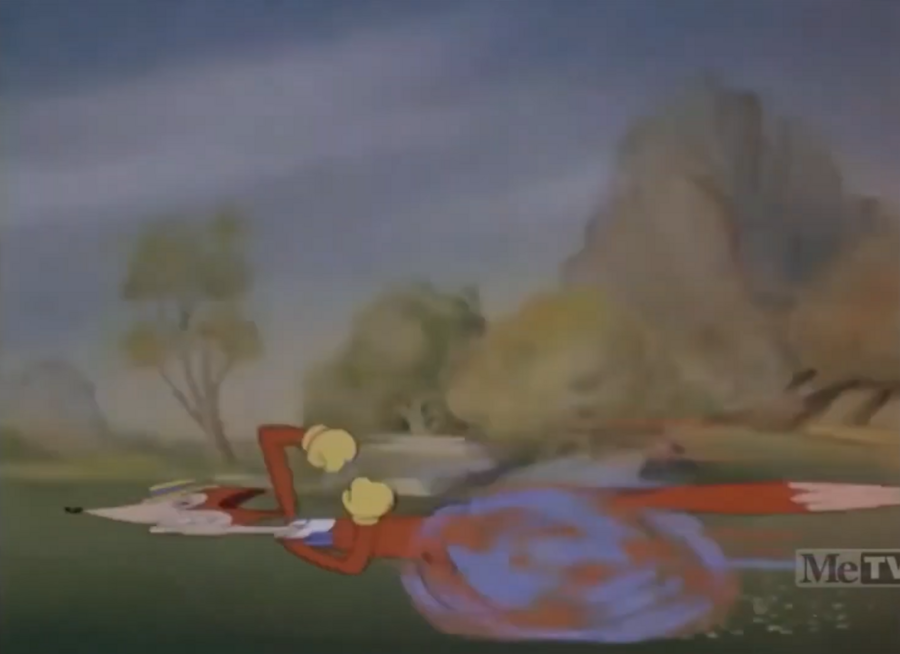
The Fox and the Grapes (Лис и виноград), directed by Frank Tashlin, 1941
Visual gags can vary in style and approach—what is effective in different situations and for various audiences. The main types of gags include: • Exaggeration — hyperbolizing movements, emotions, and actions to elicit laughter from the viewer • Contrast — an unexpected shift in rhythm, transitioning from tranquility to chaos or vice versa • Surprise — the sudden appearance of objects or a shift in context • Physical Humor (Slapstick) — falls, impacts, and unexpected collisions • Absurdity — actions that cannot happen in the real world (invisible walls, unrealistic falls, deformations)
Gags are not a modern invention; they have been an intrinsic part of classic animation since ancient times. The history of humor in animation began with the tradition of silent film. Directors drew inspiration from the works of Charlie Chaplin, Buster Keaton, and Harold Lloyd. In this study, we will examine how visual gags changed in American animation from the 1940s through the 1980s—how their form, rhythm, and function evolved.
1940s — the golden age of Warner Bros. and Metro-Goldwyn-Mayer
The 1940s are considered the golden age of American animation. During this decade, studios developed a language of comedic movement based on exaggeration and the violation of physical laws. Visual gags are one of the main structural elements of the narrative. The humor is sharp and fast-paced.
The Wacky Webbit, dir. Bob Clampett, 1942
Warner Bros. and Metro-Goldwyn-Mayer hold key positions in the industry. Everyone recognizes the legendary characters—Bugs Bunny, Daffy Duck, Tom and Jerry.
One of the key characteristics of 1940s visual gag is extreme character plasticity (slapstick). The body ceases to adhere to realistic physics and transforms into an instrument of comedic effect. Characters can be flattened, stretched, dismembered, and return to a normal state within a second.
Tom and Jerry — The Yankee Doodle Mouse (The Strategist Mouse), directed by William Hanna and Joseph Barbera, 1943
One striking example is the animated series «Tom and Jerry,» where nearly every scene is built upon a chain of physical transformations.
Tom and Jerry — Springtime for Thomas, directed by William Hanna and Joseph Barbera, 1946
Tom and Jerry — Professor Tom, directed by William Hanna and Joseph Barbera, 1948
Space in animation becomes unstable and mutable. A character might hang suspended in mid-air, continue moving after the ground vanishes beneath them, or even interact with the frame itself. Directors of that era actively utilized the surprise gag, which was rooted in violating viewer expectations. Tex Avery’s work is especially important here; he radicalized visual humor, driving it to the absurd. His cartoons are built on the constant destruction of cause-and-effect relationships and the hyperbolization of character reactions.
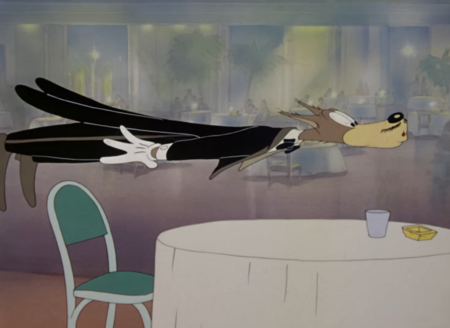
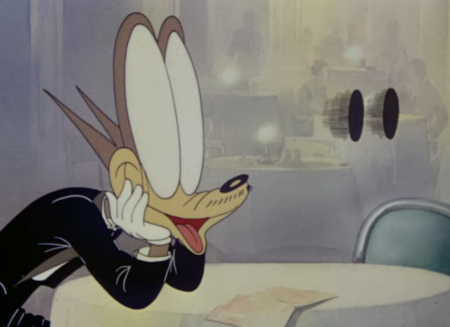
Red Hot Riding Hoood (Hot Red Riding Hood), dir. Tex Avery, 1943
King Size Canary (Very Large Canary), directed by Tex Avery, 1947
During this same period, visual gags emerged linked to the awareness of animation’s artificiality. Characters might address the audience, interact with the frame, or violate the boundaries of their own world. Such gags were heavily utilized in Looney Tunes cartoons.
Fresh Hare, directed by Friz Freleng, 1942
A Tale of Two Kitties, dir. Robert Clampett, 1942
Visual humor in the 1940s established the foundation of classic animated comedy. During this period, core principles emerged: hyperbole, body elasticity, the subversion of spatial physics, and a high density of comedic situations. Animation was not meant to imitate reality; rather, it developed its own identity and began leveraging its own conventions.
1950s — Transitional Period
In the 1940s, humor was based on chaotic slapstick and continuous movement. In the 1950s, comedy became more measured and structured. More attention was paid to the character’s psychological reaction. Gradually, the focus shifted from physical aggression to a more complex structure of anticipation and pause.
One of the defining features of visual gags is timing. The comedic effect is no longer based on the fall itself, but on the pause preceding it or the reaction following it.
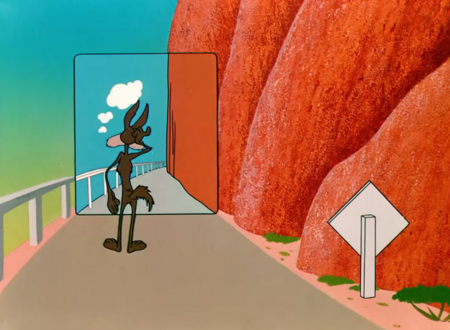
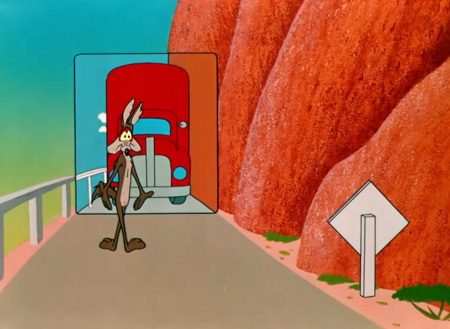
Going! Going! Gosh! (Forward! Forward!), dir. Chuck Jones, 1952
During this period, directors place greater emphasis on frame composition, pauses, and audience anticipation. Delayed reaction becomes a key technique. The character must first go through a phase of realizing what is happening before the comedic effect occurs. Humor becomes less chaotic and more «director-driven.»
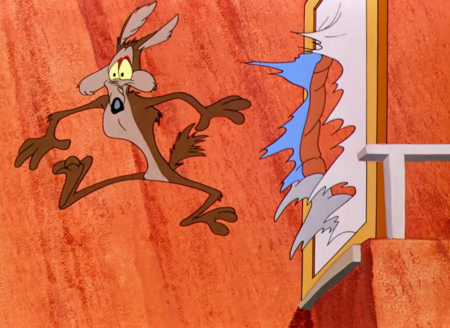
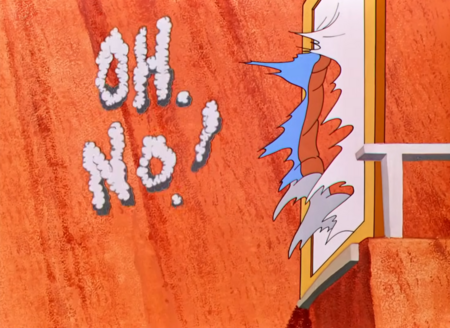
Going! Going! Gosh! (Forward! Forward!), dir. Chuck Jones, 1952
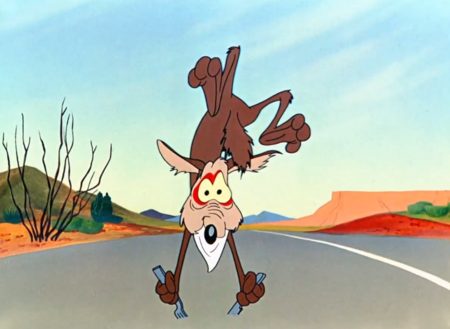
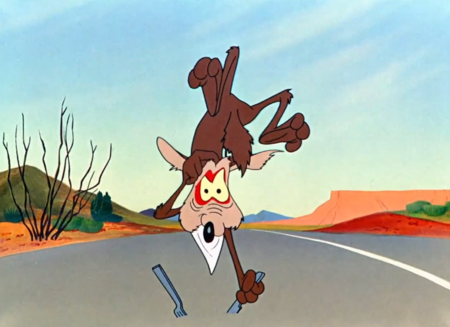
Beep, Beep (Бип, Бип), Directed by Chuck Jones, 1952