How does the same overarching figure of human transcendence repeatedly take on a new body, pose, costume, and meaning depending on the tectonic shifts in culture and societal thought? The image of the Übermensch in art and popular culture does not emerge from nowhere, nor does it develop linearly. This research demonstrates that the borrowing of external canons is never arbitrary. Mass and high culture visualize the fears, utopias, and current artistic strategies of their respective times.
Navigation
1. Concept
2. The Divine as Flawless Form
3. Romantic Revolt: Text and Disembodiment
4. The Totalitarian «New Man»
5. Mass Culture and Human Morality
6. Interface and Deconstruction
7. Final Transformation
8. Conclusion
Divine as a flawless body
Proportion, Statics, and Scale: The Divine as Imperfect Form (Antiquity–Renaissance). The Übermensch is conceived through physical perfection, mathematical balance, and harmony with the cosmos. Power is expressed not through aggression, but through absolute repose and control. The divine is synonymous with ideal anatomy and magnitude. Canonical proportions, perfect weight balance, the unemotional Greek profile, and nude or classical drapery emphasizing musculature. Physical scale directly represents sacred and social status.
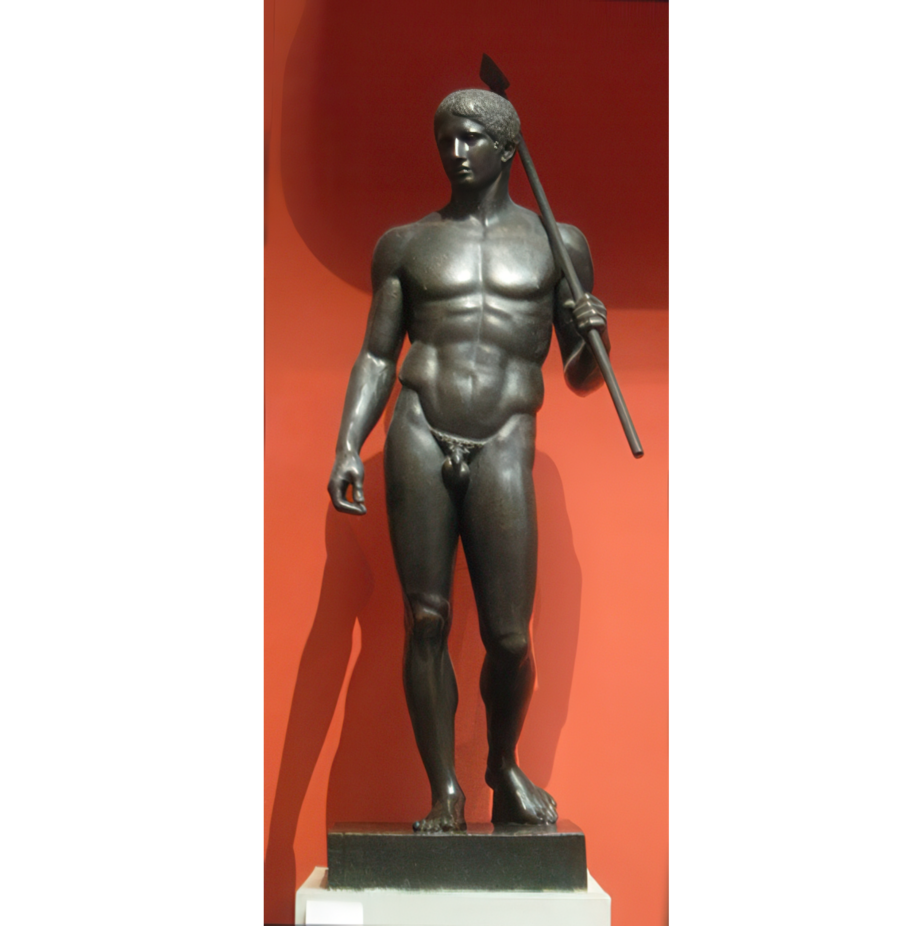
Polykleitos, Doryphoros, c. 450 BCE
Antonio del Pollaiuolo, Hercules and the Hydra, c. 1475
Michelangelo Buonarroti, David, 1501–1504
Romantic Rebellion, Text, and Incorporeality
Tragedy and the Vertical: Romantic Rebellion, Text, and Disembodiment (Late 18th — Early 20th Century).
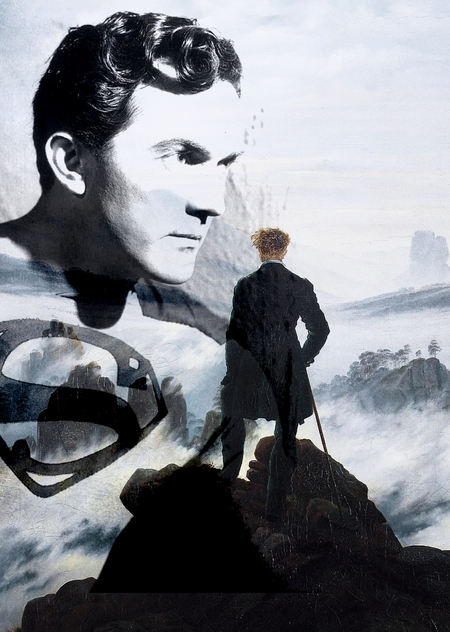
Influenced by the crisis in religion and Friedrich Nietzsche’s philosophy, the Übermensch ceases to be harmonious. The motif of tragic grandeur and overcoming the abyss emerges. The most influential image of the Übermensch arises in text that resists ready visualization. Compositional verticality, the figure on a height (rock, precipice), a gaze directed into the distance or inward, contrasting lighting, expressive gesture, and a cloak-like garment billowing in the wind.
Caspar David Friedrich, Wanderer Above the Sea of Fog, 1818
Mikhail Vrubel, Demon Sitting, 1890
Franz von Stuck, Lucifer, 1890
Edvard Munch, Portrait of Friedrich Nietzsche, 1906
The Totalitarian «New Person»
Vector and Monolith: The Totalitarian «New Man,» Race, and Machine (1920s–1940s).
The Age of Industrialization and Mass Ideologies. The Übermensch descends from Zarathustra’s mountain into the masses, merging with the machine. He is no longer an individual; he becomes a function of the state. Individuality and existential self-overcoming are erased in favor of the collective will. Diagonal composition, low-angle perspective, and the substitution of individual facial expressions with uniform, idealized faces.
V. Mukhina. Worker and Kolkhoz Woman, 1936.
Alexander Deineka, Stakhanovites, 1937
Arno Breker, Party, Fidelity, 1939
Mass Culture and Human Morality
Canon and Symbol: Mass Culture and Human Morality (1930s–1960s). The Great Depression and World War II necessitated a compensatory myth for the common person. The Superman transitions into the realm of comic books. He borrows totalitarian power and ancient proportions, yet he defends democracy. Superpowers are granted to the hero either at birth or through technology, but his morality remains purely human; he becomes a protector of the existing order and bourgeois ethics. Bright colors, a skin-tight suit like a second skin, a logo on the chest, and flight that overcomes gravity.
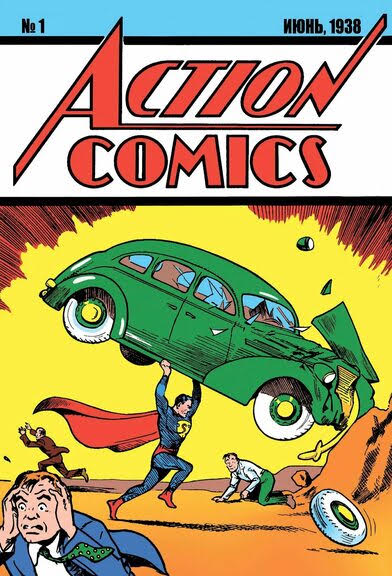
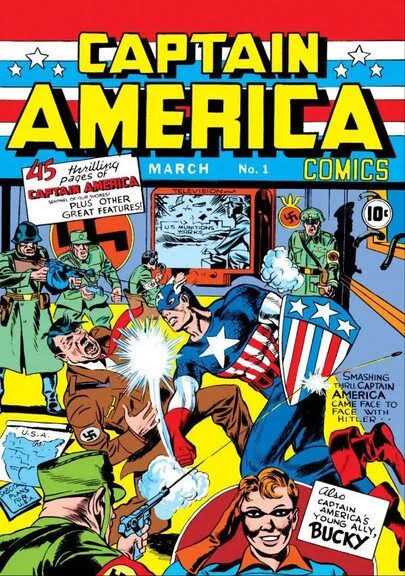
Joe Shuster and Jerry Siegel, cover of Action Comics #1, 1938, and Jack Kirby, Captain America Comics #1, 1941
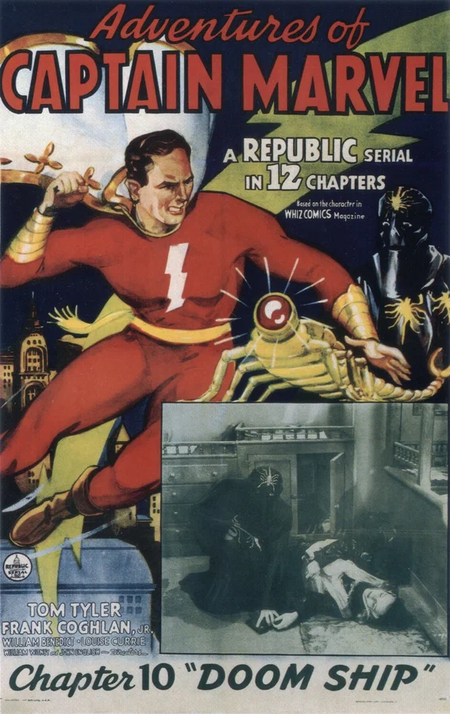
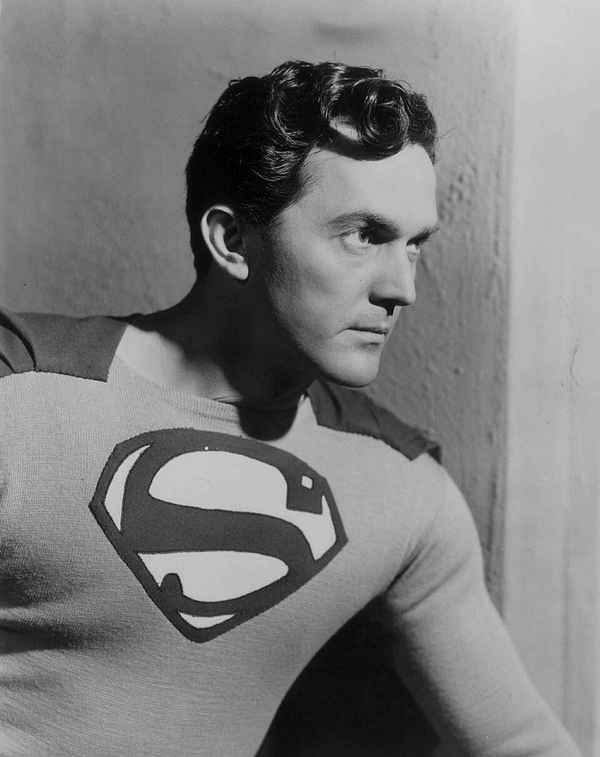
Captain Marvel’s Adventures, 1941 and Kirk Alin, Superman, 1948
Amazing Fantasy #15 cover, first appearance of Spider-Man, 1962
Interface and Deconstruction
Interface and Deconstruction: Flesh Decay, Simulacra, and Instability (1970s–2000s).
Disillusionment with pure heroes. The Übermensch loses its moral absolute and biological purity. The Übermensch can now be imperfect, exhausted, or deliberately artificial. The visual signature of this era is instability and total citation; each new iteration references previous cultural strata, transforming the image into a simulacrum. Dark palettes accented with neon or metallic tones—cables, implants, the simulation of a halo via monitor glow, visual glitches, and deconstructed or emaciated anatomy.
Terminator, 1984
Ghost in the Shell Anime, 1995
Fight Club, 1999
Final Transformation