The Transformation of the Human Form in Gothic Sculpture (12th–15th Centuries)
Concept
Sculpture occupies a vital role in Gothic architecture. While it was independent in antiquity, here the figures are integrated parts of portals, facades, and ensembles. The representation of the body in Gothic art evolved over time and with technological advancements. Throughout the 12th–15th centuries, the perception of proportion, movement, and the interaction between figures changed. Masters perfected their techniques, and sculptures developed more complex plasticity; the interaction of figures became a crucial element of the composition.
I wanted to track these changes and understand how the skills of the masters developed and how Gothic sculpture transformed.
How are the representation of the human body and the methods of figure interaction transforming in Gothic sculpture from the 12th to the 15th centuries?
Important clarification: some cathedrals do not belong entirely to one period. In such cases, I selected specific sculptural ensembles and examined them within their relevant time frame.
12th–13th Centuries
Chartres Cathedral
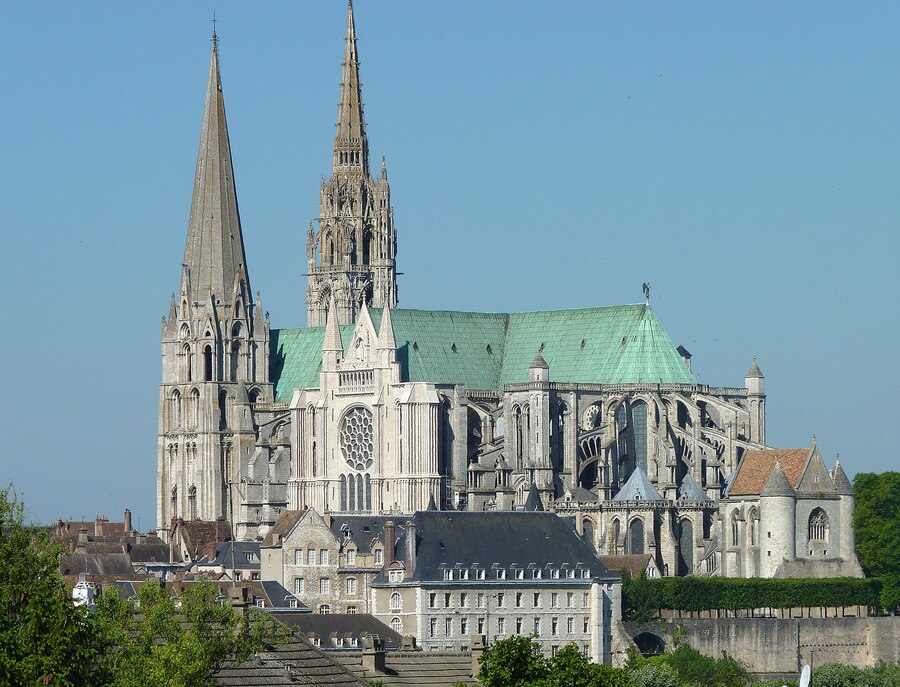
Chartres Cathedral of Notre-Dame. Construction occurred between 1194 and 1260.
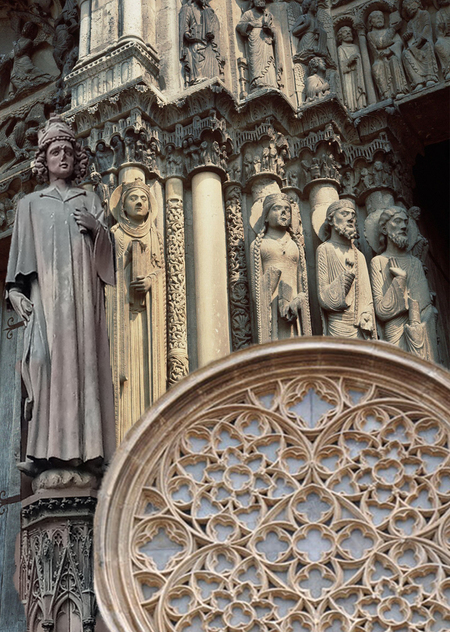
Royal Portal (circa 1150)
The proportions of the human body are distorted. The figures are elongated, reminiscent of columns. Furthermore, all characters are isolated. There is no interaction between them.
Sculptures of the North and South Portals (c. 1210–1225)
It can be observed that even within a single cathedral, sculptures from later periods begin to transform. Plasticity emerges, proportions become closer to reality, and figures begin to interact.
13th–14th centuries
French: Strasbourg Cathedral
German: Strasbourg Minster / Liebfrauenmünster zu Straßburg
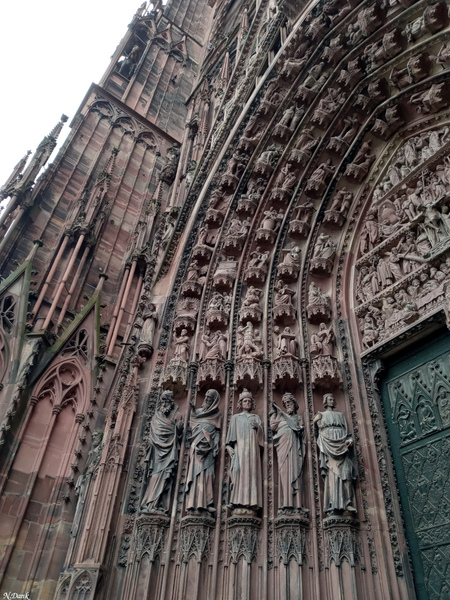
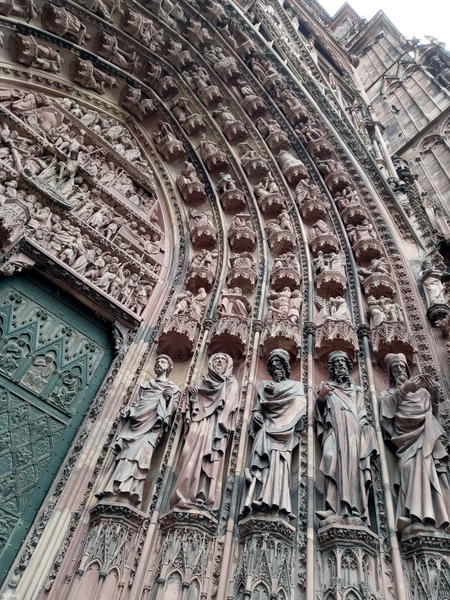
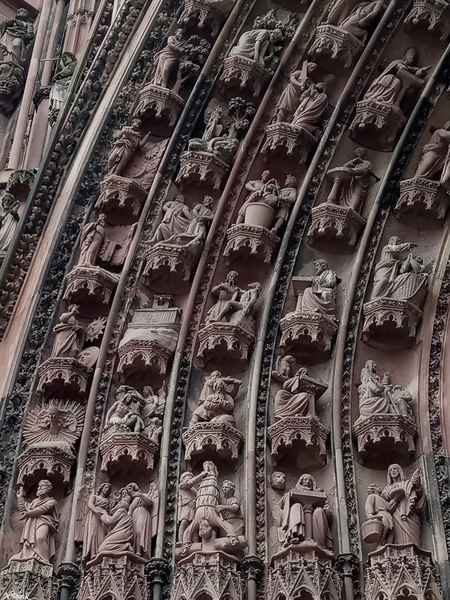
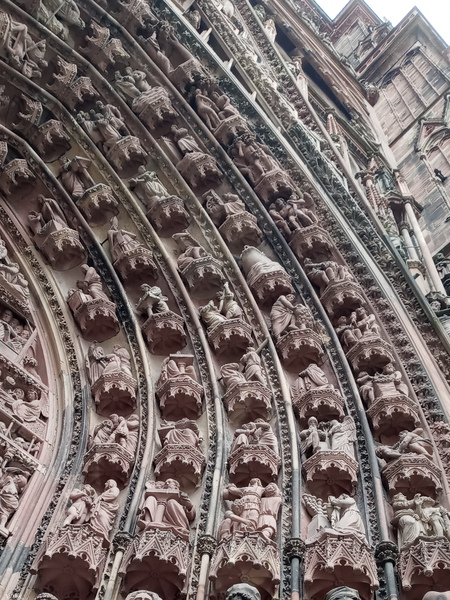
Strasbourg Cathedral of the Virgin Mary Construction took place from 1015 to 1439
Central portal of the west façade (construction proceeded from 1277 to the beginning of the 14th century)