Navigation
- The moment film pauses
- Photography learns to move
- A shot against time
- Motion disassembled into frames
- Between stillness and animation
- One photo—multiple stories
- The archive that begins to speak
Concept
Cinema is generally defined by motion. Unlike photography, which captures a single moment, film is capable of conveying the continuity of action, the transformation of space, and the passage of time. Yet, this cinematic movement arises from a sequence of still images. Each individual frame exists as a distinct visual unit, but upon playback, it becomes part of a larger flow. This dual nature of cinema is particularly evident when the image abruptly pauses.
The cessation of the frame interrupts the expected continuity of cinematic time. Action that should be ongoing becomes unfinished, and the isolated image acquires independent meaning. Stillness ceases to simply denote the absence of movement and becomes an artistic device capable of altering the structure of a narrative, highlighting a specific moment, or establishing new relationships between images.
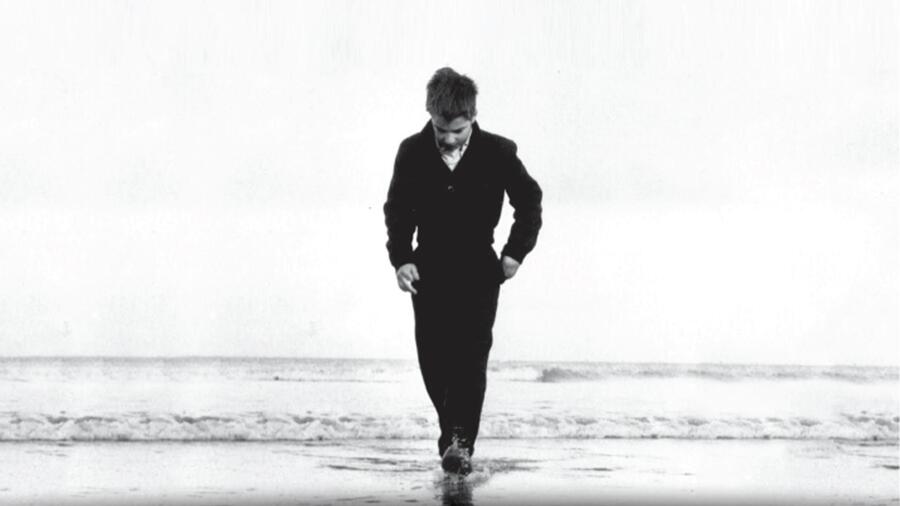
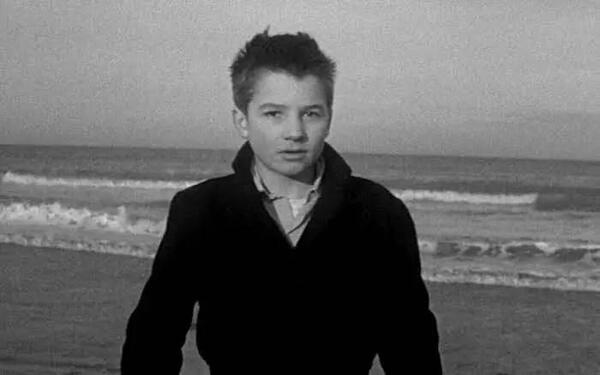
Such experiments hold a significant place within the French New Wave. Rejecting certain principles of classical narrative cinema, directors began utilizing stoppage and montage breaks as independent expressive tools. In the finale of François Truffaut’s The 400 Blows, the character’s movement halts in a static portrait that supersedes the traditional conclusion of the action. The freeze-frame becomes less of a final punctuation mark and more a method of keeping a moment suspended.
Parallel to the French New Wave, directors of the «Left Bank» group explore the possibility of creating a cinematic work directly from still images. In Chris Marker’s La Jetée, photography becomes the primary unit of narrative. A sequence of images, connected by montage, sound, and voiceover, constructs cinematic time without continuous in-frame movement. In Agnès Varda’s film Saludos Cuba, the rhythmic organization of photographs conveys the nature of movement through the succession of still compositions.
In experimental cinema, the relationship between movement and stillness undergoes further re-evaluation. The photogram, repetition, and alteration of playback speed become material for artistic investigation. In the works of Paul Sharits and Martin Arnold, movement is deconstructed, fragmented, and reassembled. Continuous action yields to a rhythmic structure where every repetition or pause possesses an independent expressive function.
Another approach relies on modifying screen duration. Slowing down can bring a moving image close to a state of stillness, while digital manipulation, conversely, allows for the creation of movement within an originally static photograph. Both techniques challenge the fixed division between photography and film: stillness is not a fixed state of the image, but rather one possible form of organizing cinematic time.
The still image acquires special significance in the film essay, where photography becomes not merely visual material but also an object of critical examination. Through extended fixation, repetition, comparison of details, and voiceover narration, directors reveal how the meaning of an image depends on its context. In Ulysses, Agnès Varda returns to her own photographs to explore the discrepancies between the captured moment and the memories associated with it. In J’aime Jane, Jean-Luc Godard and Jean-Pierre Gorin examine a single photographic frame as a complex system of visual and political relations. In the works of Harun Farocki and later Godard, still and archival images form the basis for analyzing historical events, mechanisms of representation, and the history of cinema itself.
The central hypothesis of this research is that the still image undergoes a functional transformation in cinema: it shifts from being a means to halt narrative action to becoming an autonomous principle for organizing cinematic time, and subsequently, an instrument for investigating memory, historical testimony, and the image as such.
This transformation does not imply a sequential shift in artistic methods. Different approaches to handling stasis emerge in parallel, intersect, and continue to coexist across various directions of cinema. Therefore, the study is organized not chronologically, but according to the functions that the still image assumes.
The primary method employed is comparative visual analysis. Sequences of shots, individual photograms, and video fragments are examined in terms of composition, editing, duration, repetition, and the relationship between the image and sound. This approach allows us to trace how technically similar methods of stopping or fixing an image can fulfill fundamentally different artistic objectives.
Thus, stillness is considered not as an opposition to movement, but as one of the ways movement is transformed. By halting an image, cinema does not necessarily cease the development of action or thought. On the contrary, a stopped frame can become the beginning of a new visual narrative.
The Moment Cinema Pauses
The French New Wave transforms the freezing of an image from a technical possibility into an independent artistic device. A suddenly paused shot is capable not only of highlighting a single moment but also of altering the way the narrative is organized—interrupting the action, prolonging its significance, or creating a new rhythmic structure.
François Truffaut. The 400 Blows, 1959.
The final sequence, «Four Hundred Beats,» is built upon a sharp contradiction between prolonged motion and its sudden cessation. Antoine Duanel escapes a correctional facility and heads toward the sea. The camera follows his run, maintaining spatial continuity of movement. In the open landscape, the figure of the boy appears small against the environment, and the horizontal movement along the shore emphasizes the vastness of his journey.However, the achieved spatial freedom lacks a corresponding narrative resolution. Antoine approaches the water, turns around, and looks into the lens. The camera isolates his face, and then the image movement stops. Instead of continuing the action, the film concludes with a static portrait.The shift in scale becomes fundamental. The open space of the beach gives way to a close-up, and the movement of the human figure resolves into a static composition. Where previous shots were organized by the direction of the run, the final image contains no visible vector of movement. Antoine’s face becomes the center of the frame, existing outside of further action.The freeze-frame does not indicate what will happen to the character after his escape. On the contrary, it ruptures the cause-and-effect sequence at the moment a resolution would be expected. A peculiar contradiction arises: the film achieves formal closure precisely through an image that refuses to complete the story.
The defining characteristic of the final still frame is that its immobility simultaneously concludes the film while preserving an unfinished quality to the events. Truffaut separates the end of the cinematic form from the potential continuation of the character’s life. The final frame no longer adheres to the movement of the plot, but precisely this fixation establishes a distinct boundary for the work.
Antonin’s direct gaze into the camera plays a crucial role. While the character moves along the shore, the image maintains spatial and temporal continuity of the action. After he turns, the familiar organization of the frame changes: the protagonist is no longer directed toward the next point in space, but is instead turned toward the camera itself. The stop solidifies this gaze, transforming a fleeting gesture into a steady portrait.
The motionless face also evokes the photographic image that appears in an earlier episode of the film, when Antoine is photographed for a police file. In both instances, the camera fixes his face, but the functions of the images differ. The police photograph serves for identification and control, whereas the final still frame preserves the ambiguity of the character’s position. The similar visual form takes on opposite meanings depending on the context.
Thus, the cessation of movement is not a technical pause, but an independent method of organizing the conclusion. The still frame closes the cinematic work, but it does not establish a final meaning for the last image. The instant extracted from continuous action becomes a form of open narrative closure.
François Truffaut. Jules et Jim, 1962.
In «Julie and Jim, ” the still frame takes on a different function. Instead of definitively halting the narrative, Truffaut uses static images within a continuing scene. The pause becomes an element of the montage rhythm, allowing individual gestures to be isolated from continuous motion.
One of the most striking episodes unfolds during Jules and Jim’s game of dominoes. While the men are absorbed in the game, Catherine attempts to draw their attention. Describing her prior mood, she sequentially portrays different facial expressions. During the moments the grimaces change, the movement abruptly freezes, transforming the heroine’s expression into a series of still portraits.Unlike the ending of Four Hundred Blows, the stoppage recurs several times here. Each expression is isolated from the continuous action, after which the movement resumes. This creates the effect of a photographic sequence: different states of a single face exist as separate images unified by montage.The relationship between image and sound takes on particular significance. During the pauses, Catherine’s laughter continues. The soundtrack maintains a sense of ongoing action, even though the visual activity temporarily ceases. Because of this, the image and sound no longer fully coincide in time: photographic stillness becomes incorporated into the continuous cinematic flow.The freeze-frame here does not fix a single final image of the character. On the contrary, the series of stops underscores her variability. The visual portrait is composed of several non-congruent moments, each capturing only a discrete state. Instead of concluding the action, the stillness becomes a method of its rhythmic organization.
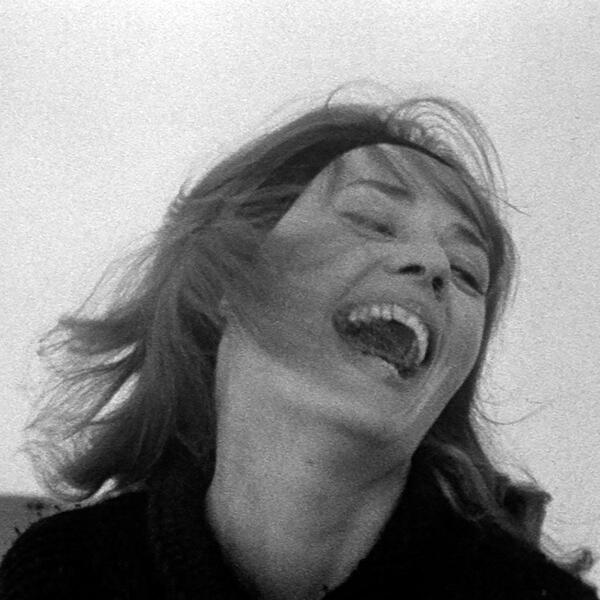
François Truffaut. The 400 Blows, 1959; Jules and Jim, 1962.
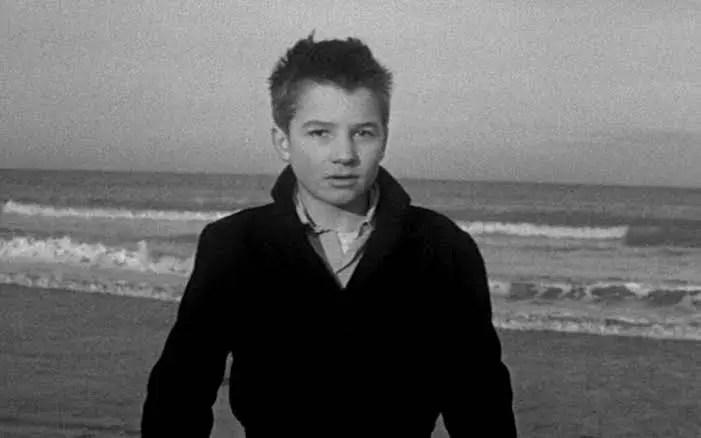
In Four Hundred Blows and Jules and Jim, a similar technical device is employed, yet its functions differ. In the former, the freeze frame becomes the concluding image of the film, separating the cinematic narrative’s finale from the character’s unresolved fate. In the latter, the stillness is incorporated into a sequence of ongoing action, transforming individual facial expressions into autonomous visual units.
The difference is most evident in the duration and placement of the stop. Antoine’s singular final freeze frame exists at the boundary of the work, replacing further visual development. Catherine’s series of stops, by contrast, is embedded in the middle of a scene where still segments constantly alternate with moving ones. In one case, the stop forms the limit of cinematic time; in the other, it constitutes its internal rhythm.
The relationship between stillness and sound is also significant. In the finale of Four Hundred Blows, the image fixes the last moment of the narrative, whereas in Jules and Jim, sonic continuity is maintained during the visual halt. The freeze frame ceases to signify a mandatory cessation of all cinematic action.
Thus, even within the French New Wave, the static image reveals several independent artistic functions. It can conclude a narrative, highlight a moment, disrupt spatio-temporal continuity, or generate a montage rhythm. Nevertheless, the stopped frame remains part of a film primarily structured around movement.
The next phase of the research pertains to a fundamentally different organization of cinematic material: the image no longer pauses within a moving film—movement itself begins to be constructed from a sequence of still photographs.
Photography learns to move
If a freeze-frame interrupts an existing motion, a photo-film proposes the opposite principle: a cinematic sequence emerges from images that are inherently still. In Chris Marker’s La Jetée and Anne Ward’s *Hello, Cubans! *, photography forms the basis of the film. However, the directors utilize it differently. Marker creates a passage of time through the succession of stills, their duration, and voiceover narration. Ward approaches the musical rhythm and sequences of photographs, which allow her to reproduce discrete phases of movement.
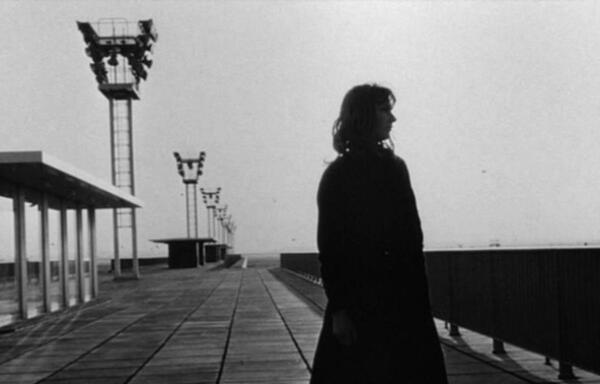
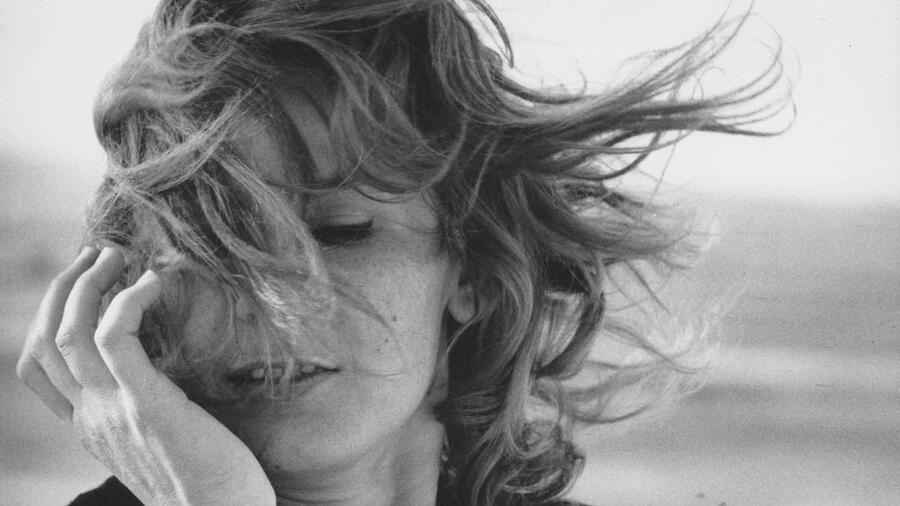
Chris Marker. «La Jetée, ” 1962.
Chris Marker’s «La Jetée» is almost entirely constructed from a sequence of black-and-white photographs. Unlike traditional cinema, movement here is not captured by the camera as a continuous change in object position. Instead, it emerges through montage, the duration of each still image, and the sound design.
One of the central visual motifs in the film is a woman captured on the observation deck of Orly Airport. Her image reappears in the narrative as part of the protagonist’s memory. Close-up portraits alternate with wide shots of the space, gradually forming a sequence of encounters, gazes, and gestures.
At the level of individual photographs, these moments remain static. The woman’s face, the turn of her head, or the position of her hands are fixed in a specific state, and the transition between them does not contain continuously shot action. However, the montage connects these disparate images into a unified temporal structure.
The fades—moments when one photograph gradually gives way to another—hold particular significance. Unlike a sharp edit cut, this type of transition momentarily overlaps two independent moments. The change occurs not within a single image, but between images, creating the sensation of moving from one state to the next.
Thus, the photograph ceases to exist solely as evidence of a discrete moment. Within the film, it acquires a duration that it lacks as an isolated snapshot. Cinematic time is formed not by the movement of objects, but by the organization of still material.
As a result, «La Jetée» demonstrates the fundamental possibility of film without the conventional continuity of visible action. Montage becomes not a means of joining moving scenes, but the primary mechanism that transforms photographs into a narrative.
Throughout almost the entire film, Marker maintains photographic stillness. Therefore, the brief episode of the woman waking up takes on special significance. For the first time, movement arises not as a result of changing photographs, but directly within the frame.The scene begins with a sequence of close-ups of the sleeping woman. Her face is shown in several shifting positions, and gradual zooms bring individual photographic moments closer. The transitions become less noticeable, creating the illusion of continuous image change.Then, the woman opens her eyes. At this moment, the still sequence gives way to a short moving shot. The composition maintains the original scale and subject matter, but its temporal structure fundamentally changes. If previously the position of the face changed only between photographs, now the movement occurs within the frame itself.Thus, Marker contrasts two modes of conveying time. The first is built on the intervals between fixed states; the second is based on the direct recording of motion. It is particularly important that the transition happens without a sharp change in composition: the boundary between photograph and cinema is revealed by the change in the very mode of the image’s existence.The technique also reconsiders the meaning of stillness in the film. Up to this point, the photographs already served a narrative function and formed a temporal sequence. The emergence of real movement does not retrospectively turn them into ordinary illustrations. On the contrary, it emphasizes the autonomy of photography as a cinematographic material.One short moving shot makes the distinction between static and moving imagery part of the film’s artistic structure. Photography proves capable of creating cinematic time independently, whereas movement becomes a rare and deliberately highlighted event.
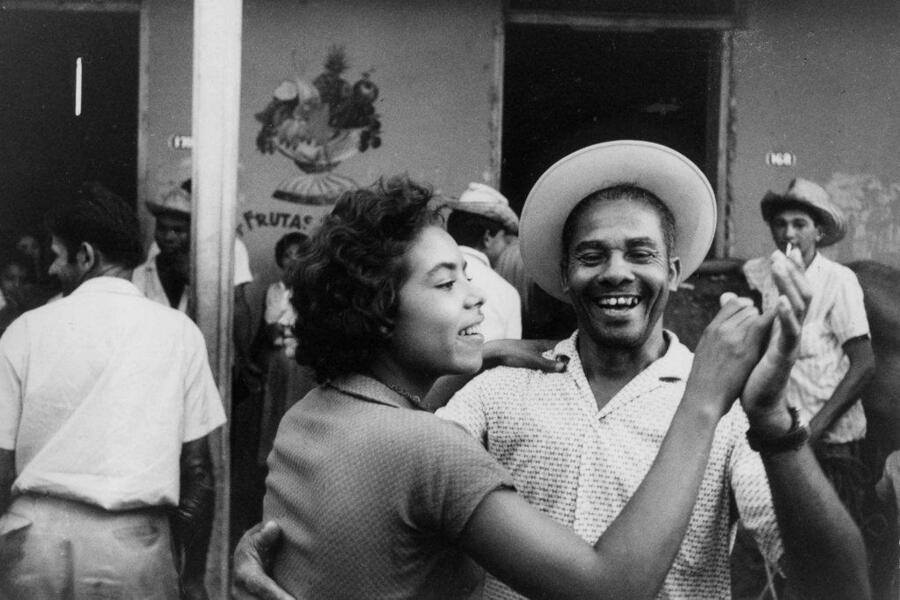
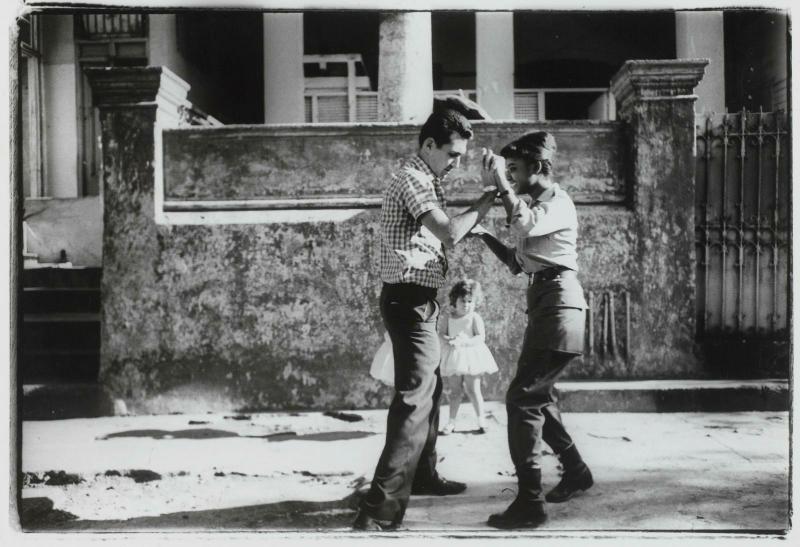
Annes Ward. «Hello, Cubans!» (Salut les Cubains), 1963. Dancing couples in the streets of Havana. On the right is a photograph from the author’s series «Cuba,» related to the creation of the film.
In «Hello, Cubans! ,» Agnes Varda treats photography as a material from which motion can be directly constructed. During her trip to Cuba, the director captures numerous episodes of daily life: street encounters, dances, musical performances, and portraits of the residents. These images later form the basis of a documentary film organized through montage and sound design.
Unlike «Take Off,» where the photographic sequence primarily shapes narrative time, Varda’s individual shots are capable of reproducing successive phases of action. This is particularly noticeable in the dance sequences. The position of the arms, the direction of the torso, and the turn of the head change from one image to the next, allowing static compositions to create a discontinuous yet recognizable sequence of movement.
The similarity between adjacent photographs plays a crucial role. Since the images maintain a similar scale, camera position, and spatial composition, attention is drawn to the changing positions of the dancing figures. A rapid succession of shots creates the illusion of movement, even though each individual frame remains photographically still.
However, Varda does not aim to completely eliminate the discontinuity. Noticeable leaps remain between individual body positions, which underscore the artificially constructed nature of the movement. The film does not hide its photographic origins but transforms them into an expressive device.The musical score becomes a crucial element of this structure. The rhythm dictates the duration of individual images and the frequency of montage transitions. The sequence of photographs gains a temporal organization independent of the original shooting event.Thus, the movement in «Hello, Cubans!» arises at the intersection of three elements: the fixed phases of action, the montage sequence, and the musical rhythm. Photography does not lose its stillness; instead, thanks to a specific organization, it begins to function as a moving cinematic image.
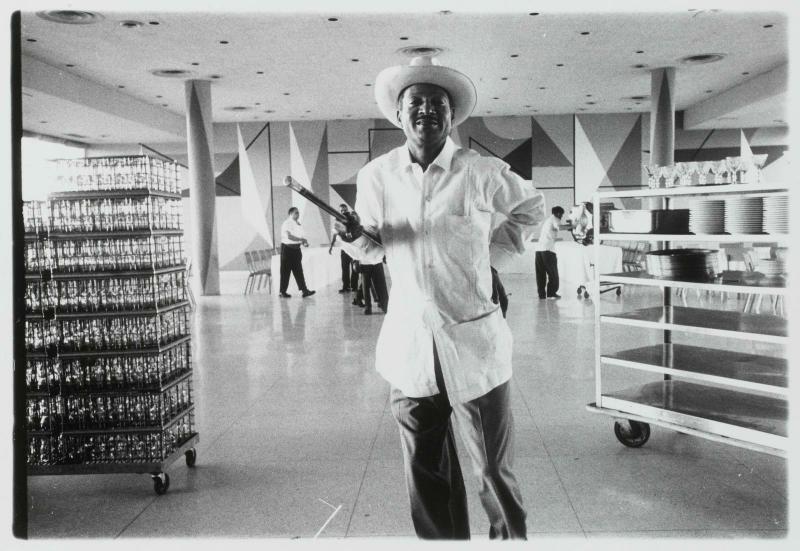
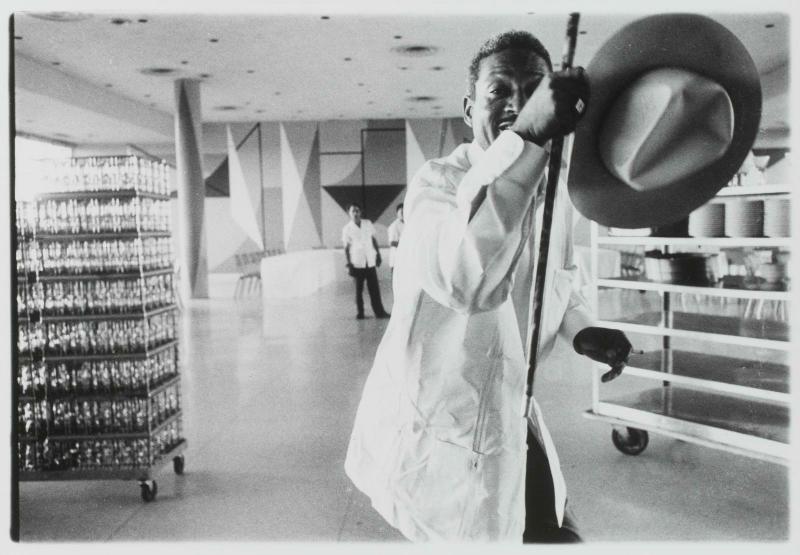
Annes Ward. «Cuba. Benny Moré I» (Cuba. Benny Moré I), 1963. Photographs from a series related to the film «Hello, Cubans!»
The principle of photographic motion is most vividly expressed in the musical segment featuring the Cuban singer Benny Moré. Varda utilizes a series of shots of the performer, assembling discrete poses into a sequence governed by the musical rhythm.
Moré’s body position shifts from frame to frame: he turns, moves his arms, and changes his torso angle. Each photograph captures an independent moment of the performance, yet through montage, these states form a fragmented movement. The space between the captured poses remains invisible, making the movement appear discontinuous and markedly rhythmic.
Unlike typical cinematic filming, the frequency of image changes here is dictated not by the speed of the real action, but by the editing decision. Varda might linger on one gesture, rapidly transition through several similar poses, or highlight a specific bodily position. The music provides the continuity that the photographic sequence cannot achieve on its own.
The singer simultaneously exists in two temporal states. At the level of each photograph, his movement is arrested, while within the film, the sequence of shots creates the impression of an ongoing performance. Varda’s voiceover lends an additional layer of meaning to this contradiction, informing the viewer of Moré’s death between the filming and the completion of the film.
Thus, photographic motion acquires a dual function. The montage and the music temporarily restore original dynamism to the fixed gestures, while the static nature of the individual shots simultaneously preserves the trace of a past moment.
Where Marker’s genuine movement arises as an exception to the photographic sequence, Varda transforms the photographic sequence itself into a means of reproducing action. Both methods retain the fundamental dependence of cinematic time on editing.