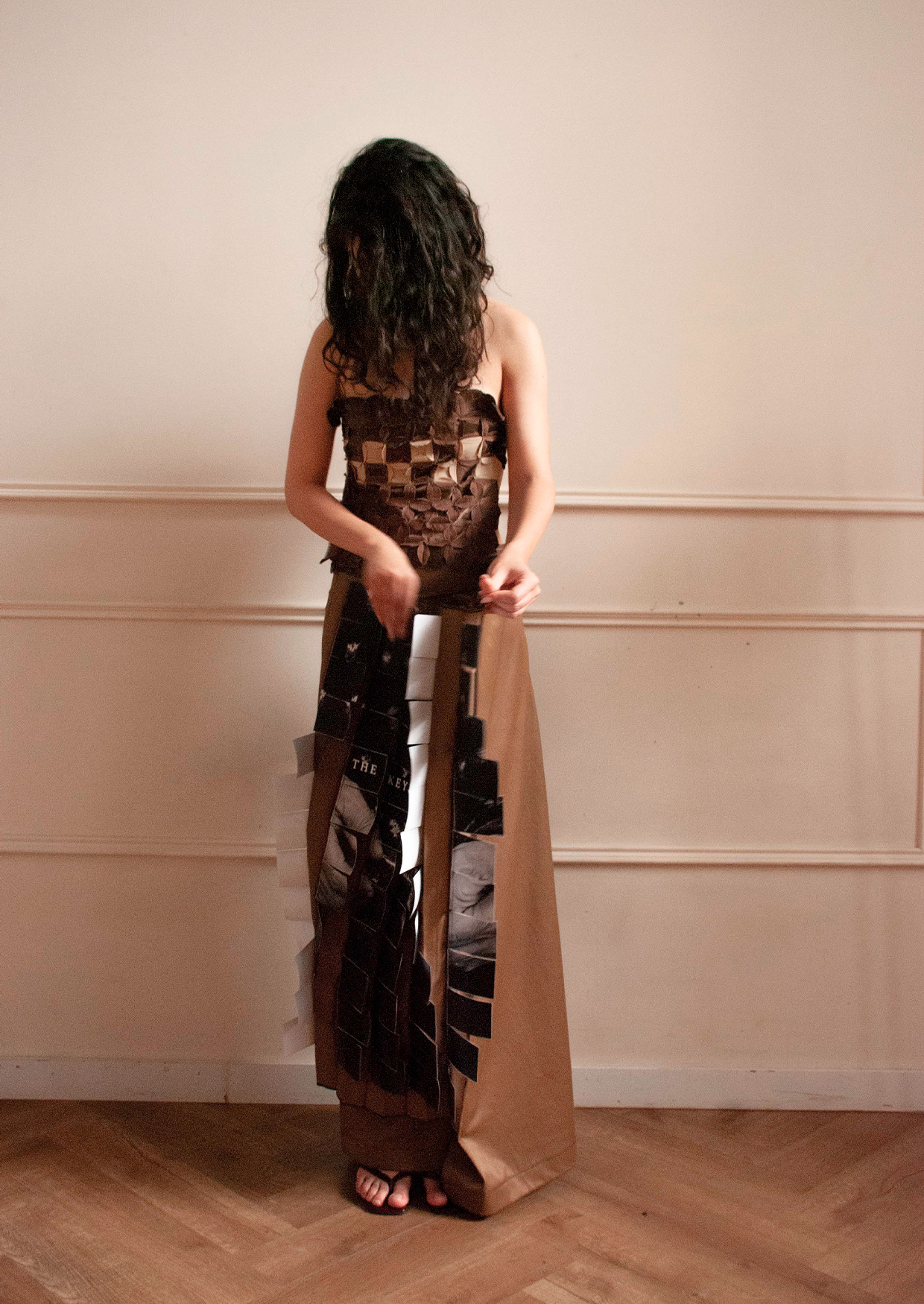
A clothing collection based on research into memory, loss, and the details through which we maintain a connection to the past.
How many details are needed to come home?

Distance, time, and loss reshape how we relate to home, people, and places. Returning to the past, we discover that memory has preserved only fragments—gestures, intonations, smells, habits, and objects.We attempt to reconstruct a whole from details, but even the most precise memories cannot restore the past to how it once was.For me, this question connects to my personal experience of living far from my homeland and to a broader cultural context in which memory becomes a means of maintaining a sense of belonging after losing a familiar environment.

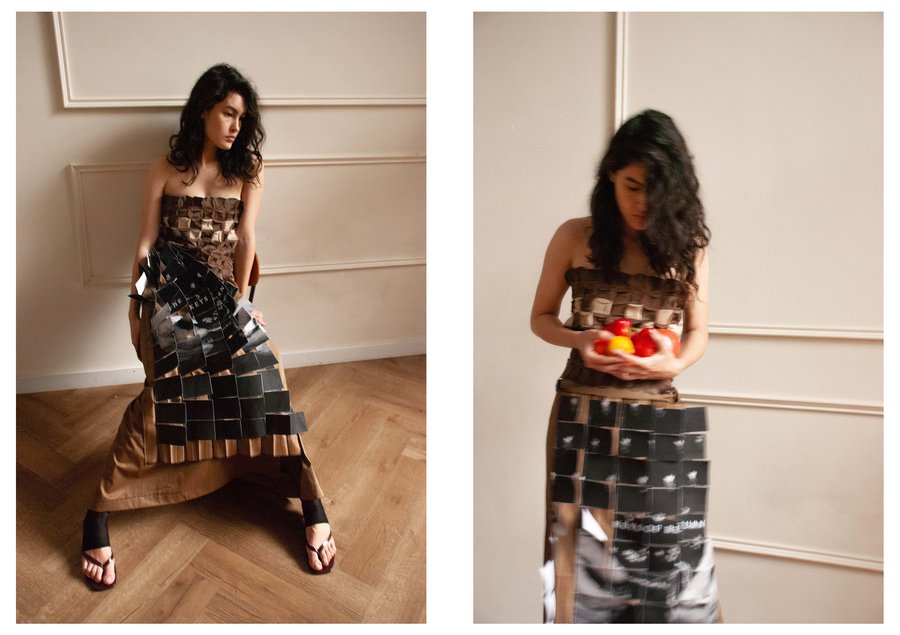
«What Is No Longer With Me» — a clothing collection that explores how personal and cultural memory persists through individual details after the familiar environment vanishes. The project is founded on the concept of «temperamental memory"—an original concept viewing memory as an active, emotionally charged process of maintaining a connection to what has been lost. Drawing upon Joseph Brodsky’s reflections on the fragmentation of memory and Roland Barthes’ notion of the punctum, the project examines the detail as a point of recognition: something seemingly insignificant that allows one to feel the presence of a person or a place. The clothing serves as a means to give these fragments material form.
Process
Project realization begins with an exploration of memory as a means of preserving connection to lost homes, people, and familiar environments. Based on the texts of Joseph Brodsky, Roland Barthes' concept of punctum, and personal recollections, the study examines how discrete details—gestures, intonations, objects, and daily rituals—retain the presence of the past, preventing its complete reconstruction. These collected materials form the foundation for the collection’s visual concept, where the fragmentation of memory, the traces of time, and the sensation of loss are translated into clothing silhouettes, constructions, and textures. After developing sketches, selecting materials, and creating samples, the collection is presented through photography and video. Thus, the research transforms into a design statement about memory as a way to maintain an emotional connection to what no longer belongs to our present.
The next phase of the project involves transitioning from theoretical research to visual and material experimentation.
Forming an archive of personal and cultural memories.
Creating a visual study of details, objects, and traces of the past.
Developing sketches and exploring constructive techniques.
Experimenting with materials, textures, seams, folds, and the transformation of form.
Creating and presenting a clothing collection.
The result will be a collection in which the research idea is revealed through the materiality, construction, and visual language of clothing.
Final
What is no longer with me continues to exist within me.Memory does not restore what has been lost in its entirety. Instead, it preserves fragments through which we continue to feel a connection to people, places, and our own history.This collection is an attempt to give these fragments a tangible form and to explore the boundary between preservation and loss.How many details are needed to feel at home?