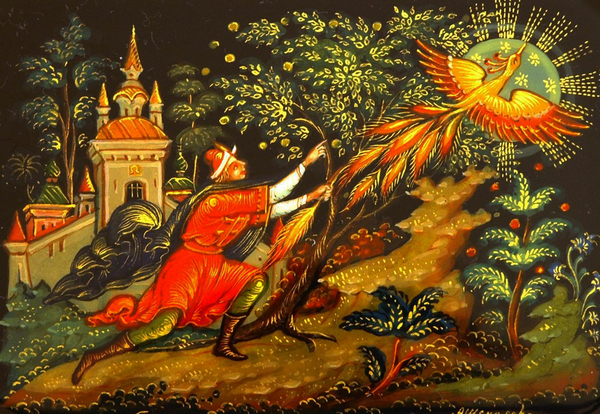
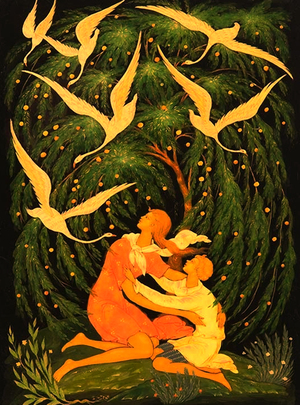
The project is inspired by the traditions of Palekh miniature—an artistic phenomenon that evolved from the icon-painting school of the 17th century and was reinterpreted by Palekh masters in the early 20th century as an independent art direction.
Concept
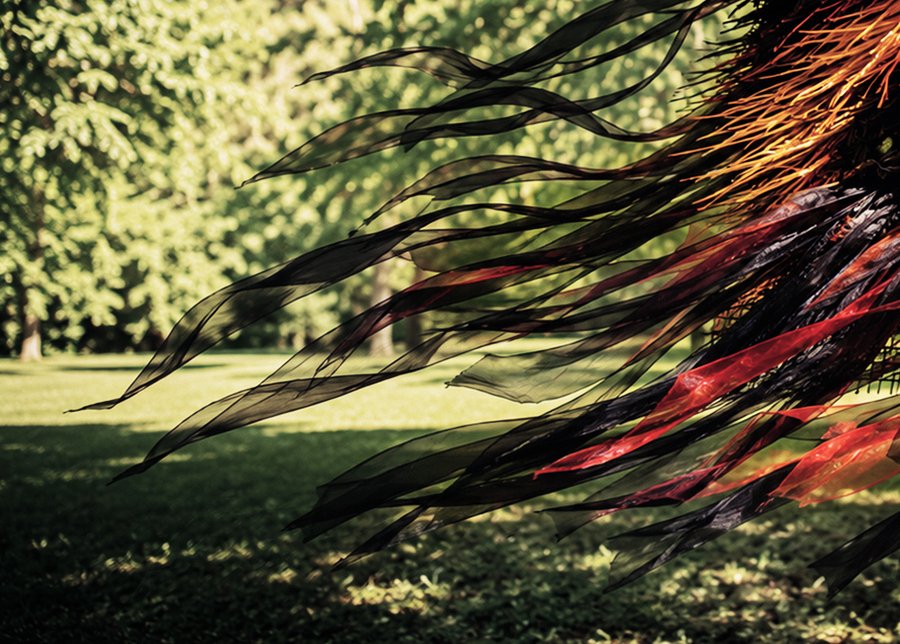
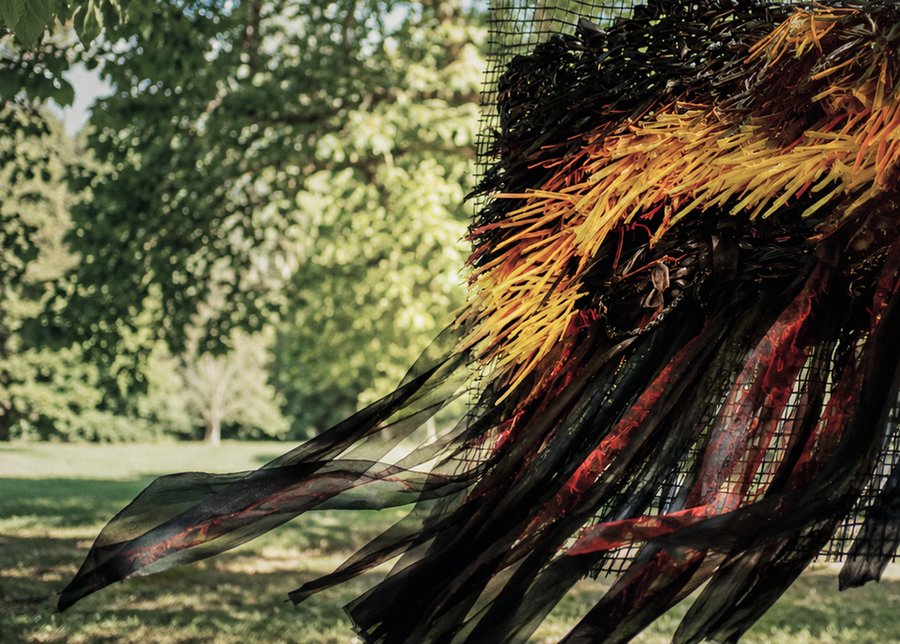
A textile art object in the form of a swan wing, inspired by H. C. Andersen’s tale «The Wild Swans, ” it conceptually depicts a key moment of the plot—the swans transforming into brothers. The form of the wing symbolizes a moment of transition and liberation, and the textile serves not only as an artistic medium but also as the conceptual foundation of the piece.

Sketching
Referencing the nettle shirts the heroine created to save her brothers, the artwork explores themes of self-sacrifice, manual labor, and the power of creativity capable of overcoming adversity. Decorative elements inspired by Palekh miniature painting enhance the imagery and connect the fairy tale narrative with the traditions of Russian decorative arts.

Sketch series / Form exploration


Final sketch / Photo of the object in creation process
The project merges historical heritage with contemporary artistic language, translating the characteristic features of Palekh aesthetics—delicate lines, decorative qualities, symbolism, and a distinct color palette—into textile form. The artwork becomes a modern interpretation of tradition, revealing Palekh as a living and relevant art form.
The creation process
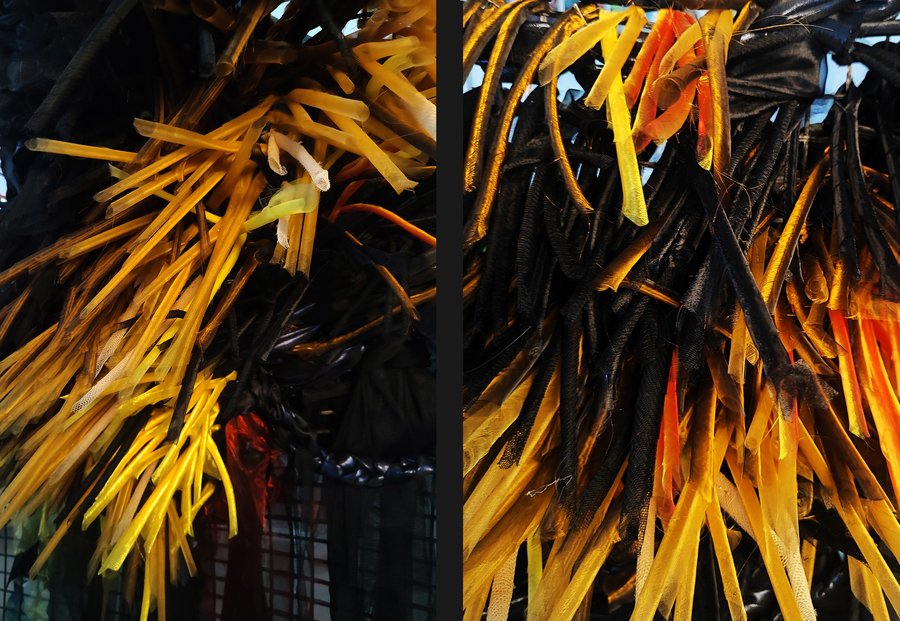
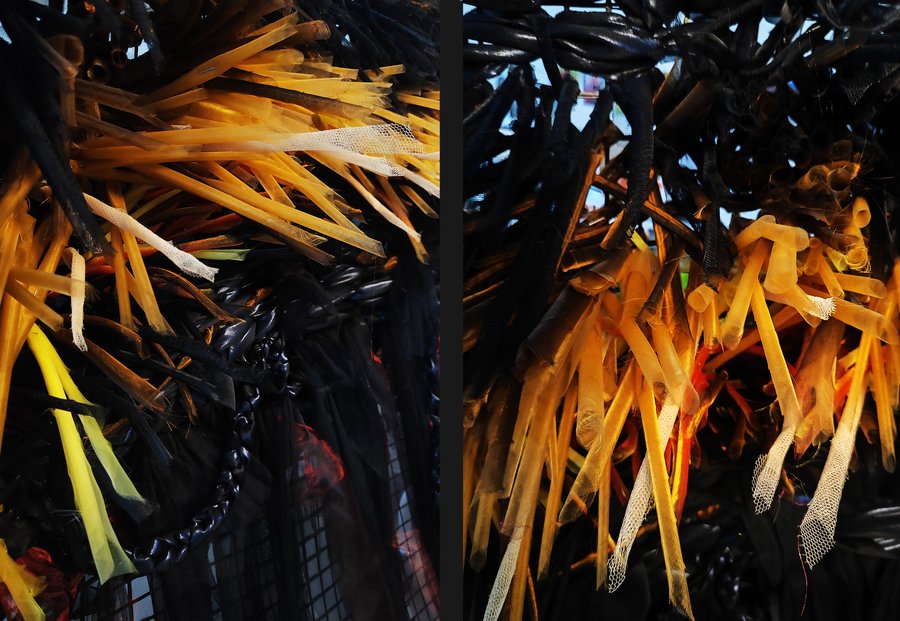
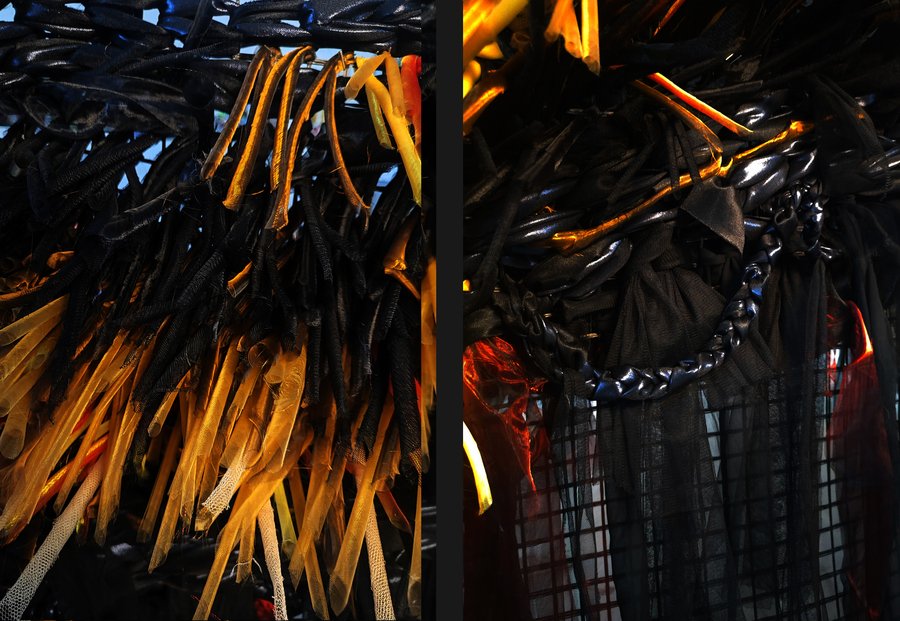
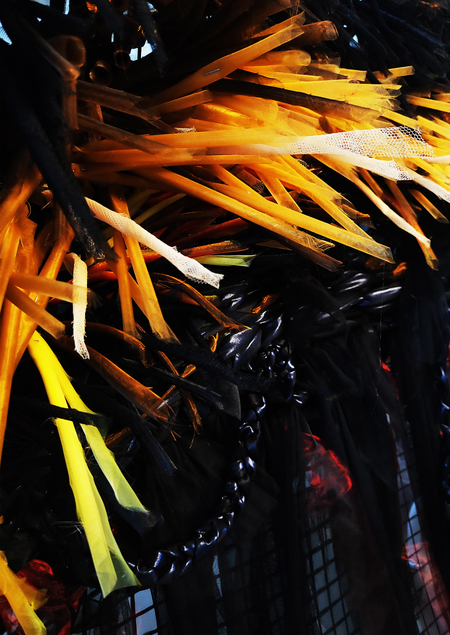
The technique incorporates a contrast between bright, voluminous tubular elements and a flat, dark weave. The combination of several rows of semi-transparent organza tubes in different shades and a fine mesh creates a smooth color transition and the effect of an internally illuminated wing.


Result