Why a bag.
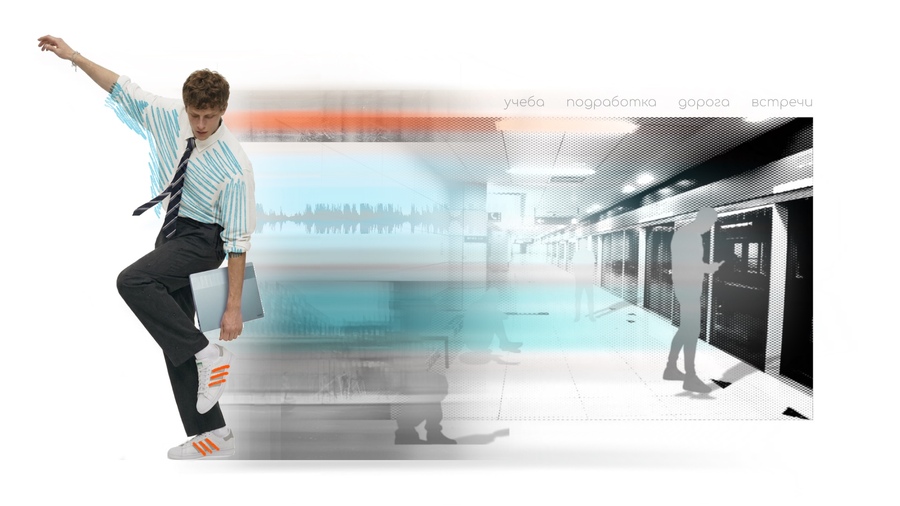
Student life is a constant state of motion: studying, part-time work, commuting, meetings. A person spends most of their day outside the home. The backpack is the only item present in every scenario.
What’s in my bag?
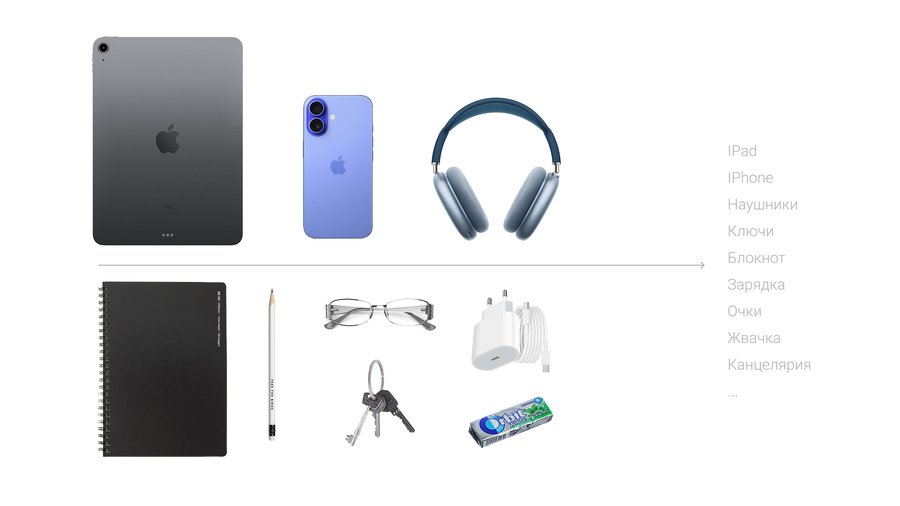
A typical student’s gear set: a tablet or laptop (11–13 inches), A4-sized documents or notebooks, headphones, charger, and water. Conclusion: A format smaller than A4 eliminates the possibility of carrying documents and a full-sized tablet. A larger format turns a bag into luggage, making it inconvenient for daily transport. A4 is the balancing point between capacity and portability.
Solution.
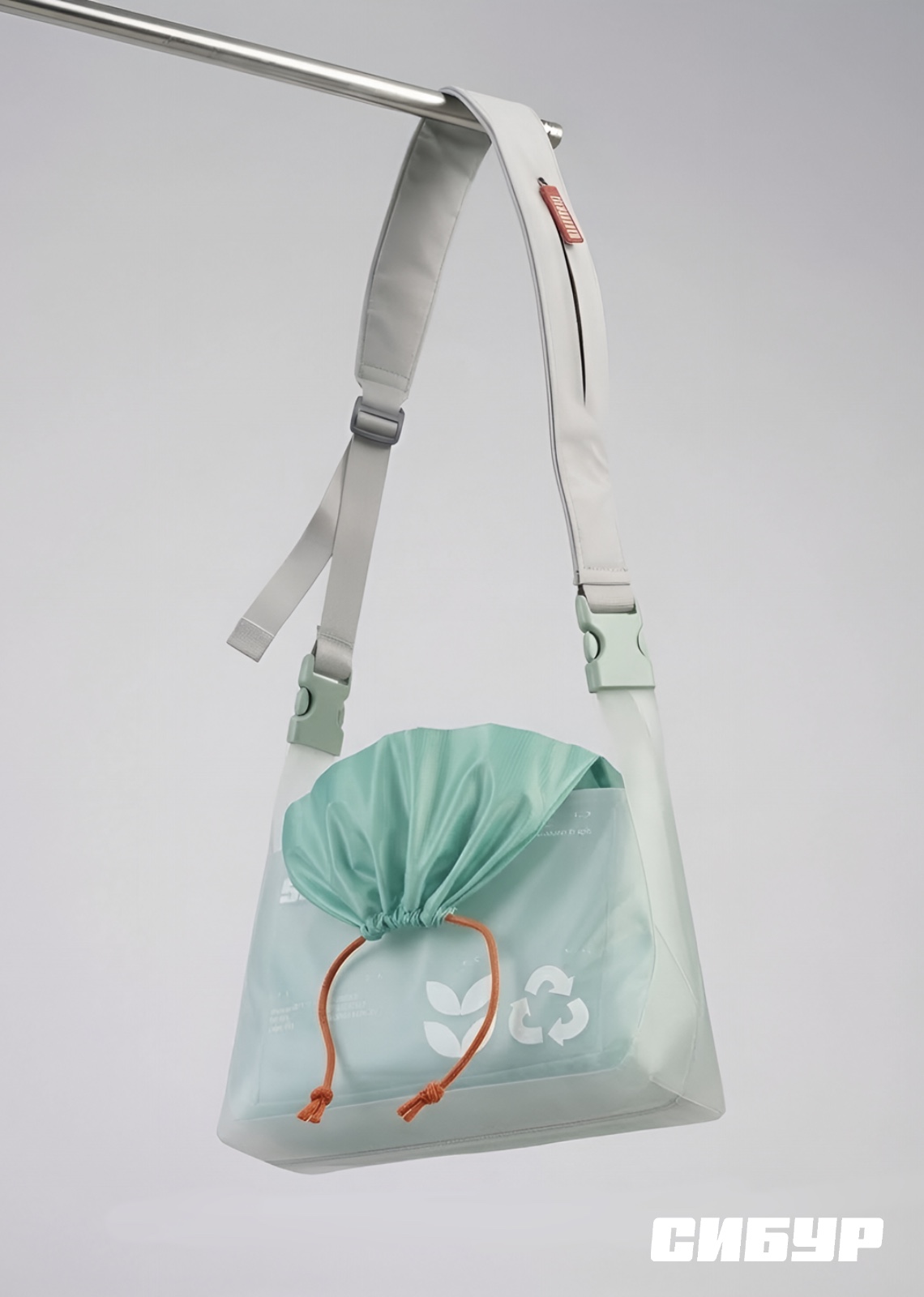
The bag consists of two independent elements joined by a zipper. This clasp can withstand significant load and allows for quick fastening/unfastening of the parts without compromising security.
Handle. A sturdy strap featuring an internal pocket for small items (cards, keys, transit pass). The length is adjustable to fit the scenario. If necessary, the handle detaches and can be worn separately as a standalone accessory.
Base. A semi-transparent matte body in A4 format. Inside is a removable drawstring pouch that conceals the contents when needed.
Functionality: The bag is designed as a modular system. The fastener connects the handle to the base but doesn’t lock the user into a single scenario. In the morning—a full configuration for studying. In the evening—the handle detaches and functions as a slot for cards and a phone.
Aesthetics: The semi-transparent matte body addresses two demands. One aesthetic (lightness, avoiding visual heaviness) and one functional (the ability to see the contents without opening the bag). The drawstring inner pouch gives the user control over the level of «transparency"—from complete openness to total privacy.
Sketches.
Visualization.
Materials.
The bag is a standalone subject with various usage scenarios.