About the Project
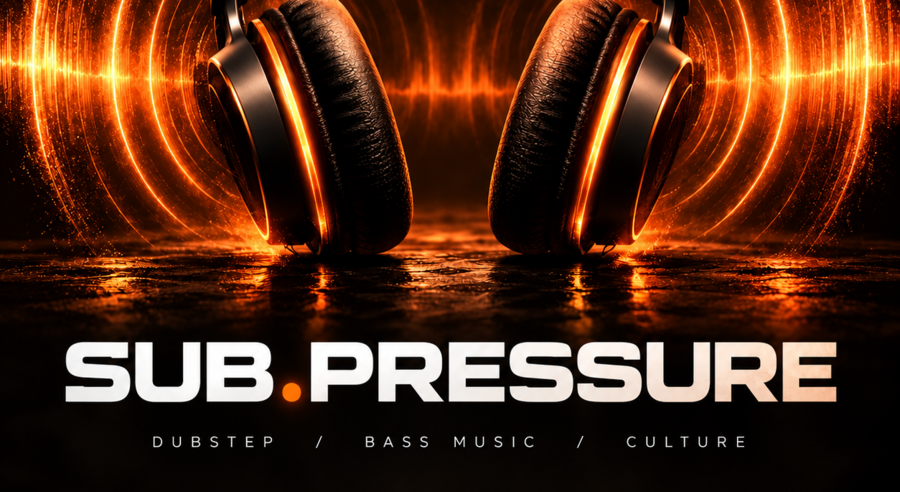
SUB.PRESSURE is an interactive media experience centered on dubstep and bass music. Here, the listener doesn’t simply receive curated tracklists—they become an active participant in a musical experiment.
The main object of study is a person’s reaction to sound—when they are anticipating a drop. What moment feels the heaviest? When the music starts losing its impact. What they want to listen to again. In typical music media, the artist tells a story about the track. In SUB.PRESSURE, the listener becomes the source of information.
Question. Why does the same sound elicit such different reactions from different people?
Project Goal
Create media that explores dubstep through the actual reactions of listeners. Don’t just say, «This drop is good.» Instead, show: 67 percent of listeners noted this moment as the most powerful. Thus, subjective perception transforms into data. The media becomes both: entertainment and research, a platform for musicians and an archive of reactions.
Value
The reader begins to understand how a feeling of power, tension, and anticipation is built from small decisions.
Themes
Core Themes:
1. Dubstep
2. Bass music
3. Drops
4. Rhythm
5. Sound Design
6. Track Structure
7. PsychoacousticsThe media does not focus on artist news.
The main theme is the mechanics of musical sensation. For example: Why do you want to re-listen to one drop immediately? Why does another feel weak? Why does the most powerful moment in a track sometimes happen before the drop?
SUB.PRESSURE examines every composition as a sequence of human reactions.
How Media Works
The musician sends a short demo. Subscribers listen to it without any information about the artist. While listening, they note: where they expected a drop, where they felt a peak, where they lost interest, and what they wanted to listen to again. All reactions are compiled. From these, a track map emerges. This map becomes new media content.
Primary unit of content
Each piece is structured according to this scheme:
Sound
Reaction
Data
Analysis
First, the user hears a fragment.
There is no explanation yet. After listening, they answer several questions.Then, they view the results of other listeners.Finally, SUB.PRESSURE explains which musical choices may have influenced the reaction.
Editorial Directions
1. DROP. Everything related to anticipation and the moment of the drop itself. Example: The listener presses a button just as they expect the drop to begin.
A general timeline then appears.2. WEIGHT. Which sound feels heavier.
The user compares two variations. Adjustable elements include: sub bass, kick, snare, distortion, space, and volume.3. BUILD. What creates the anticipation. This explores pauses, acceleration, repetition, and gradual rhythmic change.4. REPLAY. Which moments listeners want to hear again. The media aggregates replay points, generating a map of the track’s most engaging sections.5. EMPTY SPACE. When the absence of sound is more impactful than the bass itself. Users compare versions with and without pauses. This reveals how silence influences the perception of impact.
User-Generated Content
The primary source of new content comes directly from the musicians and listeners. The producer submits the first version of a track. Users provide feedback. The artist modifies the composition. After this, the new version is tested again. A new piece of content appears: BEFORE / AFTER — how the track has changed after 500 reactions. Thus, one musical fragment can generate several pieces of content.
Product within media
SUB.SCAN A fictional service for testing music demos. It displays: drop anticipation, reaction peak, drop in interest, and re-listening preference for Version A or B. The musician uploads the demo and receives a viewer reaction map. The media product itself is not advertised directly within the tool. Below the material, a caption appears: 67 reactions collected via SUB.SCAN
Visual System
The visual language is built around pressure and vibration. Black background. Deep orange. Bright ultraviolet. White peaks.Key Elements:
waveform
spectrograms
pressure lines
frequencies
timeline
distortionThe imagery seems to deform from the bass. The text shifts slightly.
The form compresses and expands.
Channels
Telegram
Short audio tests, polls, and new demos.
Website
Full interactive experiments and track maps.
VK
Visual summaries and cards.
Shorts
Quick A/B comparisons.
Studio
Target Audience: dubstep listeners, aspiring producers, DJs, sound designers, and anyone interested in electronic music.
Personas
Nikita, 21
He composes music at home. He doesn’t always grasp how effectively his drops work. He uses SUB.SCAN to check his demos.
Alina, 19
She listens to dubstep, but doesn’t compose music herself.
She is interested in comparing her reactions with others.