Beauty that doesn’t exist—about filters, retouching, and unattainable standards.
When you open social media, forty minutes later you find yourself staring at your reflection in the mirror, scrutinizing your own nose. In the morning, it was unremarkable, but now it seems larger and slightly off-center. Your nose hasn’t changed. It’s how you look at it that has changed.
The Outsider’s Gaze
In 1997, psychologists Barbara Fredrickson and Tomi-Ann Roberts described self-objectification. When a person is judged on their appearance for years, they learn to judge themselves: How do I look? What angle should I use? What will others see?
This takes a toll on resources. In one experiment, Fredrickson left students alone in front of a mirror: some were asked to wear a sweater, others a swimsuit, and then they were all given math problems to solve. The girls in swimsuits scored lower, while there was no difference among the boys. No one was watching them—the girls were preoccupied with how they looked from an outside perspective.
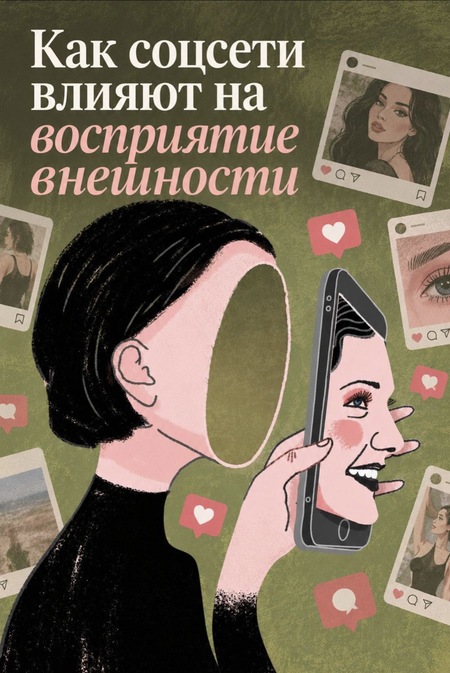
Social media makes this outsider’s gaze the default setting. Every selfie is taken with the eyes of future viewers: twenty takes, the right lighting, editing, retouching. The feed adds a curated selection, because it doesn’t contain random people: it features those who have garnered thousands of likes, and the algorithm knows not beauty, but where you paused your gaze, pushing similar content your way. Eventually, what is encountered by a fraction of the population begins to feel normal. The brain does not re-evaluate the sample; it honestly compares you to the «average» people it has been shown.
It used to be possible to spot retouching, but now processing is built into the camera. In 2023, TikTok released the Bold Glamour filter, and it didn’t «slip» off the face, even when you ran your hand across it: sculpted cheekbones, large eyes, and flawless skin looked completely real. The seam, a telltale sign of falsification, is gone.
Knowing about retouching and choosing not to succumb to it are two different things. Dutch psychologists showed pictures from Instagram to teenage girls, and those who received the edited versions were more dissatisfied with themselves than those who viewed the original images.
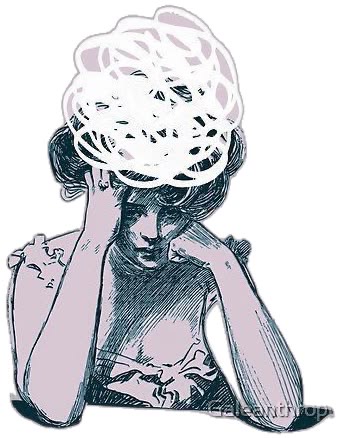
Here, physics comes into play. The front-facing camera captures a wide-angle shot from extremely close range, making the nose appear larger than it actually is—American surgeons estimate it appears about a third larger when shot from thirty centimeters away. Doctors have even coined the term «Snapchat Dysmorphia»: patients now come for consultations not with an actress’s photo, as was once the case, but with their own filtered selfie. According to a survey by the American Association of Facial Plastic Surgeons, more than half of the doctors hear such requests. Someone asks to have a face created for them that exists only within an application.
The most insidious part is that this creates a slow, subconscious adaptation. Our visual system adjusts to what it sees most frequently: experiments on facial adaptation show that after prolonged exposure to distorted features, normal features begin to seem strange. One hundred flawless faces in an evening, and your own—with pores, asymmetry, and dark circles under your eyes—looks «unfinished.»
In this process, we are comparing the incomparable. We know our own face intimately: in the morning, in bad light, in motion, with subtle expressions. We see the other person’s face as the best shot out of two hundred, carefully selected, lit, and retouched. Backstage versus the storefront—and the result is, unfortunately, already known. Internal Instagram research, which appeared in the press in 2021, documented precisely this: a third of teenage girls who were dissatisfied with their bodies reported that the application made them doubt themselves even more.
There is a simple test. Go outside, take the subway, and simply look at people. A slightly crooked nose, one eyebrow higher than the other, acne scars, uneven teeth—these are not flaws, and we wouldn’t consider any of them defective. They look alive, and people are beautiful precisely because of this. The face you lose to every evening on the feed does not exist; it is assembled from a lucky angle, flattering light, retouching, and selection from millions of photos. The only real face in this debate is reflected right now on your phone’s black screen—and it is perfect!