I remember this clearly: how media becomes part of our false memories
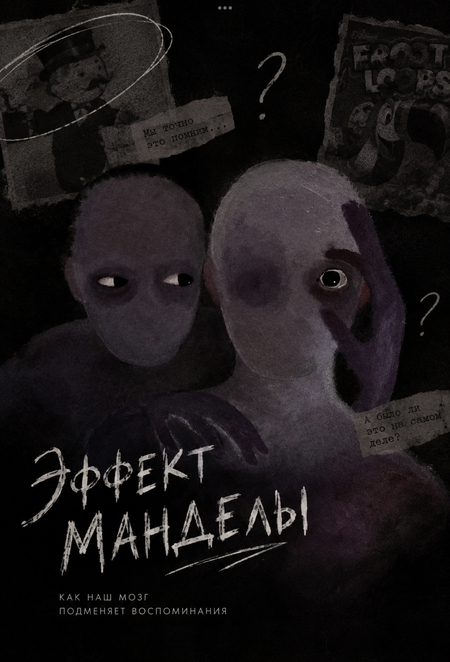
Imagine a character from a Monopoly box. A top hat, a mustache, a suit. Now, try to recall if he had a monocle.Many people are sure he did. Even though he actually didn’t.This is one of the most well-known examples of the Mandela Effect—a phenomenon where people independently recall things that never actually happened, and they often make surprisingly similar mistakes.In 2022, researchers Dipasri Prasad and Wilma Bainbridge from the University of Chicago decided to investigate why this happens. Their study showed that certain familiar images genuinely cause different people to make the same memory errors.And this raises an interesting question: If we all saw the same picture, why are some of us so certain of details that were never there?Why do we remember what never existed?We are accustomed to thinking that memory works like an archive: you see something, you save it, and you recall it later. But in reality, a memory is not an exact copy of the past. Every time we recall something, the brain reconstructs the image, and our expectations, new information, and others' stories can influence this process.For example, we picture a wealthy man in a top hat. A mustache, a suit, a serious expression—it all builds a recognizable image. A monocle also seems like a perfectly suitable accessory. Over time, it can integrate so naturally into the memory that we stop doubting whether it was there in the first place.This can be explained through cognitive schemas—our mental models of how people, objects, and situations typically appear. They help us perceive the world more quickly, but sometimes they cause us to fill in gaps with details that seem logical.However, the Mandela Effect is a bit more complex. It is not enough to say the brain is just adding missing pieces. Why, then, do different people add the exact same detail instead of something completely different?Why is the effect called the Mandela Effect?The name originated from people who claimed to remember Nelson Mandela dying while in prison during the 1980s. In reality, he was released on February 11, 1990, and died on December 5, 2013.
Later, this expression began to denote other instances where a large number of people confidently recall the same event or detail, even though their memories are factually inaccurate.
The peculiarity of the effect isn’t simply that the person is wrong. We all occasionally forget or confuse things. What is more interesting is that many can be mistaken in the same way yet remain confident in their own memory.
And this is where media comes in.
And what does the internet have to do with this?
Familiar characters, logos, packaging, advertising images, and movie scenes exist within a shared informational space. We can see the same images for years, without even thinking about how well we remember them.
The internet has made such errors particularly visible. Previously, a person might be sure that a character from Monopoly wore a monocle, without ever knowing that others remembered the same thing. Now, it is enough to stumble upon a discussion thread to see hundreds of comments: «Wait, was he actually not wearing one? I definitely remember it.»
A personal memory error transforms into a collective surprise.
But media can influence more than just which memories we discuss. They are capable of providing information that is subsequently blended with what we recall ourselves.
Imagine someone saw a character on a game box years ago. Some time later, they encounter a meme where this character has been given a monocle. The image looks familiar, they quickly scroll past it, and forget it.
Several years later, the person tries to recall the original and can no longer accurately say where that detail originated. Did they actually see it on the packaging, or did they only encounter it online?
In psychology, this relates to source memory attribution errors. We can remember the information itself, but we confuse the circumstances under which we learned it. For example, remembering a fact but forgetting whether we read it in an article, heard it from an acquaintance, or actually experienced the described event.
It is important, however, not to conflate different concepts. While these mechanisms help explain how external information can influence memory, they do not prove that every Mandela Effect instance originated specifically from the internet or a particular meme.
Can we trust our own memory?
The Mandela Effect is fascinating not just as an internet phenomenon. It serves as a reminder that the certainty of a memory is not the same as its accuracy.
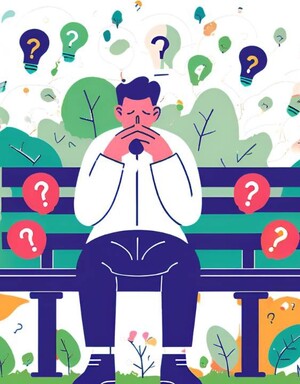
We can sincerely remember things that never happened. And sometimes, what convinces us is not an external version of events, but our own feeling—“I definitely saw that.»
Media plays several roles in this narrative. They disseminate shared imagery, help uncover common memory errors, and can introduce new information that gets mixed in with existing recollections.
But it would be inaccurate to say that the internet simply corrupts our memory. Memory never functioned as a flawless recording of events in the first place.
The next time you are absolutely sure you remember a specific detail, it is worth pausing to consider: where did you learn this information? Did you actually see it yourself, or have you encountered it multiple times in someone else’s retelling?