INDEX
1. Introduction
2. Direct Quotation
3. Deconstruction
4. Soviet Aesthetics
5. Conclusion
6. References
[1] INTRODUCTION
Art has always been closely intertwined with daily life throughout history. Quite often, the visual imagery created by artists becomes part of the material world, appearing on postcards, labels, book covers, and other items. When Yves Saint Laurent created a collection of dresses in 1965 inspired by Piet Mondrian’s abstractions, it became one of the most recognizable examples of this phenomenon in fashion. Although creative collaborations between designers and artists—such as Dalí and Schiaparelli or Poiret and Dufy—were not uncommon in the early 20th century, these were rather isolated experiments that did not become a pervasive cultural phenomenon.
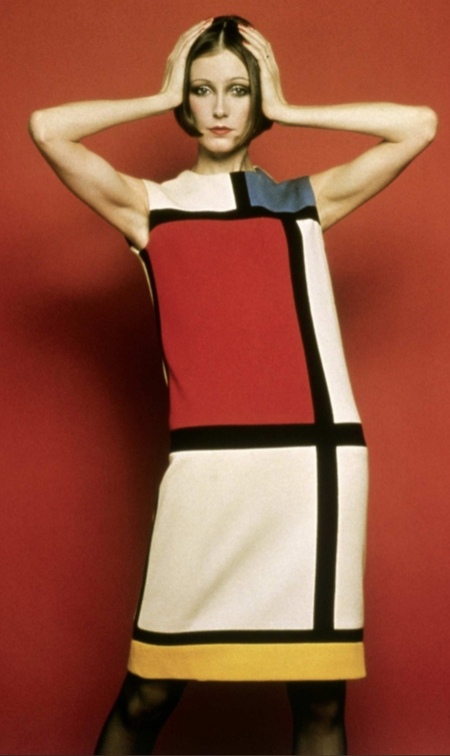
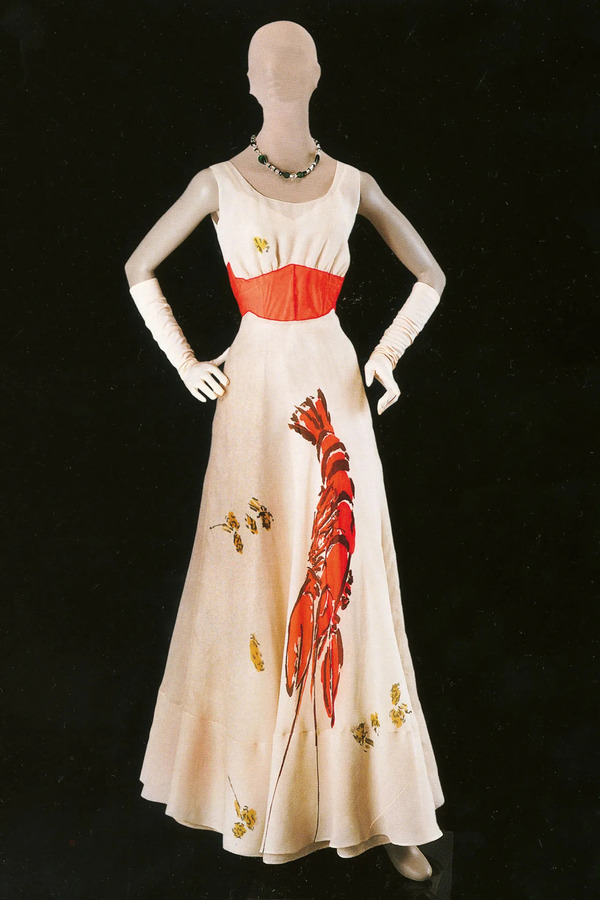
1. Mondrian Dress. Yves Saint Laurent. Fall/Winter 1965–1966 2. Oyster Dress. Elsa Schiaparelli. 1937
It is worth noting that before Saint Laurent, Soviet artists V. Stepanova, A. Rodchenko, and L. Popova experimented with the fusion of art and clothing. They utilized the principles of constructivism in their work: geometric form, vibrant colors, rhythm, and practicality. This project represented a complete reevaluation of both Soviet fashion and the creation of clothing as a whole. Their approach was based not only on the aesthetic function of garments but also on their practical utility. Their methodology involved applying artistic principles to generate forms and patterns, while considering the intended use of the items and the needs of society.
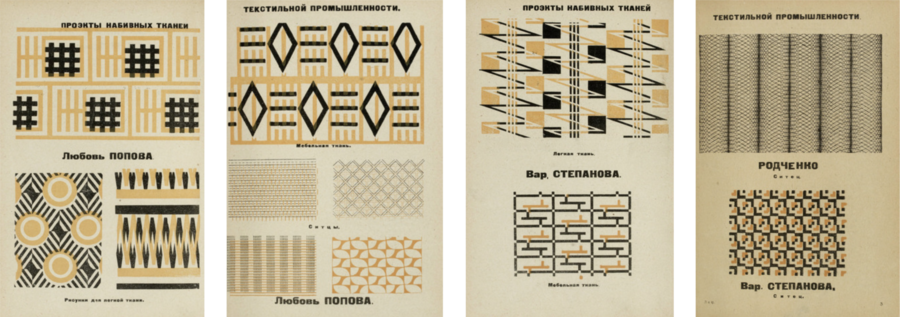
Pages from the journal «Left,» Issue No. 2 (6). 1924
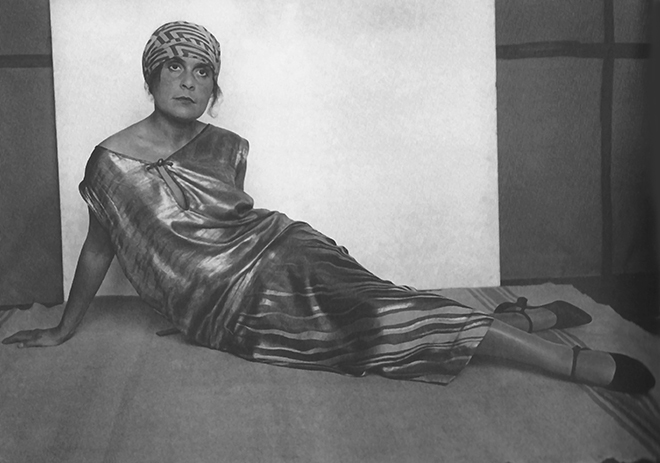
Lilya Brik in a kerchief featuring a design by Varvara Stepanova. Alexander Rodchenko. 1924
Saint Laurent initiated a new paradigm for fusing art and fashion, a trend adopted by designers globally. This approach is particularly pronounced in contemporary fashion, where referencing artworks has become a popular design strategy. Soviet art served as a major source of inspiration for fashion designers. In general, one can say that a distinct and, in many ways, unique artistic culture developed within the USSR. Soviet art did not evolve in total isolation; rather, during certain periods, a dialogue with the West and an observation of new artistic trends were maintained. Nevertheless, many phenomena of Soviet art lack direct foreign counterparts and remain recognizable even beyond Russia’s borders.
Contemporary designers are often drawn to the conciseness, boldness, practicality, and conceptual depth of Soviet art. Furthermore, artistic elements familiar to us can be found not only in the collections of Russian designers but also in renowned international fashion houses. However, the approach to borrowing visual imagery from couturiers varies significantly. In some instances, images are directly translated into the form of the garment, while in others, they are used as a foundation for reinterpretation.
This study investigates how Soviet art transforms within the context of contemporary fashion, which of its elements are most sought after by designers, and in what format they are applied in design.
Its foundation lies in sources that allow us to view fashion as a mode of communication between art and everyday life. First, we will discuss the direct citation of Soviet works in clothing. Then, we will examine the deconstruction of images. Finally, we will address the use of the visual culture of Soviet daily life in contemporary fashion.
[2] DIRECT QUOTATION
One of the simplest and most common ways to incorporate art into the context of fashion is by transferring paintings onto fabric as prints. Typically, the entire image or a fragment is used and placed on t-shirts, hoodies, and other tops. This format is most popular in collaborations between museums and mass-market brands, such as the Tretyakov Gallery and the brand «TVOYO».
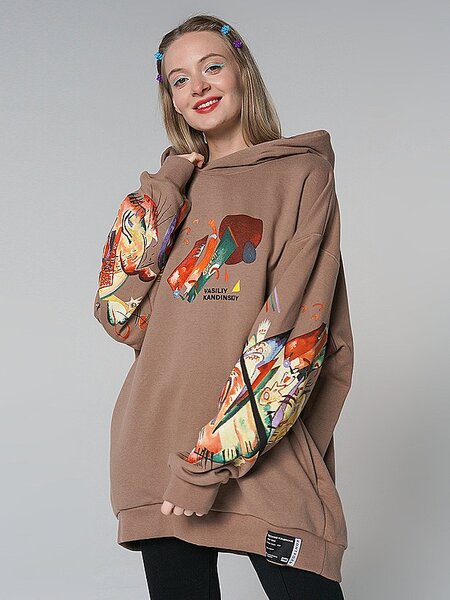
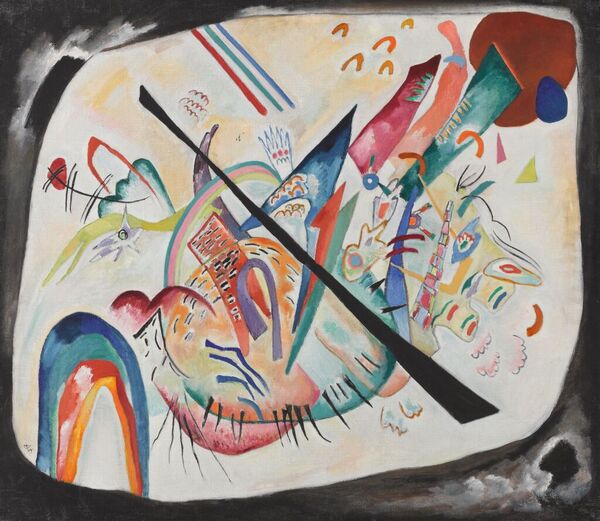
Hoodie «Kandinsky. White Oval.» Brand TVOYO 2. «White Oval.» Wassily Kandinsky. 1919
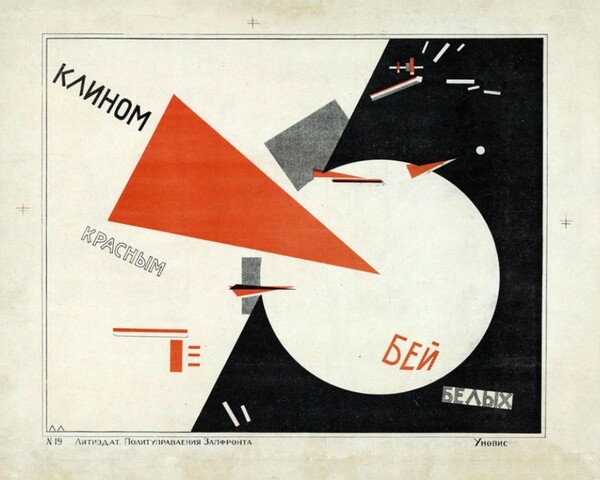
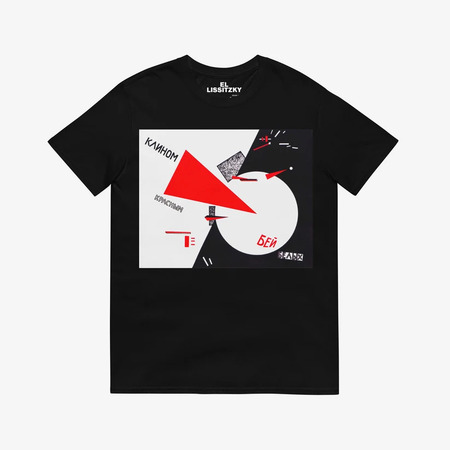
1. «Beat the Whites with a Red Wedge.» El Lissitzky. 1919 2. «El Lissitzky Beat the Whites» T-shirt. ARTSOVIET Brand
Using a single element from a work instead of the entire image is also an example of direct quotation in mode. For instance, the rising sun from Timur Novikov’s work became a key element in two collections: «SH’U x Timur Novikov» and «Gosha Rubchinsky x Timur Novikov.» The graphic language’s conciseness allows this element to be used almost as a logo. Even outside the original composition or color palette, the symbol remains recognizable.
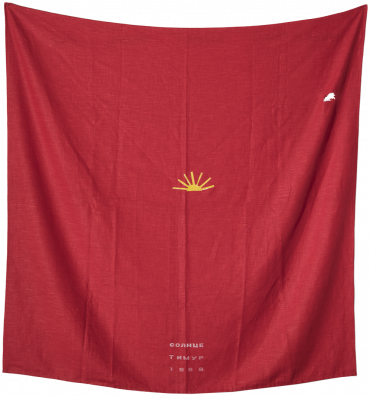
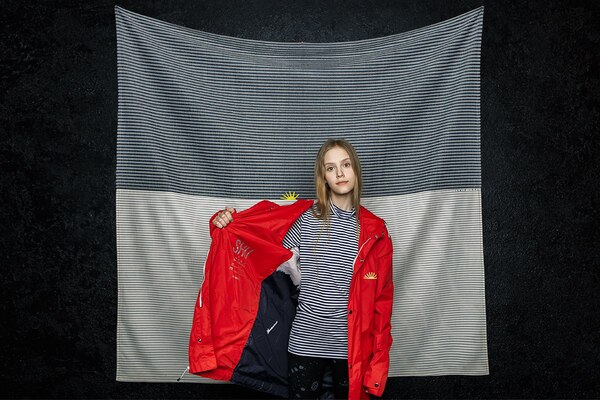
1. «The Sun.» Timur Novikov. 1988 2. «SH’U x Timur Novikov» Collection. SH’U Brand. 2016
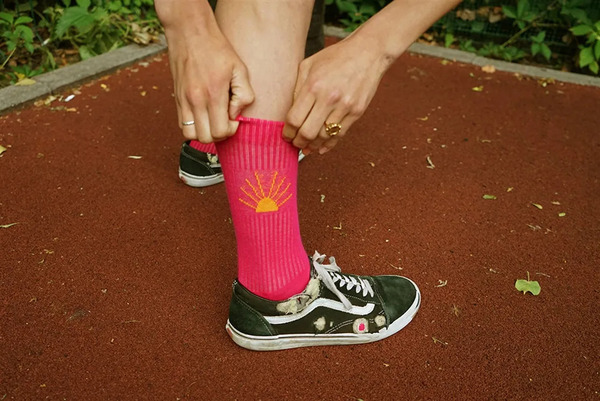
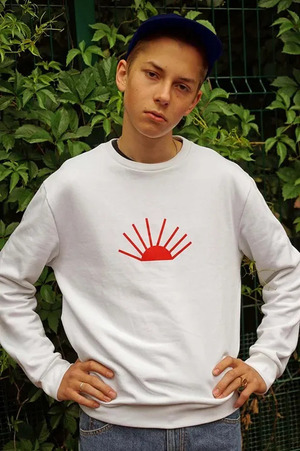
1–2. «Gosha Rubchinsky x Timur Novikov» Collection. Gosha Rubchinsky. 2015
Another example of this technique—transferring individual elements of a painting onto clothing—can be found in Valentin Yudashkin’s collection. He takes characters from Malevich’s paintings, such as «Athletes,» and transforms them into decorative ornament.
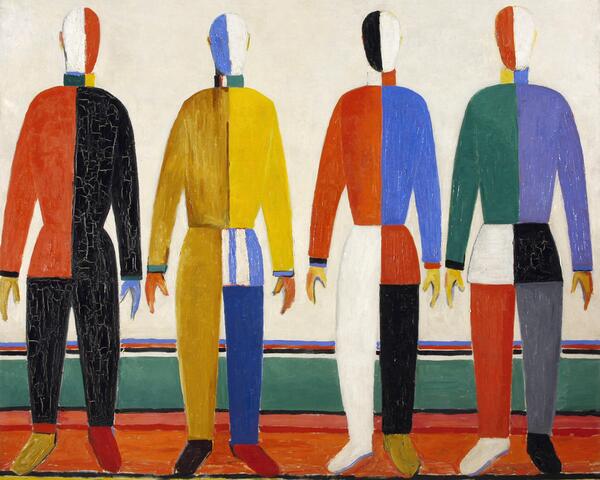
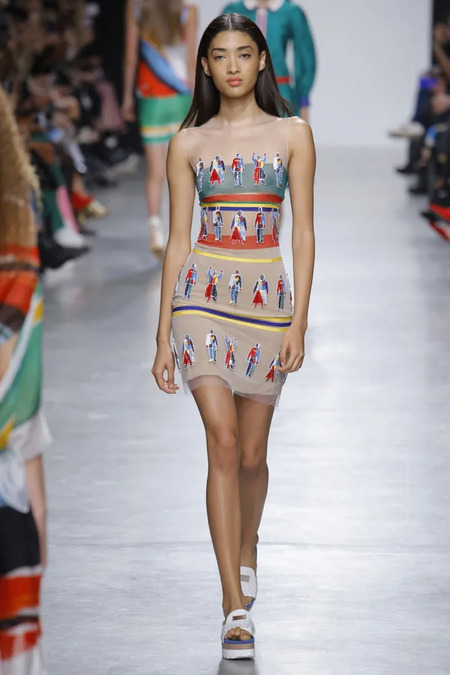
1. «Athletes.» Kazimir Malevich. 1928–1932 2. Dress. Valentin Yudashkin. Spring–Summer 2018
Sometimes, directly quoting paintings extends beyond the print and becomes the basis for the clothing’s very form. For example, in the «Gosha Rubchinskiy x Timur Novikov» collection, the work «Penguins» is transferred entirely onto a t-shirt. Because the garment is cleanly divided into black and white sections, it creates the impression that the painting itself has been transformed into clothing.A more compelling example can be found in the Amano brand collection. A dress created based on Kazimir Malevich’s painting «Suprematist Figure» does not reproduce the painting itself, but rather the clothing worn by its heroine. Thus, the garment from the painting becomes a complete part of the wardrobe, while retaining elements of the pictorial original.
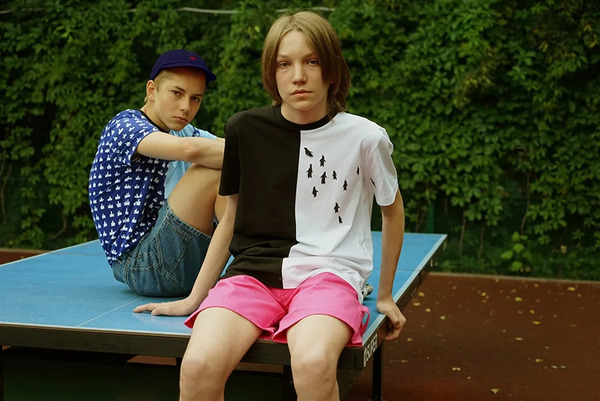
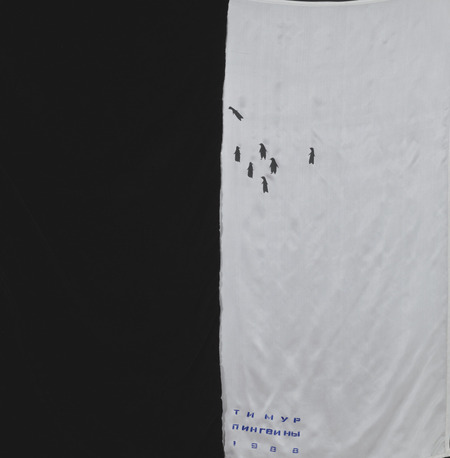
1. «Penguins.» Timur Novikov. 1988 2. Collection «Gosha Rubchinskiy x Timur Novikov.» Gosha Rubchinskiy. 2015
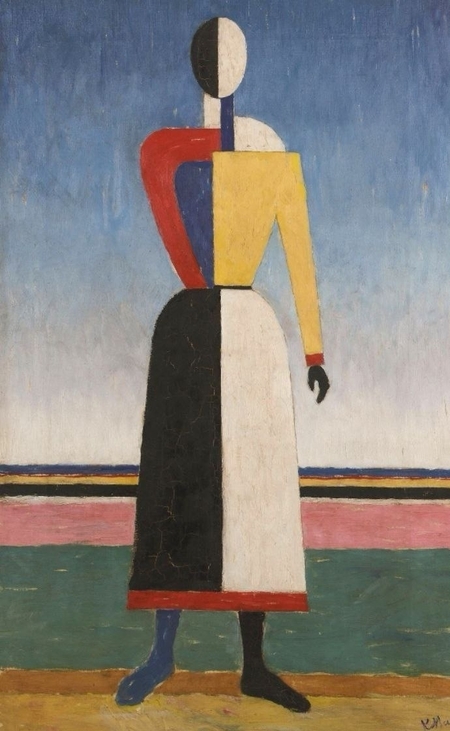
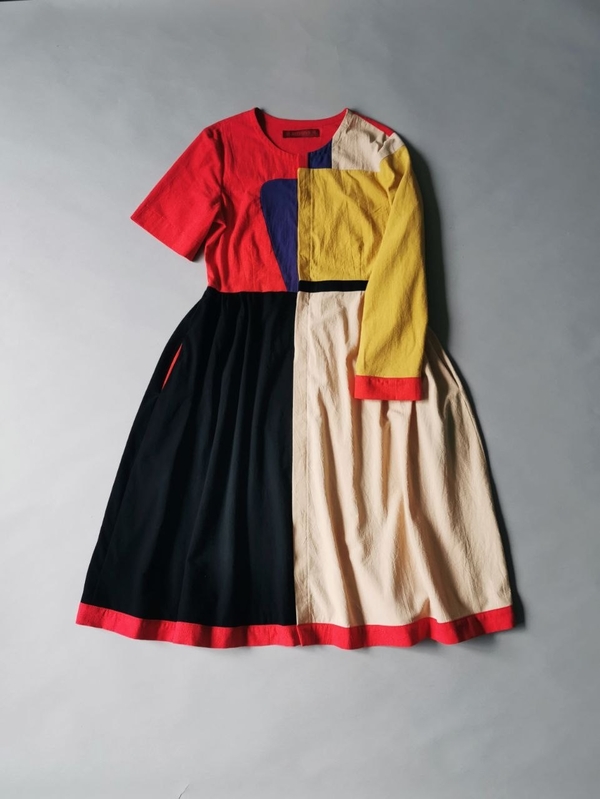
1. «Suprematist Figure.» Kazimir Malevich. Early 1930s. 2. Dress. Amano Brand. 2025.
[3] DECONSTRUCTION
In this section, we examine examples where designers do not directly reproduce works of art, but rather reinterpret them, transforming them into new forms of apparel.Rick Owens' collection «Babylon» serves as a prime example, drawing inspiration from the biblical Tower of Babel and Vladimir Tatlin’s «Monument to the Third International» project. In his designs, the designer employs skeletal structures, straight lines, and angles, merging fashion with Constructivism. In the women’s looks, this combination manifests in unconventional proportions, decorative elements, and headpieces. The men’s collection utilizes voluminous constructions made of fabric and metal rods, lending the garments a resemblance to architectural structures.
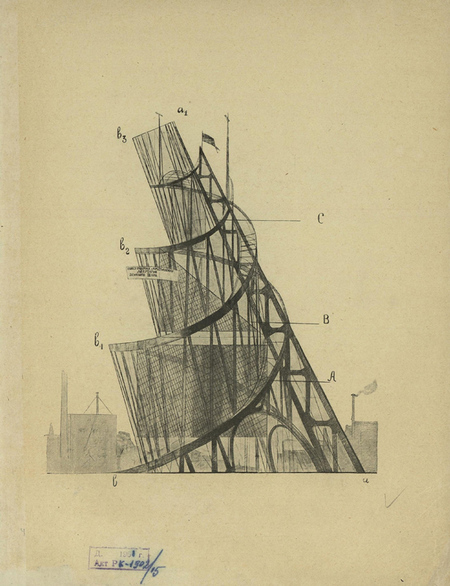

1. «Monument to the III International of the Communist League.» Vladimir Tatlin. 1919–1920 2. Reconstruction of the Monument to the III International of the Communist League. State Tretyakov Gallery. 2011
1–2. «Babylon,» womenswear collection. Rick Owens. Spring/Summer 2019. 3–4. «Babylon,» menswear collection. Rick Owens. Spring/Summer 2019.
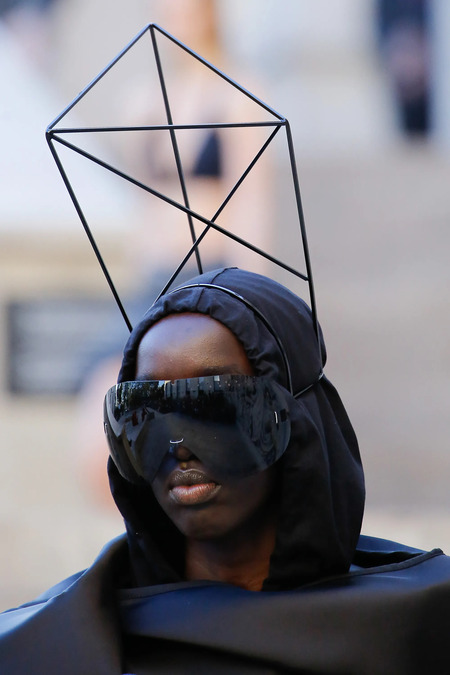
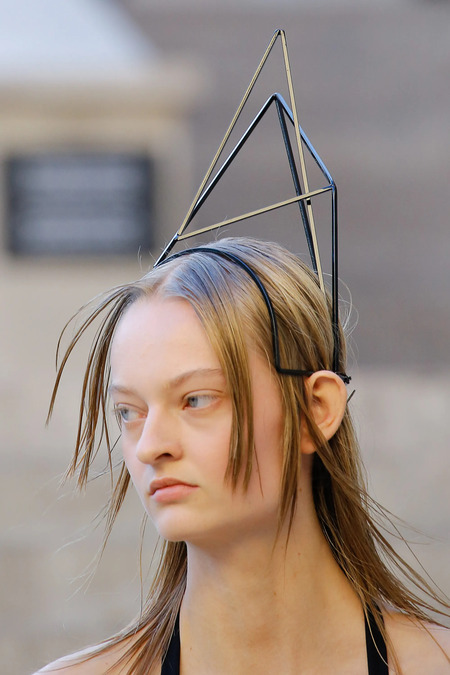
1-2. «Babylon,» women’s collection. Rick Owens. Spring-Summer 2019
For the «Deineka» collection, the brand «Glance» utilized the main characteristics of Alexander Deineka’s work: vibrant colors, monumentality, and the conciseness of silhouettes. In the garments, these principles are reinterpreted through rich shades, crisp tailoring lines, and fluid forms. The collection conveys the overall feeling of his artistic work rather than reproducing specific paintings.