Another hermetic work, the deciphering of which requires logical casuistry.
During his literary experiments, the artist Shaburov mused something like this:
If Chinese characters at least superficially resemble the objects or concepts they represent, then nothing of the sort exists in alphabetic writing.
Black letters bear no resemblance to the feelings, sounds, or scents they describe. Since this is the case, this convention can be exaggerated even further.
How? By the method of guesswork.
Take Lev Tolstoy’s novel War and Peace and select one word from each volume—a word that, in theory, should paradoxically contain the exact same content, but in a more concentrated form.
Shaburov guessed within War and Peace, and he arrived at:
«Eh bien Anna Pful understood freedom.»
But what lies behind this—we know.
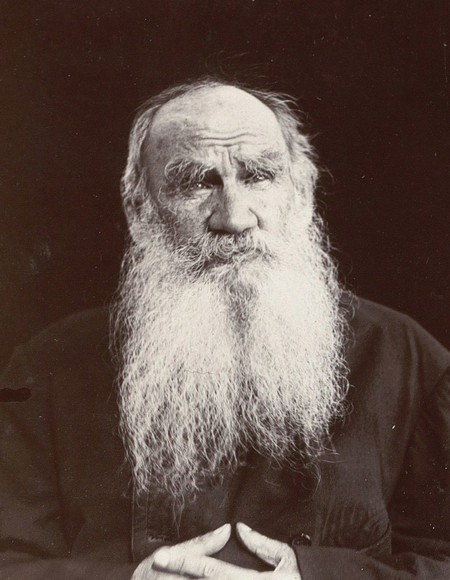
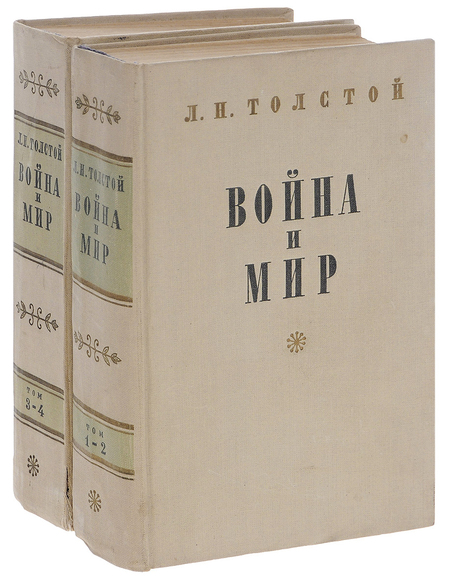
Leo Tolstoy and his novel «War and Peace» (in 4 volumes)
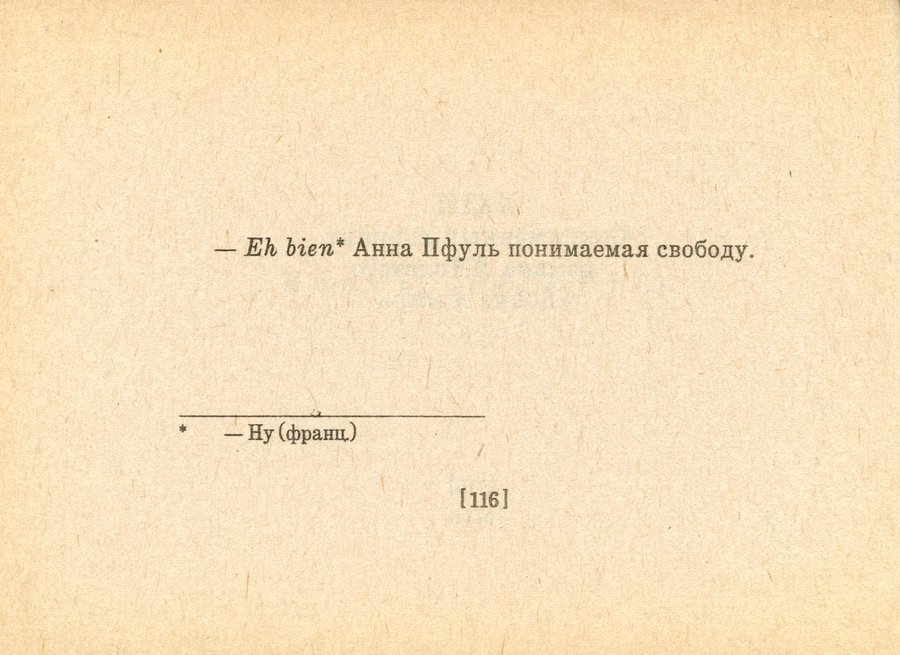
A condensed version of Leo Tolstoy’s novel «War and Peace» in the «Book of Books, written separately in April–May 1990 and printed together in September–October 1992.» 1992
Vyacheslav Kuritsyn
UNDERSTANDING FREEDOM
From «The Book of Postmodernism, ” 1992
Shaburov has a book titled «Abridged Version of Leo Tolstoy’s Novel, War and Peace.» The text of the book is: «Eh bien Anna Pfuhl understands freedom.» The publication details are: «Printed by: L. N. Tolstoy. Complete works in 22 volumes. Vols. 4–7. Moscow: Khudozhestvennaya Literatura, 1979–1981.» Just like people.A mere trifle? Perhaps. Yet, every artistic gesture carries significant weight—debating the author’s seriousness is a distant second concern. What is interesting is why this specific trifle, and not another?As is known, Bunin had considered shortening «Anna Karenina”—or rather, editing it. Knowing Bunin, one might surmise how he would edit it—condensing the expansiveness into taut, springy phrases, reducing the sprawling complexity of the psychological characteristics to a concise image, enhancing the melodic quality by shedding its self-consuming symphonic nature… They say it is fortunate he did not, as it would have been an entirely different novel.It is certainly different. But what, precisely, does „would have been“ signify? The Bunin „Anna“ would not negate the Tolstoy’s; we would have two distinct texts. You couldn’t say they are „different yet the same, ” but you could say „different, yet the same…“ In essence, this is a question of the authenticity of any text. How much of itself resides within it? How much of another self?To what extent does the Shaburov text belong to Tolstoy? Strictly speaking, it belongs one hundred percent; Shaburov did not deviate in either lexical choice or the sequence of word placement. The sentence presented to us was written by Tolstoy, even though he did not write it. It was written not by Shaburov, even though he did. However, this is merely a slight logical trick. It is not about that.All our actions—or rather, our manifestations—can be viewed, even without any logical tricks, as movements of matter. The cosmic meaning of our deaths, novels, and hobbies lies precisely in this; matter is in motion—that is the content; everything else is the method of its expression and manifestation.A novel is fundamentally a mass of energy. In the case of War and Peace, this is a large mass. The energy that can be absorbed or into which one can dissolve is the „content“ of the epic. The plot, the oak, Napoleon, Bezukhov—these are merely tools that become unnecessary after the operation.
It is clear that the same energy can be conveyed outside of any text, outside of any subject matter. Or perhaps it can be achieved like this—with fewer characters (since the only thing Shaburov and Tolstoy did was reduce the number of printed characters)? Theoretically, it is obvious that it can: whether an author can condense as much into a single word as another invested in an entire volume depends on their professionalism and talent. There is nothing fantastical about this.
For instance, take a banal example: «Matryona’s Courtyard» contains more energy than perhaps the entire work of Proskurin (which includes the energy that constitutes Proskurin himself). I don’t know if Bunin would have managed such a task (not to dilute even a drop of energy when rewriting «Anna»), but in any case, one can seriously ask this question regarding his unrealized attempt. Perhaps he would have succeeded. Thus, theoretically, nothing prevented Shaburov from painlessly reducing «War and Peace» to the state reproduced above. As for the practice—any sensible person understands that this did not happen.
What did happen? Shaburov’s book does not materialize the principle; rather, it models it. It models the possibility of redistributing energy, increasing or decreasing its concentration, and the relativity of the ratio between an object’s physical mass and its energetic potential. But it is worth noting that it models absolutely real things (for example, an atom is physically smaller than a hockey puck, but what about energy?).
In «A List of Objects Around Me,» which Shaburov meticulously produces in somewhat perfunctory quantities, Shaburov is no longer modeling; he is artistically reflecting the principle. Life is a profound thing—always quite generalized and simultaneously very concrete. It has many contexts, dimensions, and planes that exist within a single human being—crossing, ignoring each other, cooperating, and warring at the same time.
This concerns something like a barrel that can be filled and refilled without emptying it (with stones, water, sand). So, a category of life (say, in the style of Shaburov) can be filled with the definition «the mode of existence of protein bodies» (and the plane in which this definition operates is quite mundane, rustic)… Here, there is life as the actualization of higher essences. There is life as the process of defining one’s place within the context of practical psychology or, say, sociology. And there is this type of life—stretched out, like on a pallet, on surrounding objects. Any of these modes of existence is capable of aesthetic autonomy (and it is precisely in this capacity that it is reproduced in individual artistic texts), but all of them are compatible, unified, and can—with skillful execution—shine through localized manifestations of each other.Mug, spoon, couch, cup, newspaper, button, alarm clock, etc. (see the suggested list): how many meanings does this series possess, and by the way, is it even a series? <3> These are, in essence, the most real, the most familiar, the most material (in an archaeological sense) facts of our existence. An excavation of a Bronze Age settlement reveals exactly these bowls and nails. The traces of hearths and posts. A physically tangible result. You write a book: in some contexts, its energy remains after you are gone; in others, no one cares about the energy—the volume remains as a material body, something that can be touched. People «for whom» Shaburov works live in the world of objects catastrophically little. Either—they reside in the higher spheres, or in the mediated world of object functionality (there is no actual chair, but rather a substance of comfort; there is no, let’s say, nail in a boot, but a substance of discomfort; there is no sexual object, but enjoyment as such). Solzhenitsyn, a staunch materialist <4>, works on the assembly line—does he see a mug? He only knows the functions: to drink juice, to spit into, to place on a cat’s head…
Shaburov’s objects are material until their materiality completely dissolves <5>. They are raw (functionless) objects existing in a raw (devoid of functional points of application) space. Functions remain somewhere outside the scope—both beyond the «list» as text, and perhaps beyond life itself (I have a sledgehammer at home that I have never used and perhaps never will; the only function one can assign it is to take up space, evoke meaninglessness, and inspire unconscious respect—which is an object rendered senseless in all proximate contexts, yet it exists—due to its essence, due to its internal potential).The example in parentheses is extreme. Usually, a Shaburov object only loses its functionality within the list (its elements are not mediated by one another with great force), but it loses it completely in this instance. We are given a rare opportunity to see things as they are—that is, in some sense, not as things at all. Their only discernible function is to follow one another, and even that is only within the list.The list, therefore, becomes the primary structuring element of a world in which other structures are impossible (the appearance of another structure implies the appearance of another world; much like being given a fifth limb or losing the ability to move).Interesting things happen to the recipient: emotional contact between me and an object in the list is impossible. So, is it not art if there is no emotional contact? But the contact between the list and its elements is both possible and inevitable; our experience—the experience of this contact—is certainly structurally richer.The type of relationship between the list and its elements constitutes a separate cosmos. The list seems to be even more indifferent to the elements than the elements are to our perceptions of them.The list needs to propagate itself; it must maintain its rhythm; the list must extend through time and space (which is essentially the same thing; an effect difficult to articulate when applied to most older genres). Anything can be listed. The list is, in fact, infinite (though bounded by the universe). An individual object here strives toward absence, as any denominator against infinity in the numerator essentially means nothing.
The rhythm, in general, fades because there is nothing against which it can assert itself. The list, in perspective—beyond the confines of a book page, beyond this galaxy—becomes purely energy. Sometimes, however, elements group together in a cunning way, creating what could be called a blockage, a complexity, or they interlace in a correctly (calculably) patterned sequence—resulting in what I call an energetic node.
Truthfully, it is not entirely clear whether an energetic node is an inherent property of the list or an effect of the observer’s reflection. I will have to revisit this question in another work. For now: the observer logically becomes an element of the list $\langle 6 \rangle$. And the author. Ultimately, the list itself becomes an element of the list; we enter the realm of pure energy, which is difficult to discuss given the lack of established terminology and direct sensory experience.
What is interesting is that by discussing the fate of an element within a list, we instantly shifted to the relationship between the list’s elements and the fate of the list as a structure; as for the subject itself, stripped of traditional functionality, we could only say that it vanishes against the backdrop of infinity. Does this mean its essence is to vanish? The formula is obviously paradoxical—there is no way out of it. Here, Shaburov bumps up against the problem of the thing-in-itself, the problem of the unknowability of experienced, conceived objects. One can operate with it, but one cannot know it. The odious author, however, believed otherwise: «There is definitively no fundamental difference between the phenomenon and the thing-in-itself; it cannot be. The difference is simply between what has been known and what has not yet been known» (PPS, Vol. 18, p. 102). We wish we had such optimism… However, Shaburov’s artistic practice does not validate the odious author’s correctness. Shaburov tackles the problem like a cat handles a mouse: he believes that to know a thing is to «remove» it, to annul it as such through immersion in the context of infinity, in the all-consuming list (the ontological insignificance of any proposed object).
Shaburova can be accused of aesthetic hypocrisy and artistic extremism: there is a subject—there is a problem; there is no subject—there is no problem… However, when presenting a serious artist, one cannot ignore the deep contradictions in their work. Shaburov is no exception. Who is without faults?Regarding another issue—the relationship between the observer and the items on a list—we can only skate across the surface. How crucial is which specific section of the list (or rather: section of the world viewing itself) is revealed to our sight? «The fact that the observer, wherever he goes, carries with him the center of the terrain he is traversing is a rather banal and, one might say, independent phenomenon» (Pierre Desjardins). That is understandable. Shaburov has «List of objects encountered during a walk near the VIZ station on a certain date, ” „List of objects surrounding me in the pub called ‘Aragats’, ” and so on. Every list is a reality caught off guard in a specific place at a specific time. But simultaneously, every list is also a global list, as we have shown, a list of everything, even if it consists of only one or two elements.The problem is this: an artist working with the energy of the cosmos is forced to actualize their impressions depending on specific circumstances (down to a cold). How much can this actualization distort the true picture of the world? To what extent is a person even capable of influencing the cosmic meaning of events? Which of Shaburov’s lists „help“ to objectify higher substances, and which obstruct this objectification? Is Shaburov Jewish? And if he is Jewish, is there a satanic desire in his work to model a false list of the world and thus derail the world (assuming the artist’s will can make irreversible changes to the very essence of nature)?
Let us, however, turn to another interpretation of the item in Shaburov’s lists. These allow one to discuss the essential significance of each item—specifically its «vital, ” „actual“ significance, which is expressed in a word, an image, ethical categories, or an emotional disposition. Under this approach, the cup is by no means devoid of functionality; on the contrary, we arrive at the exact opposite result: the cup itself (again) is absent; there is only a pile of functions from which the object cannot be discerned. Moreover, functions are not isolated in their pure form; what is valuable is not the function itself, but the contexts in which it functions. „To drink“ is not a category. A category is, at minimum, „to drink tea.“ Or, „to drink tea at that time with that person.“An item in the list is a prompt for an associative flow. However, no—the flow suggests that meanings are emitted from the item; it is as if it were radioactive. But what is important is that the process is inverted. The item is not merely a source of light; it is also a kind of phagocyte, sucking energy from the Cosmos. Emission and absorption, in the Baudelairean sense, an entirely parallel world flowing in different directions, where each side is doubled and equal to its opposite. This absorption and emission—the sexual charge of definitions—did not escape Shaburov’s attention: he often interprets the world as a self-contained system.Well, now it’s very simple.
The inverted flow of associations: behind every item lies a life—intense and precious. Every gesture is valuable because it is unique. Every gaze matters because it is irreplaceable. Every tear is unique and irreplaceable, because it is a tear. An era is reconstructed from a tobacco crumb in a pocket. Every letter from Marina represents a life because it is mine, and no other life shines in these coordinates. A mug is trifles, but will anything remain of me other than the mug I used? To understand your freedom only through what has been assigned to you. Well then.
Notes
1. I should clarify that the operation in question is being examined solely within a purely cultural context. From a human perspective, it is, of course, impossible—it involves different values, namely moral meaning, specific historical nuances, empathy for the characters, and so on.2. We should note that such a model—even if it is denied the slightest notion of «seriousness» or «significance”—is at least a cause for intellectually stimulating exercises. I propose a game: to prove that Shaburov’s book is structurally and meaningfully comparable to the entire text of Tolstoy’s novel. Here is one approach: Eh bien (French for „well“) — one-fifth of the text, signifying the wide occupation of War and Peace by the French language and, indeed, the Napoleonic army; moreover, „well“ is the rhythm of Tolstoy’s prose—a contemplative, leisurely, deliberately circumlocutory interjection pregnant with detailed reflections, static landscapes, extensive battle scenes, and lyrical digressions of all kinds. Then there is Anna Pful: a sign of the simply rampant overpopulation of the text with characters (and a peripheral thought regarding a hint of foreign influence, Masonry, and other Russophobia). Or perhaps this: Anna—a word read in many directions, not a suggestion of the mirror structure of the second fifth of the epic? As for the „perceived freedom“: this is both the verbose quality of the gigantic epilogue (which, while not two-fifths in volume, is quite comparable in density) and the perfect formula for the breakthrough to freedom, a breakthrough that is only possible through such a grammatically inconceivable turn—a state of liberty that can only be imperfectly expressed with the admixture of certain phonological mysteries as this last wanderer sighs to depart life, in short, the inflamed lips… God knows what, of course, but it is all an act of culture.3. The impoverished nature of the material’s linear organization is determined by the two-dimensionality of the book’s strip and, generally, by the entire context of book publication. The genre is not a „list“; it is rather a „list-book“… In the West, they say, our Rubinstein is published as it should be: as a stack of cards. Who would publish Shaburov’s coupon book for the use of the word „plate“ in the form of a coupon book? When I become wealthy and have the opportunity, such an edition will become a museum artifact, not a living thing.4. This refers to an aesthetic stance, not a spiritual conceptuality, nor an ontological foundation, nor a real aesthetic result.
5. «There is nothing more infernal than the most 'obvious' object, viewed under the most natural light by an untainted mind unburdened by circumstance, ” wrote T. Neklund, and he was undoubtedly correct.6. As long as the observer is alive, they experience agonizing ambivalence: they are inside the list and looking at the list—and thus, at themselves from the outside.7. And another related question. It is known that Shaburov stutters severely. Often, he cannot articulate the intended word for a long period (about half an hour), and eventually, in frustration, he begins to search for synonyms (which, given Shaburov’s rare obtuseness, takes another forty minutes), only then articulating his thought. Once, for example, at the „Free Mail Station, ” he struck up with a female visitor with the question: „Miss, do you also sketch—h-h-h-h-khu—…khu…?“ The girl, understandably, became mortally offended halfway through the phrase. So: isn’t this the reason for Shaburov’s love of the list genre? After „uttering“ the object, he is incapable of logical continuation and is thus forced to designate the next factual unit… We rarely consider how much physiology influences creativity. Yet, this is an obvious fact. It is clear that a blind poet sees the world differently. Less significant (less conspicuous) physiological details also reflect in creative work—though more subtly, on different levels, in the most unexpected ways.
Another scriptum. After the essay on the proposed text, I came across the work «Objects and Figures Discovered by Diniil Ivanovich Kharms» («Literatour, ” L-d, No. 13/18), which points to the same properties of the world we contemplated in relation to Shaburovsky’s work. Here is one of its points:
„2. Every object (inanimate and man-made) possesses four WORKING values and one ESSENTIAL value.
The first four are: 1) The graphic value (geometric); 2) The utilitarian value; 3) The value of emotional impact on a person; and 4) The value of aesthetic impact on a person.
The fifth value is determined by the very fact of the object’s existence. It exists independent of the object’s relationship with a person and serves the object itself. The fifth value is the object’s free will.“
We will not argue about the classification of the first four values (such as how functional relates to utilitarian, whether aesthetic must be separated from graphic, or if emotional expression is a manifestation of the graphic, etc.). For Kharms, this distinction is important, but for us, something else is more crucial: there is a certain number of „working“ values, and besides them, there is the „essential“ value. This is precisely what happens in the „Lists, ” as we have demonstrated. An object deprived of any functionality (even working values) possesses only its „free will.“ And here it all connects—the author of the preface to Kharms’ publication, A. Kobrinsky, also mentions the „thing-in-itself“ (although Kharms never read Kant).
But what is interesting is that Kharms, in developing his idea, arrives at the concept of the „list“!
„11. Any series of objects that disrupts the relationship of their working values maintains the relationship of essential values… Such a series is a non-human series and a thought of the object world.“
But even more interesting follows: a series „as a newly formed synthetic object“ has, according to Kharms, three values: 1) graphic, 2) aesthetic, and 3) essential.
The utilitarian and emotional impact values disappear. Where has the utilitarian aspect gone? Clearly—in the non-object world, there is no object utilitarianism. What happens to the emotional impact? We showed this earlier: when we said that an emotional connection between the viewer and the objects in the lists is impossible, an emotional experience of the list interacting with the list’s elements is possible. In a sense, we experience the emotions from within the „thing-in-itself.“
Leo Tolstoy on the occasion of his 80th birthday. Yasnaya Polyana, 1908