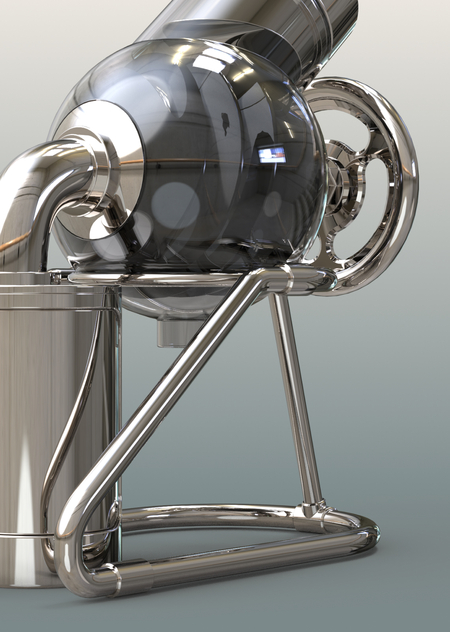
Archetype Development
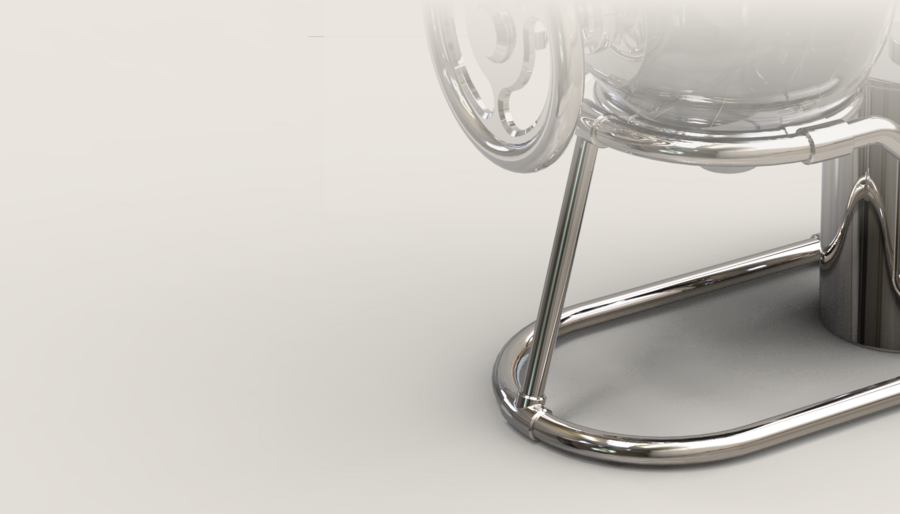
A manual screw juicer is a tool that requires personal involvement and control over the process.
Key Features: manual operation ensures quality, mechanical simplicity provides reliability and durability, and auger technology maximizes efficiency while preserving nutrients.
Historically, the archetype evolved from the most basic manual citrus press to early mechanical systems: the Norwalk juicer with a hydraulic press (1930s), and the first Champion auger juicer (1950s). During the 1980s–2000s, specialized manual models for wheat and greens were developed.
Market Analysis
The market for manual juicers is showing steady growth.
In 2023, the volume reached 52,710.1 thousand units, marking a 12,2% growth over the 2020–2023 period.
The premium manual auger juicer segment occupies a niche among eco-friendly and health-conscious consumers who are willing to pay not just for function, but also for: — the maximum retention of nutrients, vitamins, and enzymes — the preparation of not only juices, but also nut milks, sorbets, baby food, and pastes — premium materials and construction — sustainability (durability or cordless operation)
How a screw press juice extractor works
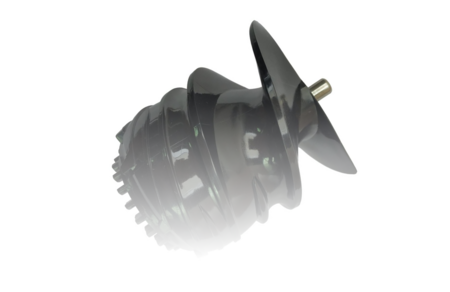
Auger juicers operate on the same principle as a meat grinder. When fruits enter the tube, the screw (auger) grinds them. The pulp is then pushed through a sieve and separated into two streams: the juice goes into one container, and the pulp goes into the other.
The slow grinding process allows you to prepare fresh juices from celery, strawberries, pineapple, mango, make almond milk, or create purees from peaches and bananas.
Analogues
Among the advantages of a auger juicer are the increased volume and preservation of the resulting juice, the maintenance of the juice’s beneficial properties, low noise levels during operation, and the ability to extract juice from fibrous and hard produce.
However, these types of juicers have lower output and a higher price point. Furthermore, they produce a puree rather than juice from soft berries and fruits.
Centrifugal and specialized citrus juicers are analogous to the screw juicer.
Centrifugal Juicer:
- pulp-free juice
- low price
- high output
— loss of some of the juice’s beneficial properties — smaller juice yield — short juice shelf life — difficult to clean — high noise level — cannot extract juice from fibrous or hard produce
Citrus Juicer:
- Ease of use
- Speed
- Low price
- Easy to clean
— Narrow specialization
Example Matching
Lexen Healthy Juicer Manual GP27-S
- Proven design
- Stable mounting
- Compact and portable
Wheatgrass Juicer BL-30
- Proven durable construction
- Stable mounting
- Stylish and more modern design
Tribest Z-Star Z-710
- Compact and portable — Utilitarian design, not suited for projecting a premium lifestyle
KOJU Manual Juicer
- Compact — Stylish design, suitable for a specific interior
Motor Sich SBCh-1
Time-tested construction — Outdated design — Aluminum can oxidize
Time-tested construction — Outdated Soviet cast iron model
Materials
ULTEM / Tritan — extremely durable, food-safe, transparent plastic. Stainless Steel — a slow-production method where quality control supersedes volume. BPA-free Plastic — used for transparent components and streamlines the design. Silicone — silicone overlays may be incorporated for comfortable, prolonged use.
Ergonomics and Advanced Developments
The ergonomics of a manual screw juicer incorporate several principles: stability achieved through a weighted base or tabletop attachment; spout height suitable for standard cups; easy assembly and disassembly without excessive effort; simple cleaning due to minimal hard-to-reach areas; intuitive control, among others.
Feature Expansion
— implementation of single- and two-screw systems for various raw materials — modularity with interchangeable nozzles
Comfort
— increased loading bottleneck → allows whole fruits without cutting — automatic slicing in the upper part of the spinning basket → allows whole fruits without cutting — transparent containers for process monitoring — weighted base for strength and stability
Care
— implementation of a non-mesh filter — easier to clean + more durable — minimal parts for simple maintenance
Queries and Pain Points
Active User Requests: — health as a priority — quality control + complete control over the cooking process — expanded functionality: preparing plant-based milk, healthy desserts, and pastes — waste minimization — appliance durability
User Pain Points: — difficulty in use, hand fatigue — the need to prepare fruits before using the appliance — poor build quality — wobbly construction — difficulty cleaning
Niche User Requests: — personalized nutrition: making juices for specific goals — electrical independence — domestic aesthetics: the appliance must be a source of pride, a kitchen decoration, and a part of the style
Image Online
In social media, this is part of the lifestyle of a successful, healthy, and mindful person.