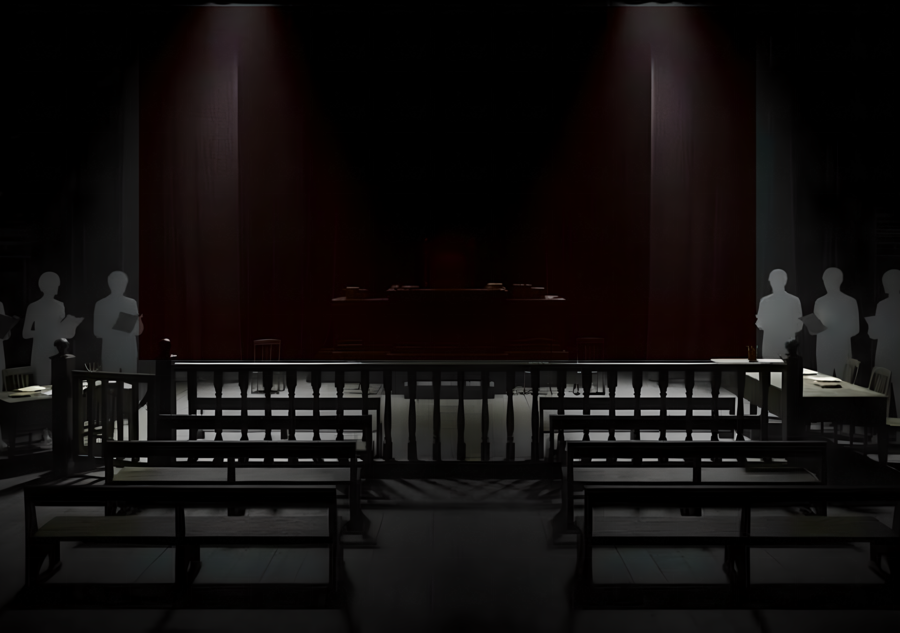
An immersive investigative play where the audience acts as the jury.
What is more dangerous to society—condemning someone who has not committed a crime, or excusing a person whose actions led to a tragedy?
Step 2. Irony
Показать ситуацию с преувеличением, перекосом или комическим сдвигом
Present a model of behavior or a situation in an intentionally distorted way—through exaggeration, reversal, or comical regulation. The irony must be recognizable, not malicious. It is important to create distance: we are observing the phenomenon from the outside.









Step 3. Discovery
Привести аудиторию к мягкому самоузнаванию
Connect an ironic image to real-life situations and everyday experience. The transition must be smooth: from humorous to familiar. In this moment, the effect of «this is about us» arises, opening the path to accepting the idea.









Step 4. Morals
Сформулировать вывод без давления и нравоучения
Formulate your conclusion calmly and subtly, without accusation or a commanding tone. A format of observation or alternative perspective works better than direct instruction. The moral should sound like an idea the viewer arrived at independently.









Step 5. Final
Оставить лёгкое послевкусие и пространство для внутреннего вывода
Close the presentation with a brief phrase or statement that maintains an ironic distance and preserves the core meaning. Do not overload the finale with explanations. A good conclusion in this structure is a slight smile and a thought that resonates later.