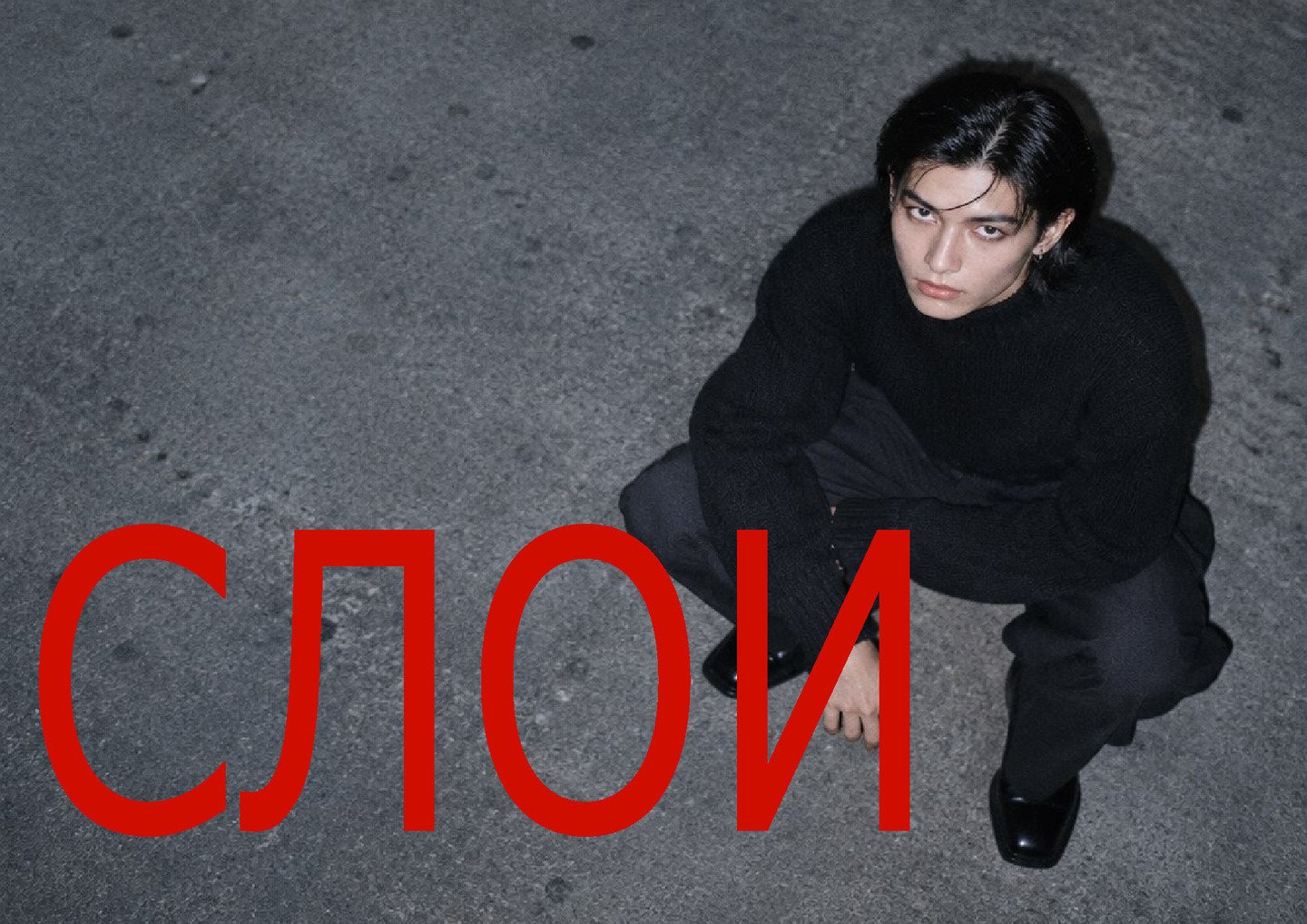
Cover Design Goal: To establish the theme and direction of the conversation through value and outcome.
Formulate the theme by focusing on the value or result for the audience, rather than the product name.
The cover must answer the question: «Why should I keep listening?»
If all other slides were removed, the value proposition of the discussion should still be clear from this single screen.
WHY — problem and context
Why is this important now?
People aged 22–35 want to look good, but they are trapped between two extremes: — fast fashion—cheap, but quickly wears out and becomes tiresome; — high-end brands—high quality, but unaffordable.
Meanwhile, no one wants to spend hours studying fashion or analyzing trends.
Simultaneously, the trend toward conscious consumption is growing: resale, sustainable fashion, «less but better.» However, in the Russian-speaking space, there is almost no media that discusses this honestly, systematically, and without snobbery.
The conclusion is: the audience exists, the demand exists, but the media that meets this need in a human way—it doesn’t. This is the entry point for «Sloy.»
WHY — The Goal of Media
Become the leading Russian-language media outlet for fashion culture and conscious consumption.
What this means in practice: — Shaping the narrative, not just selling items; — Discussing what people wear every day; — Elevating fashion from a discussion of trends to a conversation about culture.
SMART Goal: Within 12 months — achieve 10,000 Telegram subscribers, an engagement rate (ER) of no less than 8%, and monetization through native advertising from brands and resale platforms.
WHAT — Theme
Segment: Conscious consumption in fashion. Narrow topic: Clothing culture and practical style for working professionals aged 22–35 in major cities.
What we will discuss:
— how a wardrobe is structured and why it succeeds or fails; — how to buy less, but better; — how to distinguish quality from marketing; — how to care for clothing and extend its lifespan; — how resale and the secondary market work; — how clothing relates to identity, work, and the city.
What we will not discuss:
— trends for the sake of trends; — «how to look like an influencer»; — glossy extravagance.
WHO — TARGET AUDIENCE: 4 Segments
We work with a B2C audience—people aged 22–35 who are interested in fashion but haven’t turned it into an obsession. Within this group are four segments: three primary and one peripheral.
Young Professional (Ages 22–28) (Primary) Just starting to earn. Wants to look mature and appropriate. Fears overpaying or looking «out of place for their age.»
Working Professional (Ages 28–35) (Primary) Has an income, but lacks time. Wants a system, not just trends. Values simplicity and control.
Conscious Consumer (Ages 25–35) (Primary) Values sustainability, resale, and ethical production. Is tired of mass consumption.
Aspiring Stylist / Content Creator (Peripheral) Seeks materials and ideas for their own work. May become a media ambassador.
PERSON 1 — Anya
Character 1 — Anya, 25 years old
«I want to look mature, but not like a copy of my mom.»
Who is she? A Junior Marketing Specialist at an agency in Moscow. Income: 80–120k ₽. She rents an apartment and is unmarried. She reads Telegram, watches short videos, and occasionally browses Pinterest.
Goals: To look appropriate at work and in daily life. To stop making «one-time» purchases. To figure out what suits her specifically.
Motivations: She wants confidence in her style. She fears looking «out of sync with her age» or like «everyone else.»
Objectives: To build a basic seasonal wardrobe. To learn how to combine pieces.
Problem with current solution: She shops impulsively, and her clothes don’t match. She reads blogs, but without a system—her knowledge doesn’t coalesce.
Context: She gets ready in 10 minutes in the morning. In the evening, she scrolls feeds looking for inspiration.
Stage: early adopter—she is willing to try new media.
PERSON 2 — Dmitry
Person 2 — Dmitry, 32 years old«I don’t have time to think about clothes—I just want them to work.»Who is he?
A Senior Developer at a product company in St. Petersburg. Income: 200+ thousand ₽. Married, no children. He doesn’t read fashion blogs, but he wants to look appropriate.Goals:
Minimize morning decision-making. Look appropriate for meetings and the office.Motivations:
Saving time and energy. Gaining control over his wardrobe.Tasks:
Create a capsule wardrobe for work and weekends. Learn how to care for clothes to make them last longer.Problem with the current solution:
He buys the same items repeatedly and doesn’t wear some pieces. He doesn’t understand why some items work while others do not.Context:
He has five minutes in the morning to choose an outfit. In the evening, he works and doesn’t want to spend time shopping.Stage: Early Majority — he follows the system, not the trend.
PERSONA 3 — Liza
Persona 3 — Lisa, 29 years old«I don’t want to buy new if I can make old things look beautiful.»Who is she?
Freelance graphic designer in Kazan. Income: 100–150 thousand ₽. In a relationship. Reads
Telegram, watches YouTube, goes to clothing swaps.Goals:
A sustainable wardrobe without constant consumption. Buying and selling through resale. Less waste, more meaning in possessions.Motivations:
Values—ecology, ethics, mindfulness. Aesthetics—how a piece looks and feels is important.Tasks:
To learn how to care for clothing. To understand the resale market. To build a capsule wardrobe without buying anything new.Problem with current solution:
It’s hard to find quality in resale. There’s no system—everything relies on intuition.Context:
She is looking for media that speaks her language. She saves useful posts and returns to them.Stage: innovator — she is already searching for such media.
PERSONA 4 — Marina
Persona 4 — Marina, 27 years old«I need material to do my job better.»Who is she?
A budding stylist who runs a blog in Yekaterinburg. Her income is unstable, ranging from 50–100 thousand RUB. She follows professional channels and saves relevant posts.Goals:
Expert content for her professional work. Ideas for her own content creation.Motivations:
Professional growth. Recognition within her community.Tasks:
In-depth analyses and methodology. Case studies and examples.Problem with current solutions:
There is a lack of structured materials readily available. She has to gather information piece by piece.Context:
She uses media as a source of inspiration and knowledge. She could become an ambassador or partner for media outlets.Stage: early adopter.
HOW — Channels and Formats
Distribution Channels and FormatsLogic:
One «home» + one storefront + one archive. Content is adapted for each platform, not duplicated.Primary Channels:Telegram — the media hub, community, and depth.
Formats: text posts, curated selections, infographic cards, mini-longform articles, case studies.YouTube — the showcase, attraction.
Formats: short-form videos, vlog breakdowns, reports from swaps and markets.Podcast Platforms (Yandex Music, Podcasts) — depth, conversation.
Formats: interviews with stylists, designers, resale vendors.Dzen — the archive, SEO.
Formats: longform articles, retrospectives, textual materials.Optional Channels (if the academic office permits; Instagram* and Facebook* belong to Meta, which is banned in the Russian Federation):Instagram* — short videos, visual collections;
TikTok — viral formats, traffic attraction.
COMPETITOR CATEGORIES
Competitive Landscape
Direct Competitors — Serving the same audience with the same focus:
- Telegram channels and blogs by practicing stylists focusing on capsule wardrobes.
- Lifestyle media featuring fashion segments (e.g., The Blueprint).
- Channels dedicated to concepts like «10-piece capsule» or «basic wardrobe.»
Indirect Competitors — Offering an alternative path to achieve the same outcome:
- Mass-market brands with strong content offerings (Lime, Sela, Maag).
- Personal stylists (offering individualized wardrobe consultations).
- Outfit-building apps and curated shopping guides.
Potential Competitors — Targeting the same audience, with the potential to enter the niche through diversification:
- Resale platforms (Oskelly, Vinted, Avito).
- Marketplaces (Ozon, Wildberries) that feature media sections.
- Sustainable fashion brands that are developing their own media presence.
HOW — analysis criteria
What criteria do we use to analyze competitors?
- Topic and Depth — Are they focused on trends or on system? Practice or inspiration?
- Tone of voice — Is it expert, friendly, ironic, or aesthetic?
- Visual style — Photos, video, motion graphics, collages, or a unified template?
- Formats and tools — Stories, Reels, collections, long-form articles, guides, saved content?
- Adaptation to platforms — Do they duplicate content or tailor it for each platform?
- Audience reaction — What is liked and what is disliked (analysis via LiveDune).
Analysis Tools:
Wordstat, AnswerThePublic, KeywordTool — for key search queries. LiveDune — for social media, hashtags, and audience interests. SimilarWeb — for competitor website traffic. TargetHunter, AdSpoler — for VK advertising. Creative Center — for TikTok advertising. Ad Library — for Instagram/Facebook.
HOW — Top 3 Direct Competitors
Direct Competitors—Top 31. Practical Stylist (Typical blog: «Capsule Wardrobe for the Season»)
Topic: capsules, styling breakdowns. Tone: friendly, «expert friend.» Formats: Reels, collections.
Works well: personal experience, honesty.
Doesn’t work well: lack of structure, vague advice.
Our differentiation: editorial perspective and a system of recurring features.2. Fashion Media (The Blueprint)
Topic: trends, industry. Tone: expert, aesthetic. Formats: long-form articles, essays.
Works well: beautiful presentation, experts.
Doesn’t work well: «highbrow, ” not about everyday life.
Our differentiation: practicality and discussion of the everyday.3. Telegram Channel „Basic Wardrobe“
Topic: staple pieces, shopping. Tone: simple, practical. Formats: collections, discounts.
Works well: specifics, links.
Doesn’t work well: overt advertising, lack of system.
Our differentiation: discussing culture, not just listing items.
AS — Top 3 Indirect Competitor
Indirect Competitors — Top 3
Lime / MAAG (Content) Type: Mass-market brand. Why they compete: They provide the same answers—foundational knowledge, quality, and quick takeaways. What they excel at: Resources, visuals, and reach. Our differentiation: We are an independent media source; we do not sell our own merchandise.
Personal Stylist Type: Service. Why they compete: They deliver the same result—a functional wardrobe. What they excel at: Individualized approach. Our differentiation: An editorial perspective accessible to everyone, offered freely.
Shopping Applications and Marketplace Curations Type: Service. Why they compete: They help users select and purchase items. What they excel at: Convenience and discounts. Our differentiation: We are not about «buy, ” but about „think and choose.“
TOP 3 Potential Competitors
Potential Competitors—Top 31. Oskelly / Vinted / Avito
Why Potential: They target the same audience and are already creating content about style.
When They Could Enter: They could launch a full-fledged media outlet focused on conscious consumption.2. Ozon / Wildberries
Why Potential: They are developing blogs and media sections.
When They Could Enter: They could create a recurring feature about capsule wardrobes and style.3. Sustainable Fashion Brands
Why Potential: They share the same target audience and align on values.
When They Could Enter: They might begin publishing their own media.