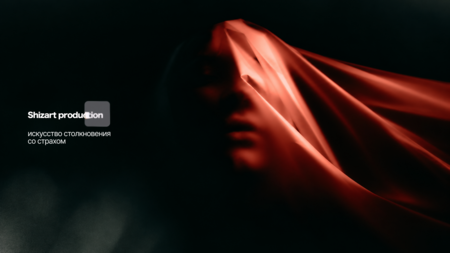
Where does the design process go?
Лонгрид «След. Дело о пропавшем процессе» рассказывает об этой проблеме в форме расследования.
Every finished mockup has a story: drafts, discussions with the client, various iterations, and revisions. Once the project is submitted, only the final file remains, and everything that happened between the initial idea and the final save is lost.
In this long-read, the reader sees the finished product without its history, examines the clues from the past, and gradually discovers where the entire creative process vanishes.
Why is a long-form article needed?

The longread is part of the Uchte.no graduation project. It is a service that saves the history of work on a design project. For more information about the project.
The service itself is not advertised in the long-form article. The goal of the article is for the reader to recognize the problem and reach the conclusion independently that the working process is worth preserving.

The plot is structured like a four-part detective story.
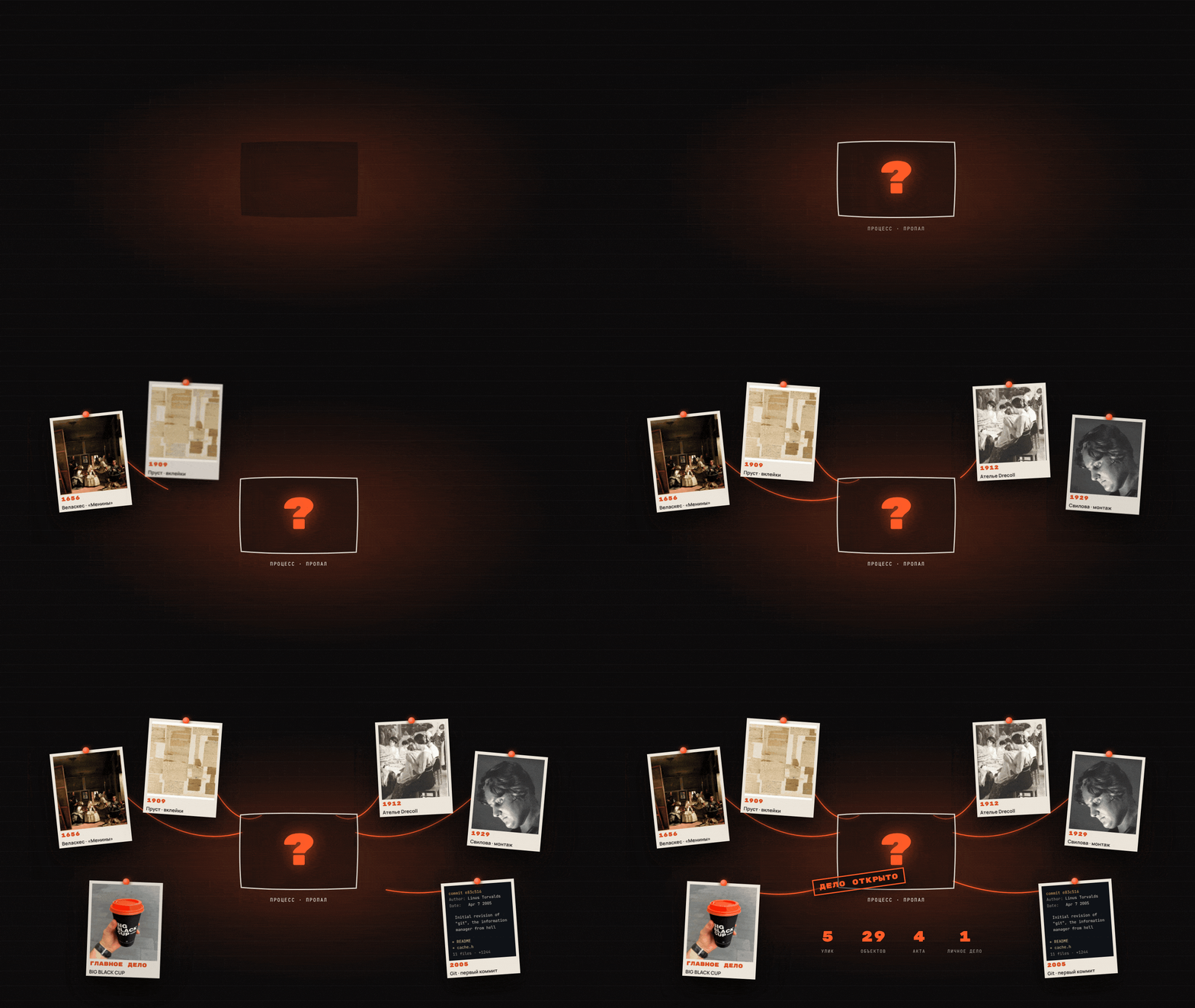
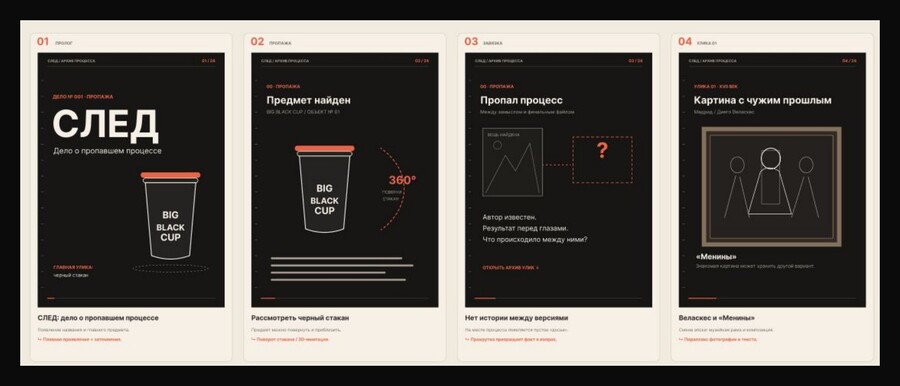
First, the reader sees the BIG BLACK CUP: an object discovered, but its creation story is absent. Then, they examine five clues from the past and learn how traces of this work were preserved in painting, literature, cinema, fashion, and programming.
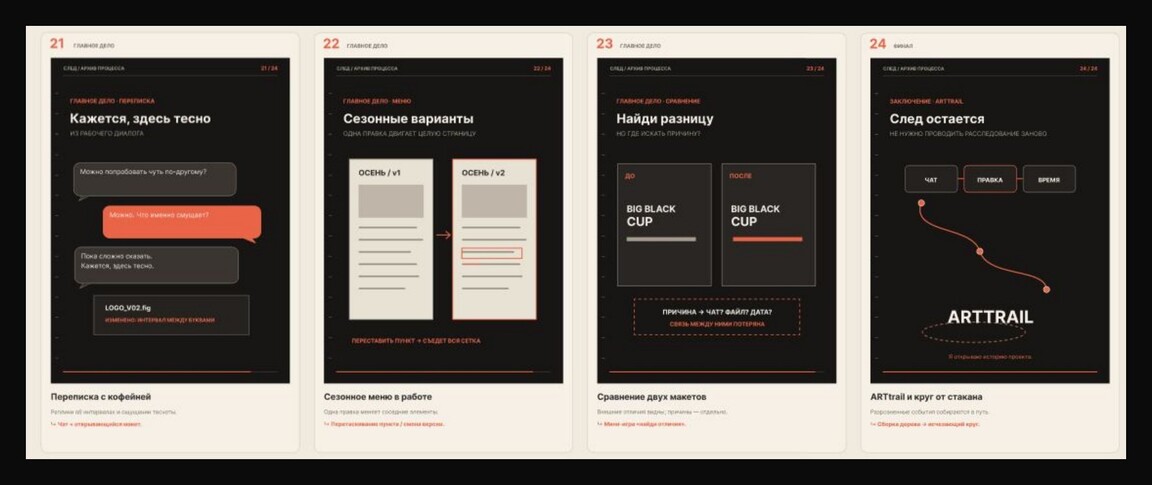
The third part is dedicated to my own project for a coffee shop: correspondence with the client, logo versions, and menu revisions. In the finale, the clues coalesce into a comprehensive conclusion.
Each longread section is a piece of work. There are 29 in total, and the counter in the header indicates where the reader is currently located.
Why detective?
The detective format transforms a familiar design problem into a puzzle that readers want to solve. The reader is no longer just reading text—they are actively conducting an investigation.
Every piece of evidence found sparks curiosity for the next, keeping the reader engaged until the finale, and the reader draws the conclusion themselves.
Five historical examples
Где прятался след работы?
Each example illustrates where the imprint of the work remains. In Velázquez’s work, it is the layers of paint beneath the canvas; in Proust’s, it is the pasted-in clippings within the manuscripts; in cinema, it is the excised film fragments; in atelier practice, it is the guiding thread; and in programming, it is the commit history in Git.
Storyboard
Before laying out the page, I storyboarded the entire long-form article. This helped establish the rhythm: on which screens the reader can calmly read the text, and on which they actively interact with the material.
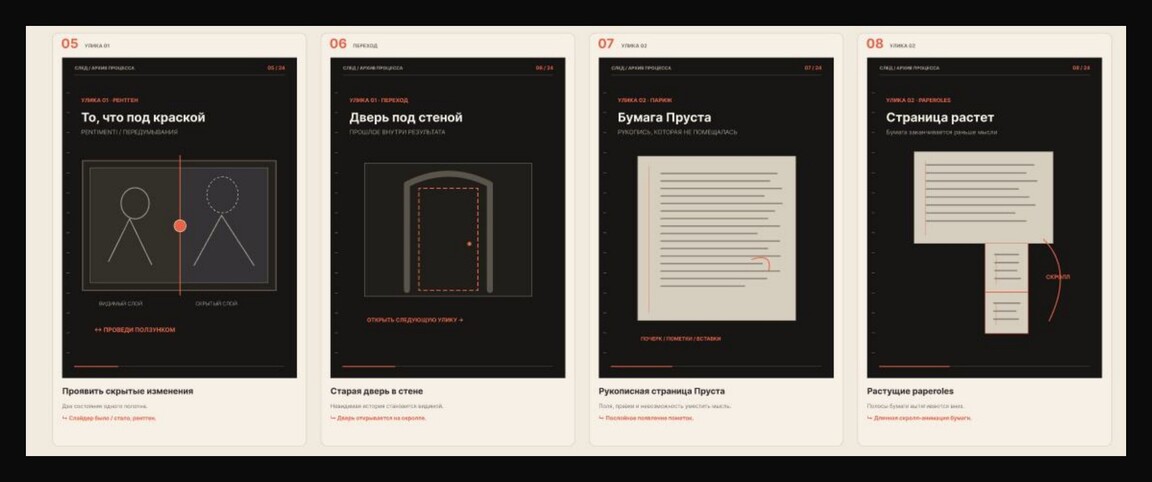
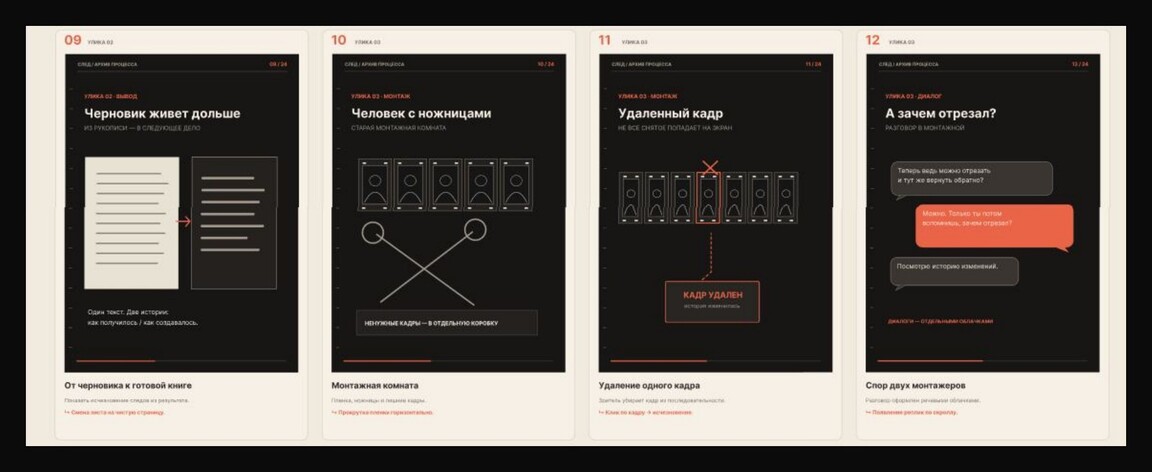
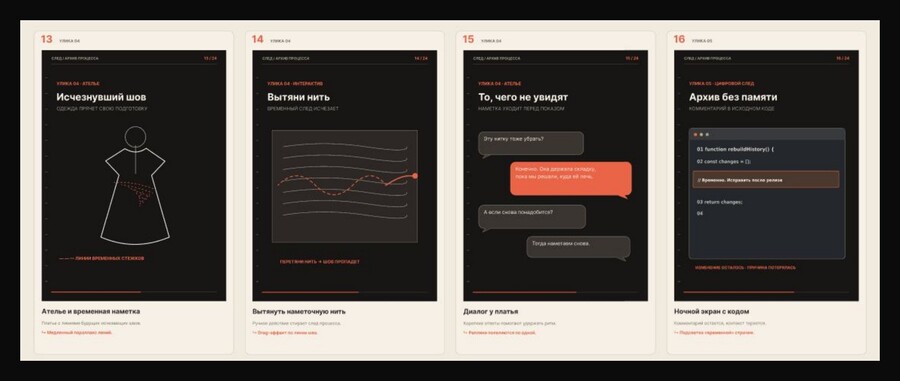

How Sketches Became Screens
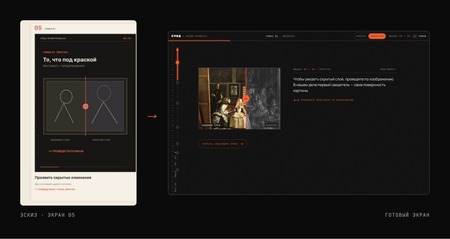
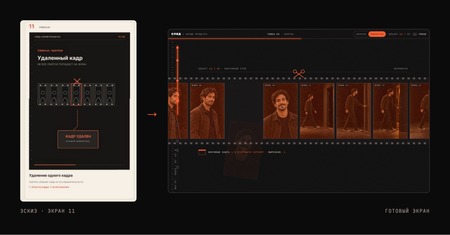
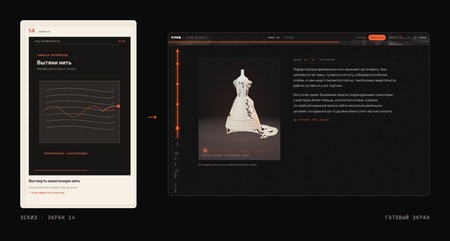
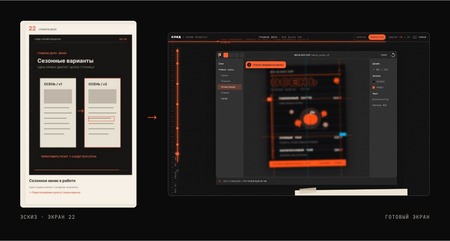
In every sketch, I described one action for the reader. In the final longform piece, this became an interactive element: a slider reveals an X-ray view of the artwork, the film can be cut, the thread can be pulled out, and edits in the menu can be applied with a click.
The reader uncovers the clues.
Почти в каждой главе ему нужно что-то сделать самому.
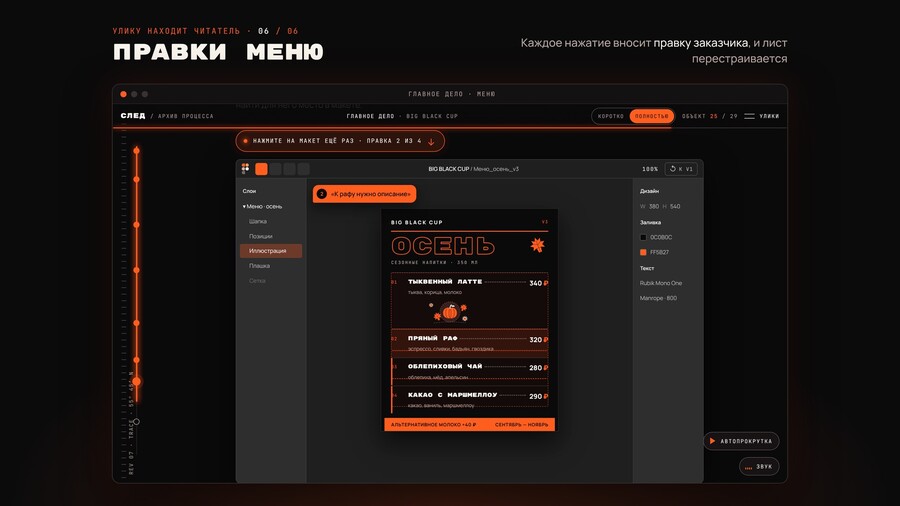
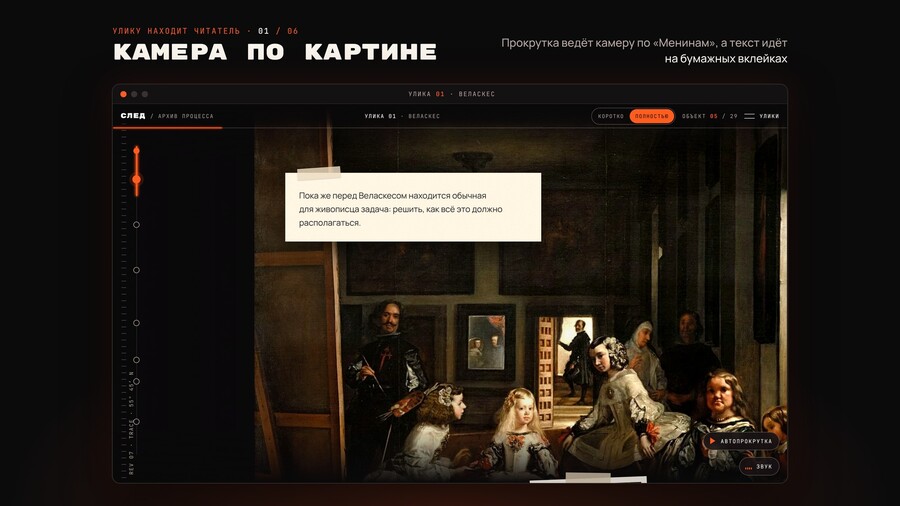
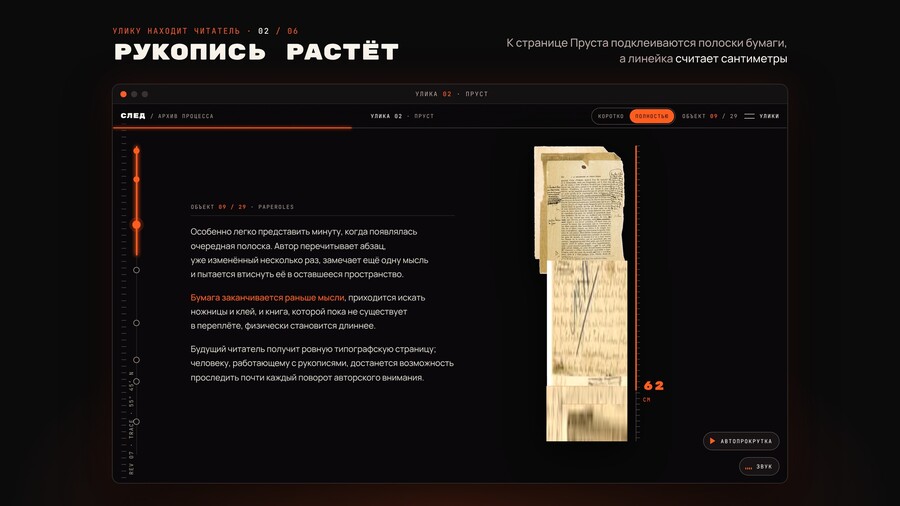
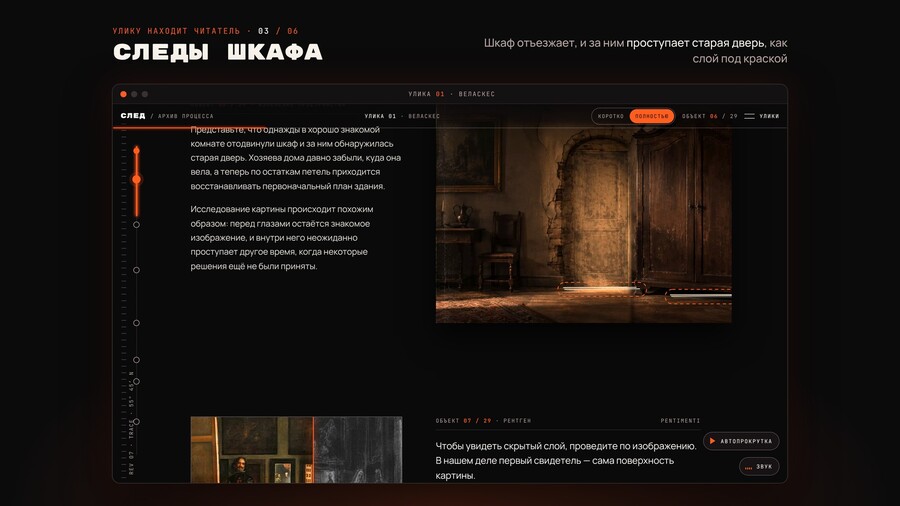
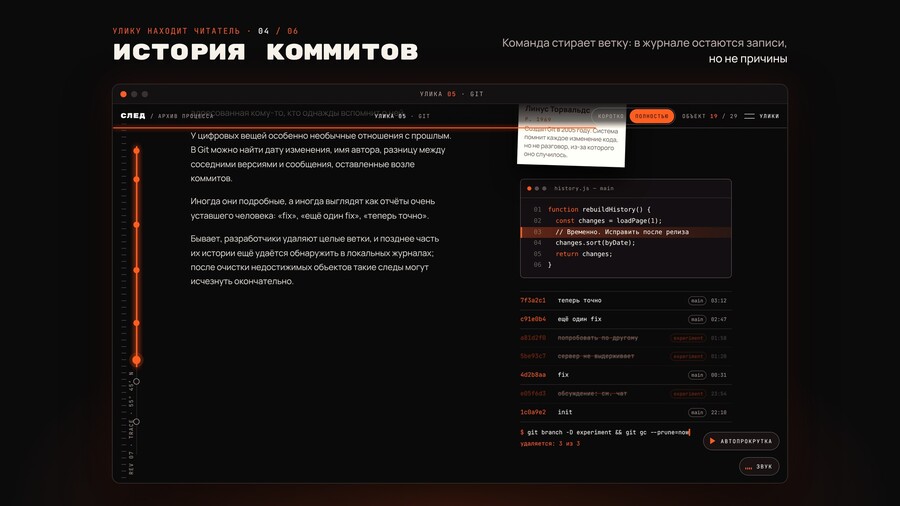
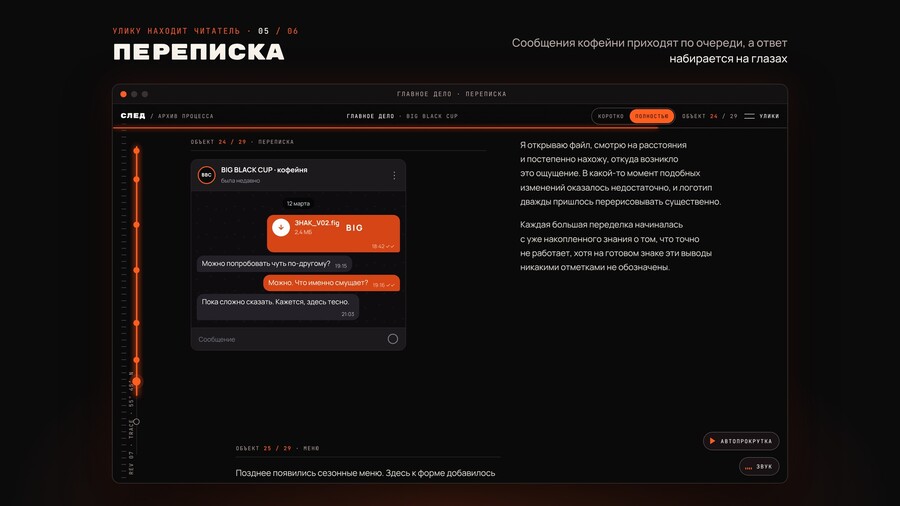
The reader moves a camera across the painting, watches the Proust manuscript grow, discovers traces of a wardrobe, reviews commits, reads correspondence with the client, and makes edits to the menu themselves.
Detective Elements in the Design
To make the longread resemble investigative materials, I added a magnifying glass, a chalk outline of the missing item, film splice transitions between chapters, an investigation border, handwritten underlining, and a «Case Closed» stamp in the finale.