«This image that lives in your imagination is not transmitted directly — there is no way to get others to see what you see» — Sit van Hout in an article for their
Project concept
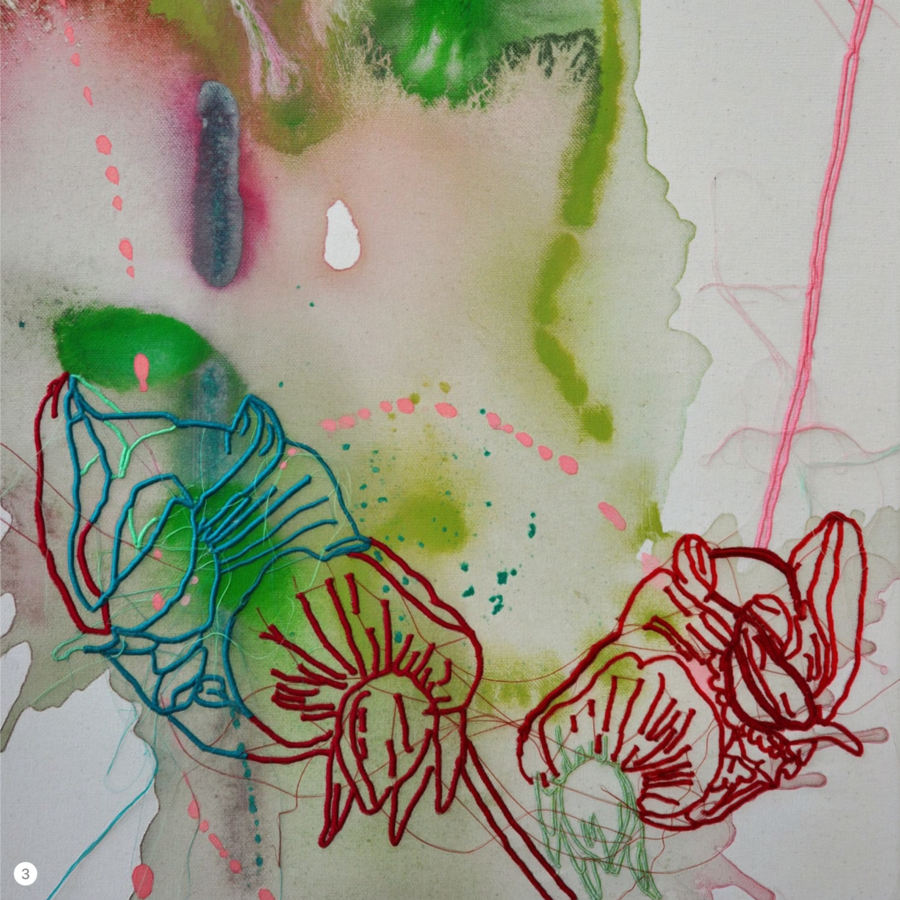
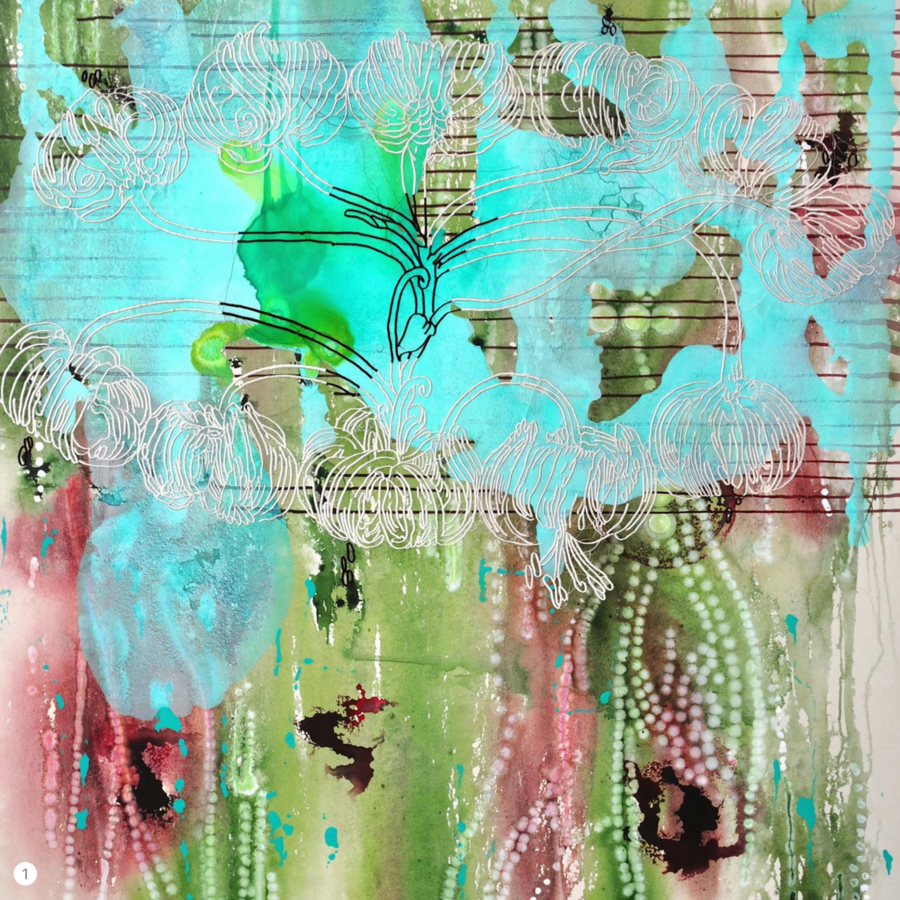
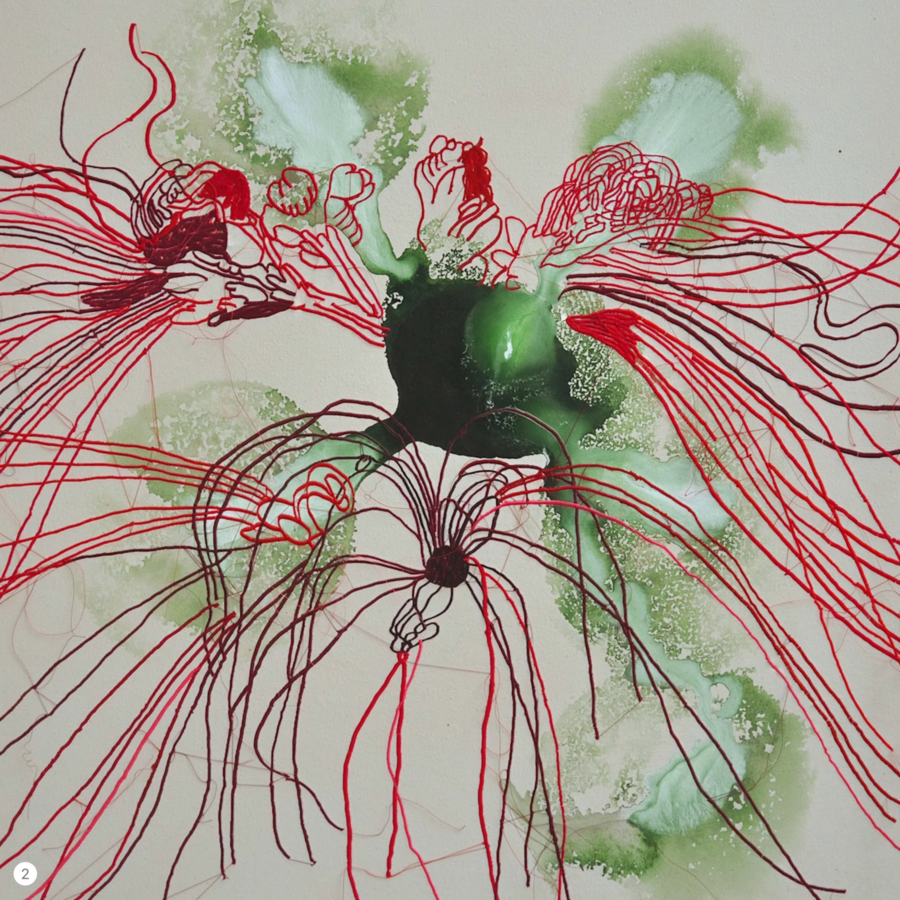
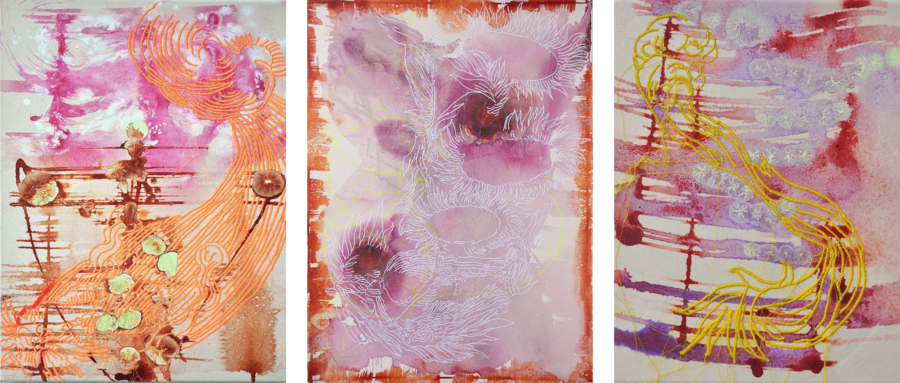
Sit van Hout. Work from the series of «Building the Garden» (2011), left-to-right: [1] * The Garden of Jacob de Fay [2] *Temple of Flora * [3] *Erwtje Tuberose
The project aims to study the visual language of artist Sith van Hout and interpret it using neuronetic tools. The main challenge was not direct stylization, but the transmission of the intuitive nature of its painting by means of digital generation. Her work inspired me with my fine natural aesthetics — I sought to keep this feeling in the plastic of my own images, using neurosmart as a tool. The series includes features of the Sith van Hout method, but reveals them in their original, self-contained form. In the main part of the project, under the images, I describe these features — they are the ones that create a sense of seriality and internal unity.
Sit van Hout. Work in the series «After L.C. (2014), left-to-right: „Angel and Dragon (Orange)“
Sit van Hout. == sync, corrected by elderman == @elder_man
The images were born from the interaction of personal sensations and machine perception. I created text descriptions (in the future) built through the observation of her paintings: attention to bodilyity, illusion of motion, tracks, leak effects, softness, spots, depths. It has proved crucial for me to preserve the association materiality that arises in her work — tissue, bodies, surfaces through which something breathes, flows, or is sealed.
Sit van Hout. Work in the series «Thinking the Garden» (2012-2013), left-to-right:
Image Series
»…carnations with frayed translucent petals against woodgrain streaked with jade green and rose quartz»
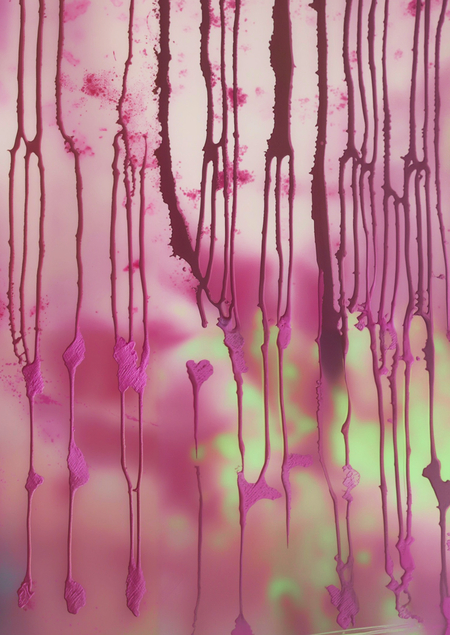
- »…a garden of stockers with watercolor numbers» (2) 2. »…a paintbrush dripping that turn into Tiny Birds» The series produced includes images as if they were coated from current structures, branched vascular lines, growing masses. Such motives refer to anatomical cuts, root systems, tissue structures. In some images, shape flows down or curls through the center, and in others, as if floating on the surface. Sit’s visual sense of organics is repeated, as if the material was moving, decaying, or confluenced. Reproduction of free-flowing and paint-washing techniques. For example, the pigment spreads through the background, forming soft, organic contours that resemble spots on biological tissues. Visually, the effect of approaching painting with acryl and watermelon on wet paper. Digital drops vary in density and flow along gravitational lines. The focus is on the transmission of uncontrollable material, which intersects with the original artist’s technique.
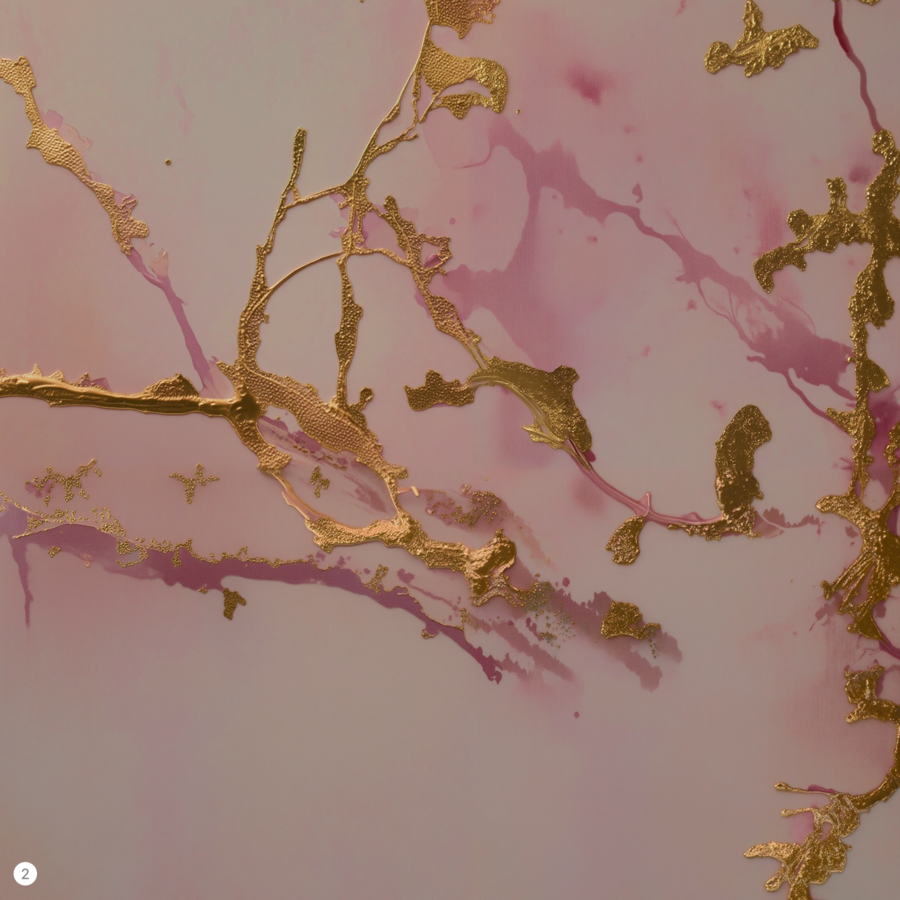
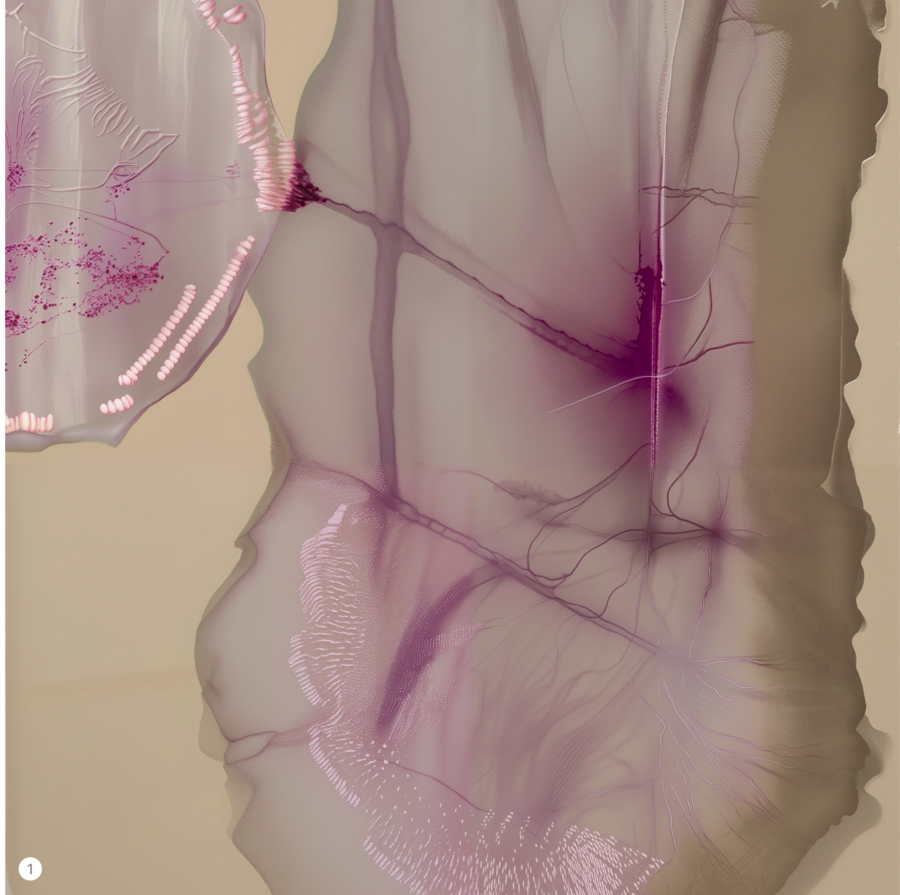
- …x-ray transparent magnolia petals with vascular systems made in wire, suspend over a corroding mirror poling with liquid watercolor and mercury 2. …cherry blossom branches rendered via atomic force microscope, molecular bonds visible as gold filigree against point point breakoff and detaining silk
- »…geometric diamonds with razor-sharp edges floating against a chaotic splash of liquid gold and cruched berries, each line drawn with 0.3 mm technical pen precision» 2. »…organic forms and layered texts» 3. »…surgical-precise Line drawings of botanical specifics dissected by vivalent activities of acrylic paint in industrial yellows and warning-sign reds» Corporal, pink, beard, gray, ash, milk tones prevail. There are dense colour spots and leaks, active accents, and muffled crossings. Coaches are soft, color functions as an element of the body structure. The light on the images is weak, scattered, deep.
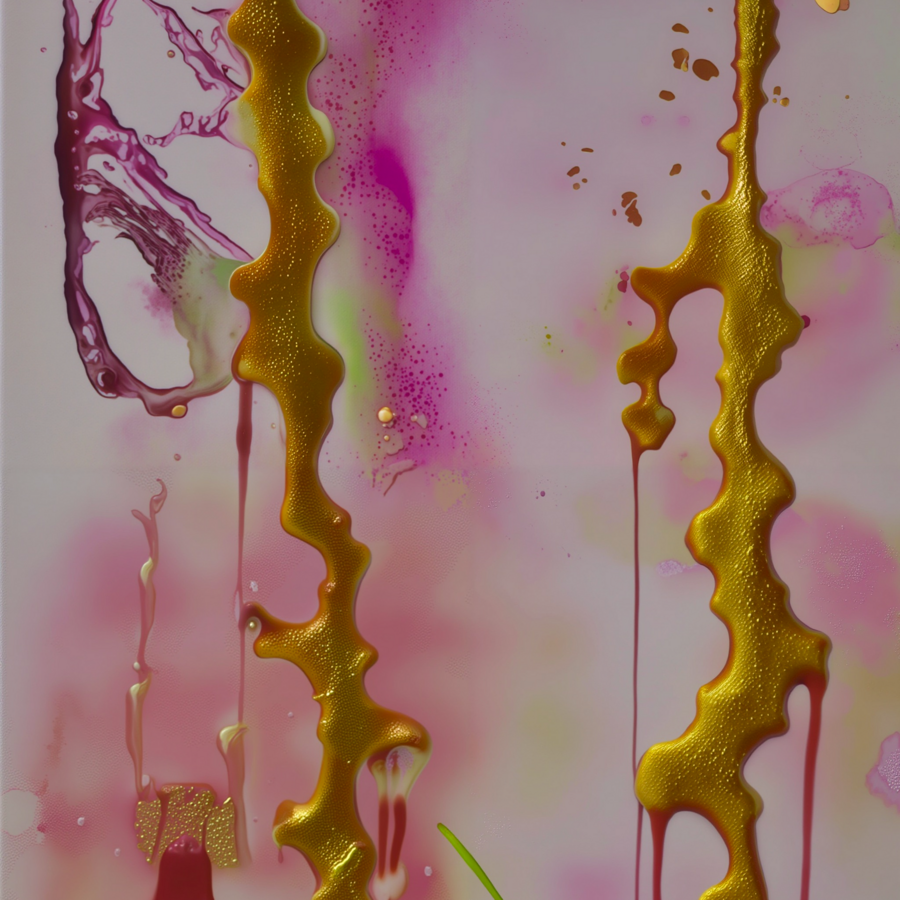
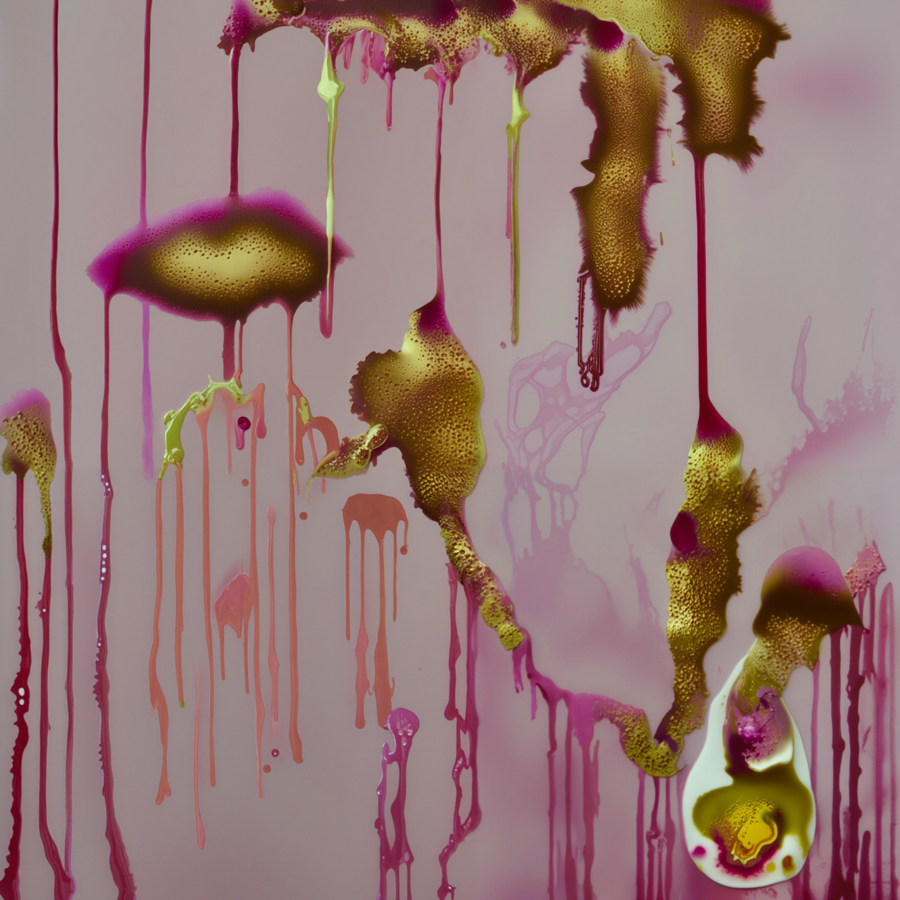
»…a carnival of melting clocks and carnivorous orchids dripping liquid gold»
Many images show invoicing, as if there was pressure, liquid, and precipitation in the material. This is achieved through multilayer effects, blurring, touch marks. Somewhere the surfaces look like wet, sealed motion or touch, somewhere like dried traces, reminiscent of paper or skin. These images arise without direct simulating, but they are of the same physical nature as Sit.
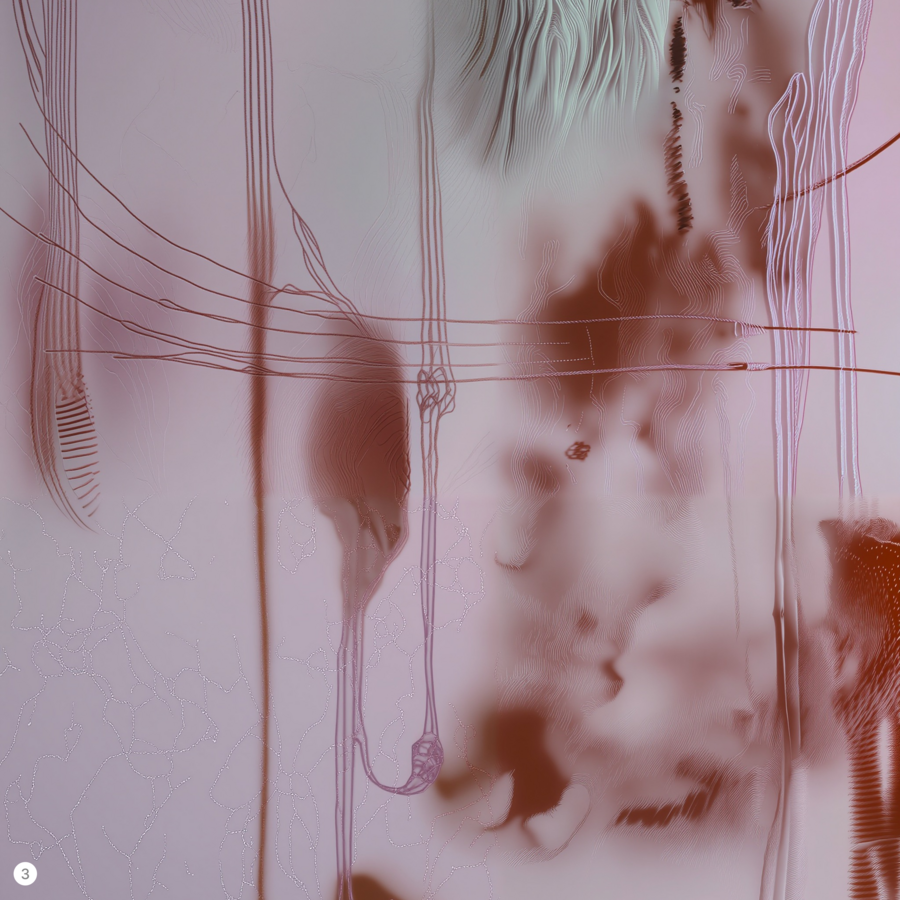
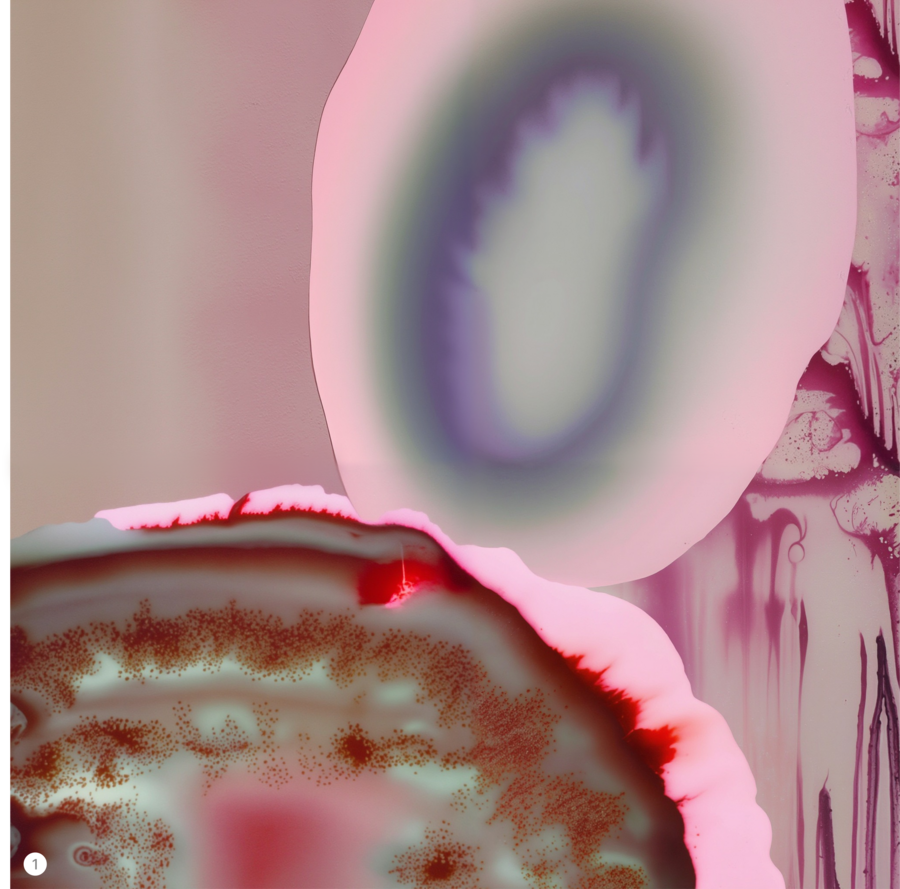
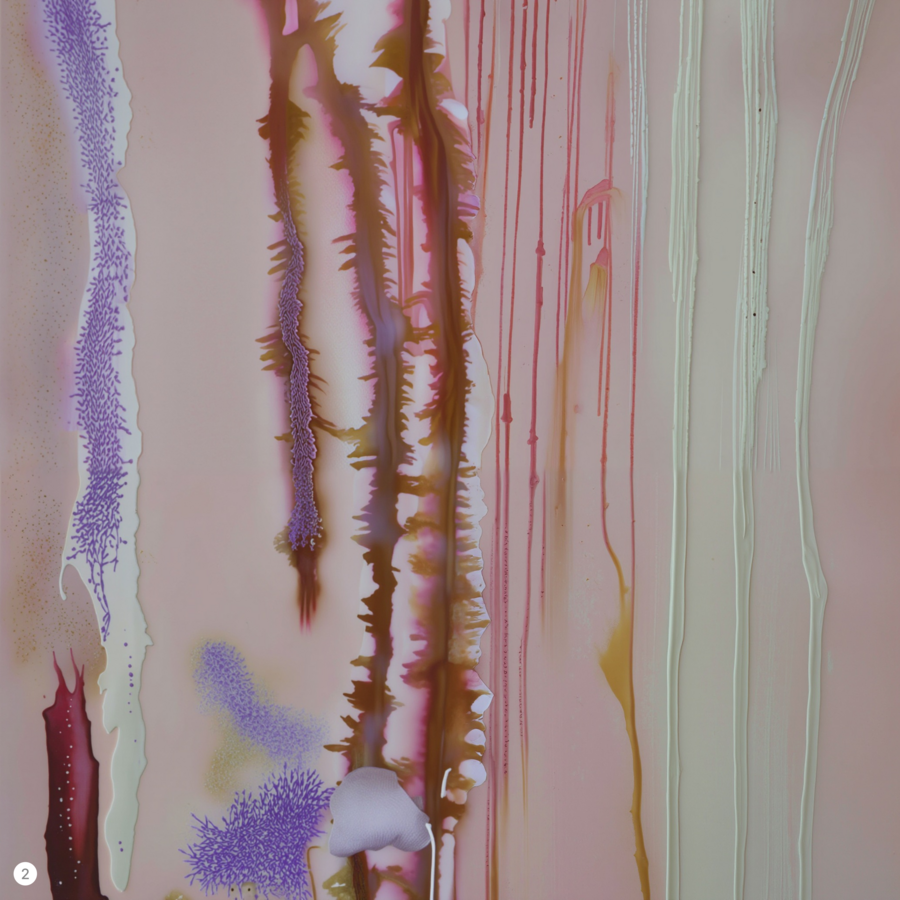
- »…a ver Dream of fundamental porcelain» 2. »…a garden of flyers bleaching watercolords» 3. »…calligraphic brushstrokes transforming into suspended copper wires, vibrating with energy» Images are based on the main types of composition that are characteristic of the artist’s work: there are verticals with lower motion, there are dense central masses, there are rhythmic diluted forms.
»…x-ray transparent magnolia petals with vascular systems mapped in platinum wire, suspended over a corroding mirror pooling with liquid watercolor and mercury»
Linear elements similar to threads cross colour fields and create rhythms that refer to a manual seam. The lines are shivering, with ripped edges, different lengths and density. The effect of fibrous heterogeneity is formed, a characteristic characteristic of the mixed techniques of Sit van Hout, when the real and painted threads are integrated into the composition.
»…bright toxic blossoms blooming through cracks in a mirrored sky»
It was possible to reproduce the key qualities of its painting: the effect of living matter, the absence of rigid localization of shape, the illusion of motion, association with the body and living surfaces. The visual language of the final series is based on the same principles: current, sediment, body, trace, interaction between the inside and the outside without literal appearance. These images give the same impression — as if it were something alive on the border between the material and the sensitive. Inflammation and illuminance effects are present, resulting in spatiality and visual tact. Color forms crowd out the background, go beyond the «leaf,» modeling «open forms» that disrupt the stability of the frame. The focus and partial loss of shapes give the images a fragmented, multilayered character. There’s a image of memory as a mobile, unaffordable structure.
»…a cosmic garden where galaxies bloom into iridescent orchids»
The series covers various visual registers, ranging from almost weightless, dusty and transparent to dense, saturated, active mass and structure. This fact confirms that variations within the chosen method are possible that do not extend beyond the visual language of the artist. This is proof of the success of the neural stylistics and its adaptation to the task.
- »…a topographical map extruded into three-dimensional ribbons of vellum, floating over volcanic eruptions of gouache and spray paint»
- »…a tsunami frozen mid-crash into geometric shards of frosted glass and fishing net fragments»